

Table of contents
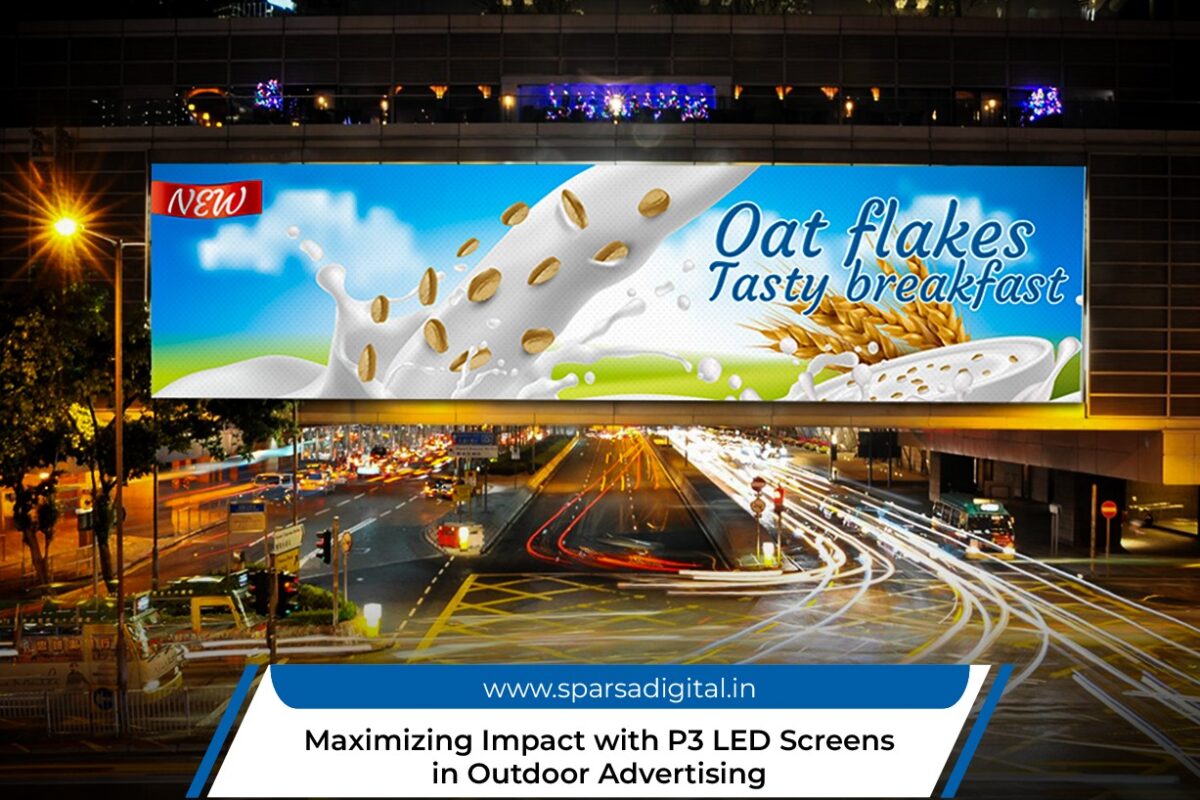
In today’s fast-paced, visually-driven world, advertising has evolved far beyond traditional billboards and posters. With the advent of advanced digital display technology, brands and businesses are now turning to dynamic, high-impact solutions to capture the attention of passersby. Among these solutions, the P3 LED screen has become a popular choice for outdoor advertising due to its superior resolution, versatility, and ability to create captivating visual experiences. In this blog, we’ll explore the advantages of P3 LED screens and their transformative role in LED screen outdoor advertising.
What Is a P3 LED Screen?
The term P3 LED screen refers to a type of LED display where the “P” stands for “pixel pitch,” and the number 3 indicates the distance (in millimeters) between individual pixels. This pixel pitch determines the resolution and image quality of the screen. In a P3 LED screen, the pixels are spaced 3 millimeters apart, offering a high-resolution display that is particularly well-suited for both close-up and distant viewing. This makes P3 screens ideal for high-traffic outdoor environments like shopping malls, sports arenas, city streets, and public squares.
In technical terms, pixel pitch plays a crucial role in the sharpness and clarity of the image. The smaller the pixel pitch, the higher the resolution and the better the image quality. For outdoor advertising, P3 LED screens strike the perfect balance between pixel density and performance, ensuring that the display is clear and vibrant even at large sizes.
Also Read: Exploring the Wonders of Active LED Screens and LED Display Technology
Why Choose P3 LED Screens for Outdoor Advertising?
1. High-Resolution Display for Greater Visual Impact
One of the standout features of the P3 LED screen is its impressive resolution. With a pixel pitch of just 3mm, it provides sharp and clear images that maintain their quality even when viewed from a distance. This is particularly important in outdoor advertising, where a large audience often views the screen from various angles and distances.
Whether you’re advertising a product, service, or event, the ability to deliver high-definition, dynamic content will ensure that your message cuts through the noise of a crowded urban environment. P3 LED screens enable advertisers to create vibrant visuals, motion graphics, and videos that can capture the attention of passersby more effectively than static displays.
2. Bright and Visible in Any Lighting Conditions
Outdoor advertising often involves competing with a variety of environmental factors, including bright sunlight, varying weather conditions, and changing times of day. One of the major benefits of P3 LED screens is their ability to maintain bright, vivid displays regardless of these factors. The LED technology used in these screens is engineered to provide excellent visibility even in direct sunlight, ensuring that your content is visible to pedestrians and drivers throughout the day.
Additionally, P3 LED screens have adjustable brightness levels, allowing them to automatically adapt to ambient lighting conditions. This means they will be bright enough during the day and dimmed appropriately at night, optimizing energy consumption while maintaining an optimal viewing experience.
3. Energy Efficiency and Cost-Effectiveness
Energy efficiency is a key consideration for businesses investing in outdoor advertising, as the cost of running digital displays around the clock can quickly add up. Fortunately, LED technology is known for its low power consumption compared to traditional display systems like fluorescent or incandescent lighting. The P3 LED screen, with its efficient design, minimizes energy usage while delivering high-quality visuals, making it a more environmentally friendly and cost-effective option for long-term outdoor advertising campaigns.
4. Durability and Longevity
Outdoor displays are exposed to a variety of harsh conditions, from extreme weather to dust and pollution. P3 LED screens are built to withstand these challenges. With weatherproof casings and robust construction, these screens are designed to continue performing optimally in the toughest environments. Whether it’s rain, snow, or heat, P3 LED screens are equipped to handle a wide range of weather conditions, ensuring a longer lifespan and reducing maintenance costs over time.

LED Screen Outdoor Advertising: A Game-Changer
1. Dynamic Content for Greater Engagement
One of the key advantages of using LED screens for outdoor advertising is the ability to display dynamic, eye-catching content. Unlike traditional static billboards or posters, which feature a fixed image or message, LED screens can display video, animation, and real-time data. This flexibility allows advertisers to rotate different ads or messages throughout the day, keeping the content fresh and engaging.
2. Targeted Advertising with Geolocation Features
LED screens, especially in busy urban areas, provide a unique opportunity for targeted advertising. With advanced technologies such as geolocation tracking, advertisers can tailor their messaging to specific demographics or locations. For example, a P3 LED screen in a shopping district could display different ads based on the time of day, weather conditions, or nearby events. This hyper-targeted approach allows businesses to make the most of their advertising spend by delivering highly relevant content to the right audience at the right time.
3. High-Impact Locations
LED screen outdoor advertising is increasingly popular in high-traffic areas such as city squares, airports, transportation hubs, and sports stadiums. These locations offer exceptional visibility to large audiences, making them ideal for advertisers who want to maximize their reach. With their bright, large-scale displays, P3 LED screens are perfect for these settings, allowing brands to capture the attention of thousands of people at any given time.
For example, in a busy airport, P3 LED screens can display targeted advertisements to travelers, offering promotions for nearby stores, food and beverage options, or travel services. The ability to grab the attention of people who are waiting, walking, or passing through makes outdoor advertising on P3 LED screens incredibly effective.
4. Integration with Digital Marketing Campaigns
P3 LED screens can seamlessly integrate with digital marketing campaigns. Whether you’re running a social media promotion, offering a flash sale, or leveraging user-generated content, these screens can display live updates and interact with other online platforms. This level of integration enhances the impact of outdoor advertising by allowing brands to synchronize their physical and digital marketing efforts.
For instance, a retailer might use a P3 LED screen to display user-generated social media posts about their products, further enhancing their online presence and creating a more immersive advertising experience. This cross-channel integration helps to bridge the gap between digital and physical advertising spaces, creating a cohesive marketing strategy.
Conclusion
P3 LED screens have become a game-changing tool in the world of LED screen outdoor advertising. Their superior resolution, brightness, energy efficiency, and durability make them the perfect solution for high-impact digital advertising. From city streets to sports arenas and shopping centers, P3 LED screens deliver dynamic, engaging content that captures attention and maximizes brand visibility.
As outdoor advertising continues to evolve, the role of high-quality LED screens will only increase. For businesses looking to stand out in a crowded market and connect with consumers in meaningful ways, investing in a P3 LED screen is a smart choice. By combining cutting-edge technology with creative, dynamic content, companies can deliver messages that truly resonate with their audience and make a lasting impression in the world of outdoor advertising.
