
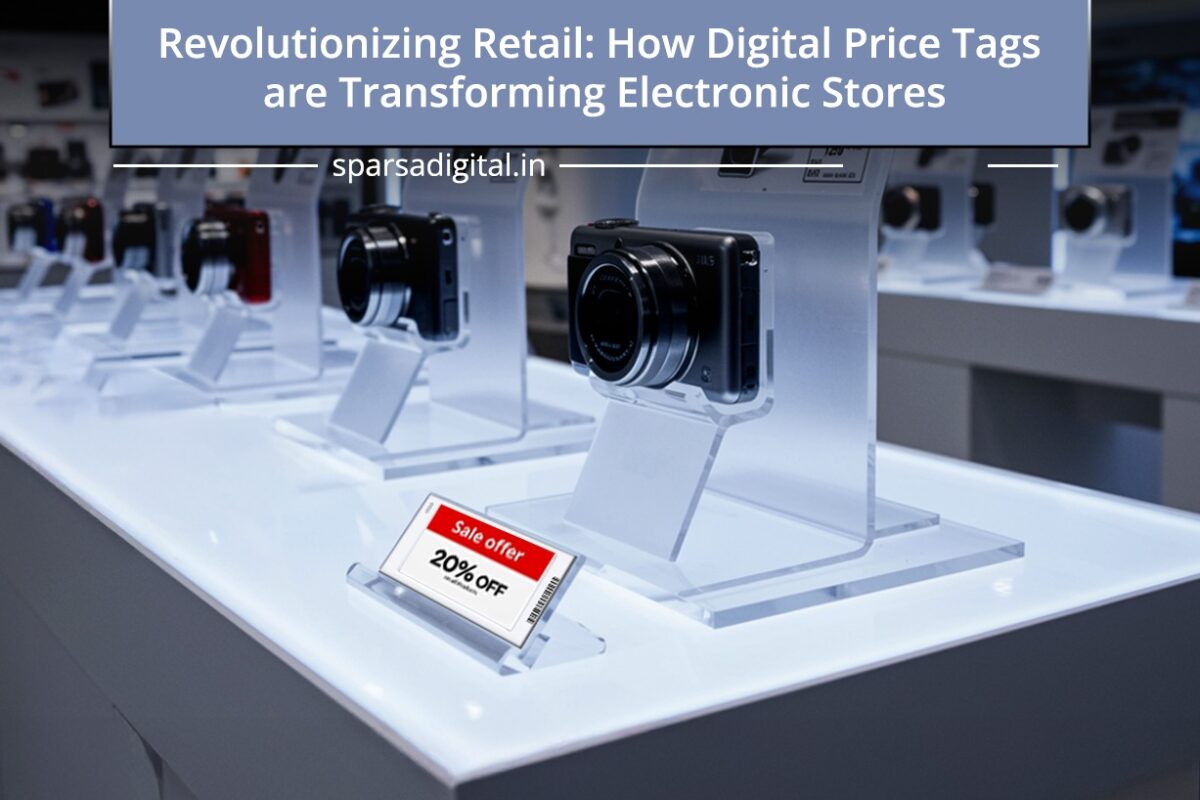
How Digital Price Tags are Transforming Electronic Stores

Revolutionizing Retail: How Digital Price Tags are Transforming Electronic Stores

In an era where technology drives almost every aspect of our lives, it’s no surprise that retail spaces, especially electronic stores are embracing innovative tools to enhance customer experiences. Among the most impactful upgrades in recent years is the adoption of digital price tags.

From streamlining operations to improving customer satisfaction, digital price tags are no longer a novelty, they’re fast becoming a retail necessity. In this blog, we’ll explore how digital price tags are revolutionizing the electronic retail sector, particularly for high-demand items like cameras, smartphones, laptops, smartwatches, and more.

What Are Digital Price Tags?

Digital price tags, also known as Electronic Shelf Labels (ESLs), are small electronic display devices, usually LCD or e-ink screens, placed on store shelves to show product prices, specs, promotions, or barcodes. Unlike traditional paper tags, these digital displays can be updated wirelessly and in real-time via a central management system.

Why Digital Price Tags Matter in Electronic Stores

Electronic items often have fluctuating prices due to technological advancements, promotions, or market competition. Updating paper price tags frequently in stores is time-consuming, error-prone, and labor-intensive. That’s where digital price tags come into play.

1. Real-Time Price Updates

Imagine you’re running a large electronics store. Prices of smartphones and laptops can change based on brand directives, online competition, or inventory levels. Digital price tags allow for instant updates across all shelves with just a few clicks ensuring price consistency across channels.

For example, if Samsung launches a temporary discount on the Galaxy S24, the price tag across hundreds of store locations can be updated simultaneously saving time and preventing pricing errors.

2. Detailed Product Information

With limited space on paper tags, it’s hard to list all product features. But with digital price tags, you can display dynamic content such as:

  • Phone storage capacity (e.g., 256GB vs. 512GB)

  • Camera megapixels

  • Battery life

  • Brand comparison tables

  • Warranty information

These rich details enhance the customer experience, especially in complex product categories like DSLRs or gaming laptops.

3. Reduced Operational Costs

Though the initial investment in digital price tags is higher, they drastically cut down operational costs over time. No need to print, laminate, or manually replace tags for every price change. Staff can focus more on customer service rather than price maintenance.

4. Seamless Omnichannel Integration

Customers today compare prices online while standing inside the store. Digital price tags can sync with your online pricing engine to ensure uniformity between in-store and online pricing preventing customer mistrust and increasing conversion rates.

Use Cases: How Digital Price Tags Elevate Shopping Experience

Smartphone Section

In an aisle full of iPhones, Galaxy models, and budget-friendly options, customers often need help comparing features. Digital tags can display specs side-by-side or include QR codes for deeper dives into tech reviews or demo videos.

Camera Display Counters

High-end DSLR and mirrorless cameras often come with a lot of jargon: ISO range, lens compatibility, autofocus systems. Digital tags can display specs side-by-side or include QR codes for deeper dives into tech reviews or demo videos.

Laptop Racks

Laptops are feature-heavy products. A digital price tag can show CPU type, RAM, SSD size, battery life, and pre-installed software. It helps shoppers make informed decisions without waiting for a store associate.

Gaming Consoles and Accessories

With frequent bundle deals, digital tags make it easy to highlight limited-time offers, saving both time and confusion. Gamers want fast facts and these tags deliver.

Benefits for Retailers

  • Dynamic Promotions: Run flash sales or end-of-day markdowns with ease.

  • Inventory Alerts: Some systems integrate with inventory software to alert staff when stock is low.

  • Data Insights: Track customer engagement with interactive tags to see which products get the most views or scans.

  • Eco-Friendly: Reduces paper waste, aligning with green retail practices.

Benefits for Shoppers

  • Price Transparency: Know exactly what you’re paying for no surprises at checkout.

  • Instant Info Access: No need to Google specs or ask associates, details are right there.

  • More Confidence in Buying: Clear and current product data leads to smarter purchases.

Challenges and Considerations

While digital price tags offer many benefits, they do come with a few challenges:

  • Initial Investment: Costs can be significant for large-scale implementation.

  • Training Required: Staff need to be trained on the system.

  • Power Source: While most ESLs use low-power e-ink and last years on batteries, power management is still crucial.

However, with long-term savings and improved customer satisfaction, the ROI is generally worth it, especially for high-margin electronics.

The Future of Digital Price Tags in Electronics Retail

Looking ahead, we expect even smarter ESL systems. Future features may include:

  • Touchscreen capabilities for customer interaction.

  • AI-powered recommendations displayed right on the tag.

  • AR integrations where scanning the tag shows a virtual unboxing or review video.

As the demand for convenience and efficiency rises, so will the importance of digital price tags, especially in electronics retail, where information and speed are everything.

FAQs About Digital Price Tags in Electronic Stores

1. Are digital price tags suitable for small electronic shops?

Yes. While larger chains see the most benefit, even smaller stores can benefit from increased efficiency and professional presentation.

2. Do digital price tags require Wi-Fi?

Most systems use secure radio frequencies or low-energy Bluetooth. Some integrate with Wi-Fi, but dedicated networks are often used for stability and security.

3. Can customers interact with digital price tags?

Basic digital tags are passive, but interactive models are emerging that allow QR scanning.

4. What’s the lifespan of a digital price tag?

Most e-ink based tags can last 5–7 years on a single battery, depending on how frequently updates occur.

5. Are they waterproof or durable for electronics in open displays?

Yes. Many digital tags are built with shock- and water-resistant casings, ideal for busy retail environments.

6. How are promotions or bundles handled?

Promotions can be set up and scheduled in the central system. Bundled offers can be dynamically displayed alongside base prices.

Conclusion

Digital price tags are reshaping the electronics retail landscape. From smartphones to DSLRs, these smart tags offer a win-win for both retailers and customers: operational efficiency, accuracy, eco-friendliness, and a richer shopping experience.

If you manage or own an electronics store, now is the time to consider investing in this future-ready technology. It’s more than a display, it’s a direct link between your shelf and your digital pricing strategy.

Digital Price Tags and Electronic Shelf Labels Leading the Future of Retail Industry

Digital Price Tags and Electronic Shelf Labels Leading the Future of Retail Industry

Table Of Content

  • Introduction
  • What Are Digital Price Tags and Electronic Shelf Labels?
  • Benefits of Digital Price Tags and Electronic Shelf Labels
  • Real-Time Price Updates
  • Enhanced Customer Experience
  • Cost and Labor Efficiency
  • Sustainability and Environmental Benefits
  • How Digital Price Tags and Electronic Shelf Labels Work
  • Applications in Different Industries
  • Choosing the Right Digital Price Tag System
  • Future Trends in Digital Pricing Technology
  • Conclusion
  • FAQs

Introduction

The retail industry is undergoing a major digital transformation, and one of the most revolutionary innovations is the adoption of digital price tags and electronic shelf labels. These technologies are reshaping how businesses manage pricing, promotions, and inventory while enhancing the overall shopping experience.

What Are Digital Price Tags and Electronic Shelf Labels

Digital price tags, also known as electronic shelf labels (ESLs), are digital displays that replace traditional paper price tags. These electronic labels use wireless technology to update prices in real time, ensuring accurate pricing and eliminating the need for manual changes. Retailers can synchronize these digital labels with their central pricing systems to implement instant updates, promotions, and dynamic pricing strategies.

Benefits of Digital Price Tags and Electronic Shelf Labels

Real-Time Price Updates
One of the key advantages of digital price tags is the ability to update prices remotely. Retailers no longer need to manually replace thousands of paper tags when prices change. This ensures consistency across all stores and minimizes pricing errors that could lead to customer dissatisfaction.
Enhanced Customer Experience
Electronic shelf labels improve customer experience by displaying real-time promotions, QR codes, and product details. Shoppers can scan QR codes for additional product information, compare prices, or even check stock availability. This technology provides a more interactive and informed shopping experience.
Cost and Labor Efficiency
Switching to digital price tags significantly reduces labor costs associated with price adjustments. Employees can focus on customer service rather than manually updating price labels. Additionally, automated pricing ensures compliance with promotional schedules and reduces human errors.
Sustainability and Environmental Benefits
Using electronic shelf labels eliminates the need for paper price tags, reducing waste and supporting sustainability efforts. Retailers can contribute to environmental conservation by minimizing paper consumption and waste generation.

How Digital Price Tags and Electronic Shelf Labels Work

Digital price tags and electronic shelf labels operate using wireless communication technologies such as Bluetooth, Wi-Fi, or NFC (Near Field Communication). A central pricing system controls these labels, allowing retailers to make instant updates. The key components include:
E-paper or LCD display: Provides clear and easy-to-read price information.
Wireless connectivity: Enables remote updates from the store’s database.
Battery-powered operation: Ensures long-lasting performance with minimal maintenance.

Applications in Different Industries

While digital price tags are commonly used in retail, their applications extend to various industries, including:
Grocery stores & supermarkets: Real-time updates for fresh produce and dynamic pricing based on demand.
Electronics & appliance stores: Showcasing detailed product specifications and comparisons.
Pharmacies: Displaying accurate medication prices and dosage information.
Warehousing & logistics: Streamlining inventory management with real-time tracking.

Choosing the Right Digital Price Tag System

When selecting electronic shelf labels, consider the following factors:
Display type: Choose between e-paper or LCD based on visibility and energy efficiency.
Integration capability: Ensure compatibility with your POS and inventory management system.
Battery life: Look for long-lasting battery performance to reduce maintenance.
Customization options: Opt for labels that can display promotions, QR codes, and multi-language support.

The future of digital price tags and electronic shelf labels is promising, with advancements such as:
AI-driven pricing: Dynamic pricing based on demand, competition, and customer behavior.
IoT integration: Connecting digital labels with smart store systems for enhanced automation.
Augmented Reality (AR) displays: Providing immersive product information through interactive labels.

Conclusion

The implementation of digital price tags and electronic shelf labels is revolutionizing retail operations. These technologies offer improved pricing accuracy, operational efficiency, and enhanced customer engagement. As more businesses adopt digital pricing solutions, the retail landscape will continue to evolve toward a smarter, more sustainable future.

FAQs

1. How do digital price tags work?
Digital price tags use wireless technology to update prices in real time, ensuring accuracy and reducing manual labor.
2. Are electronic shelf labels expensive to implement?
While there is an initial investment, the long-term savings in labor, printing, and pricing accuracy make them cost-effective.
3. Can digital price tags integrate with existing POS systems?
Yes, most electronic shelf labels are designed to seamlessly integrate with POS and inventory management systems.
4. Do digital price tags require frequent maintenance?
No, digital price tags are designed for durability and have long battery life, reducing the need for frequent maintenance.
5. Are electronic shelf labels suitable for all types of stores?
Yes, electronic shelf labels can be used in supermarkets, electronics stores, pharmacies, and even warehouses.
By adopting digital price tags and electronic shelf labels, retailers can stay ahead of the competition, streamline pricing strategies, and improve overall efficiency.


Rise of Electronic Shelf Labels (ESLs) and Digital Price Tags

The Rise of Electronic Shelf Labels (ESLs) and Digital Price Tags: Revolutionizing Retail

In today’s fast-paced retail environment, businesses are constantly seeking innovative solutions to streamline operations, enhance customer experience, and stay competitive. One such solution gaining traction is the use of Electronic Shelf Labels (ESLs) and digital price tags. These cutting-edge technologies are transforming how retailers manage product pricing and display, offering benefits ranging from improved operational efficiency to enhanced shopper engagement.

What Are Electronic Shelf Labels (ESLs)?

Electronic Shelf Labels (ESLs) are digital displays mounted on store shelves to show pricing and product information. These labels use technologies like e-ink or LCD screens to display real-time data. Unlike traditional paper tags, ESLs can be updated instantly from a central location, ensuring pricing consistency across all stores and even within the same store.

The Growing Demand for Digital Price Tags

Digital price tags are the next-generation version of paper price labels, taking the functionality of ESLs a step further. These tags display prices, promotions, and other product details, which can be updated remotely in real time. The shift toward digital price tags is driven by several factors:

  • Operational Efficiency: With digital tags, retailers can update product pricing or inventory information instantly, eliminating the need for manual price checks or re-labeling.
  • Price Accuracy: Real-time price updates ensure that customers always see accurate pricing, which reduces the risk of discrepancies and customer dissatisfaction.
  • Enhanced Customer Experience: Digital price tags allow retailers to present dynamic pricing, promotions, and additional product details, making shopping more interactive and engaging for customers.
  • Reduced Costs: By eliminating the need for physical price tags and paper labels, retailers can cut down on print and labor costs, contributing to long-term savings.

Benefits of ESLs and Digital Price Tags

  1. Real-Time Price Updates: One of the primary advantages of ESLs is the ability to instantly change pricing across all product labels in real-time. This capability is particularly beneficial during promotions, clearance sales, or when reacting to competitor price changes.
  2. Labor Savings: With the automation of pricing updates, the need for employees to manually change price tags is significantly reduced. This not only saves time but also allows workers to focus on more valuable tasks like customer service.
  3. Improved Accuracy: Manual price updates often result in errors, whether due to misprinted tags or incorrect information being displayed. With ESLs, data is updated centrally, eliminating human errors.
  4. Enhanced Customer Engagement: Digital price tags offer more than just pricing. They can display detailed product information, availability, and even personalized discounts, improving the overall customer experience.
  5. Environmental Impact: Traditional paper tags contribute to unnecessary waste. ESLs help reduce paper consumption and are a more sustainable solution for modern retailers.

Case Study: Carrefour’s Use of ESLs in Europe

Carrefour, one of Europe’s largest hypermarket chains, has adopted electronic shelf labels across its stores in several countries, including France and Spain. The retail giant implemented ESLs to streamline pricing and improve operational efficiency.

Before the switch, Carrefour struggled with maintaining consistent pricing across its stores. Paper tags had to manually updated by staff, often leading to delays and discrepancies in pricing. By introducing ESLs, Carrefour was able to update prices instantly across all locations, ensuring price consistency and minimizing human error.

In addition, the retailer was able to improve its customer experience by providing more detailed product information on the electronic labels. Shoppers were able to access additional data such as product features, nutritional information, and special offers directly from the label.

The results were impressive—Carrefour reported significant reductions in operational costs, especially in terms of labor and paper usage, and an increase in customer satisfaction due to accurate and timely information. Moreover, the retailer gained valuable insights into consumer behavior by tracking which price changes had the most significant impact on sales.

The Future of ESLs and Digital Price Tags

As the technology continues to evolve, ESLs and digital price tags are becoming more advanced. We can expect the following innovations:

  • Integration with IoT: Future ESLs will likely integrate more deeply with other Internet of Things (IoT) devices, allowing for even more personalized experiences, such as providing customers with instant promotions based on their past shopping behavior.
  • AI-Powered Pricing: Artificial intelligence could play a significant role in determining the optimal price for products based on data analytics, trends, and even competitor prices. This would help retailers optimize margins while remaining competitive.
  • Sustainability: Further advancements in ESL technology may allow for even more energy-efficient displays, extending battery life and reducing environmental impact.

FAQs on Electronic Shelf Labels and Digital Price Tags

Q1: How do electronic shelf labels save retailers money?

A1: ESLs save money by reducing labor costs associated with manual price updates, eliminating the need for paper labels, and improving pricing accuracy. These labels also enable retailers to quickly adjust prices to reflect market conditions, optimizing sales.

Q2: What industries benefit the most from ESLs?

A2: Retail industries such as grocery stores, supermarkets, department stores, and even pharmacies have benefited significantly from ESLs. The technology is ideal for large-scale retailers with high inventory turnover, as it helps manage dynamic pricing efficiently.

Q3: Can ESLs used in small stores?

A3: Yes! While ESLs are more commonly used in large retail chains, small businesses can also benefit from their use, especially if they have a dynamic pricing model or frequent promotions. The long-term cost savings in labor and materials can be highly beneficial.

Q4: How long does the battery in an ESL last?

A4: The battery life of an ESL can last anywhere from one to three years, depending on the model and usage. E-ink displays, for example, are very energy-efficient and can last much longer than traditional LCDs.

Q5: Are ESLs difficult to install and maintain?

A5: No, ESLs are relatively easy to install and maintain. Most systems involve minimal disruption to daily operations, and retailers typically receive support for installation, software integration, and updates. The labels themselves are designed for long-term durability.

Conclusion

As the retail industry continues to evolve, Electronic Shelf Labels (ESLs) and digital price tags represent a key innovation in pricing management and customer engagement. These technologies are more than just a tool for displaying prices—they are transforming the entire in-store experience, improving efficiency, reducing errors, and offering new ways to connect with consumers.

With the adoption of ESLs expected to grow in the coming years, retailers that embrace this technology early will likely enjoy a competitive edge in terms of both operational efficiency and customer satisfaction. Whether for large chains or small businesses, ESLs are becoming an indispensable tool for modern retail success.

The Future of Retail Electronic Shelf Labels and Digital Price Tags

The Future of Retail: Electronic Shelf Labels and Digital Price Tags

In the ever-evolving landscape of retail, technological advancements have revolutionized how businesses operate and how customers interact with products. Among these innovations, Electronic Shelf Labels (ESLs) and Digital Price Tags (DPTs) stand out as game-changers. These technologies offer retailers a streamlined, efficient, and dynamic way to manage product pricing and inventory, enhancing both the customer experience and operational efficiency.

What are Electronic Shelf Labels (ESLs) and Digital Price Tags?

Electronic Shelf Labels (ESLs) are digital displays placed on store shelves, typically showing product information like price, availability, and product details. Unlike traditional paper labels, ESLs are powered by electronic technology that allows them to be easily updated remotely.

Digital Price Tags (DPTs) are a specific type of ESL primarily focused on displaying prices digitally. DPTs offer the flexibility to change prices in real-time without the need for manual labor or printing new tags, making them highly effective for promotions and pricing strategies.

Both ESLs and DPTs are part of the broader trend of digital signage solutions in retail, providing dynamic, real-time, and accurate data to customers and store staff alike.

Benefits of Electronic Shelf Labels and Digital Price Tags

1. Price Accuracy

One of the most significant advantages of ESLs and DPTs is the enhanced accuracy of pricing. Traditional paper price tags are often manually updated, leading to human errors, which can result in discrepancies between the price displayed on the shelf and the price at checkout. With ESLs, prices are automatically updated across the entire store or specific sections, ensuring that the price on the shelf always matches the price at checkout.

2. Efficiency in Price Management

Price management can be an enormous task, particularly during promotional periods or when prices fluctuate frequently. ESLs and DPTs allow retailers to adjust prices across multiple stores or departments simultaneously through centralized software. This level of automation reduces the need for manual labor and minimizes the time spent on re-tagging shelves, improving operational efficiency.

3. Enhanced Customer Experience

Digital price tags improve the shopping experience by providing clear, legible, and easily updated product information. Shoppers can quickly access prices, discounts, availability, and even product details like size, color, or features, helping them make informed purchasing decisions. Additionally, ESLs can be used to show real-time promotions or sales, which can attract customers’ attention and increase sales.

4. Inventory Management

ESLs not only display pricing but can also be linked to inventory systems, allowing for real-time updates on stock levels. This integration can help reduce instances of stockouts or overstocking, improving supply chain efficiency. When a product is running low, the system can automatically notify staff to reorder, ensuring that the shelves are always stocked with the right products.

5. Sustainability

Traditional paper tags require regular reprints, which contributes to paper waste. By switching to electronic tags, retailers can reduce paper usage significantly. Furthermore, ESLs typically use low-energy technologies, such as e-ink displays, which consume very little power, making them an environmentally friendly solution.

Case Studies: Real-World Applications of ESLs and DPTs

1. Woolworths (Australia)

Woolworths, one of Australia’s largest supermarket chains, implemented ESLs in its stores to streamline operations and improve customer service. The retailer uses ESLs to display prices and promotions, and the system is integrated with its central pricing platform. This has allowed Woolworths to automate price updates across its stores, ensuring pricing accuracy and consistency. Furthermore, ESLs help with inventory management by providing real-time data on stock levels.

Impact: The use of ESLs at Woolworths has led to significant improvements in operational efficiency, with employees no longer needing to manually update prices. Customers also benefit from accurate pricing and timely information on promotions, which has enhanced the overall shopping experience.

2. Carrefour (Europe and the Middle East)

Carrefour, a leading global retailer, has been using digital price tags and ESLs in its hypermarkets across Europe and the Middle East. The retailer’s use of digital price tags enables it to quickly change prices across hundreds of products, including those in high-demand categories such as fresh produce. This flexibility allows Carrefour to respond to market changes, adjust prices based on competitor pricing, and launch timely promotions.

Impact: Carrefour has experienced increased price compliance and reduced labor costs, as staff no longer need to manually adjust the price tags. Moreover, the use of ESLs has contributed to better customer satisfaction by making product information more accessible.

3. Lidl (Germany)

Lidl, a popular discount supermarket chain in Europe, implemented ESLs in several of its stores. The system integrates digital price tags with their backend system, allowing Lidl to adjust prices in real-time. This is especially useful during special sales events, where prices can fluctuate frequently. The ESLs also display important product information, such as nutritional details, helping customers make more informed choices.

Impact: Lidl reported better price transparency, enhanced promotional campaigns, and improved customer engagement thanks to ESLs. The system also allowed the company to reduce costs related to paper tag printing and manual updates, contributing to operational efficiency.

4. The Home Depot (United States)

In the United States, Home Depot uses ESLs to provide customers with clear and accurate pricing, as well as detailed product information for items like tools, appliances, and hardware. The company’s implementation of ESLs is designed to enhance the customer experience, reduce stockouts, and ensure that product prices are always up-to-date.

Impact: Home Depot has seen improvements in operational efficiency, particularly in its pricing accuracy and the speed at which promotions are launched across stores. ESLs also help Home Depot staff keep track of inventory in real-time, reducing errors in stock replenishment.

Challenges of Implementing ESLs and DPTs

1. Initial Costs

The upfront investment required for implementing ESLs and DPTs can be significant. The cost of purchasing the hardware (electronic displays, communication systems) and software (for managing the pricing system) can be a barrier for smaller retailers. However, these costs are often offset by the long-term savings and efficiencies gained.

2. Integration with Existing Systems

Retailers looking to adopt ESLs may face challenges integrating these systems with their existing infrastructure, including inventory management, point-of-sale (POS) systems, and pricing software. The integration process can be complex and may require significant time and resources to ensure smooth operations.

3. Technical Issues

As with any technology, ESLs and DPTs may experience technical difficulties, such as display malfunctions, connectivity issues, or software bugs. Retailers need to have robust technical support and troubleshooting systems in place to minimize downtime and ensure the system runs smoothly.

4. Employee Training

Introducing ESLs and DPTs into retail operations often requires employees to undergo training to effectively use the new system. This may require time and resources, particularly if staff members are not familiar with digital technology.

Frequently Asked Questions (FAQs)

1. What is the difference between Electronic Shelf Labels and Digital Price Tags?

Electronic Shelf Labels (ESLs) are digital labels that display product information such as price, stock levels, and descriptions. Digital Price Tags (DPTs) are a subset of ESLs, primarily focused on displaying pricing information.

2. How do ESLs improve operational efficiency?

ESLs streamline pricing management by allowing retailers to update prices remotely, saving time and labor costs. This eliminates the need for manual price updates and reduces the chances of errors in pricing, leading to smoother operations.

3. Are ESLs cost-effective for small retailers?

While the initial investment may be high, small retailers can save in the long run through reduced labor costs and improved pricing accuracy. Additionally, the integration of ESLs with inventory systems helps minimize losses due to stock discrepancies.

4. Can ESLs be used in all types of retail environments?

Yes, ESLs are versatile and can be used in various retail environments, including supermarkets, fashion stores, electronics retailers, and more. The flexibility of digital price tags allows them to adapt to different product types and store layouts.

5. What are the environmental benefits of using ESLs?

ESLs contribute to sustainability by reducing the need for paper-based labels and tags. Additionally, many ESL systems use energy-efficient e-ink technology, further reducing their environmental impact.

Conclusion

Electronic Shelf Labels and Digital Price Tags are not just trends—they are shaping the future of retail. With their ability to enhance operational efficiency, improve customer experiences, and reduce environmental impact, these technologies are quickly becoming indispensable for modern retailers. As seen in the case studies of companies like Woolworths, Carrefour, and Home Depot, ESLs are driving success by enabling real-time price changes, improved inventory management, and seamless customer engagement. While there are some challenges to implementing these systems, the long-term benefits they offer make them a compelling choice for retailers looking to stay competitive in the digital age.

The Rise of Electronic Shelf Labels and Digital Price Tags

Revolutionizing Retail: The Rise of Electronic Shelf Labels and Digital Price Tags

In the dynamic and competitive world of retail, staying ahead of the curve requires embracing innovative technologies that enhance efficiency, improve customer experience, and streamline operations. Among the latest advancements transforming the retail landscape are Electronic Shelf Labels (ESLs) and Digital Price Tags. These digital solutions are rapidly gaining traction, offering a plethora of benefits to both retailers and consumers. In this comprehensive blog, we will explore the world of electronic shelf labels and digital price tags, delving into their significance, applications, advantages, and the future trends that are shaping their evolution.

Understanding Electronic Shelf Labels (ESLs)

What Are Electronic Shelf Labels?

Electronic Shelf Labels (ESLs) are digital display systems used by retailers to show product pricing, promotions, and other relevant information on store shelves. Unlike traditional paper labels, ESLs utilize e-ink or LCD technology to present dynamic and easily updatable information. These labels are connected to a central system, allowing for real-time updates and remote management. ESLs can display various types of information, including prices, barcodes, stock levels, and promotional messages.

Applications of Electronic Shelf Labels

  1. Supermarkets and Grocery Stores: ESLs are widely used in supermarkets and grocery stores to display product prices, discounts, and special offers. They help in maintaining accurate pricing and enable quick updates during promotions and sales events.
  2. Electronics and Appliance Stores: In stores selling electronics and appliances, ESLs provide detailed product information, specifications, and pricing. This helps customers make informed purchasing decisions and reduces the need for staff assistance.
  3. Pharmacies: Pharmacies use ESLs to display prices, expiration dates, and dosage information for medications. This ensures accuracy and compliance with regulatory requirements.
  4. Clothing and Apparel Stores: ESLs in clothing stores can display prices, sizes, and available stock for each item. They also facilitate dynamic pricing strategies based on demand and inventory levels.
  5. Convenience Stores: Convenience stores benefit from ESLs by easily updating prices and promotions for a wide range of products. This enhances operational efficiency and improves customer experience.

Benefits of Electronic Shelf Labels

  1. Real-Time Updates: ESLs allow for instant updates to pricing and product information, ensuring that the information displayed is always accurate and up-to-date. This eliminates pricing discrepancies and enhances customer trust.
  2. Operational Efficiency: By automating the process of updating prices and product information, ESLs reduce the need for manual labor and minimize human errors. This frees up staff to focus on other critical tasks, improving overall store efficiency.
  3. Enhanced Customer Experience: ESLs provide clear and easily readable information, helping customers make informed decisions quickly. They can also display promotional messages and cross-selling opportunities, enhancing the shopping experience.
  4. Cost Savings: While the initial investment in ESLs may be significant, they offer long-term cost savings by eliminating the need for printing paper labels and reducing labor costs associated with manual updates.
  5. Sustainability: ESLs contribute to environmental sustainability by reducing paper waste and the carbon footprint associated with printing and distributing paper labels. This aligns with the growing consumer demand for eco-friendly practices.

Exploring Digital Price Tags

What Are Digital Price Tags?

Digital price tags are similar to electronic shelf labels but can used in a broader range of applications. These digital tags display prices and product information electronically and can updated remotely. Digital price tags are commonly used in retail environments, but they can also found in hospitality, logistics, and other industries. They often incorporate features such as QR codes, NFC (Near Field Communication), and RFID (Radio Frequency Identification) for enhanced functionality.

Applications of Digital Price Tags

  1. Retail Stores: Digital price tags are widely used in retail stores to display prices, discounts, and product details. They facilitate dynamic pricing strategies and enable real-time updates during sales and promotions.
  2. Hospitality Industry: In hotels and restaurants, digital price tags are used to display menu prices, room rates, and special offers. They can easily updated to reflect changes in pricing and promotions.
  3. Warehouses and Distribution Centers: Digital price tags are used in warehouses and distribution centers to label inventory, track stock levels, and manage logistics. They improve inventory accuracy and streamline operations.
  4. Libraries and Public Institutions: Libraries and public institutions use digital price tags to label books, equipment, and other assets. This simplifies inventory management and ensures accurate tracking of items.
  5. Healthcare Facilities: In healthcare facilities, digital price tags are used to label medical equipment, medications, and supplies. They help in maintaining accurate records and ensuring compliance with regulatory standards.

Benefits of Digital Price Tags

  1. Dynamic Pricing: Digital price tags enable retailers to implement dynamic pricing strategies based on factors such as demand, inventory levels, and competitor pricing. This flexibility allows for optimized pricing and increased profitability.
  2. Improved Inventory Management: Digital price tags can display real-time stock levels and product information, helping retailers manage inventory more effectively. This reduces the risk of stockouts and overstock situations.
  3. Enhanced Customer Engagement: Digital price tags can display additional product information, promotions, and QR codes for accessing online reviews or product videos. This engages customers and enhances their shopping experience.
  4. Streamlined Operations: By automating the process of updating prices and product information, digital price tags reduce the need for manual labor and minimize errors. This improves operational efficiency and reduces costs.
  5. Increased Accuracy: Digital price tags ensure that pricing and product information is always accurate and up-to-date. This eliminates pricing discrepancies and enhances customer trust.

The Future of Electronic Shelf Labels and Digital Price Tags

As technology continues to advance, electronic shelf labels and digital price tags are expected to become even more sophisticated and integral to the retail landscape. Several trends are shaping the future of these digital solutions:

  1. Integration with IoT: The Internet of Things (IoT) is revolutionizing retail by enabling devices to communicate and share data in real time. ESLs and digital price tags integrated with IoT can provide personalized pricing and promotions based on customer behavior and preferences.
  2. Artificial Intelligence and Machine Learning: AI and machine learning algorithms can analyze customer data and market trends to optimize pricing strategies and promotions. This allows retailers to maximize profitability and improve customer satisfaction.
  3. Augmented Reality (AR) and Virtual Reality (VR): AR and VR technologies can enhance the functionality of ESLs and digital price tags by providing immersive and interactive shopping experiences. Customers can visualize products in their environment and access additional information through AR applications.
  4. Mobile Integration: Integration with mobile devices through apps and NFC technology can enhance the functionality of ESLs and digital price tags. Customers can receive personalized notifications, access additional information, and complete transactions using their smartphones.
  5. Blockchain Technology: Blockchain technology can enhance the security and transparency of ESLs and digital price tags by providing a tamper-proof record of pricing and product information. This ensures accuracy and builds trust with customers.
  6. Energy-Efficient Displays: Future ESLs and digital price tags will focus on energy efficiency, using low-power e-ink and other technologies to reduce energy consumption. This aligns with sustainability initiatives and reduces operational costs.
  7. Enhanced Security Features: With the increasing use of digital solutions, security will be a key focus. Future ESLs and digital price tags will incorporate advanced security features to protect sensitive information and ensure data privacy.

Conclusion

Electronic shelf labels and digital price tags are revolutionizing the retail industry by providing dynamic, accurate, and easily updatable pricing and product information. Their ability to enhance operational efficiency, improve customer experience, and support sustainable practices makes them invaluable tools for modern retailers. As technology continues to evolve, these digital solutions will become even more sophisticated, offering enhanced functionality and contributing to a more efficient and engaging retail environment.

By embracing electronic shelf labels and digital price tags, retailers can stay ahead of the competition, optimize their operations, and deliver a superior shopping experience to their customers. The integration of advanced technologies such as IoT, AI, AR, and blockchain will further drive the evolution of these digital solutions, making them indispensable assets in the future of retail. As we move forward, the focus on sustainability, accuracy, and customer engagement will continue to shape the development of electronic shelf labels and digital price tags, ensuring their relevance and impact in the ever-changing retail landscape.

Wondering where to start from? You are just at the right place. We, at Sparsa Digital, help businesses kick start their journey with the best of digital tools. From signage requirements to advertising, and so much more, we have got you covered. Connect with our experts today!

Revolutionizing Retail The Rise of Digital Price Tags and Electronic Shelf Labels

Revolutionizing Retail: The Rise of Digital Price Tags and Electronic Shelf Labels

In the bustling aisles of modern retail stores, a silent revolution is taking place. Traditional paper price tags and manual price updates are giving way to sleek digital displays that promise greater efficiency, flexibility, and customer engagement. Enter the era of digital price tags and electronic shelf labels (ESLs), where the humble price tag becomes a dynamic conduit for innovation in the retail landscape.

The retail industry is constantly evolving, driven by technological advancements and changing consumer preferences. In this digital age, where convenience and efficiency reign supreme, retailers are under pressure to adapt or risk being left behind. One area where this adaptation is particularly evident is in the realm of pricing and product information display.

Digital price tags and Electronic Shelf Labels represent a paradigm shift in how retailers manage pricing and communicate with customers. No longer constrained by static paper tags, retailers can now dynamically update prices, promotions, and product information in real-time. This not only streamlines operations but also opens up a world of possibilities for enhancing the shopping experience.

The Evolution of Pricing in Retail

The concept of price tags dates back to the 19th century when retailers began using printed labels to display prices alongside products. For decades, this basic method remained largely unchanged, with manual price updates being the norm. However, as retail operations grew in scale and complexity, so too did the challenges associated with managing pricing information.

The advent of barcode technology in the 1970s revolutionized retail operations, enabling more efficient inventory management and checkout processes. Barcode scanners made it easier to track product sales and update pricing centrally. However, the reliance on paper price tags persisted, presenting limitations in terms of flexibility and responsiveness to market changes.

Enter Digital Price Tags and ESLs

Digital price tags and ESLs represent the next evolution in retail pricing technology. These electronic displays leverage digital signage and wireless communication technologies to provide real-time updates and information dissemination. Unlike traditional paper tags, which require manual intervention to update, digital tags can be remotely controlled and programmed, allowing for instantaneous price changes and promotional updates across entire store networks.

The benefits of digital price tags and ESLs are manifold:

  1. Real-Time Price Updates: With digital tags, retailers can adjust prices instantaneously in response to market conditions, competitor pricing, or promotional campaigns. This agility enables retailers to remain competitive and maximize revenue opportunities.
  2. Reduced Operational Costs: By eliminating the need for manual price tag updates, retailers can significantly reduce labor costs associated with pricing and signage management. Additionally, the durability of digital displays reduces the frequency of replacement compared to paper tags, further lowering operational expenses.
  3. Improved Accuracy: Digital price tags minimize the risk of pricing errors and inconsistencies, ensuring that customers are charged the correct amount for their purchases. This enhances trust and credibility in the retailer’s brand and reduces the likelihood of disputes at the checkout.
  4. Enhanced Customer Experience: Dynamic digital displays can leveraged to provide additional product information, such as ingredients, nutritional values, and customer reviews. Interactive features, such as barcode scanning or product comparison tools, empower customers to make informed purchasing decisions.
  5. Personalized Promotions: Digital price tags enable retailers to deliver targeted promotions and personalized offers based on customer demographics, purchase history, or location. This personalized approach enhances customer engagement and loyalty, driving repeat business.
  6. Environmental Sustainability: By reducing the consumption of paper and ink associated with traditional price tags, digital displays contribute to environmental sustainability efforts. Furthermore, the longevity of electronic displays minimizes electronic waste compared to disposable paper tags.

Implementation Challenges and Considerations

While the benefits of digital price tags and ESLs are compelling, their widespread adoption is not without challenges. Retailers must consider various factors when implementing these technologies:

  1. Initial Investment: The upfront cost of deploying digital price tags and ESLs can be significant, especially for large retail chains with extensive store networks. However, the long-term cost savings and operational efficiencies often justify the initial investment.
  2. Integration with Existing Systems: Seamless integration with existing inventory management, pricing, and POS systems is essential for the effective deployment of digital price tags. Compatibility issues can arise if systems are not adequately synchronized, leading to inaccuracies and inefficiencies.
  3. Maintenance and Support: While digital displays offer greater durability than paper tags, they still require periodic maintenance and technical support. Retailers must ensure access to timely maintenance services to address issues such as display malfunctions or software updates.
  4. Data Security and Privacy: The wireless communication capabilities of digital price tags raise concerns about data security and privacy. Retailers must implement robust encryption protocols and access controls to safeguard sensitive pricing and customer information.
  5. Training and Change Management: Transitioning from paper tags to digital displays may require training for store staff to familiarize them with new processes and technologies. Change management strategies should employed to minimize resistance to adoption and ensure smooth implementation.

The Future of Retail Pricing

As technology continues to advance, the future of retail pricing holds exciting possibilities. Emerging technologies such as RFID (Radio Frequency Identification) and NFC (Near Field Communication) are poised to further revolutionize pricing and inventory management in retail environments. These technologies offer advantages such as improved product visibility, automated inventory tracking, and enhanced customer engagement.

Additionally, the convergence of digital price tags with AI-powered analytics holds promise for predictive pricing strategies and dynamic pricing optimization. By leveraging data insights and machine learning algorithms, retailers can anticipate demand fluctuations, optimize pricing strategies in real-time, and maximize profitability.

Furthermore, the proliferation of omnichannel retailing is driving demand for seamless pricing consistency across online and offline channels. Digital price tags and ESLs play a crucial role in enabling retailers to maintain pricing parity and deliver a cohesive shopping experience across all touchpoints.

Conclusion

Digital price tags and electronic shelf labels represent a transformative technology that is reshaping the retail landscape. By replacing static paper tags with dynamic electronic displays, retailers can achieve greater operational efficiency, enhance customer engagement, and stay competitive in an increasingly digital marketplace. While implementation challenges exist, the long-term benefits of these technologies far outweigh the initial hurdles. As retailers embrace innovation and harness the power of digital signage, the future of retail pricing looks brighter than ever before.

Exploring the Revolution of Electronic Shelf Labels and Digital Price Tags in Retail

Exploring the Revolution of Digital Price Tags in Retail and Electronic Shelf Labels

In the ever-evolving landscape of retail, technology continues to play a pivotal role in shaping the way businesses operate and interact with customers. One such innovation that is transforming the traditional retail experience is the advent of Electronic Shelf Labels (ESL) and Digital Price Tags. In this comprehensive blog post, we will delve into the myriad applications, advantages, and future implications of ESL and digital price tags in retail environments. From enhancing pricing accuracy to enabling dynamic promotions, these digital solutions are revolutionizing the way products are priced, labeled, and presented to consumers.

Understanding Electronic Shelf Labels

A. The Evolution of Pricing Displays:

Traditional paper price tags have long been the standard in retail, but they come with inherent challenges such as manual updates, potential pricing errors, and time-consuming processes. Electronic Shelf Labels (ESL) represent a leap forward in this regard, offering a dynamic and automated solution for displaying product prices and information.

B. How Electronic Shelf Labels Work:

ESL systems typically consist of digital displays attached to store shelves, connected to a central server. These displays can be updated remotely, allowing retailers to change prices, update promotions, and synchronize information across multiple locations in real-time. The wireless communication infrastructure ensures seamless connectivity, making the pricing process more efficient and accurate.

C. Benefits of Electronic Shelf Labels:

   1. Pricing Accuracy and Consistency

ESL systems significantly reduce the risk of pricing errors that may occur with manual labeling. Prices can be updated instantly, ensuring consistency across all shelves and minimizing the chances of discrepancies between the shelf and the point of sale.

   2. Dynamic Pricing Strategies

Retailers can implement dynamic pricing strategies more effectively with ESL. Prices can be adjusted based on factors such as demand, time of day, or even competitor pricing. This flexibility allows retailers to stay competitive in a fast-paced market.

   3. Time and Labor Savings

Automating the pricing update process eliminates the need for manual label changes. This not only saves time for store staff but also reduces the potential for errors associated with manual data entry.

   4. Improved Customer Experience

ESL enables a more interactive and engaging shopping experience. Customers can easily access detailed product information, promotions, and even reviews directly from the digital display, enhancing their overall shopping experience.

Digital Price Tags

A. Beyond Traditional Pricing:

Digital Price Tags (DPT) expand the capabilities of pricing displays beyond mere numbers. These tags can incorporate various elements, such as digital screens, allowing retailers to showcase additional information, graphics, and even advertisements directly on the shelf.

B. Advanced Features and Functionality:

   1. Rich Media Content

      Digital price tags enable retailers to display rich media content, such as images and videos, providing customers with a more immersive and informative experience. This feature is particularly beneficial for showcasing product features, demonstrations, and promotions.

   2. Integration with Inventory Systems

      DPT systems can be integrated with inventory management systems, allowing real-time tracking of stock levels. When a product is running low, the digital display can automatically update to reflect the availability status or trigger alerts for restocking.

   3. Interactive Elements

      Some digital price tags incorporate interactive elements, such as touch screens or QR codes, allowing customers to access additional information, reviews, or even place orders directly from the shelf.

Enhancing the Retail Experience

A. Personalized Shopping Experience:

The implementation of ESL and digital price tags opens the door to a more personalized shopping experience. Retailers can use customer data and preferences to tailor promotions and recommendations, displayed directly on the shelf. This level of personalization fosters customer loyalty and satisfaction.

B. Real-Time Promotions and Marketing:

ESL and digital price tags empower retailers to run real-time promotions and marketing campaigns. Whether it’s a flash sale, a limited-time discount, or a new product launch, these digital displays provide a platform for immediate and eye-catching communication with customers.

C. Streamlining Inventory Management:

The integration of ESL and digital price tags with inventory management systems enhances the efficiency of stock control. Retailers can monitor product levels in real-time, reducing the likelihood of stockouts or overstock situations. This data-driven approach improves inventory turnover and contributes to a more optimized supply chain.

Overcoming Implementation Challenges

A. Initial Investment and ROI:

While the benefits of ESL and digital price tags are significant, the initial investment can be a barrier for some retailers. However, it’s essential to view this technology as a long-term investment that yields returns through improved operational efficiency, reduced errors, and enhanced customer satisfaction.

B. Staff Training and Change Management:

Introducing new technology requires adequate training for store staff. Ensuring that employees are comfortable with the new systems and understand their benefits is crucial for a smooth transition. Change management strategies should be in place to address any resistance and facilitate a positive shift in the working environment.

C. Data Security and Privacy Concerns:

The connectivity of ESL and digital price tag systems raises concerns about data security and customer privacy. Retailers must implement robust security measures to protect customer information and ensure compliance with data protection regulations. Transparent communication about data usage and privacy policies is essential to build and maintain customer trust.

The Future of Retail Technology

A. Integration with IoT and AI:

The future of ESL and digital price tags lies in their integration with the Internet of Things (IoT) and Artificial Intelligence (AI). IoT connectivity can enable even more advanced features, such as sensors that track customer movement and engagement with products. AI algorithms can analyze customer behavior to provide personalized recommendations and optimize pricing strategies.

B. Sustainability Initiatives:

As environmental sustainability becomes a priority for businesses and consumers alike, the design and production of ESL and digital price tags are likely to align with eco-friendly practices. Reduced energy consumption, recyclable materials, and efficient end-of-life disposal strategies will be integral to the development of these technologies.

C. Expanded Use Cases Beyond Retail:

The versatility of ESL and digital price tags extends beyond traditional retail environments. Industries such as healthcare, hospitality, and logistics can benefit from these technologies for inventory management, pricing updates, and information dissemination.

Conclusion

In conclusion, the adoption of Electronic Shelf Labels and Digital Price Tags marks a significant milestone in the evolution of retail technology. These digital solutions not only address longstanding challenges associated with traditional pricing methods but also open new possibilities for enhanced customer experiences and operational efficiency. As technology continues to advance, ESL and digital price tags will play a pivotal role in shaping the future of retail, providing businesses with the tools they need to thrive in an increasingly competitive and tech-driven market.

Digital Price Tag a game changer in the shopping industry

Digital Price Tags: A Game Changer in the Shopping Experience

In an era characterized by rapid technological advancements, the retail industry is no exception to the transformative power of innovation. One such innovation that is poised to revolutionize the retail landscape is the implementation of digital price tags. These digital price tags for retail are more than just a modern replacement for traditional paper tags. They are a game changer that promises to enhance the shopping experience for both retailers and customers.

In the fast-paced world of supermarkets, where prices can change frequently, the importance of accurate pricing and efficient price updates cannot be overstated. Electronic price tags, also known as digital shelf labels (DSLs), have emerged as a powerful solution to streamline operations and enhance the shopping experience in supermarkets. In this blog, we will explore how these digital price tags are revolutionizing the way supermarkets operate and how they benefit both retailers and customers.

Real-Time Price Updates

Traditional paper price tags are static and require manual updates whenever prices change. This process can be time-consuming and prone to errors. Digital price tags for retail, on the other hand, enable retailers to update prices in real-time through a centralized system. This ensures that customers always see the accurate price, reducing frustration and potential disputes at the checkout.

Electronic price tags for supermarkets, on the other hand, allow for real-time price updates through a centralized system. This ensures that customers always see the correct prices, reducing confusion and checkout disputes.

Dynamic Pricing Strategies

Digital price tags for retail open the door to dynamic pricing strategies, allowing retailers to adjust prices based on various factors such as demand, time of day, or inventory levels. By implementing dynamic pricing, retailers can optimize their profit margins and offer more competitive pricing, attracting price-sensitive shoppers while maximizing revenue during peak demand periods.

Supermarkets can take advantage of electronic price tags to implement dynamic pricing strategies. Prices can adjusted based on factors such as demand, inventory levels, and time of day. For instance, perishable items nearing their expiry dates can be discounted automatically to reduce waste and maximize sales.

Enhanced Customer Experience

Digital price tags can display more than just prices. Retailers can use these tags to provide customers with additional information, such as product descriptions, customer reviews, and nutritional facts for food products. This additional information empowers customers to make informed purchasing decisions, ultimately enhancing their shopping experience.

Electronic price tags for supermarkets provide more than just price information. Supermarkets can display additional details, including product descriptions, nutritional information, and customer reviews. This empowers shoppers to make informed choices, leading to a better overall shopping experience.

  1. Inventory Management and Stock Control

Traditional price tags provide limited insights into inventory levels. Digital price tags for retail, however, can be integrated with inventory management systems. This integration enables retailers to monitor stock levels in real-time, automatically triggering reorders when inventory is low. This results in reduced out-of-stock incidents and ensures that customers can consistently find the products they want.

Maintaining optimal stock levels is crucial in the supermarket industry. Electronic price tags for supermarkets can integrated with inventory management systems, allowing retailers to monitor stock levels in real-time. When products run low, automatic alerts can trigger restocking, ensuring that popular items are always available.

Sustainability and Cost Reduction

The environmental impact of traditional paper price tags is significant. Retailers must print and replace paper tags regularly, contributing to paper waste and increased operational costs. Digital price tags are a more sustainable solution, as they are reusable, reducing paper waste and cutting printing costs over time.

Traditional paper tags contribute to paper waste and incur printing costs. Electronic price tags are a sustainable alternative, as they are reusable and reduce the need for paper tags. Over time, this leads to significant cost savings and a smaller environmental footprint.

  1. Adaptability to Marketing Campaigns

Retailers frequently run promotions and marketing campaigns to attract customers. Digital price tags for retail can easily updated to reflect these promotions. This eliminates the need for manual price adjustments and ensures that customers are aware of special offers and discounts.

Supermarkets frequently run promotions and marketing campaigns. Electronic price tags for supermarkets can easily updated to reflect these promotions, eliminating the need for manual price adjustments and ensuring that customers are aware of special offers and discounts.

2. Anti-Theft Measures

Digital price tags can equipped with anti-theft features, such as alarms triggered when a product is removed without authorization. This enhances security in retail stores and deters theft, ultimately saving retailers money and protecting their assets. Nonetheless, the same goes for the electronic price tags too.

3. Analytics and Customer Insights

Digital price tags for retail can collect data on customer interactions with products. Retailers can use this data to gain valuable insights into customer preferences, shopping habits, and product performance. This information can inform merchandising decisions, helping retailers optimize their product offerings.

Conclusion

Digital price tags for retail are poised to be a game changer in the industry. They offer benefits that extend far beyond mere price display. Real-time updates, dynamic pricing, enhanced customer experiences, improved inventory management, sustainability, adaptability to marketing campaigns, anti-theft measures, and valuable analytics all contribute to a more efficient, profitable, and customer-centric retail environment.

As the supermarket landscape continues to evolve, electronic price tags are becoming an integral part of the shopping experience, helping supermarkets provide better service, reduce operational costs, and adapt to changing market dynamics. In this digital age, electronic price tags are undeniably a game changer for the supermarket industry.

Retailers who embrace this technology can stay competitive in an ever-evolving market and create a shopping experience that is both convenient and engaging for customers. As the retail landscape continues to evolve, digital price tags are an innovation that will undoubtedly play a pivotal role in shaping the future of retail.

supermarket-digital-price-tags

Supermarket Digital Price Tags and Electronic Shelf Labels: Enhance Shopping Experiences

In today’s fast-paced world, technological advancements have revolutionized various industries, and the retail sector is no exception. Supermarkets, the cornerstone of consumer shopping, have embraced innovative solutions to provide enhanced experiences for shoppers. One such innovation that has gained traction in recent years is the implementation of digital price tags. In this article, we will explore the concept of supermarket digital price tags, their benefits, and the transformative impact they have on the retail landscape.

Understanding Supermarket Digital Price Tags

Traditional paper price tags have long been a staple of retail stores, requiring manual updates and often leading to inaccuracies. Supermarket digital price tags, on the other hand, are electronic displays that replace traditional paper tags with dynamic, real-time pricing information. These digital price tags are typically connected wirelessly to a central system, enabling instantaneous updates and ensuring consistency across the store.

A. Components and Technology

  • Digital price tags consist of electronic ink (e-ink) displays that mimic the appearance of printed paper. These displays are energy-efficient and easy to read from various angles. Wireless communication technologies, such as Bluetooth or Wi-Fi, facilitate seamless connectivity between the tags and the central management system.

B. Real-Time Updates

  • Unlike traditional paper tags, digital price tags enable real-time price updates. Retailers can modify prices remotely, reflecting changes instantly throughout the store. This agility allows supermarkets to respond promptly to market dynamics, promotions, and inventory changes.

Benefits of Supermarket Digital Price Tags

A. Enhanced Pricing Strategies

  • The dynamic nature of digital price tags empowers retailers to implement versatile pricing strategies. Special promotions, time-sensitive discounts, and personalized offers can be executed seamlessly. This flexibility enables supermarkets to attract and retain customers effectively.

B. Improved Operational Efficiency

  • Digital price tags eliminate the need for manual price updates, reducing labor costs and minimizing human errors. Staff members can focus on customer service and other value-added tasks, enhancing overall operational efficiency.

C. Enhanced Customer Experience

  • Shoppers benefit from clear, up-to-date pricing information that aids informed purchasing decisions. Moreover, digital price tags facilitate consistent pricing across different channels, such as online and in-store, ensuring a unified shopping experience.

D. Sustainability and Waste Reduction

  • By eliminating the constant need for paper tags, supermarkets contribute to environmental sustainability. Digital price tags significantly reduce paper waste, aligning with modern eco-friendly practices.

Implementation Challenges and Considerations

A. Initial Investment

  • Transitioning to digital price tags involves an upfront investment in hardware, software, and infrastructure. However, the long-term benefits in terms of operational efficiency and customer satisfaction often outweigh the initial costs.

B. Data Security and Management

  • Ensuring the security of pricing data and preventing unauthorized access is crucial. Robust cybersecurity measures must be in place to safeguard sensitive information.

C. Staff Training and Change Management

  • Introducing new technology requires proper training for employees to effectively operate and manage digital price tags. Change management strategies help staff adapt to the shift from traditional methods.

Real-World Examples

A. Amazon Go Stores

  • Amazon Go stores, known for their cashier-less shopping experience, utilize digital price tags to display real-time prices on shelves. The technology seamlessly integrates with the store’s checkout process, providing a frictionless shopping experience.

B. European Retailers

  • Many European supermarkets, such as Auchan and Carrefour, have successfully adopted digital price tags. These retailers have reported improved pricing accuracy, reduced operational costs, and enhanced customer engagement.

Understanding Electronic Shelf Labels

Electronic Shelf Labels are digital displays that replace traditional paper labels on retail shelves. These labels utilize electronic ink (e-ink) technology to mimic the appearance of ink on paper, allowing for clear and legible price and product information. ESLs are connected to a central system through wireless communication, enabling real-time updates of pricing and product details.

The Components of ESLs

  • E-Ink Display: The heart of ESLs, e-ink displays offer energy efficiency and visibility in various lighting conditions.
  • Wireless Connectivity: Bluetooth, Wi-Fi, or other wireless protocols facilitate communication between ESLs and the central management system.
  • Central Control: A software interface allows retailers to remotely manage and update pricing, promotions, and product information across the store.

Conclusion

Supermarket digital price tags represent a transformative leap in the retail industry, fostering a dynamic shopping environment that benefits both retailers and customers. The agility to implement real-time pricing updates, personalized promotions, and consistent shopping experiences positions supermarkets at the forefront of technological innovation. While challenges like initial investment and data security must be addressed, the numerous advantages, including improved efficiency, sustainability, and customer satisfaction, underscore the compelling rationale for adopting this technology. As supermarkets continue to evolve, digital price tags are a powerful tool that will shape the future of retail.

Connect with our team of experts today at Sparsa Digital. Begin your journey to more enhanced procedures, while taking advantage of the most productive systems available in the market.

Revolutionizing-Retail-Sector-with-Digital-Price-Tags

Revolutionizing Retail Sector with Digital Price Tags and Electronic Shelf Labels

The retail industry has undergone a significant transformation in recent years, and one of the most remarkable advancements has been the introduction of digital price tags and electronic shelf labels (ESLs). These cutting-edge technologies have revolutionized the way products are priced, displayed, and managed in stores. In this blog, we will explore the concept of digital price tags and Electronic shelf labels, their benefits and challenges, and the impact they have on the retail landscape.

Understanding Digital Price Tags and Electronic Shelf Labels

Digital price tags and ESLs are electronic display systems that replace traditional paper-based price tags on retail shelves. These technologies utilize digital screens or electronic ink displays to showcase product information, pricing details, and other relevant data. Unlike static paper labels, digital price tags and ESLs can be remotely controlled and updated in real-time, allowing retailers to adjust prices, promotions, and product information effortlessly.

Benefits of Digital Price Tags and ESLs

Real-Time Price Updates

One of the most significant advantages of digital price tags and ESLs is the ability to implement real-time price updates. This ensures that prices are accurate and consistent across all shelves and eliminates discrepancies between the physical shelf and the point of sale. Retailers can also quickly respond to market fluctuations, implement dynamic pricing strategies, and adjust prices during sales events or peak hours.

Enhanced Efficiency and Cost Savings

The adoption of digital price tags and ESLs streamlines price management processes. Traditionally, updating prices on paper tags involved significant manual labor and time consumption. With Electronic shelf labels, these updates can be done automatically and wirelessly, reducing labor costs and the potential for human errors. Additionally, retailers save on paper and printing costs, promoting eco-friendly practices.

Dynamic Product Information Display

Beyond displaying prices, ESLs provide a platform for showcasing detailed product information. Customers can access relevant details, such as ingredients, nutritional facts, and customer reviews, directly from the electronic label. This interactive feature enhances the overall shopping experience and empowers customers to make informed purchasing decisions.

Personalization and Targeted Promotions

Digital price tags and ESLs open up opportunities for personalized shopping experiences. Retailers can use these platforms to target specific customer segments with customized promotions, discounts, and product recommendations. Personalization promotes customer loyalty and improves overall customer satisfaction.

Inventory Management and Analytics

ESLs can be integrated with inventory management systems, providing real-time visibility into stock levels. This enables retailers to efficiently manage inventory, identify popular products, and forecast demand accurately. The data collected from electronic shelf labels also offers valuable insights into customer behavior and shopping patterns, helping retailers optimize store layouts and product placements.

Overcoming Challenges

While digital price tags and electronic shelf labels offer numerous advantages, their implementation may encounter some challenges:

  • Initial Setup Cost

The upfront investment required to deploy ESL systems can be substantial, particularly for large retail chains. However, retailers must view this expense as a long-term investment that will result in operational efficiencies and cost savings over time.

  • Technology Integration

Integrating ESLs with existing store infrastructure and point-of-sale systems can be complex. Retailers need to ensure seamless integration to avoid disruptions in store operations and ensure data accuracy.

  • Power and Connectivity

ESLs rely on power sources and require stable connectivity for real-time updates. Retailers must address power backup solutions and robust Wi-Fi networks to prevent any downtime in price updates.

Impact on the Retail Landscape

Digital price tags and electronic shelf labels have had a transformative impact on the retail industry:

  • Improved Customer Experience

The interactive nature of ESLs enhances the shopping experience by providing customers with detailed product information and personalized offers. This leads to increased customer satisfaction, loyalty, and ultimately, higher sales.

  • Agile Pricing and Promotions

Real-time price updates and the ability to implement dynamic pricing strategies enable retailers to respond quickly to market trends and optimize pricing strategies. This agility helps maximize sales and profitability.

  • Efficient Operations and Inventory Management

Electronic shelf labels streamline price management processes, reduce manual errors, and provide accurate stock information. This allows retailers to optimize inventory levels, reduce out-of-stock situations, and improve supply chain management.

  • Sustainability and Cost Savings

By eliminating paper-based price tags and reducing the need for manual price changes, digital price tags and ESLs contribute to a more sustainable environment. The cost savings achieved through reduced labor and printing expenses further enhance the economic benefits for retailers.

Conclusion

Digital price tags and electronic shelf labels represent a game-changer in the retail industry. Their ability to provide real-time price updates, enhance customer experiences, and optimize operations have transformed the way retailers manage pricing, promotions, and product information. Despite the challenges of implementation, the long-term benefits of digital price tags and ESLs are undeniable, making them an integral part of the modern retail landscape. As technology continues to advance, these systems will evolve further, bringing even more innovative solutions to the world of retail.