
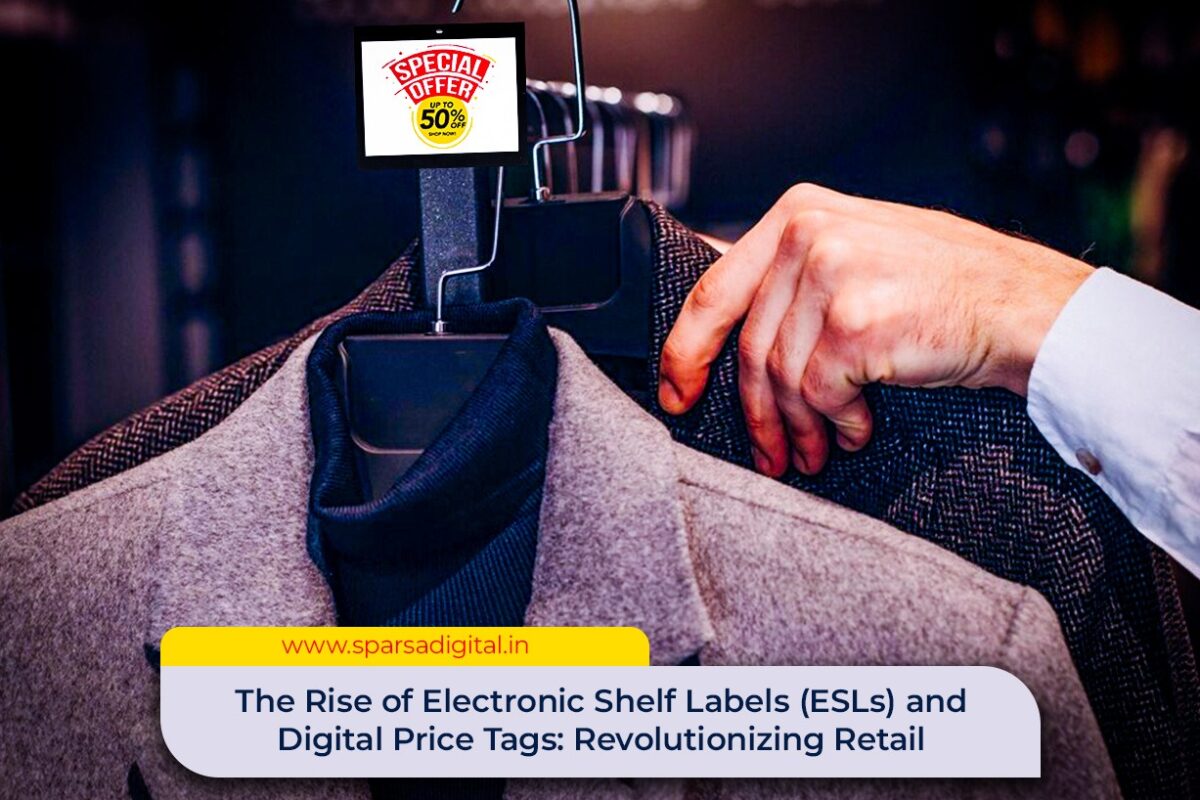
Rise of Electronic Shelf Labels (ESLs) and Digital Price Tags

The Rise of Electronic Shelf Labels (ESLs) and Digital Price Tags: Revolutionizing Retail

In today’s fast-paced retail environment, businesses are constantly seeking innovative solutions to streamline operations, enhance customer experience, and stay competitive. One such solution gaining traction is the use of Electronic Shelf Labels (ESLs) and digital price tags. These cutting-edge technologies are transforming how retailers manage product pricing and display, offering benefits ranging from improved operational efficiency to enhanced shopper engagement.

What Are Electronic Shelf Labels (ESLs)?

Electronic Shelf Labels (ESLs) are digital displays mounted on store shelves to show pricing and product information. These labels use technologies like e-ink or LCD screens to display real-time data. Unlike traditional paper tags, ESLs can be updated instantly from a central location, ensuring pricing consistency across all stores and even within the same store.

The Growing Demand for Digital Price Tags

Digital price tags are the next-generation version of paper price labels, taking the functionality of ESLs a step further. These tags display prices, promotions, and other product details, which can be updated remotely in real time. The shift toward digital price tags is driven by several factors:

  • Operational Efficiency: With digital tags, retailers can update product pricing or inventory information instantly, eliminating the need for manual price checks or re-labeling.
  • Price Accuracy: Real-time price updates ensure that customers always see accurate pricing, which reduces the risk of discrepancies and customer dissatisfaction.
  • Enhanced Customer Experience: Digital price tags allow retailers to present dynamic pricing, promotions, and additional product details, making shopping more interactive and engaging for customers.
  • Reduced Costs: By eliminating the need for physical price tags and paper labels, retailers can cut down on print and labor costs, contributing to long-term savings.

Benefits of ESLs and Digital Price Tags

  1. Real-Time Price Updates: One of the primary advantages of ESLs is the ability to instantly change pricing across all product labels in real-time. This capability is particularly beneficial during promotions, clearance sales, or when reacting to competitor price changes.
  2. Labor Savings: With the automation of pricing updates, the need for employees to manually change price tags is significantly reduced. This not only saves time but also allows workers to focus on more valuable tasks like customer service.
  3. Improved Accuracy: Manual price updates often result in errors, whether due to misprinted tags or incorrect information being displayed. With ESLs, data is updated centrally, eliminating human errors.
  4. Enhanced Customer Engagement: Digital price tags offer more than just pricing. They can display detailed product information, availability, and even personalized discounts, improving the overall customer experience.
  5. Environmental Impact: Traditional paper tags contribute to unnecessary waste. ESLs help reduce paper consumption and are a more sustainable solution for modern retailers.

Case Study: Carrefour’s Use of ESLs in Europe

Carrefour, one of Europe’s largest hypermarket chains, has adopted electronic shelf labels across its stores in several countries, including France and Spain. The retail giant implemented ESLs to streamline pricing and improve operational efficiency.

Before the switch, Carrefour struggled with maintaining consistent pricing across its stores. Paper tags had to manually updated by staff, often leading to delays and discrepancies in pricing. By introducing ESLs, Carrefour was able to update prices instantly across all locations, ensuring price consistency and minimizing human error.

In addition, the retailer was able to improve its customer experience by providing more detailed product information on the electronic labels. Shoppers were able to access additional data such as product features, nutritional information, and special offers directly from the label.

The results were impressive—Carrefour reported significant reductions in operational costs, especially in terms of labor and paper usage, and an increase in customer satisfaction due to accurate and timely information. Moreover, the retailer gained valuable insights into consumer behavior by tracking which price changes had the most significant impact on sales.

The Future of ESLs and Digital Price Tags

As the technology continues to evolve, ESLs and digital price tags are becoming more advanced. We can expect the following innovations:

  • Integration with IoT: Future ESLs will likely integrate more deeply with other Internet of Things (IoT) devices, allowing for even more personalized experiences, such as providing customers with instant promotions based on their past shopping behavior.
  • AI-Powered Pricing: Artificial intelligence could play a significant role in determining the optimal price for products based on data analytics, trends, and even competitor prices. This would help retailers optimize margins while remaining competitive.
  • Sustainability: Further advancements in ESL technology may allow for even more energy-efficient displays, extending battery life and reducing environmental impact.

FAQs on Electronic Shelf Labels and Digital Price Tags

Q1: How do electronic shelf labels save retailers money?

A1: ESLs save money by reducing labor costs associated with manual price updates, eliminating the need for paper labels, and improving pricing accuracy. These labels also enable retailers to quickly adjust prices to reflect market conditions, optimizing sales.

Q2: What industries benefit the most from ESLs?

A2: Retail industries such as grocery stores, supermarkets, department stores, and even pharmacies have benefited significantly from ESLs. The technology is ideal for large-scale retailers with high inventory turnover, as it helps manage dynamic pricing efficiently.

Q3: Can ESLs used in small stores?

A3: Yes! While ESLs are more commonly used in large retail chains, small businesses can also benefit from their use, especially if they have a dynamic pricing model or frequent promotions. The long-term cost savings in labor and materials can be highly beneficial.

Q4: How long does the battery in an ESL last?

A4: The battery life of an ESL can last anywhere from one to three years, depending on the model and usage. E-ink displays, for example, are very energy-efficient and can last much longer than traditional LCDs.

Q5: Are ESLs difficult to install and maintain?

A5: No, ESLs are relatively easy to install and maintain. Most systems involve minimal disruption to daily operations, and retailers typically receive support for installation, software integration, and updates. The labels themselves are designed for long-term durability.

Conclusion

As the retail industry continues to evolve, Electronic Shelf Labels (ESLs) and digital price tags represent a key innovation in pricing management and customer engagement. These technologies are more than just a tool for displaying prices—they are transforming the entire in-store experience, improving efficiency, reducing errors, and offering new ways to connect with consumers.

With the adoption of ESLs expected to grow in the coming years, retailers that embrace this technology early will likely enjoy a competitive edge in terms of both operational efficiency and customer satisfaction. Whether for large chains or small businesses, ESLs are becoming an indispensable tool for modern retail success.

Revolutionizing Retail with Digital Labels

Revolutionizing Retail with Digital Labels

The Future of Electronic Shelf Labels Technology

In the evolving landscape of retail, staying ahead of the competition is essential for success. One innovative solution that has emerged in recent years is the use of digital labels, specifically electronic shelf labels (ESL). These high-tech digital tags are transforming how retailers manage pricing, inventory, and customer engagement. In this blog, we’ll explore the advantages of electronic shelf labels technology, how they work, their applications, and why they are a game-changer for modern retail.

What Are Electronic Shelf Labels (ESL)?

Electronic shelf labels are digital price tags that replace traditional paper labels on store shelves. These digital labels can display a variety of information, including prices, product descriptions, promotions, and even stock levels. Using technologies such as e-ink or LED displays, ESL tags offer retailers a more dynamic and efficient way to manage product information.

The Technology Behind ESL Tags

  1. E-Ink Displays: Many electronic shelf labels use e-ink technology, which mimics the appearance of ink on paper. This technology is energy-efficient, providing clear visibility in various lighting conditions while consuming very little power.
  2. Wireless Communication: ESL systems typically use wireless communication protocols (such as RFID or Wi-Fi) to sync with a central management system. This allows for real-time updates across all digital tags in the store.
  3. Central Management System: A robust software platform enables retailers to manage content across all ESL tags efficiently. This system can integrate with existing inventory management and point-of-sale (POS) systems, streamlining operations.

The Benefits of Digital Labels

1. Real-Time Price Updates

One of the most significant advantages of electronic shelf labels technology is the ability to update prices and product information in real-time. This feature is particularly valuable during promotions or price changes, allowing retailers to react quickly to market fluctuations without the need for labor-intensive manual updates.

2. Reduced Labor Costs

Traditional paper labels require constant monitoring and manual replacement, which can be time-consuming and costly. By implementing ESL tags, retailers can significantly reduce labor costs associated with updating shelf labels. This efficiency allows staff to focus on more critical tasks, such as customer service and inventory management.

3. Improved Pricing Accuracy

Pricing errors can lead to customer dissatisfaction and lost revenue. Digital labels help eliminate these errors by ensuring that prices are updated automatically across the store. This accuracy enhances the customer experience and builds trust in the retailer’s pricing strategy.

4. Enhanced Customer Experience

Digital labels can display more than just prices. Retailers can use ESL tags to provide additional product information, such as nutritional details, usage instructions, or customer reviews. This added value helps consumers make informed purchasing decisions, enhancing their overall shopping experience.

5. Sustainability Benefits

Transitioning to electronic shelf tags also supports sustainability efforts. By reducing the need for paper labels, retailers can lower their environmental impact and promote a greener image. Additionally, ESL technology can reduce waste associated with frequent label changes and printing.

Applications of Electronic Shelf Labels

1. Grocery Stores

In grocery retail, ESL tags are particularly beneficial. They can display prices, discounts, and product information, ensuring customers have access to accurate data. Additionally, retailers can easily update pricing during sales or promotions, keeping customers informed and engaged.

2. Pharmacies

Pharmacies can use digital labels to display essential information such as medication instructions, prices, and safety warnings. This information can enhance patient safety and compliance while ensuring accurate pricing at all times.

3. Electronics and Appliance Retailers

For stores selling electronics and appliances, ESL tags can display complex product specifications and features. Retailers can easily update product information to reflect the latest models or promotions, helping customers make informed decisions.

4. Fashion Retail

In the fashion industry, ESL tags can be used to showcase pricing, size availability, and even promotional offers. Digital labels can also facilitate quick inventory updates, ensuring that customers have access to the latest information.

5. Home Improvement Stores

Home improvement retailers can utilize ESL tags to display product specifications, pricing, and promotional information on a wide range of items. The ability to update information quickly can also help manage seasonal inventory changes effectively.

Choosing the Right ESL Solution

When considering electronic shelf labels for your business, several factors should be evaluated to ensure the best fit for your needs:

1. Display Technology

Choose between e-ink and LED displays based on your store’s lighting conditions and visibility requirements. E-ink displays are ideal for a paper-like appearance and energy efficiency, while LED displays can provide vibrant colors and animations.

2. Integration Capabilities

Select an ESL system that integrates seamlessly with your existing inventory management and POS systems. This integration is crucial for ensuring real-time data synchronization and operational efficiency.

3. Battery Life

Consider the battery life of the digital labels. E-ink ESL tags typically have longer battery life, sometimes lasting several years on a single charge. This longevity can reduce maintenance costs and the frequency of battery replacements.

4. Content Management System

A robust content management system is essential for managing and updating the digital labels. Look for a user-friendly interface that allows for easy scheduling, updating, and monitoring of content across all tags.

5. Scalability

As your business grows, your ESL solution should be able to scale with it. Consider systems that can easily expand to accommodate new products, categories, or additional store locations.

The Future of Digital Labels

As technology continues to advance, the future of electronic shelf labels looks promising. Here are some trends to watch:

1. Smart Technology Integration

With the rise of the Internet of Things (IoT), digital labels are expected to integrate with smart technologies. This integration can lead to enhanced functionalities, such as automated inventory tracking and personalized customer experiences based on shopping behavior.

2. AI and Machine Learning

Artificial intelligence and machine learning will play a crucial role in optimizing pricing strategies and inventory management. Retailers can analyze data collected from ESL systems to predict demand trends and adjust prices accordingly.

3. Augmented Reality (AR)

The incorporation of AR technology into digital labels could revolutionize how customers interact with products. For instance, customers could scan a digital label with their smartphones to access virtual content, such as 3D product demonstrations or customer reviews.

4. Enhanced Customization Options

Future ESL systems may offer greater customization options for retailers, allowing them to create unique label designs that align with their branding. This customization could enhance the in-store experience and create a more cohesive brand identity.

Conclusion

Digital labels, particularly electronic shelf labels, are revolutionizing the retail landscape. Their ability to provide real-time updates, improve pricing accuracy, and enhance customer engagement makes them invaluable tools for modern retailers. As businesses continue to adapt to changing consumer expectations and technological advancements, the adoption of ESL tags is likely to grow.

By implementing electronic shelf labels technology, retailers can streamline operations, reduce labor costs, and create a more engaging shopping experience. As you consider integrating ESL solutions into your business, keep in mind the importance of selecting the right technology, ensuring seamless integration, and staying informed about future trends. Embrace the potential of digital tags, and watch your retail operations thrive!

Revolutionizing Retail The Rise of Digital Price Tags and Electronic Shelf Labels

Revolutionizing Retail: The Rise of Digital Price Tags and Electronic Shelf Labels

In the bustling aisles of modern retail stores, a silent revolution is taking place. Traditional paper price tags and manual price updates are giving way to sleek digital displays that promise greater efficiency, flexibility, and customer engagement. Enter the era of digital price tags and electronic shelf labels (ESLs), where the humble price tag becomes a dynamic conduit for innovation in the retail landscape.

The retail industry is constantly evolving, driven by technological advancements and changing consumer preferences. In this digital age, where convenience and efficiency reign supreme, retailers are under pressure to adapt or risk being left behind. One area where this adaptation is particularly evident is in the realm of pricing and product information display.

Digital price tags and Electronic Shelf Labels represent a paradigm shift in how retailers manage pricing and communicate with customers. No longer constrained by static paper tags, retailers can now dynamically update prices, promotions, and product information in real-time. This not only streamlines operations but also opens up a world of possibilities for enhancing the shopping experience.

The Evolution of Pricing in Retail

The concept of price tags dates back to the 19th century when retailers began using printed labels to display prices alongside products. For decades, this basic method remained largely unchanged, with manual price updates being the norm. However, as retail operations grew in scale and complexity, so too did the challenges associated with managing pricing information.

The advent of barcode technology in the 1970s revolutionized retail operations, enabling more efficient inventory management and checkout processes. Barcode scanners made it easier to track product sales and update pricing centrally. However, the reliance on paper price tags persisted, presenting limitations in terms of flexibility and responsiveness to market changes.

Enter Digital Price Tags and ESLs

Digital price tags and ESLs represent the next evolution in retail pricing technology. These electronic displays leverage digital signage and wireless communication technologies to provide real-time updates and information dissemination. Unlike traditional paper tags, which require manual intervention to update, digital tags can be remotely controlled and programmed, allowing for instantaneous price changes and promotional updates across entire store networks.

The benefits of digital price tags and ESLs are manifold:

  1. Real-Time Price Updates: With digital tags, retailers can adjust prices instantaneously in response to market conditions, competitor pricing, or promotional campaigns. This agility enables retailers to remain competitive and maximize revenue opportunities.
  2. Reduced Operational Costs: By eliminating the need for manual price tag updates, retailers can significantly reduce labor costs associated with pricing and signage management. Additionally, the durability of digital displays reduces the frequency of replacement compared to paper tags, further lowering operational expenses.
  3. Improved Accuracy: Digital price tags minimize the risk of pricing errors and inconsistencies, ensuring that customers are charged the correct amount for their purchases. This enhances trust and credibility in the retailer’s brand and reduces the likelihood of disputes at the checkout.
  4. Enhanced Customer Experience: Dynamic digital displays can leveraged to provide additional product information, such as ingredients, nutritional values, and customer reviews. Interactive features, such as barcode scanning or product comparison tools, empower customers to make informed purchasing decisions.
  5. Personalized Promotions: Digital price tags enable retailers to deliver targeted promotions and personalized offers based on customer demographics, purchase history, or location. This personalized approach enhances customer engagement and loyalty, driving repeat business.
  6. Environmental Sustainability: By reducing the consumption of paper and ink associated with traditional price tags, digital displays contribute to environmental sustainability efforts. Furthermore, the longevity of electronic displays minimizes electronic waste compared to disposable paper tags.

Implementation Challenges and Considerations

While the benefits of digital price tags and ESLs are compelling, their widespread adoption is not without challenges. Retailers must consider various factors when implementing these technologies:

  1. Initial Investment: The upfront cost of deploying digital price tags and ESLs can be significant, especially for large retail chains with extensive store networks. However, the long-term cost savings and operational efficiencies often justify the initial investment.
  2. Integration with Existing Systems: Seamless integration with existing inventory management, pricing, and POS systems is essential for the effective deployment of digital price tags. Compatibility issues can arise if systems are not adequately synchronized, leading to inaccuracies and inefficiencies.
  3. Maintenance and Support: While digital displays offer greater durability than paper tags, they still require periodic maintenance and technical support. Retailers must ensure access to timely maintenance services to address issues such as display malfunctions or software updates.
  4. Data Security and Privacy: The wireless communication capabilities of digital price tags raise concerns about data security and privacy. Retailers must implement robust encryption protocols and access controls to safeguard sensitive pricing and customer information.
  5. Training and Change Management: Transitioning from paper tags to digital displays may require training for store staff to familiarize them with new processes and technologies. Change management strategies should employed to minimize resistance to adoption and ensure smooth implementation.

The Future of Retail Pricing

As technology continues to advance, the future of retail pricing holds exciting possibilities. Emerging technologies such as RFID (Radio Frequency Identification) and NFC (Near Field Communication) are poised to further revolutionize pricing and inventory management in retail environments. These technologies offer advantages such as improved product visibility, automated inventory tracking, and enhanced customer engagement.

Additionally, the convergence of digital price tags with AI-powered analytics holds promise for predictive pricing strategies and dynamic pricing optimization. By leveraging data insights and machine learning algorithms, retailers can anticipate demand fluctuations, optimize pricing strategies in real-time, and maximize profitability.

Furthermore, the proliferation of omnichannel retailing is driving demand for seamless pricing consistency across online and offline channels. Digital price tags and ESLs play a crucial role in enabling retailers to maintain pricing parity and deliver a cohesive shopping experience across all touchpoints.

Conclusion

Digital price tags and electronic shelf labels represent a transformative technology that is reshaping the retail landscape. By replacing static paper tags with dynamic electronic displays, retailers can achieve greater operational efficiency, enhance customer engagement, and stay competitive in an increasingly digital marketplace. While implementation challenges exist, the long-term benefits of these technologies far outweigh the initial hurdles. As retailers embrace innovation and harness the power of digital signage, the future of retail pricing looks brighter than ever before.

Why-electronic-shelf-labels-are-a-little-know-retail-efficiency-secret

Electronic Shelf Labels: The Little-Known Retail Efficiency Secret

In the fast-paced world of retail, efficiency is key to staying competitive. From supply chain management to customer experience, every aspect of the retail industry strives for optimization. However, there is a lesser-known secret to improving efficiency that many are yet to fully embrace: electronic shelf labels in retail(ESLs). These digital price tags offer a myriad of benefits that can revolutionize the way retailers operate. In this blog post, we will explore why electronic shelf labels in retail are a powerful tool for enhancing efficiency.

Know More About Electronic Shelf Labels in Retail

Real-Time Price Updates:

One of the primary advantages of electronic shelf labels in retail is their ability to display real-time pricing information. In traditional retail settings, manual price updates can be time-consuming and prone to errors. ESLs eliminate this hassle by seamlessly integrating with a store’s pricing system. Retailers can easily update prices across the entire store or specific sections with a few clicks, ensuring accurate and consistent pricing. This automation saves valuable time for store employees, enabling them to focus on other critical tasks.

Improved Pricing Accuracy:

Price discrepancies can lead to customer dissatisfaction and loss of trust. ESLs eliminate the risk of pricing errors caused by outdated or mismatched tags. With real-time synchronization, ESLs ensure that the displayed price matches the one in the store’s central database. This accuracy not only enhances customer satisfaction but also reduces the time spent by employees addressing customer complaints and processing refunds or adjustments.

Dynamic Pricing Capabilities:

Electronic shelf labels in retail offer retailers the ability to implement dynamic pricing strategies effortlessly. With the integration of data analytics and intelligent pricing algorithms, ESLs can automatically adjust prices based on factors such as demand, time of day, or competitor pricing. This dynamic pricing approach allows retailers to optimize profit margins, reduce stock levels for slow-moving items, and increase sales for high-demand products. ESLs enable retailers to stay agile in a rapidly changing market, giving them a competitive edge.

Efficient Inventory Management:

Keeping track of inventory levels and ensuring product availability is a constant challenge for retailers. ESLs can significantly streamline inventory management processes. By linking ESLs with inventory management systems, retailers gain real-time insights into stock levels and can receive automated notifications for restocking or replenishment. This proactive approach helps reduce out-of-stock situations, optimize inventory turnover, and prevent revenue losses caused by missed sales opportunities.

Time-Saving Maintenance:

Traditional paper tags require manual replacement and updates, which can be a time-consuming task for store employees. In contrast, electronic shelf labels in retail are easily maintained and updated. Once installed, ESLs can be remotely managed, eliminating the need for manual label changes. Store employees can focus on core responsibilities, such as assisting customers or managing the sales floor, rather than spending time on mundane label maintenance tasks.

Enhanced Customer Experience:

ESLs offer more than just efficient operations; they also contribute to an improved customer experience. Customers can rely on accurate and consistent pricing information throughout the store. ESLs can also display additional product details, such as nutritional information, allergen warnings, or customer reviews, enriching the shopping experience and aiding purchase decisions. Additionally, ESLs enable retailers to quickly implement promotions or flash sales, attracting customers with attractive offers and driving sales.

Conclusion

While electronic shelf labels in retail have a little-known efficiency secret, their impact on optimizing operations and improving customer experiences should not underestimated. By leveraging real-time updates, improved accuracy, dynamic pricing capabilities, efficient inventory management, time-saving maintenance, and enhanced customer experiences, retailers can gain a significant competitive advantage. As the retail landscape continues to evolve, embracing technologies like ESLs will be crucial for staying ahead in a rapidly changing industry.

Looking forward to getting started? Connect with our experts at Sparsa Digital today. Our team of experts makes sure they get the best solutions as per your needs and expectations. In this case, getting started with electronic shelf labels in retail. ESLs are the need of the hour! Businesses now realize that it is hard time to understand its importance and the value they provide. So, still thinking? Waste no more time and contact us at Sparsa Digital to help you begin your journey right away!

Electronic-Shelf-Labels-in-Retail

Undeniable Benefits of Electronic Shelf Labels in Retail Sector

Electronic Shelf Labels (ESLs) are battery-fueled remote innovation that permits vendors to consequently refresh values across the store continuously. It also eliminates long stretches of monotonous and botched manual work. Electronic shelf labels in retail show dietary data, thing size, cost per weight, stock excess, different variables. These advantage shoppers yet additionally assist staff with exhorting clients all the more precisely.

They further develop evaluating rate and precision, boost snap and gather, and smooth out recharging. Besides, these labels utilize a remote organization to speak with a focal centre to frame a unique valuing robotization organization.

Despite that, have you at any point believed that while you have numerous rack marks, is it simple to supplant every one of the batteries days today?

Indeed, the response is YES! The remote associations for the electronic shelf label (ESL) industry, supplanting an electronic rack name’s battery is basic.

In any case, these names show item subtleties on a fluid precious stone or electronic paper. In addition, the store’s nearby organization can change the visual material.

How can we use Electronic Shelf Labels in Retail Sector?

Electronic Shelf Labels Benefits Summed Up

Indeed, these computerized names are regularly tracked down on the front lines of racks. They are typically connected to the store’s far-off PC and carry out the accompanying roles:

Show Item Subtleties

Electronic shelf label benefits include the display of the cost of an item. Nonetheless, these names likewise show supply levels, item specs, expiry dates, and more data. These particulars help customers in concluding which object to buy, subsequently further developing the client experience.

To Advance with a Designated Crowd These advanced sticker prices can likewise help traders in executing and upgrading their promoting endeavours. Retailers can interface with clients by showing data in light of their hunt records, earlier exchanges, and web-based entertainment action. Therefore, electronic shelf labels in retail help a shop in expanding its pay valuable open doors.

Inventory Management

Electronic shelf label benefits also include work on business activities and the upgradation of the shopping experience. Besides, stock data is digitalised with electronic shelf labels in retail. This empowers representatives to figure out which items require recharging.

These advanced sticker prices are connected to an internet-based store’s stock data to deal with buys just and really.

Reduce Production Costs

You never again need to make new paper cards when new updates show up. This takes out the need to buy paper, toner, and a copier. Additionally, it likewise saves time for your representatives since they don’t need to eliminate and supplant each paper sticker.

Offer additional data

Commonly, paper names just show the item’s cost. At the point when Electronic shelf labels in retail were first presented this was valid for them as well. On their send-off during the 1990s, ESLs could show restricted characters and numbers utilizing LCD shows like adding machines. Tech improvements have expanded their capacity to show a more extensive scope of data while holding high meaningfulness. Electronic shelf labels in retail show dietary data, thing size, cost per weight, stock excess, different variables. These advantage shoppers yet additionally assist staff with exhorting clients all the more precisely. With 76% of buying choices made at the rack edge, why hazard losing a deal with lacking item data?

Customize shopping experiences

QR codes can be among the extra data ESLs show. These permit clients to additionally interface with an item, with choices to add to a list of things to get. Also to view shopper surveys, share the item using virtual entertainment, or save the item to arrange online sometime in the future. This last perspective likewise considers Electronic shelf label benefits to effectively be essential for an omnichannel shopping experience. This also allows clients to get to items from your organization even after they’ve left an actual store. 67% of buyers report they are bound to buy an item coming up if they can without much of a stretch access item data carefully. That is made conceivable by utilizing ESLs along these lines.

Prevent showrooming

Increasingly more regularly buyers participate in the act of showrooming. Here items are inspected in physical stores before being bought on the web. Electronic shelf labels in retail help refresh expense of their items given the current retail costs of contenders and outlets. This also empowers in-store dynamic evaluation. Regardless of whether clients on your premises search the net, they’ll just find costs which match yours, elevating the chance of an on-the-spot buy.

Increase accuracy

Paper item marks frequently disappear, are moved by clients, or show obsolete data. Electronic shelf label benefits also help you to develop name exactness by 80% using two cycles. One being right off the bat, being appended to the rack, they can’t disappear similarly paper marks will generally stray. Furthermore, with evaluation and data are taken care of to the electronic name from a concentrated framework, ESLs show state-of-the-art, exact data for every item.

Optimise Working Hours

During the drawn-out assignment of supplanting hundreds, on the off chance that not a large number of marks, it’s straightforward why a worker could commit errors. As well as bringing down marking exactness, this errand is likewise tedious, requiring hours of extra labour supply. At the point when item marks can be refreshed from an incorporated computerized framework the requirement for a lot of this labour supply is killed. This opens up staff to handle different undertakings or effectively help clients.

What are ESLs and why they are significant?

Electronic shelf labels in retail are advanced show labels that go on racks. They associate with the retailer’s organization and can be controlled from a distance.

Consider that briefly. On account of ESL, retail directors have some control over the costs of things in their stores. Also offer arrangements, and even go about as guides for clients searching for explicit things in huge stores. All with no manual mediation or chance of human blunder. That is vital to anybody in the retail business.

This is notwithstanding the current wi-fi framework it has set up. In some cases, an on-prem cost update server should be set up too. All of this includes link runs, extra PoE switch ports, IT security provisioning and observing, and work, meaning extra expenses.

Further, upkeep is an additional continuous expense which ascends a direct extent to the intricacy of the ESL arrangement.

Sparsa Digital generally works for future verification with its clients. Therefore, their ESL arrangement is straightforward. We give a brought-together network layer, permitting clients to use our passageways as ESL “entryways” through the IoT radio. Also in the gadget to control electronic rack marks, push cost refreshes using the cloud, etc.

The gadget keeps on giving remote admittance to store staff- no additional equipment is required by any stretch.

The subsequent modernized framework depicted above isn’t fabricated only for electronic shelf labels in retail. It additionally upholds other state-of-the-art advances, for example, sensors and cameras that empower use cases. For example, carefully oversaw social removal, in-store security and checking, and the sky is the limit from there, all without dramatically stacking up repeating organization and foundation-related costs.

The drawn-out retailer’s objective is computerization. Perhaps not a chaperon-free state but rather certainly not a specialist subordinate state either. The perfect balance is a retail location where orderlies can increase the value of clients. This can also enhance their experience, and pass on innovation to deal with all the other things.

Ending Note

Still thinking about where to start? We are here to help. Get in touch with our experts at Sparsa Digital today and get a tailored solution for your business. This can help you cater for your needs just in the right manner without burning a hole in your pocket. Whether you need to upgrade client commitment, work on partner effectiveness, robotize activities, or drive advancement across the whole chain. Sparsa Digital is your extension to the new universe of retail.