

Table of contents
In an increasingly digital world, traditional static signs are fast becoming outdated. As businesses strive to capture attention more effectively and communicate dynamically, digital signage has emerged as a game-changing solution across industries. Among the sectors where digital signage has shown powerful impact is real estate, where buying decisions are visual, time-sensitive, and deeply experiential. Alongside this, interactive solutions like Engage & Learn digital signage are redefining how people interact with information in educational, retail, and corporate spaces.
Whether you’re a real estate professional, marketer, developer, or technology enthusiast, this comprehensive guide will help you understand why digital signage is no longer optional, it’s essential in the digital age.
What Is Real Estate Digital Signage?
Real estate digital signage refers to the use of digital displays, such as LED screens, LCD monitors, interactive touchscreens, video walls, or kiosks, deployed in environments where property listings, agent information, market trends, wayfinding, alerts, and audience-specific content can be shown and updated dynamically. These systems replace static posters, printed flyers, and manual message boards with highly engaging, real-time, customizable content that can change with a click.
Unlike static signs that require manual replacement, digital signage provides flexibility, timeliness, and the ability to integrate rich multimedia like HD photos, videos, 360° virtual tours, live data feeds, and real-time market charts- all of which empower potential buyers, renters, or investors with up-to-date insights.
How It Works
At its core, real estate digital signage operates through:
- Display Hardware: Screens of varying sizes deployed in offices, storefront windows, lobbies, buildings, or sales centers.
- Content Management Software (CMS): Cloud-based platforms or local servers that let users upload, schedule, and remotely update content on any number of screens.
- Media Players/Network: Devices that connect the CMS with the screens to render scheduled content, sometimes with analytics.
- Connectivity & Integration: Options to feed live data (like listings or mortgage rates) via APIs or data integrations with MLS (Multiple Listing Service) databases.
Real estate digital signage is inherently dynamic, scalable, and remote-manageable; ideal for an industry where pricing, availability, and promotions constantly evolve.
Why Real Estate Digital Signage Matters
1. Real-Time Listing Updates and Accuracy
Static posters can quickly become outdated. New listings may arrive, prices can change, and availability can shift. Digital signage lets you update all screens across your locations instantly through a CMS, eliminating manual labor and reducing errors.
2. High-Impact Visual Communication
Highest quality photos, video walkthroughs, and 360° virtual tours deliver immersive views of properties that static signs simply cannot match. This visual richness improves engagement and gives potential clients a stronger sense of the space and lifestyle on offer.
3. Educated and Confident Buyers
Digital signage can show mortgage tools, financing options, neighborhood statistics, and market trends, empowering customers with critical decision-making information on the spot.
4. Brand Differentiation
In crowded real estate markets, digital signage can set a brand apart by projecting innovation, professionalism, and customer-centric communication.
Top Real Estate Digital Signage Use Cases
Here are practical deployments of real estate digital signage, similar to the use cases highlighted in leading digital signage solutions providers.
1. Window Displays to Attract Foot Traffic
High-resolution screens placed in office storefront windows can show rotating property listings- complete with images, pricing, location maps, and agent information. These displays operate even when the office is closed, turning every passerby into a potential lead.
2. Office Lobby & Reception Messaging
In your office receptions or waiting areas, digital signage can welcome visitors, show regional market trends, schedule appointments, highlight agent achievements, and provide lifestyle videos or neighborhood insights.
3. Open House Dynamic Displays
During open houses, digital screens can present:
- 360° virtual walkthroughs
- Floor plans
- Feature highlights
- Nearby amenities
Potential buyers get a richer on-site experience that helps speed up decision-making and increases conversions.
4. Neighborhood & Local Context Displays
Displaying local neighborhood features such as schools, parks, transit networks, lifestyle photos, and community events helps clients understand value beyond just a home’s interior.
5. Agent Profiles and Testimonials
Digital signage can spotlight agent biographies, expertise, awards, and verified client testimonials, building trust right from the first visual impression.
6. Interactive Wayfinding and Self-Service Kiosks
Interactive kiosks can allow visitors to explore listings, visit guides, or find appointments on their own; perfect for large real estate showrooms, commercial centers, or residential sales offices.
7. Market Data and Analytics Displays
Large screens in corporate offices can showcase real-time data like pricing graphs, inventory changes, sales pipelines, and KPIs, enabling internal teams to stay informed and aligned.
What Is Engage & Learn Digital Signage?
While digital signage is often thought of as broadcast– showing content to a passive audience. Engage & Learn digital signage is interactive. These systems invite users to actively participate, explore, and absorb information, bridging the gap between display content and human interaction.
This can take many forms:
- Touchscreen interaction: Users explore maps, property features, educational content, or quizzes.
- Sensor-triggered content: Screens respond when users touch, lift, or place objects (like Smart IoT triggers)
- QR-enabled experiences: Users scan codes to download brochures or access additional resources.
- Gamified learning modules: Especially in educational contexts, signage that promotes active participation and feedback- ideal for schools and training facilities.
Unlike traditional signage, Engage & Learn solutions serve not just as displays, they become tools that educate, inform, and empower audiences through interactive engagement.
Engage & Learn Use Cases
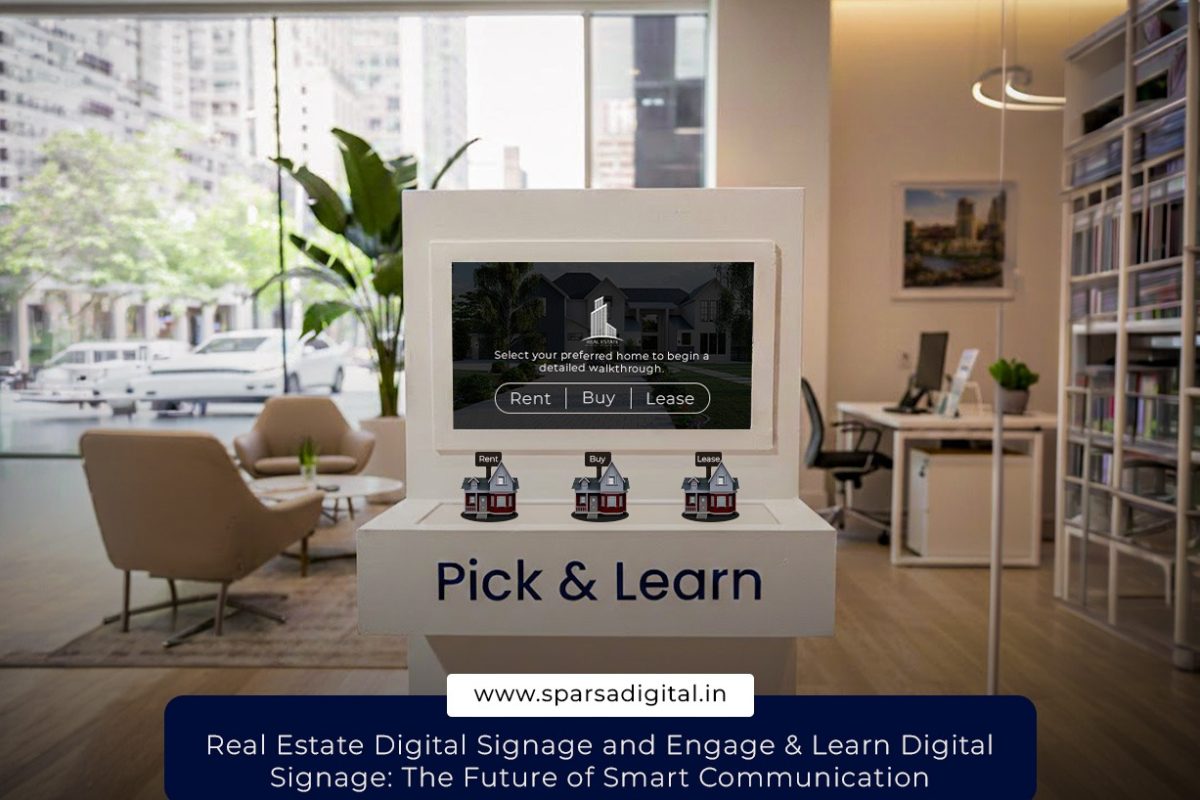
1. Real Estate Sales Centers
In property showrooms, Engage & Learn stations let clients:
- Browse properties by features
- Compare floor plans interactively
- Trigger 3D walkthroughs by placing models or floor templates
This interactivity enriches customer exploration and reduces dependency on agent explanations alone.
2. Educational & Corporate Training
Schools and training centers use Engage & Learn signage to present:
- Interactive lessons
- Quizzes and real-time responses
- Live polls and gamified modules
These systems transform classrooms into immersive, adaptive learning spaces.
3. Retail & Product Engagement
Retailers use sensor-triggered Engage & Learn displays that react when products are picked up, providing detailed features, how-to videos, or comparisons, significantly enhancing customer education and dwell time.
4. Events, Exhibitions, and Trade Shows
Interactive signage at events lets attendees explore booths, download brochures, and access schedules without queues or printed materials, all through immersive and responsive screens.
Benefits of Real Estate Digital Signage & Engage & Learn Displays
Both traditional digital signage and interactive Engage & Learn systems deliver substantial value:
Boost Engagement and Attention
Dynamic and interactive content holds attention far better than static signs. Engagement increases dwell time, leads, and conversions.
Cost Savings Over Time
Although initial investment can be higher, digital signage eliminates recurring printing, design, and installation costs associated with static signage.
Instant Updates and Flexibility
Remote content updates and scheduling ensure listings, promotions, and pricing are always accurate.
Better Data Insights
Interactive signage can generate engagement data which content attracts attention, what customers interact with, and what drives conversions, enabling better strategic decisions.
Enhanced Brand Perception
Modern, visually engaging screens create a professional image that builds trust and boosts brand visibility.
Implementation Best Practices
To maximize impact, follow these guidelines:
Choose the Right Screens
Select hardware appropriate for the environment: indoor vs outdoor, touch vs passive, single displays vs video walls. Screen quality affects how content is perceived and engaged with.
Use a Robust CMS
A powerful content management system allows scheduling, version control, remote updates, analytics, and seamless integration with data sources.
Focus on Content Quality
Sharp images, video, and interactive widgets designed for audience needs outperform generic content. Tell a story, showcase lifestyle and context — not just facts.
Integrate Data Streams
Sync with property databases, market feeds, or CRM systems for live updates and more relevant content.
FAQs
1. What is real estate digital signage?
It’s a digital display system that showcases property listings, market data, agent profiles, wayfinding, and other real estate-specific content dynamically through screens and CMS tools.
2. How is Engage & Learn digital signage different from regular digital signage?
Engage & Learn systems are interactive and respond to touch, motion, sensors, or inputs, enabling users to actively explore content rather than just view it.
3. Where can real estate digital signage be deployed?
Across office windows, building lobbies, sales centers, open houses, neighborhood kiosks, and even mobile or pop-up setups.
4. Can interactive signage collect engagement data?
Yes. Many solutions provide analytics on usage, dwell time, interactions, and conversion triggers, helping refine strategies.
5. Do these systems require internet access?
Cloud-based CMS solutions do require connectivity for remote updates, though some support offline playback with scheduled content.
6. Are these systems expensive?
Initial costs vary based on hardware, screen size, installation, and software. However, long-term savings from eliminating print costs and added engagement ROI often outweigh upfront investment.
7. Can real estate signage show real-time market data?
Yes, through integrations with MLS, CRM tools, or live feeds, digital signage can present up-to-the-minute pricing, trends, and analytics.
8. Is Engage & Learn suitable outside education?
Definitely. Retail, corporate training, events, exhibitions, and wayfinding all benefit from interactive signage.
Final Thoughts
The era of static real estate signs and passive displays is fading. Whether you’re showcasing luxury homes, promoting rental communities, or enhancing internal communication, digital signage, especially when paired with Engage & Learn interactive experiences, provides a dynamic, modern, and responsive platform that speaks directly to today’s audiences. By delivering relevant, visually rich, and interactive content, you empower users to engage, learn, and decide with confidence.
Embracing these technologies not only enhances customer experience but also elevates brand perception, improves operational efficiency, and unlocks data-driven insights that traditional signage could never provide. The future of real estate communication is digital and it’s interactive.
