

Table of contents
In today’s fast-paced retail environment, businesses are constantly seeking innovative solutions to streamline operations, enhance customer experience, and stay competitive. One such solution gaining traction is the use of Electronic Shelf Labels (ESLs) and digital price tags. These cutting-edge technologies are transforming how retailers manage product pricing and display, offering benefits ranging from improved operational efficiency to enhanced shopper engagement.
What Are Electronic Shelf Labels (ESLs)?
Electronic Shelf Labels (ESLs) are digital displays mounted on store shelves to show pricing and product information. These labels use technologies like e-ink or LCD screens to display real-time data. Unlike traditional paper tags, ESLs can be updated instantly from a central location, ensuring pricing consistency across all stores and even within the same store.
The Growing Demand for Digital Price Tags
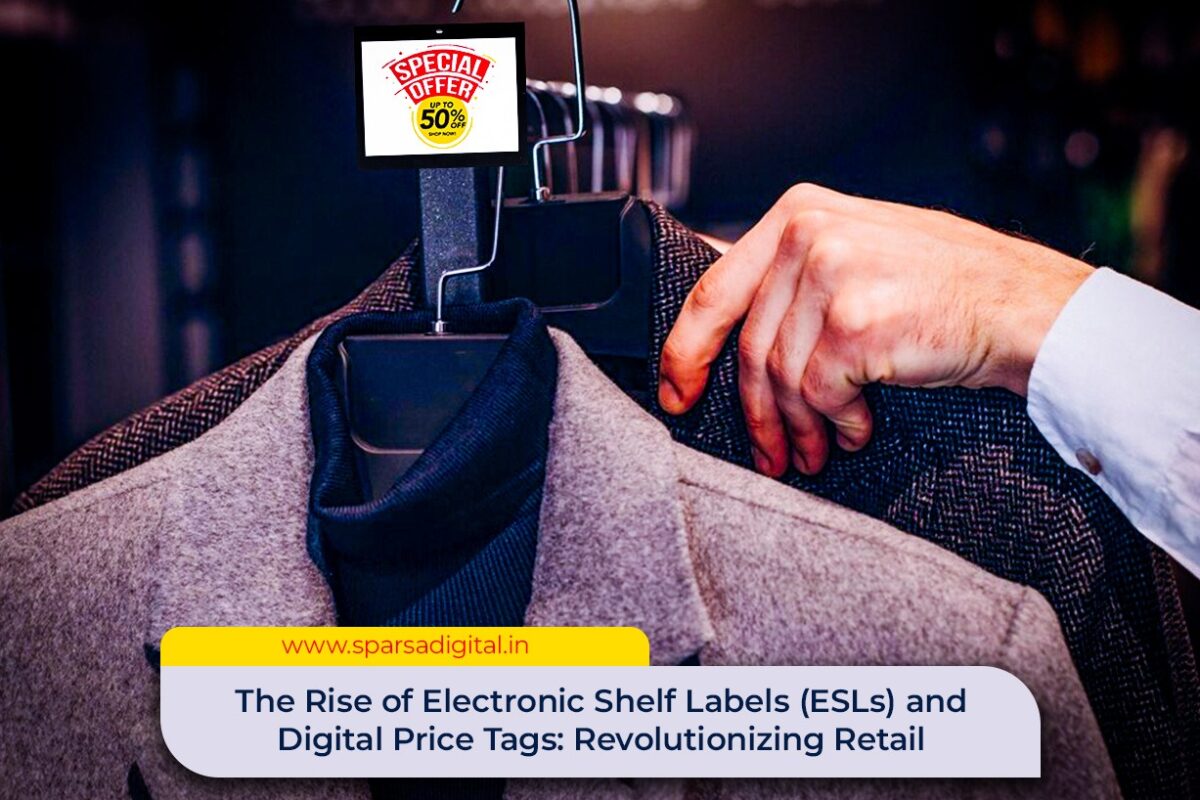
Digital price tags are the next-generation version of paper price labels, taking the functionality of ESLs a step further. These tags display prices, promotions, and other product details, which can be updated remotely in real time. The shift toward digital price tags is driven by several factors:
- Operational Efficiency: With digital tags, retailers can update product pricing or inventory information instantly, eliminating the need for manual price checks or re-labeling.
- Price Accuracy: Real-time price updates ensure that customers always see accurate pricing, which reduces the risk of discrepancies and customer dissatisfaction.
- Enhanced Customer Experience: Digital price tags allow retailers to present dynamic pricing, promotions, and additional product details, making shopping more interactive and engaging for customers.
- Reduced Costs: By eliminating the need for physical price tags and paper labels, retailers can cut down on print and labor costs, contributing to long-term savings.
Also Read: Digital Price Tags and Electronic Shelf Labels Leading the Future of Retail Industry
Benefits of ESLs and Digital Price Tags
- Real-Time Price Updates: One of the primary advantages of ESLs is the ability to instantly change pricing across all product labels in real-time. This capability is particularly beneficial during promotions, clearance sales, or when reacting to competitor price changes.
- Labor Savings: With the automation of pricing updates, the need for employees to manually change price tags is significantly reduced. This not only saves time but also allows workers to focus on more valuable tasks like customer service.
- Improved Accuracy: Manual price updates often result in errors, whether due to misprinted tags or incorrect information being displayed. With ESLs, data is updated centrally, eliminating human errors.
- Enhanced Customer Engagement: Digital price tags offer more than just pricing. They can display detailed product information, availability, and even personalized discounts, improving the overall customer experience.
- Environmental Impact: Traditional paper tags contribute to unnecessary waste. ESLs help reduce paper consumption and are a more sustainable solution for modern retailers.
Product: Electronic Shelf Labels / Digital Price Tags
Case Study: Carrefour’s Use of ESLs in Europe
Carrefour, one of Europe’s largest hypermarket chains, has adopted electronic shelf labels across its stores in several countries, including France and Spain. The retail giant implemented ESLs to streamline pricing and improve operational efficiency.
Before the switch, Carrefour struggled with maintaining consistent pricing across its stores. Paper tags had to manually updated by staff, often leading to delays and discrepancies in pricing. By introducing ESLs, Carrefour was able to update prices instantly across all locations, ensuring price consistency and minimizing human error.
In addition, the retailer was able to improve its customer experience by providing more detailed product information on the electronic labels. Shoppers were able to access additional data such as product features, nutritional information, and special offers directly from the label.
The results were impressive—Carrefour reported significant reductions in operational costs, especially in terms of labor and paper usage, and an increase in customer satisfaction due to accurate and timely information. Moreover, the retailer gained valuable insights into consumer behavior by tracking which price changes had the most significant impact on sales.
The Future of ESLs and Digital Price Tags
As the technology continues to evolve, ESLs and digital price tags are becoming more advanced. We can expect the following innovations:
- Integration with IoT: Future ESLs will likely integrate more deeply with other Internet of Things (IoT) devices, allowing for even more personalized experiences, such as providing customers with instant promotions based on their past shopping behavior.
- AI-Powered Pricing: Artificial intelligence could play a significant role in determining the optimal price for products based on data analytics, trends, and even competitor prices. This would help retailers optimize margins while remaining competitive.
- Sustainability: Further advancements in ESL technology may allow for even more energy-efficient displays, extending battery life and reducing environmental impact.
FAQs on Electronic Shelf Labels and Digital Price Tags
Q1: How do electronic shelf labels save retailers money?
A1: ESLs save money by reducing labor costs associated with manual price updates, eliminating the need for paper labels, and improving pricing accuracy. These labels also enable retailers to quickly adjust prices to reflect market conditions, optimizing sales.
Q2: What industries benefit the most from ESLs?
A2: Retail industries such as grocery stores, supermarkets, department stores, and even pharmacies have benefited significantly from ESLs. The technology is ideal for large-scale retailers with high inventory turnover, as it helps manage dynamic pricing efficiently.
Q3: Can ESLs used in small stores?
A3: Yes! While ESLs are more commonly used in large retail chains, small businesses can also benefit from their use, especially if they have a dynamic pricing model or frequent promotions. The long-term cost savings in labor and materials can be highly beneficial.
Q4: How long does the battery in an ESL last?
A4: The battery life of an ESL can last anywhere from one to three years, depending on the model and usage. E-ink displays, for example, are very energy-efficient and can last much longer than traditional LCDs.
Q5: Are ESLs difficult to install and maintain?
A5: No, ESLs are relatively easy to install and maintain. Most systems involve minimal disruption to daily operations, and retailers typically receive support for installation, software integration, and updates. The labels themselves are designed for long-term durability.
Conclusion
As the retail industry continues to evolve, Electronic Shelf Labels (ESLs) and digital price tags represent a key innovation in pricing management and customer engagement. These technologies are more than just a tool for displaying prices—they are transforming the entire in-store experience, improving efficiency, reducing errors, and offering new ways to connect with consumers.
With the adoption of ESLs expected to grow in the coming years, retailers that embrace this technology early will likely enjoy a competitive edge in terms of both operational efficiency and customer satisfaction. Whether for large chains or small businesses, ESLs are becoming an indispensable tool for modern retail success.
