
Engage-and-Learn-Signage-How-Interactive-Digital-Signage-Education-Is-Powering-Smart-Learning-Displays-2

Engage and Learn Signage: How Interactive Digital Signage Education Is Powering Smart Learning Displays

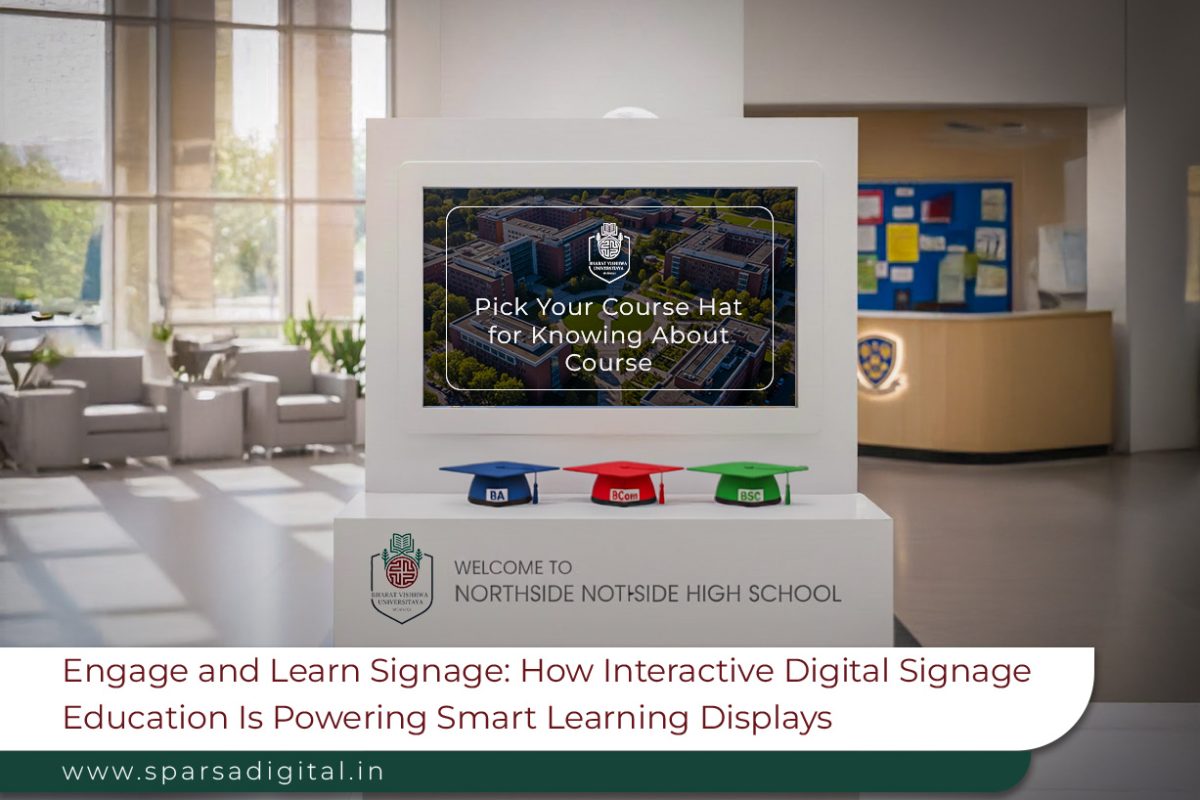
Education is no longer confined to chalkboards, static posters, or one-way lectures. As classrooms, campuses, and learning spaces evolve, technology has become a central driver of engagement, comprehension, and retention. Among the most impactful innovations shaping modern education are engage and learn signage, interactive digital signage education solutions, and smart learning displays.

These tools are transforming how students interact with content, how educators deliver lessons, and how institutions communicate information. From preschools and K-12 schools to universities, training centers, and corporate learning environments, digital signage is redefining learning as an immersive, interactive, and student-centric experience.

In this blog, we explore what engage and learn signage is, how interactive digital signage education works, the role of smart learning displays, real-world use cases, benefits, implementation strategies, and future trends, along with answers to frequently asked questions.

What Is Engage and Learn Signage?

Engage and learn signage refers to digital displays designed specifically to encourage active participation and knowledge absorption rather than passive viewing. Unlike traditional signage that simply displays announcements or advertisements, engage and learn signage invites users to touch, explore, respond, and interact.

In educational environments, this type of signage becomes a teaching assistant, an information hub, and an engagement tool all in one.

Key Characteristics of Engage and Learn Signage

  • Interactive touch-based interfaces
  • Visually rich multimedia content (videos, animations, graphics)
  • Gamified learning elements
  • Real-time feedback and responses
  • Adaptable content for different age groups and subjects

Engage and learn signage bridges the gap between digital content and human interaction, making learning more memorable and enjoyable.

Understanding Interactive Digital Signage in Education

Interactive digital signage education focuses on using connected digital displays to enhance teaching, learning, and communication within educational institutions. These systems combine hardware (screens, sensors, touch panels) with software (content management systems, learning tools, analytics).

How Interactive Digital Signage Education Works

  1. Content Creation – Educators or administrators create lesson material, quizzes, videos, or announcements
  2. Centralized Management – Content is managed through a digital signage CMS
  3. Real-Time Interaction – Students interact via touch, motion, QR codes, or mobile integration
  4. Data & Insights – Engagement metrics help improve teaching strategies

This approach turns static information into dynamic learning experiences.

What Are Smart Learning Displays?

Smart learning displays are advanced digital screens built for educational environments. They combine interactive technology, connectivity, and intelligent features to support teaching and collaborative learning.

These displays go beyond simple projection or display- they are responsive, adaptable, and often integrated with learning platforms.

Core Features of Smart Learning Displays

  • Multi-touch and gesture recognition
  • Wireless screen sharing
  • Cloud connectivity
  • Integration with LMS and educational apps
  • AI-powered personalization (in advanced systems)

Smart learning displays are the backbone of modern engage and learn signage ecosystems.

Why Engage and Learn Signage Matters in Modern Education

1. Improves Student Engagement

Interactive visuals capture attention better than textbooks or lectures alone. When students can touch, explore, and participate, learning becomes active rather than passive.

2. Supports Different Learning Styles

Visual, auditory, and kinesthetic learners all benefit from interactive digital signage education. Videos, animations, quizzes, and hands-on interaction ensure inclusivity.

3. Encourages Collaboration

Smart learning displays enable group activities, brainstorming, and peer learning, fostering teamwork and communication skills.

4. Enhances Information Retention

Studies consistently show that interactive learning improves memory retention compared to traditional methods.

Applications of Interactive Digital Signage Education

1. Smart Classrooms

In classrooms, engage and learn signage can display:

  • Interactive lessons
  • Live quizzes and polls
  • Visual explanations of complex concepts
  • Collaborative whiteboarding

Teachers can adapt lessons in real time based on student responses.

2. Preschools and Early Learning Centers

For younger learners, smart learning displays help teach:

  • Alphabets, numbers, and shapes
  • Animals, colors, and basic science
  • Storytelling through animation
  • Learning through play

Touch-based engagement keeps children curious and focused.

3. School and College Campuses

Across hallways, libraries, and common areas, interactive digital signage education supports:

  • Campus maps and wayfinding
  • Event announcements
  • Academic schedules
  • Emergency alerts

Engage and learn signage ensures students receive information clearly and instantly.

4. Libraries and Learning Labs

In libraries, smart learning displays can:

  • Guide students to book locations
  • Explain research tools
  • Offer self-learning modules
  • Display digital catalogs

This transforms libraries into interactive knowledge hubs.

5. Training Centers and Skill Development Institutes

Professional and vocational training centers use engage and learn signage for:

  • Simulation-based learning
  • Process demonstrations
  • Safety training
  • Assessment and feedback

Interactive digital signage education ensures faster and more effective skill acquisition.

Benefits of Smart Learning Displays for Educators

Simplified Teaching

Teachers can combine multiple teaching tools into one platform- videos, presentations, quizzes, and notes; saving time and effort.

Real-Time Assessment

Instant polls and quizzes help educators assess understanding and adjust lessons accordingly.

Content Flexibility

Lessons can be updated, reused, or customized for different classes with ease.

Benefits for Educational Institutions

Modern Learning Environment

Smart learning displays reflect innovation and technological advancement, enhancing institutional reputation.

Cost Efficiency Over Time

Though initial investment may be higher, digital signage reduces long-term printing and material costs.

Centralized Communication

Administrators can push updates, notices, and alerts across multiple screens instantly.

Role of Engage and Learn Signage in Hybrid Learning

Hybrid learning blends physical and digital education. Engage and learn signage plays a crucial role by:

  • Supporting remote content sharing
  • Enabling recorded and live lessons
  • Allowing QR-based access to resources
  • Bridging online and offline learning experiences

Smart learning displays make hybrid classrooms seamless and interactive.

Designing Effective Interactive Digital Signage Education Content

To maximize impact, content should be:

  • Age-appropriate
  • Visually engaging but uncluttered
  • Interactive rather than static
  • Aligned with curriculum goals

Gamification, storytelling, and real-life examples make learning more relatable and effective.

Challenges and How to Overcome Them

1. Resistance to Technology

Solution: Provide training and demonstrate clear benefits to educators and staff.

2. Content Management Complexity

Solution: Use user-friendly CMS platforms designed for education.

3. Budget Constraints

Solution: Start small with key areas and scale gradually.

Future of Engage and Learn Signage

The future of interactive digital signage education is exciting and innovation-driven.

  • AI-powered personalized learning
  • Augmented and virtual reality integration
  • Voice-enabled smart learning displays
  • Advanced analytics for learning insights

As education becomes more learner-centric, engage and learn signage will play an even bigger role.

Choosing the Right Smart Learning Display Solution

When selecting a solution, consider:

  • Screen size and resolution
  • Touch accuracy and durability
  • Software compatibility
  • Ease of content updates
  • Support and scalability

Partnering with a reliable digital signage company ensures long-term success.

Conclusion

Engage and learn signage, interactive digital signage education, and smart learning displays are redefining how knowledge is delivered and absorbed. They bring learning to life, foster curiosity, and prepare students for a digital-first world.

By investing in these technologies, educational institutions can create immersive, inclusive, and future-ready learning environments that benefit students, teachers, and administrators alike.

FAQs: Engage and Learn Signage & Smart Learning Displays

1. What is engage and learn signage in education?

Engage and learn signage refers to interactive digital displays designed to actively involve students in the learning process through touch, visuals, and multimedia content.

2. How does interactive digital signage education improve learning?

It increases engagement, supports multiple learning styles, enables real-time feedback, and improves knowledge retention.

3. What are smart learning displays used for?

Smart learning displays are used for interactive lessons, collaboration, campus communication, and digital learning activities.

4. Are smart learning displays suitable for all age groups?

Yes, they can be customized for preschools, schools, colleges, and professional training environments.

5. Can interactive digital signage replace traditional teaching?

No, it complements traditional teaching by enhancing engagement and understanding rather than replacing educators.

6. Is interactive digital signage expensive?

Initial costs may be higher, but long-term benefits include reduced printing costs and improved learning outcomes.

7. Do smart learning displays require internet connectivity?

Most features work better with internet access, but some content can be used offline.

8. How easy is it to update content on engage and learn signage?

With a CMS, content updates are quick, centralized, and user-friendly.

9. Can smart learning displays support hybrid learning?

Yes, they seamlessly integrate online and offline learning experiences.

10. What is the future of interactive digital signage education?

The future includes AI-driven personalization, AR/VR integration, and smarter analytics for enhanced learning outcomes.
Digital-Signage-CMS-for-Education-Powering-Cloud-CMS-Signage-and-Centralized-Campus-Signage

Digital Signage CMS for Education: Powering Cloud CMS Signage and Centralized Campus Signage

Educational institutions today are more complex and connected than ever before. Schools, colleges, universities, and training centers are no longer just places for academic instruction, they are dynamic ecosystems where communication, safety, engagement, and learning intersect. In this evolving environment, traditional notice boards, printed circulars, and manual announcements are proving inadequate.

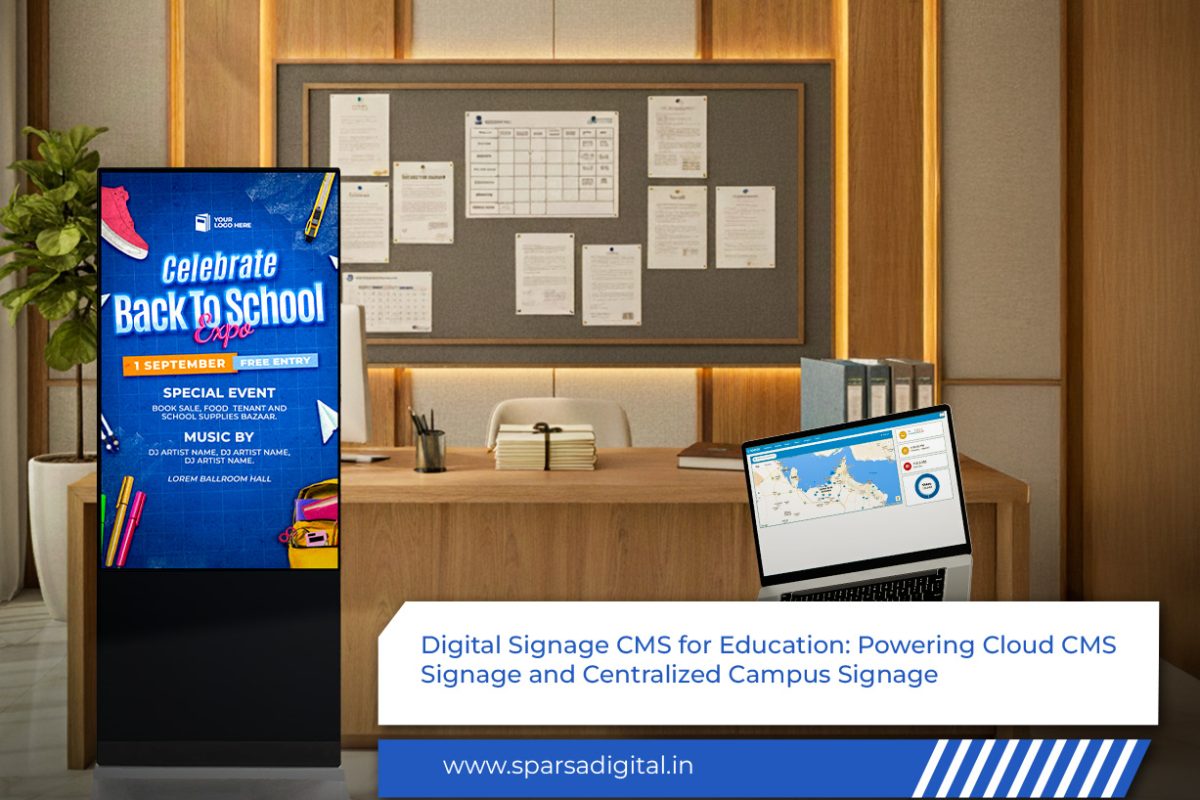
This is where digital signage CMS for education emerges as a transformative solution. When powered by cloud CMS signage, educational institutions gain the ability to manage content centrally, deliver real-time information, and create a truly centralized campus signage network that enhances communication and learning experiences across campuses.

In this blog, we explore how digital signage CMS works in education, the role of cloud-based content management systems, the importance of centralized campus signage, key benefits, real-world applications, implementation strategies, challenges, and future trends along with detailed FAQs.

What Is Digital Signage CMS for Education?

A digital signage CMS for education is a content management system specifically designed to create, manage, schedule, and distribute digital content across multiple screens within educational environments. These screens may be located in classrooms, hallways, libraries, cafeterias, hostels, auditoriums, and outdoor campus areas.

Unlike generic CMS platforms, education-focused digital signage CMS solutions are built to support:

  • Academic schedules and timetables
  • Campus announcements and alerts
  • Learning content and educational media
  • Event promotions and student engagement content
  • Emergency and safety communication

The CMS acts as the control center for all digital displays, ensuring consistent, timely, and relevant information delivery.

Understanding Cloud CMS Signage in Education

Cloud CMS signage refers to a digital signage content management system hosted on the cloud rather than on local servers. This allows administrators and educators to manage content remotely from any device with internet access.

How Cloud CMS Signage Works

  1. Content is created or uploaded via a web-based dashboard
  2. Content is stored securely in the cloud
  3. Administrators assign content to specific screens or screen groups
  4. Updates are pushed instantly across the network
  5. Screens display content in real time or as scheduled

For educational institutions with multiple buildings or campuses, cloud CMS signage is a game-changer.

Why Education Needs Centralized Campus Signage

Centralized campus signage means managing all digital screens across an institution from a single platform. Whether it’s one school or a university with multiple campuses, centralized control ensures uniform communication and operational efficiency.

The Communication Challenge in Education

Educational institutions deal with:

  • Frequent schedule changes
  • Last-minute announcements
  • Emergency alerts
  • Event promotions
  • Academic updates

Without centralized systems, communication becomes fragmented, slow, and inconsistent.

Centralized campus signage solves this by ensuring that the right message reaches the right audience at the right time.

Key Benefits of Digital Signage CMS for Education

1. Centralized Content Management

With a digital signage CMS for education, administrators can control hundreds of screens from a single dashboard. Content updates no longer require physical access to each display.

This is especially valuable for institutions with large or multi-location campuses.

2. Real-Time Communication

Cloud CMS signage enables instant updates. Whether it’s a class cancellation, weather alert, or exam notice, information can be displayed immediately across relevant screens.

Real-time communication improves responsiveness and trust.

3. Improved Student Engagement

Digital displays with dynamic visuals, videos, and interactive elements attract attention far more effectively than printed notices. Students are more likely to read and respond to digital messages.

4. Cost Savings Over Time

While the initial investment in digital signage infrastructure may seem high, institutions save significantly by reducing:

  • Printing costs
  • Paper waste
  • Manual labor for notice distribution

Centralized campus signage offers long-term operational efficiency.

5. Sustainability and Eco-Friendliness

Cloud-based digital signage reduces paper usage and waste, supporting green campus initiatives and sustainability goals.

Applications of Cloud CMS Signage in Educational Institutions

1. Classroom Communication

Digital signage CMS for education can be integrated into classrooms to display:

  • Daily lesson agendas
  • Visual learning aids
  • Assignment deadlines
  • Live announcements

This supports blended and smart classroom environments.

2. School and College Corridors

In hallways and common areas, centralized campus signage can show:

  • Timetables and room allocations
  • Faculty availability
  • Student achievements
  • Motivational content

These displays keep students informed without overcrowding notice boards.

3. Libraries and Learning Centers

Cloud CMS signage in libraries can be used for:

  • Digital catalogs and directions
  • Library rules and updates
  • Research tips and tutorials
  • Event notifications

This transforms libraries into interactive information hubs.

4. Auditoriums and Event Spaces

Digital signage CMS allows institutions to manage:

  • Event schedules
  • Guest speaker introductions
  • Seating information
  • Live announcements

All content can be updated instantly from a centralized system.

5. Campus Safety and Emergency Alerts

One of the most critical uses of centralized campus signage is emergency communication. Cloud CMS signage enables:

  • Instant campus-wide alerts
  • Evacuation instructions
  • Safety notifications

This ensures fast, consistent communication during critical situations.

6. Cafeterias and Hostels

In cafeterias, digital signage CMS for education can display:

  • Daily menus
  • Nutritional information
  • Timings and announcements

In hostels, screens can show notices, rules, and emergency contacts.

Role of Digital Signage CMS in Multi-Campus Institutions

Universities and large education groups often operate across multiple locations. Managing communication across these campuses is a major challenge.

With cloud CMS signage:

  • Content can be customized for each campus
  • Global announcements can be pushed to all locations
  • Local updates can be managed independently

This balance of centralized control and local flexibility is essential for large institutions.

Features to Look for in a Digital Signage CMS for Education

When choosing a solution, educational institutions should consider the following features:

1. Cloud-Based Access

A true cloud CMS signage platform allows remote access without complex infrastructure.

2. User Roles and Permissions

Different users- administrators, faculty, IT staff should have controlled access levels.

3. Scheduling and Automation

Content should be scheduled by date, time, or event, reducing manual intervention.

4. Multi-Screen and Multi-Zone Support

Centralized campus signage requires grouping and zoning screens for targeted communication.

5. Integration Capabilities

The CMS should integrate with learning management systems (LMS), calendars, and databases.

6. Analytics and Reporting

Usage data and screen performance analytics help institutions measure impact.

Challenges in Implementing Centralized Campus Signage

1. Resistance to Change

Staff and faculty may be hesitant to adopt new technology.

Solution: Training sessions and clear demonstrations of benefits.

2. Content Overload

Too much information on screens can reduce effectiveness.

Solution: Clear content guidelines and structured templates.

3. Network and Connectivity Issues

Cloud CMS signage depends on stable internet connectivity.

Solution: Reliable infrastructure and offline fallback options.

Best Practices for Using Cloud CMS Signage in Education

  • Keep content concise and visually clear
  • Rotate messages to avoid screen fatigue
  • Use consistent branding and color schemes
  • Schedule academic and non-academic content strategically
  • Review and update content regularly

The Future of Digital Signage CMS for Education

The future of digital signage CMS for education is driven by innovation and intelligence.

  • AI-powered content recommendations
  • Personalized signage for students and staff
  • Integration with mobile apps and QR codes
  • Data-driven decision-making through analytics
  • Smart campuses with IoT-enabled signage

Cloud CMS signage will become an integral part of digital-first education ecosystems.

Why Centralized Campus Signage Is a Strategic Investment

Centralized campus signage is not just a communication tool- it is a strategic asset that enhances:

  • Institutional efficiency
  • Student experience
  • Campus safety
  • Brand image

Educational institutions that invest in modern signage infrastructure position themselves as forward-thinking and student-centric.

Conclusion

A robust digital signage CMS for education, powered by cloud CMS signage, is essential for building efficient, connected, and responsive educational environments. By adopting centralized campus signage, institutions can streamline communication, enhance learning experiences, and future-proof their campuses.

As education continues to evolve, cloud-based digital signage will play a critical role in shaping smart, informed, and engaged academic communities.

FAQs: Digital Signage CMS for Education

1. What is a digital signage CMS for education?

It is a content management system designed to manage and distribute digital content across educational institution displays.

2. How does cloud CMS signage benefit schools and colleges?

It allows remote content management, real-time updates, scalability, and reduced IT infrastructure costs.

3. What is centralized campus signage?

Centralized campus signage refers to managing all digital displays across a campus or multiple campuses from one platform.

4. Is cloud CMS signage secure for educational data?

Yes, most platforms offer encryption, secure access, and user permission controls.

5. Can digital signage CMS integrate with LMS systems?

Many education-focused CMS platforms support integration with learning management systems.

6. Is digital signage suitable for small schools?

Yes, cloud CMS signage is scalable and works for institutions of all sizes.

7. How often can content be updated?

Content can be updated instantly or scheduled as needed.

8. Does centralized campus signage require constant internet?

The Internet is required for updates, but some systems support offline playback.

9. What types of screens can be managed?

The CMS can manage indoor displays, outdoor LED screens, interactive panels, and video walls.

10. Why should educational institutions invest in digital signage CMS?

It improves communication, reduces operational costs, enhances learning environments, and supports smart campus initiatives.

How Digital Screens Drive Engagement in Modern Offices

How Digital Screens Drive Engagement in Modern Offices

Modern workplaces are no longer confined to desks, whiteboards, and printed posters. The corporate landscape is rapidly evolving- hybrid work models, flexible office setups, and digital-first communication are now the norm. Within this transformation, digital screens have become essential tools for driving employee engagement, streamlining communication, and fostering a connected work culture.

From sleek lobby video walls to meeting room dashboards and internal communication displays, digital screens now play a central role in shaping how teams interact with information and with one another. This article explores how digital screens drive engagement in modern offices, the types of displays making the biggest impact, and strategies to maximize their effectiveness.

1. The Role of Digital Screens in Modern Office Environments

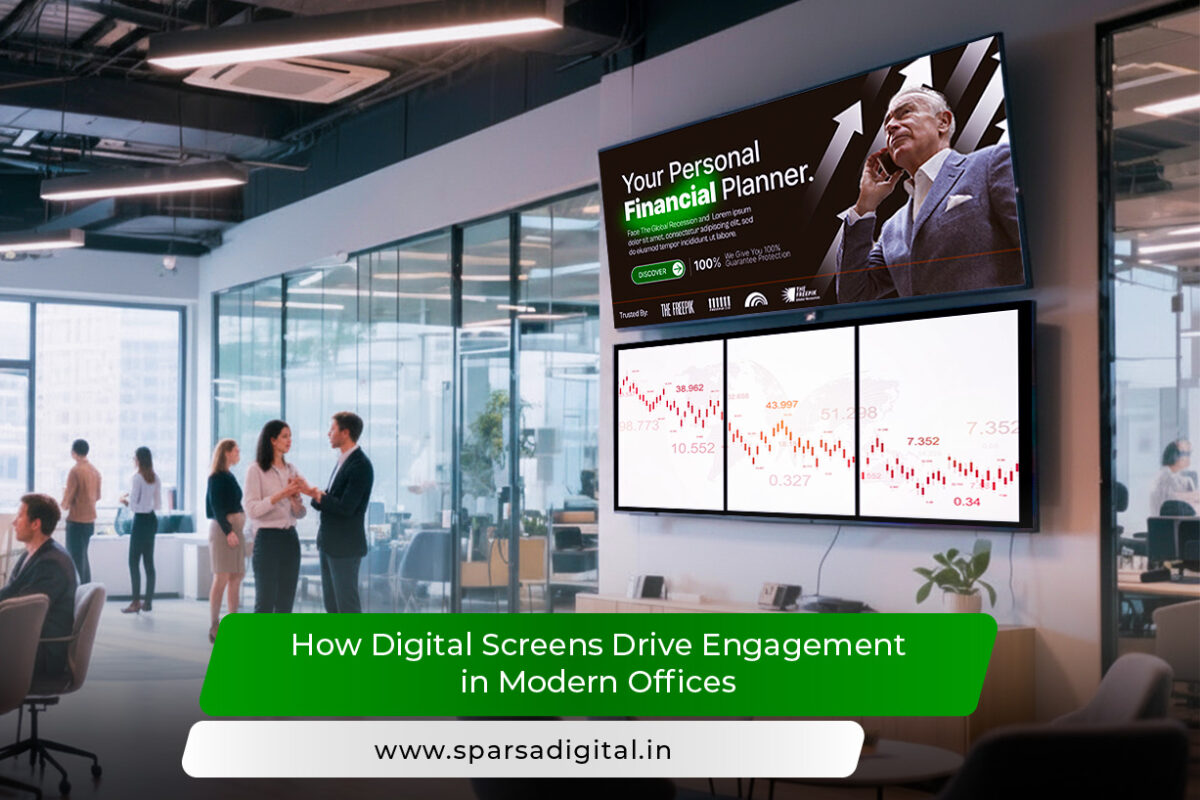
Digital screens have become more than decorative tech, they’re functional, dynamic communication tools. They bridge the gap between management and employees, streamline operations, and create immersive experiences.

Key roles digital screens serve include:

  • Internal communication: Share announcements, company updates, and performance metrics in real time.

  • Brand storytelling: Reinforce organizational culture through digital displays that showcase milestones, values, or CSR initiatives.

  • Collaboration and productivity: Support hybrid meetings and interactive brainstorming through touch-enabled or data-driven screens.

  • Wayfinding and space management: Guide employees and visitors across large office spaces or campuses.

  • Recognition and morale boosting: Celebrate achievements and birthdays, displaying visuals that make employees feel valued.

Ultimately, digital screens bring transparency, energy, and interactivity to everyday office life.

2. Types of Digital Screens Commonly Used in Offices

Modern workplaces utilize a mix of displays tailored to specific purposes and spaces. Here are the key types and their functions:

a. Lobby and Reception Displays

These are often the first screens visitors and employees encounter. They set the tone for your brand and showcase professionalism.

Use cases:

  • Display welcome messages for guests

  • Showcase brand videos or corporate highlights

  • Stream live data such as news or stock tickers

Hardware tips: Use large LED or 4K LCD panels with high brightness and slim bezels for a polished look.

b. Meeting Room Screens

Essential for hybrid meetings and presentations, these displays power collaboration and decision-making.

Use cases:

  • Video conferencing and presentation sharing

  • Displaying agendas and schedules

  • Annotating documents in real time

Hardware tips: Invest in interactive touchscreens or smart displays integrated with Microsoft Teams, Zoom, or Google Meet.

c. Digital Dashboards

Placed in high-traffic areas, these screens display real-time company data or performance KPIs.

Use cases:

  • Sales performance, marketing analytics, and progress trackers

  • Department-wise updates and productivity insights

  • Live project dashboards from platforms like Trello, Jira, or Power BI

Hardware tips: Opt for reliable commercial-grade displays with high refresh rates and 24/7 uptime capability.

d. Employee Communication Boards

These digital bulletin boards replace static posters with vibrant, regularly updated content.

Use cases:

  • Announcements, HR updates, and upcoming events

  • Company news, surveys, and motivational messages

  • Safety reminders or compliance guidelines

Hardware tips: Use portrait-oriented displays or video walls for maximum readability in common areas.

e. Wayfinding and Scheduling Screens

Used in large corporate campuses, coworking spaces, or business centers, these screens simplify navigation and resource booking.

Use cases:

  • Interactive maps or floor directories

  • Real-time meeting room availability

  • Queue management for cafeterias or reception desks

Hardware tips: Look for touch-enabled, durable screens with clear outdoor readability if placed near entrances.

3. How Digital Screens Enhance Employee Engagement

Digital displays impact engagement at multiple levels- visual, emotional, and behavioral. Here’s how:

a. Creating an Informed Workforce

Digital screens help employees stay up-to-date without endless emails. Displaying concise updates, KPIs, and dashboards ensures everyone remains aligned with business goals.

b. Boosting Transparency and Trust

When leadership shares company metrics, milestones, and future plans through screens, it creates a culture of openness and inclusion. Employees feel more connected to organizational progress.

c. Celebrating People and Achievements

From “Employee of the Month” spotlights to celebrating team milestones, recognition displayed publicly enhances morale and encourages healthy competition.

d. Reinforcing Company Culture

Brand messages, motivational quotes, and cultural campaigns keep your company’s values top of mind. Consistent visual branding across screens strengthens identity and belonging.

e. Supporting Hybrid Work and Collaboration

Interactive digital whiteboards, wireless casting tools, and multi-device integrations make hybrid meetings smooth and engaging, ensuring equal participation for remote and in-office workers.

f. Reducing Communication Overload

Instead of overwhelming employees with Slack messages or long newsletters, screens deliver bite-sized, high-impact information where it matters- cafeterias, corridors, and break zones.

4. Designing Content That Captures Attention

Hardware is only half the story. The real engagement comes from well-crafted content tailored to employee needs.

Tips for effective office screen content:

  • Keep it short: Messages should be digestible within 5–10 seconds.

  • Use motion graphics: Animations attract more attention than static text.

  • Highlight real people: Include team photos, testimonials, and behind-the-scenes videos.

  • Update regularly: Outdated content reduces credibility. Keep your playlists dynamic.

  • Balance information and entertainment: Mix corporate messages with light, engaging content like trivia or news highlights.

Modern digital signage platforms allow automated scheduling and remote updates, making it easy to keep your content fresh and relevant.

5. Measuring Engagement and Effectiveness

To justify investments in digital displays, offices must measure how effectively screens engage employees.

Key performance indicators (KPIs):

  • Content interaction rates: Especially on touch-enabled or feedback screens.

  • Dwell time: How long employees look at the screen.

  • Message recall: Can employees remember recent announcements?

  • Feedback participation: Are engagement campaigns driving responses?

  • Reduction in email volume: A sign that screens are replacing redundant communication channels.

Regularly analyzing these metrics helps optimize screen placement, content types, and timing.

6. Integration with Office Technology Ecosystems

For digital screens to truly enhance engagement, they must seamlessly integrate with other systems.

Key integrations include:

  • Calendar systems: For meeting room scheduling (Google Calendar, Outlook).

  • HR platforms: To display birthdays, anniversaries, and employee highlights.

  • Project management tools: Real-time project dashboards from Asana, Trello, or Jira.

  • IoT and sensors: Auto-triggered content based on occupancy or motion.

  • Visitor management systems: Automatic welcome messages for guests.

Integration ensures automation, accuracy, and reduced manual input, making digital signage a natural extension of your digital workplace.

7. Best Practices for Implementing Office Digital Displays

a. Strategic Placement

Install screens in high-traffic or communal zones- cafeterias, lobbies, lift areas, and meeting rooms to ensure maximum visibility.

b. Consistency in Branding

Use brand colors, fonts, and visual templates to maintain consistency and professionalism across all displays.

c. Accessibility and Readability

Choose appropriate font sizes, color contrast, and screen angles for different lighting conditions and distances.

d. Security and Privacy

Implement network security measures for screens connected to internal systems. Use encrypted connections and access controls to prevent data leaks.

e. Regular Maintenance

Clean screens periodically and check for connectivity or playback issues. Schedule downtime for software and firmware updates.

8. The Future of Office Engagement Through Digital Displays

The next phase of workplace communication will see even smarter digital screens that adapt to employee behavior and preferences. Trends shaping the future include:

  • AI-powered content personalization: Displaying relevant information based on department, schedule, or user profile.

  • Voice-activated interfaces: Allowing employees to interact hands-free with screens for directions or updates.

  • Energy-efficient LED and OLED screens: Supporting sustainability goals while maintaining visual quality.

  • Transparent and flexible displays: Offering futuristic aesthetics for high-end office interiors.

  • Analytics-driven signage: Measuring engagement and optimizing messages through AI insights.

These innovations will continue to make digital screens not just tools, but integral components of smart, connected office ecosystems.

Conclusion

Digital screens have redefined how modern offices communicate and engage. They’re not just visual upgrades, they’re strategic assets that enhance transparency, motivation, and collaboration.

From onboarding new hires to showcasing data-driven dashboards, digital displays ensure that every message reaches employees effectively and memorably.

As workplaces evolve, adopting well-integrated digital screens will remain key to building informed, inspired, and connected teams.

FAQs

Q1. How do digital screens improve communication in offices?
 They deliver real-time updates, announcements, and dashboards across departments, ensuring information is accessible to everyone without relying on emails.

Q2. Are digital screens suitable for small offices?
 Yes. Even a few strategically placed displays in lobbies or meeting rooms can boost engagement and streamline communication.

Q3. What content works best on office digital screens?
 Short, visual content such as KPIs, announcements, team highlights, and motivational messages perform best.

Q4. Can digital screens integrate with existing tools like Slack or Microsoft Teams?
 Absolutely. Many digital signage platforms offer direct integration to pull live data or announcements from collaboration tools.

Q5. How can digital screens support hybrid work environments?
 They bridge physical and digital spaces by displaying hybrid meeting schedules, video conferencing links, and live collaboration boards.

Q6. Are office digital screens expensive to maintain?
 Not necessarily. Commercial-grade LED or LCD screens are energy-efficient and built for long-term 24/7 use with minimal upkeep.

Q7. How do I measure employee engagement through digital signage?
 Track metrics like dwell time, interaction rates, and participation in campaigns or surveys promoted through the screens.

Q8. What are some emerging trends in office digital displays?
 Trends include AI-driven personalization, interactive dashboards, sustainable hardware, and transparent LED panels for futuristic workplaces.

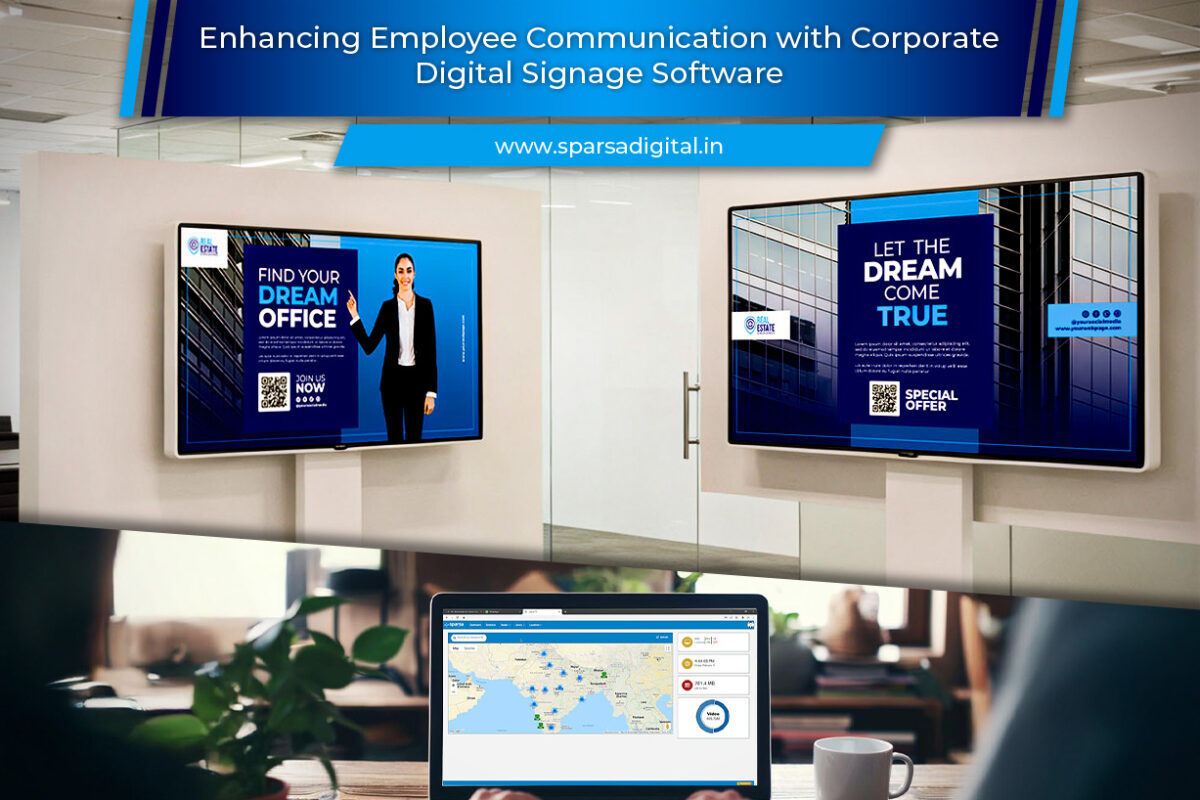
Enhancing Employee Communication with Corporate Digital Signage Software

Enhancing Employee Communication with Corporate Digital Signage Software

In today’s fast-paced corporate world, effective internal communication is no longer a “nice-to-have”, it’s a strategic necessity. As organizations expand across geographies and hybrid work becomes the new norm, keeping employees informed, motivated, and connected has become more challenging than ever. Traditional methods like email newsletters or bulletin boards often fail to capture employees’ attention in a digital-first environment.

This is where corporate digital signage software comes into play. By transforming ordinary screens into dynamic communication tools, it enables organizations to deliver targeted, timely, and visually engaging content that enhances employee communication and engagement across all levels.

Let’s explore how corporate digital signage software is redefining workplace communication and the key features that make it an indispensable asset for modern enterprises.

1. The Role of Digital Signage in Internal Communication

Corporate digital signage refers to the use of digital screens within workplaces, such as office lobbies, cafeterias, corridors, and break rooms, to display internal messages, announcements, dashboards, and alerts. When powered by robust software, these screens become a powerful channel to reach employees instantly and effectively.

Unlike traditional communication tools that depend on active engagement (like checking emails or intranet portals), digital signage leverages passive communication delivering messages in high-traffic areas where employees naturally gather. This ensures better message visibility and retention.

2. Benefits of Using Corporate Digital Signage for Employee Communication

a. Real-time Information Sharing

With digital signage software, HR and communications teams can update content in real time. Whether it’s a new company policy, emergency alert, or event reminder, information can be pushed instantly across all screens within seconds.

b. Improved Employee Engagement

Visually rich content such as videos, infographics, or live dashboards, grabs attention better than text-heavy emails. Engaged employees are more likely to absorb information, participate in events, and align with company goals.

c. Enhanced Transparency and Culture Building

Displaying company achievements, performance metrics, and leadership updates fosters transparency. Celebrating employee milestones, birthdays, and team successes also strengthens organizational culture.

d. Reduced Email Overload

Employees already face inbox fatigue. Digital signage helps declutter communication by diverting routine announcements to on-screen messages, freeing emails for critical conversations.

e. Effective Communication Across Locations

For organizations with multiple offices or remote teams, corporate digital signage ensures uniform communication. Every branch receives the same updates simultaneously, maintaining brand consistency and messaging accuracy.

3. Key Features of Corporate Digital Signage Software

Modern digital signage platforms are designed for ease, scalability, and control. Below are the features that make them ideal for employee communication:

a. Centralized Content Management

The software’s centralized dashboard allows administrators to manage all displays from one location. This ensures consistency while allowing customization for different departments or locations.

b. Remote Scheduling and Updates

With cloud-based control, HR or communications teams can schedule content ahead of time or make immediate updates remotely, perfect for real-time news or event-driven announcements.

c. Integration with Existing Systems

The best signage software integrates seamlessly with HRM, CRM, Slack, Teams, and calendar tools. For instance, meeting room schedules or employee recognition data can automatically display without manual intervention.

d. Dynamic and Interactive Content Support

From video messages by leadership to live social media feeds, dynamic content keeps communication fresh and engaging. Some systems even support interactive kiosks where employees can browse updates or submit feedback.

e. Role-based Access and Permissions

Different departments can manage their own content while adhering to brand guidelines. For example, HR can manage employee announcements, while IT oversees maintenance alerts.

f. Analytics and Performance Tracking

Track how often certain content is displayed, which screens get the most views, and how employees interact with the content. Analytics help fine-tune communication strategies for maximum impact.

4. Practical Applications of Corporate Digital Signage

a. Employee Announcements

Use signage screens to share company news, product launches, or organizational updates. When employees are informed, they feel more involved in the company’s mission.

b. Performance Dashboards

Displaying sales achievements, customer satisfaction scores, or KPIs motivates employees and promotes healthy competition among teams.

c. HR and Training Updates

Highlight training schedules, wellness programs, or HR policy reminders. Visually displaying these helps employees stay compliant and informed.

d. Recognition and Motivation

Feature “Employee of the Month,” top performers, and birthdays on digital boards. Recognition in public spaces boosts morale and encourages a positive workplace environment.

e. Safety and Emergency Alerts

In manufacturing or logistics environments, digital signage is crucial for broadcasting safety reminders or emergency instructions instantly.

f. Event Promotion

Whether it’s a town hall, corporate webinar, or team-building activity, screens can advertise upcoming events and encourage participation.

g. Wayfinding and Onboarding

Interactive digital signage can guide new employees or visitors through large campuses, displaying directions, welcome messages, or even meeting schedules.

5. Why Digital Signage Works Better Than Traditional Communication

AspectTraditional Tools (Email, Posters)Digital Signage
VisibilityOften overlooked or ignoredHighly visible in common areas
EngagementText-heavy and staticVisually dynamic and multimedia
Update SpeedManual and time-consumingInstant cloud updates
ConsistencyVaries across departmentsCentralized and uniform
MeasurementHard to track engagementAnalytics and proof-of-play available

By replacing static channels with interactive digital communication, companies can turn everyday spaces into hubs of information and connection.

6. How to Implement Digital Signage for Internal Communication

Step 1: Identify Communication Goals

Start by outlining what you want to achieve, whether it’s improving employee engagement, simplifying updates, or reinforcing company culture.

Step 2: Choose the Right Software

Select a corporate digital signage software that offers remote control, scalability, and integration capabilities. Cloud-based options are ideal for multi-location organizations.

Step 3: Define Screen Placement

Install screens strategically in high-traffic zones such as cafeterias, hallways, and reception areas to maximize visibility.

Step 4: Develop Content Strategy

Create a mix of content- announcements, dashboards, motivational quotes, training snippets, and recognition highlights to keep it engaging.

Step 5: Assign Roles and Permissions

Set up role-based access for different departments to maintain consistency while allowing flexibility.

Step 6: Analyze and Optimize

Use built-in analytics to evaluate content performance and make improvements based on data insights.

7. Real-world Use Cases

a. Corporate Headquarters

Display leadership updates, company KPIs, and live performance dashboards to foster alignment and motivation.

b. Retail and Franchise Chains

Use signage to communicate with front-line employees across stores sharing targets, product updates, and policy changes.

c. Manufacturing Units

Show safety guidelines, production milestones, and shift announcements in real time.

d. Educational Institutions

Share schedules, achievements, and event highlights across campus buildings to keep staff and students informed.

e. Healthcare Organizations

Display emergency codes, patient satisfaction metrics, and internal updates without disrupting workflows.

8. Best Practices for Effective Corporate Signage Communication

  • Keep content concise: Use short messages, bold visuals, and clear headlines.

  • Use automation wisely: Schedule recurring content (like daily dashboards) to save time.

  • Balance fun and formal: Mix business updates with motivational or cultural content to maintain interest.

  • Refresh content frequently: Avoid repetition by updating visuals weekly or bi-weekly.

  • Encourage feedback: Use QR codes or links for employees to share ideas or feedback on signage content.

9. Future of Corporate Digital Signage

As workplaces evolve, so does digital signage. Emerging technologies such as AI-driven personalization and data integration are making signage smarter. For instance:

  • AI algorithms can tailor messages by department or time of day.

  • IoT sensors can trigger safety or environmental messages based on conditions.

  • Integration with collaboration tools (like Slack or Teams) ensures communication remains consistent across all channels.

The future workplace will likely blend traditional communication with real-time, automated, and data-driven signage to create a truly connected employee experience.

Conclusion

Corporate digital signage software has revolutionized the way companies communicate internally. It offers an engaging, centralized, and scalable platform to connect employees, improve transparency, and strengthen workplace culture. By transforming walls and lobbies into live communication hubs, organizations can ensure every employee- onsite or remote feels informed, valued, and aligned with the company’s vision.

As businesses continue embracing digital transformation, the role of digital signage in enhancing employee communication will only grow. Investing in the right software today means investing in a more connected, motivated, and productive workforce tomorrow.

FAQs

Q1. What is corporate digital signage software?
 Corporate digital signage software is a platform that allows companies to manage and display internal communication content such as announcements, dashboards, and alerts on digital screens across offices or facilities.

Q2. How does digital signage improve employee engagement?
 It delivers visually engaging, real-time messages in high-traffic areas, making information easier to consume and more memorable than traditional emails or printed notices.

Q3. Can digital signage be used in hybrid workplaces?
 Yes. Cloud-based signage software enables communication across remote and physical locations, ensuring hybrid employees receive consistent updates.

Q4. What type of content can be shown on corporate digital signage?
 Content can include company news, KPIs, employee recognition, safety alerts, event updates, training videos, and motivational messages.

Q5. Is digital signage software expensive to implement?
 Costs vary by scale and features, but many cloud-based solutions are affordable and scalable, allowing businesses to start small and expand gradually.

Q6. How secure is corporate digital signage software?
 Most enterprise-grade systems include encryption, role-based access, and audit trails to ensure data security and prevent unauthorized content uploads.

Q7. How can companies measure the effectiveness of digital signage?
 Built-in analytics track display uptime, content play frequency, and employee engagement, helping organizations optimize their internal communication strategy.

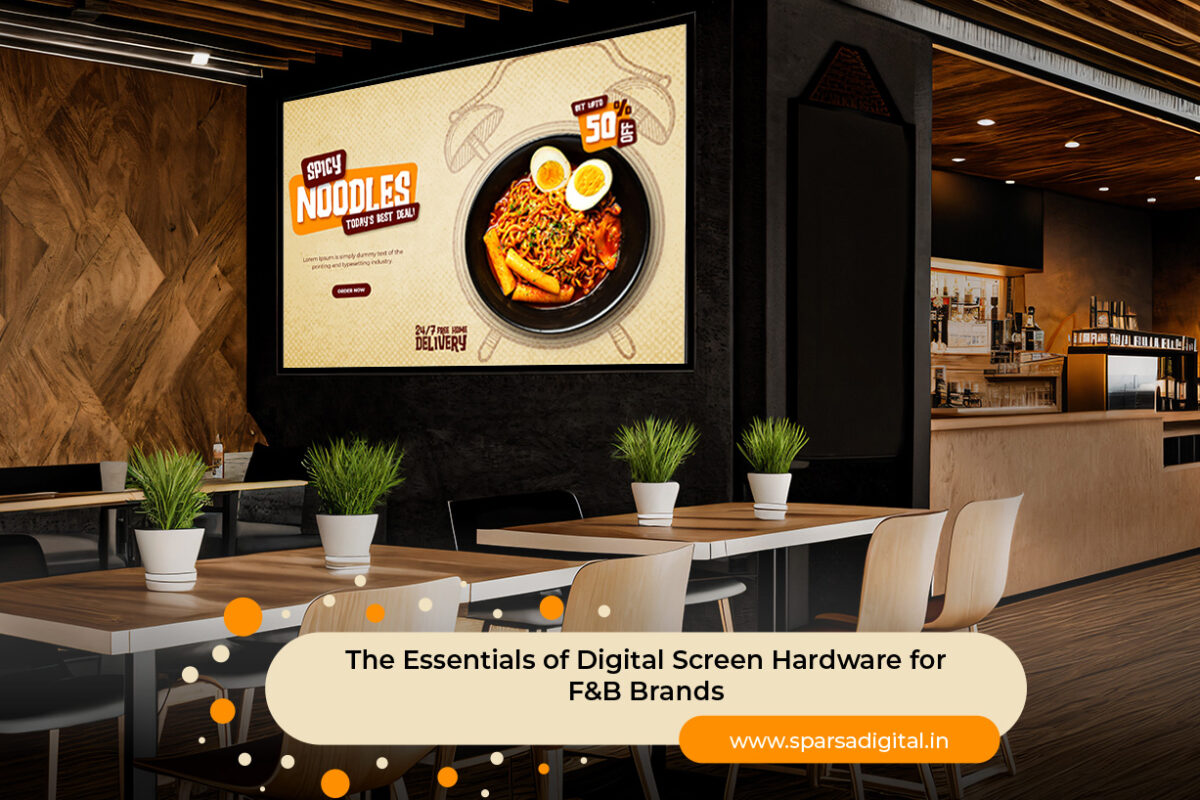
The Essentials of Digital Screen Hardware for F&B Brands

The Essentials of Digital Screen Hardware for F&B Brands

In the highly competitive world of Food & Beverage (F&B), first impressions matter. Whether it’s a quick-service restaurant, a café, or a fine dining outlet, the way you present your menu and brand visuals can dramatically impact customer engagement and sales. As digital transformation continues to reshape the industry, digital screens have emerged as a crucial element of in-store communication and branding.

While much of the focus often goes to software content management systems, menu automation, and remote updates, the hardware behind these screens is equally vital. The right display setup ensures consistent performance, visual appeal, and reliability across all your locations.

In this article, we’ll break down the essentials of digital screen hardware for F&B brands covering types, specifications, installation best practices, and why hardware choices directly influence your overall digital signage ROI.

1. The Growing Importance of Digital Screen Hardware in F&B

Digital screens are more than just menu boards, they’re interactive storytellers. From dynamic digital menu boards and order kiosks to promotional displays and drive-thru screens, F&B brands are using screens to engage customers in real time.

However, achieving this depends heavily on the quality and suitability of the hardware. A high-performance digital display ensures:

  • Crisp, readable visuals even in bright environments

  • Long-term durability under heat, grease, and moisture

  • Smooth integration with your digital signage software

  • Low maintenance and energy efficiency

Simply put, great content needs great hardware to shine.

2. Core Types of Digital Screens Used in F&B Environments

Different screen types cater to different operational needs in an F&B setup. Here are the most commonly used ones:

a. Digital Menu Boards

Mounted above counters or behind service areas, these are the backbone of QSRs (Quick Service Restaurants). They display menu items, pricing, and offers dynamically allowing quick updates for limited-time promotions or combos.

Hardware essentials:

  • High-brightness LED or LCD panels (700-2500 nits for visibility)

  • Anti-glare coating for indoor lighting

  • Commercial-grade panels with 24/7 operational rating

b. Drive-thru and Outdoor Screens

For restaurants offering outdoor ordering, these screens must withstand weather and ambient light challenges.

Hardware essentials:

  • Weatherproof and IP65-rated enclosures

  • High-brightness outdoor displays (2000+ nits)

  • Temperature control and vandal-resistant casing

  • Sunlight-readable, anti-fog glass

c. Self-order Kiosks and Touchscreens

Interactive self-ordering stations enhance efficiency and reduce queue times. These kiosks require rugged yet sensitive touch panels.

Hardware essentials:

  • Capacitive or IR touch screens

  • Responsive touch sensitivity with waterproof coating

  • Durable chassis resistant to spills or tampering

  • Integration with POS systems and payment modules

d. Video Walls and Branding Displays

Large LED video walls or tiled displays in lobbies or lounges enhance ambiance and branding. They can showcase brand stories, food visuals, and social media feeds.

Hardware essentials:

  • Narrow-bezel or seamless LED panels

  • Modular design for flexible sizes

  • High contrast ratio for lifelike visuals

  • Remote brightness and calibration control

e. Tabletop and Counter Displays

Smaller, tablet-style screens placed on tables or counters serve as interactive digital table tents, enabling upselling and promoting loyalty programs.

Hardware essentials:

  • Compact design with sturdy base

  • Battery or USB power options

  • Wi-Fi and Bluetooth connectivity

  • Durable screen surface for frequent touch interactions

3. Key Hardware Specifications to Prioritize

When choosing digital screen hardware for F&B applications, it’s crucial to focus on specifications that align with your operational environment:

a. Brightness and Visibility

F&B locations vary in lighting, some are dim and ambient, others flooded with sunlight.

  • Indoor screens: 500-1000 nits brightness

  • Outdoor screens: 2000-3500 nits for clear visibility

b. Resolution and Display Quality

Full HD (1080p) is standard, but 4K displays are increasingly popular for larger screens. Higher resolutions improve the legibility of menus and visual appeal of food imagery.

c. Durability and Build Quality

Choose commercial-grade displays designed for continuous use. Consumer TVs might be cheaper initially but tend to fail faster under 24/7 operation.

d. Operating Temperature and Protection

Restaurant environments expose screens to humidity, oil, and heat. Always check for:

  • Heat-resistant casings

  • IP-rated protection

  • Built-in cooling fans or heat dissipation design

e. Connectivity Options

Seamless integration is key. Look for multiple input/output ports:

  • HDMI, USB, DisplayPort, and LAN

  • Wi-Fi and Bluetooth for wireless syncing

  • Optional 4G/5G modules for remote locations

f. Mounting and Design

Hardware flexibility matters, especially when dealing with limited wall or ceiling space. Opt for VESA-compliant mounts, adjustable brackets, and sleek frames that blend with the restaurant’s aesthetic.

4. Media Players and Controllers: The Brains Behind the Screens

While the display is the visible part of digital signage, the media player is the core engine that runs your content. It stores, plays, and updates media files through your signage software.

Types of media players:

  • Standalone players: Dedicated mini-computers connected via HDMI.

  • System-on-Chip (SoC) screens: Built-in players that eliminate the need for external devices.

  • Android-based players: Affordable and compatible with most cloud CMS platforms.

What to look for:

  • High processing power for HD/4K playback

  • Ample storage or cloud syncing capability

  • Remote device management support

  • Auto-reboot and offline playback features

5. Installation Best Practices for F&B Digital Displays

Proper installation ensures longevity and safety. Follow these best practices:

  • Height and angle optimization: Position menu boards above eye level but within comfortable viewing range.

  • Secure mounting: Use certified brackets and fixtures to prevent falls or vibration damage.

  • Cable management: Conceal wires for a clean, professional look.

  • Ventilation and cooling: Ensure air circulation around the display, especially in kitchens or hot zones.

  • Routine inspection: Regularly check for screen brightness uniformity, dust buildup, and connection stability.

6. Power and Energy Efficiency Considerations

Energy costs are a major concern in F&B operations. Choosing energy-efficient hardware helps reduce long-term expenses.

  • LED-backlit panels consume less power than fluorescent LCDs.

  • Automatic brightness control adjusts levels based on ambient lighting.

  • Sleep mode scheduling allows screens to power down during off-hours.

  • Energy Star-certified hardware ensures compliance with global efficiency standards.

7. Maintenance and Longevity

To maximize ROI, choose hardware that requires minimal maintenance and offers long lifespans. Commercial displays typically last 50,000 to 100,000 hours with proper care.

Tips for maintenance:

  • Use microfiber cloths to clean screens, avoid harsh chemicals.

  • Keep firmware and software updated for optimal performance.

  • Regularly inspect outdoor units for water ingress or screen burn-in.

  • Partner with hardware vendors offering warranty and after-sales service.

8. Integrating Hardware with Digital Signage Software

Hardware alone can’t deliver results without seamless software integration. Choose a digital signage platform that complements your hardware setup by offering:

  • Remote content scheduling and monitoring

  • Multi-screen synchronization

  • Menu integration with POS systems

  • Real-time updates and performance analytics

Cloud-based digital signage software is ideal for multi-location F&B chains, as it allows centralized control while maintaining flexibility for local menu variations.

The future of F&B display technology is driven by innovation, sustainability, and interactivity. Expect to see:

  • Transparent LED menu boards for futuristic aesthetics

  • Interactive touch displays with AI-driven recommendations

  • Energy-efficient OLED panels with vibrant visuals

  • Smart sensors for audience detection and dynamic content adaptation

  • Modular LED tiles for customizable restaurant layouts

These advancements will continue bridging the gap between physical and digital dining experiences offering customers personalized engagement at every touchpoint.

Conclusion

For F&B brands, digital displays are not just tools, they’re extensions of the brand experience. The right digital screen hardware ensures that your content looks stunning, performs reliably, and enhances every customer interaction.

From menu boards to kiosks, the combination of commercial-grade hardware, efficient power management, and strategic installation can transform your restaurant’s ambiance and operational efficiency.

In a market where visuals drive appetite and engagement, investing in the right display hardware isn’t an expense, it’s a growth strategy.

FAQs

Q1. Why is hardware selection important for F&B digital signage?
 Because the wrong hardware can result in poor visibility, frequent breakdowns, and high maintenance costs, directly affecting customer experience and ROI.

Q2. What’s the difference between commercial and consumer-grade screens?
 Commercial-grade screens are built for 24/7 operation, higher brightness, and heat resistance unlike consumer TVs designed for limited daily use.

Q3. Can outdoor digital menu boards handle extreme weather?
 Yes, high-quality outdoor displays come with IP65-rated enclosures, temperature control, and anti-glare glass to withstand harsh weather conditions.

Q4. How long do digital screens typically last in F&B settings?
 With proper maintenance, commercial displays last between 5 to 8 years (approximately 50,000-100,000 hours of operation).

Q5. Are digital screens energy efficient?
 Modern LED and OLED screens consume less power, and features like auto-dimming and scheduled shutdowns further improve energy efficiency.

Q6. Can digital screens be integrated with POS systems?
 Absolutely. Many modern setups support integration, enabling automatic price updates and menu synchronization across locations.

Q7. What’s the best screen size for digital menu boards?
 It depends on your space, but 43-55 inches is ideal for most indoor F&B applications, ensuring readability from various distances.

Q8. How can I maintain my digital display hardware?
 Clean screens regularly, ensure ventilation, update firmware, and schedule periodic professional servicing to extend lifespan.

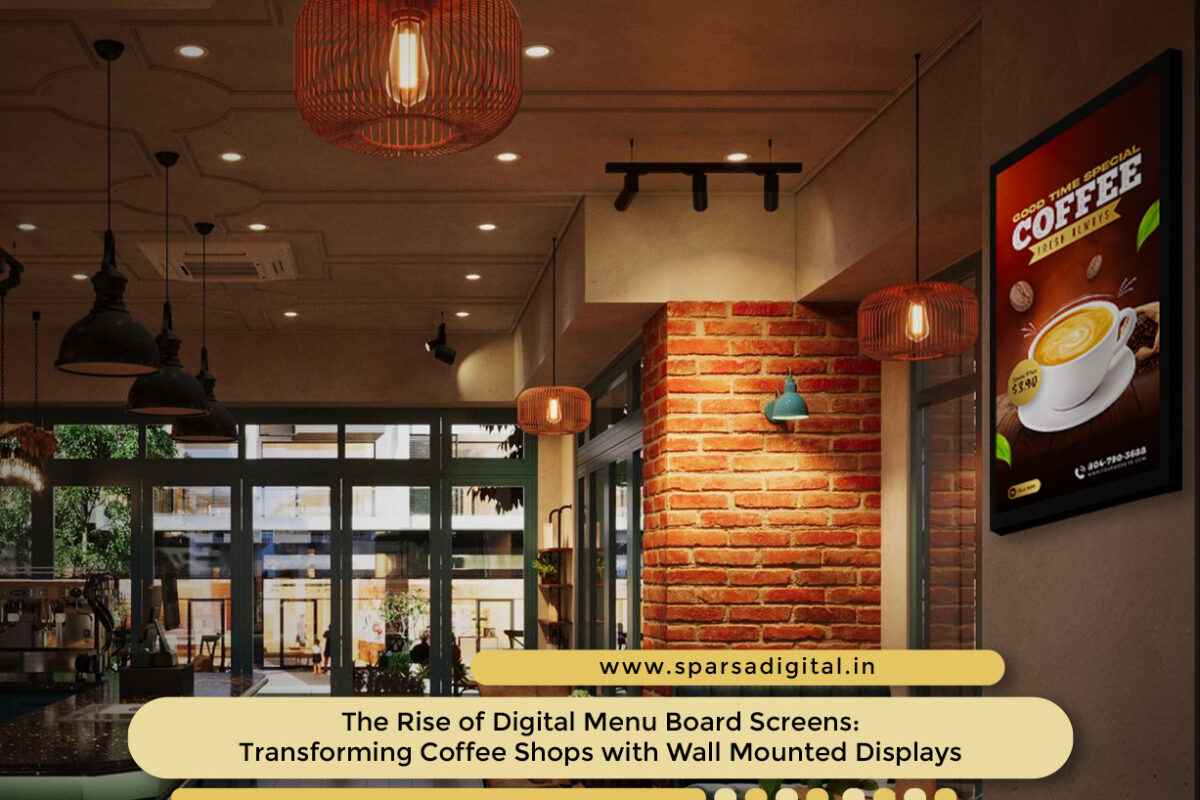
The Rise of Digital Menu Board Screens Transforming Coffee Shops with Wall Mounted Displays

The Rise of Digital Menu Board Screens: Transforming Coffee Shops with Wall Mounted Displays

The coffee culture has evolved far beyond a simple cup of espresso. Today, coffee shops are hubs for socializing, remote work, casual meetings, and lifestyle experiences. With such an expanded role, the way coffee shops present themselves visually has become critical. One of the biggest game-changers in this space is the adoption of digital menu board screens. Unlike traditional chalkboards or printed menus, these innovative solutions combine design, technology, and customer psychology to enhance sales and create an engaging café atmosphere.

In particular, the digital menu board for coffee shop setups paired with wall mounted displays are making waves in the retail and hospitality sector. From displaying mouthwatering visuals to allowing real-time updates, these boards aren’t just functional, they’re part of the overall brand experience.

This blog explores the impact of digital menu boards, the role of wall-mounted displays in coffee shops, implementation strategies, benefits, and why this technology is no longer a “luxury” but a necessity in modern cafés.

Why Coffee Shops Are Embracing Digital Menu Board Screens

1. Visual Storytelling

Coffee shops thrive on aesthetics. A latte art photo, steaming cappuccino, or freshly baked croissant displayed on vibrant digital menu board screens can draw customers in immediately. Unlike static print menus, these screens allow for dynamic, high-resolution storytelling that aligns with the shop’s vibe.

2. Flexibility and Real-Time Updates

Printed menus often cause a bottleneck whenever price updates or new product launches are required. With a digital menu board for coffee shop, staff can update items instantly, ensuring accuracy and eliminating the cost of reprinting. Seasonal specials, limited-time offers, and new beverages can be showcased in seconds.

3. Enhancing Customer Experience

The customer journey begins even before the order is placed. With clear, easy-to-read wall mounted displays, customers can browse the menu without confusion, reducing waiting times and improving efficiency. This directly contributes to better customer satisfaction and quicker service cycles.

4. Marketing and Promotions

Digital boards allow coffee shops to run targeted campaigns. For instance, a wall mounted display near the counter can show a happy-hour deal or highlight “barista’s pick of the day.” Upselling becomes seamless when screens strategically place combo offers alongside regular menu items.

The Power of Wall Mounted Displays in Coffee Shops

Optimized Space Usage

Coffee shops often have limited counter space. A wall mounted display solves this problem by providing visibility without cluttering the counter. Mounted strategically at eye level, it ensures every customer entering the shop gets a clear view of the menu and promotions.

Design Integration

Modern cafés are designed with a certain aesthetic- minimalist, rustic, industrial chic, or vibrant. Wall-mounted digital menu board screens blend into these designs effortlessly. Unlike bulky boards, they add a sleek and modern touch while maintaining brand personality.

Improved Accessibility

For customers waiting in line, a digital menu board for coffee shop mounted on the wall ensures visibility from a distance. This not only helps with order preparedness but also keeps queues moving faster as customers decide before reaching the counter.

Benefits of Digital Menu Board Screens for Coffee Shops

1. Boost in Sales

According to industry research, digital signage increases sales by up to 30%. Coffee shops can use digital menu board screens to promote seasonal drinks like pumpkin spice lattes, upsell bakery items, or highlight premium add-ons such as oat milk or flavor shots.

2. Sustainability

By going digital, cafés reduce paper and printing waste. A wall mounted display ensures eco-friendly communication with customers while reducing recurring menu printing costs.

3. Consistency Across Locations

For coffee chains or multi-location businesses, a centralized digital menu board for coffee shop ensures all outlets display the same promotions and prices. This creates consistency in branding and messaging.

4. Customer Engagement

Coffee shop visitors expect more than coffee, they want an experience. Using engaging content like trivia, fun facts, or loyalty program promotions on digital menu board screens can keep customers entertained while they wait.

Implementing Digital Menu Boards in Coffee Shops

Step 1: Choosing the Right Hardware

Not all digital menu board screens are created equal. Coffee shops should look for displays that offer high brightness, durability, and energy efficiency. Since these boards run for long hours daily, reliability is key.

Step 2: Strategic Placement

Placement of wall mounted displays can make or break their effectiveness. The most common placements are behind the counter, near the entrance, or along the ordering queue. The goal is to ensure maximum visibility and minimal glare.

Step 3: Content Management System (CMS)

A good digital menu board for coffee shop setup needs a reliable CMS to control content. The CMS allows owners to update menus remotely, schedule promotions, and design layouts that resonate with their branding.

Step 4: Content Strategy

Dynamic content is the soul of digital signage. Beyond just listing prices, coffee shops should include:

  • High-quality product images

  • Rotating promotions

  • Seasonal offers

  • Cross-selling suggestions

  • Social media integration (live Instagram feeds, hashtags)

Step 5: Maintenance

Regular checks ensure digital menu board screens function smoothly. Software updates, display calibrations, and cleaning keep the experience consistent.

Case Study: Digital Menu Board for Coffee Shop Success

Consider a mid-sized café chain that switched from printed menus to digital menu board screens. Within three months, they noticed:

  • A 22% increase in add-on sales like flavor shots and bakery combos.

  • Reduced customer complaints about outdated pricing.

  • Faster order placement due to clearer visibility.

  • Enhanced customer loyalty thanks to engaging promotional content.

The adoption of wall mounted displays allowed them to modernize their space, aligning their branding with customer expectations.

Challenges and Solutions

Challenge 1: Initial Investment

Some coffee shop owners hesitate due to the upfront cost of digital menu board screens.
 Solution: Emphasize ROI through savings on printing, increased sales, and reduced errors.

Challenge 2: Content Creation

Many shops lack resources to design engaging visuals.
 Solution: Use built-in templates from CMS software or partner with digital signage providers.

Challenge 3: Space Constraints

Smaller coffee shops might feel a wall mounted display won’t fit.
 Solution: Compact, sleek screen models are available that integrate seamlessly into tight spaces.

  1. Interactive Boards: Touch-enabled digital menu board for coffee shop setups where customers can browse nutritional information or customize their drinks.

  2. AI-Driven Recommendations: Personalized promotions based on time of day, weather, or customer data.

  3. Integration with Mobile Ordering: Syncing digital menu board screens with apps to create omnichannel consistency.

  4. Sustainable Energy Solutions: Solar-powered or energy-efficient wall mounted displays designed for eco-conscious businesses.

Conclusion

The future of coffee shops lies in creating seamless, engaging, and tech-driven customer experiences. Investing in digital menu board screens, complemented by sleek wall mounted displays, is no longer optional, it’s essential. A digital menu board for a coffee shop doesn’t just list items; it sells experiences, drives sales, and builds lasting connections with customers.

From increasing sales and improving customer flow to enhancing sustainability and brand storytelling, digital menu boards are transforming coffee culture worldwide. Whether you own a boutique café or a chain of coffee shops, adopting this technology ensures you remain competitive in a rapidly evolving market.

FAQs

Q1. Why should a coffee shop use digital menu board screens instead of traditional menus?
 Digital menu boards allow real-time updates, engaging visuals, and reduced printing costs while enhancing the customer experience.

Q2. How does a wall mounted display benefit a coffee shop with limited space?
 Wall-mounted displays save counter space, improve visibility, and blend seamlessly into the shop’s design.

Q3. Is the digital menu board for coffee shops affordable for small businesses?
 Yes, while the initial cost may seem high, the ROI through increased sales and reduced operational costs makes it affordable long-term.

Q4. Can digital menu boards show more than just menus?
 Absolutely. They can display promotions, loyalty offers, social media feeds, or even entertainment content to engage customers.

Q5. How often can I update my digital menu board screens?
 As often as needed. Updates can be made instantly via the CMS, making it easy to manage seasonal offers or pricing changes.

Q6. Are digital menu boards eco-friendly?
 Yes, by eliminating printing needs and reducing waste, they are a sustainable choice for coffee shops.

Weatherproof Technology How Outdoor LED Displays Thrive in Harsh Conditions

Weatherproof Technology: How Outdoor LED Displays Thrive in Harsh Conditions

In today’s competitive visual marketing world, outdoor communication tools must be both eye-catching and resilient. Whether it’s a bustling metropolitan area, a quiet town square, or the side of a stadium, the ability to broadcast a vibrant, high-definition message is invaluable. This is why the outdoor advertising LED display screen and the outdoor LED display board have become such essential tools for advertisers, municipalities, and event organizers.

These advanced systems are designed not only to deliver dynamic visuals but also to operate flawlessly in the harshest weather conditions- heavy rain, scorching sunlight, freezing snow, and even dusty winds. The magic behind this reliability lies in weatherproof technology, a combination of robust engineering, protective design, and smart thermal management that allows these displays to function 24/7, all year round.

This comprehensive guide explores the rising demand for outdoor LED displays, the features that make them weather-resistant, their ability to handle extreme climates, and why they’re the top choice for impactful outdoor messaging.

1. The Rising Demand for Outdoor LED Displays

The popularity of the outdoor advertising LED display screen has exploded in recent years. Unlike static billboards, these displays can deliver animated visuals, full-motion video, and real-time updates that draw the eye instantly. Studies show that moving visuals attract 400% more views than static ones, making LED displays a high-return investment for brands.

From retail storefronts and public events to transportation hubs and large-scale entertainment venues, the outdoor LED display board is transforming how businesses engage audiences. The reasons for their rising demand include:

  • Round-the-clock visibility in any weather or lighting conditions.

  • Instant content updates without costly printing.

  • Greater audience engagement with vivid animations.

  • Cost-effectiveness over the display’s long lifespan.

  • Versatility to suit both commercial and public information needs.

However, none of this would be possible without robust weatherproofing. Outdoor displays must endure months, even years of exposure to extreme elements without performance loss.

2. Understanding Weatherproof Technology in Outdoor LED Displays

Weatherproof technology for an outdoor advertising LED display screen is far more advanced than simply making the housing waterproof. Engineers design these systems to defend against multiple environmental hazards at once:

  • Rain, snow, and humidity – which can short-circuit electronics.

  • Extreme hot and cold – which can warp materials or cause thermal failure.

  • Dust and airborne particles – which can damage circuitry over time.

  • Direct sunlight and UV radiation – which can fade colors and degrade components.

  • Wind and vibrations – which can loosen fixtures or cause physical damage.

To counteract these challenges, the outdoor LED display board integrates sealed enclosures, specialized coatings, robust materials, and internal climate control systems that maintain consistent performance regardless of external conditions.

3. Key Features of Weatherproof Outdoor LED Displays

3.1 High IP Ratings for Water and Dust Resistance

The Ingress Protection (IP) rating is the industry standard for assessing how well an enclosure prevents dust and moisture from entering. For outdoor applications, an outdoor advertising LED display screen typically carries an IP65 rating or higher:

  • IP65 – Dust-tight and resistant to water jets from any direction.

  • IP66 – Dust-tight and protected against powerful water jets.

  • IP67 – Dust-tight and can withstand temporary immersion.

This ensures the display remains fully operational even during storms or dust-heavy conditions.

3.2 Advanced Thermal Management

Temperature fluctuations can wreak havoc on electronics. An outdoor LED display board uses:

  • Aluminum housing for heat dissipation.

  • Active cooling with fans or liquid cooling systems.

  • Temperature sensors that adjust brightness or trigger cooling as needed.

  • Low-temperature heaters to prevent freezing in winter climates.

These features prevent overheating during summer and protect components in sub-zero winter conditions.

3.3 UV Protection and Anti-Glare Coatings

Direct sunlight can bleach colors and make visuals unreadable. The outdoor advertising LED display screen combats this with:

  • UV-resistant coatings that prevent fading.

  • Anti-glare surfaces for maximum clarity in bright daylight.

  • High-brightness LEDs (up to 10,000 nits) for visibility even under direct sun.

3.4 Rugged Construction and Impact Resistance

Public installations face accidental bumps, thrown debris, and sometimes vandalism. An outdoor LED display board is built with:

  • Tempered glass panels to protect LEDs.

  • Steel or aluminum frames for structural strength.

  • Shock-absorbent mounting to handle vibrations from traffic or events.

3.5 Sealed Connectors and Waterproof Power Supplies

Every part of the outdoor advertising LED display screen, from cables to connectors, is sealed against moisture ingress. Waterproof power supplies and silicone gaskets ensure uninterrupted performance.

4. How Outdoor LED Displays Handle Extreme Weather Conditions

4.1 Rain and Storms

An outdoor LED display board can operate in torrential rain thanks to sealed casings, weatherproof coatings, and drainage systems that prevent water accumulation.

4.2 Snow and Ice

Self-heating components or integrated heating systems melt snow and ice before they can obstruct visuals or damage LEDs.

4.3 Desert Heat and Sunlight

With ultra-bright LEDs and efficient heat dissipation, the outdoor advertising LED display screen stays legible in 45°C+ conditions without overheating.

4.4 Dust Storms

Dust filters and IP-rated seals prevent fine particles from interfering with internal electronics.

5. Applications of Weatherproof Outdoor LED Displays

The adaptability of the outdoor LED display board means it’s used across industries:

  • Retail – Digital storefront signs and promotional boards.

  • Transportation – Arrival/departure boards in stations and airports.

  • Sports – Scoreboards and sponsor promotions in stadiums.

  • Public Sector – Traffic alerts, emergency messages, and community updates.

  • Events – Outdoor concerts, movie nights, and festivals.

In each scenario, the display’s weatherproofing ensures uninterrupted service regardless of the season.

6. Benefits of Using Weatherproof LED Displays

A weatherproof outdoor advertising LED display screen delivers tangible advantages:

  1. Year-round operation – Zero downtime due to weather.

  2. High ROI – More impressions and ad value over time.

  3. Low maintenance – Minimal repair costs.

  4. Brand reliability – Messages always visible to the public.

  5. Eco-efficiency – LEDs consume less power than traditional lights.

7. Installation Best Practices for Outdoor LED Displays

Even with top-tier weatherproofing, proper installation ensures a long service life for an outdoor LED display board:

  • Secure mounting to withstand wind loads.

  • Adequate ventilation for cooling.

  • Drainage planning to prevent pooling water.

  • Regular inspection of seals, brackets, and power supplies.

Technology is pushing the outdoor advertising LED display screen into new territories:

  • Smart brightness sensors for energy efficiency.

  • Remote diagnostics to identify issues before failure.

  • Solar-powered systems for off-grid operation.

  • 4K+ resolution outdoors for cinema-grade visuals.

  • Self-cleaning glass to reduce manual upkeep.

Conclusion

The outdoor LED display board is a marvel of modern engineering, combining brilliant visuals with rugged durability. Through advanced weatherproof technology, these displays maintain crystal-clear performance year-round, from rain-soaked streets to sunlit deserts.

For businesses, event organizers, and municipalities, investing in a weatherproof outdoor advertising LED display screen is a long-term decision that guarantees visibility, engagement, and reliability in any climate.

FAQs

Q1: What IP rating should I look for in an outdoor LED display board?
 A: IP65 or higher ensures strong dust and water resistance.

Q2: Can an outdoor advertising LED display screen run in extreme cold?
 A: Yes, many models have built-in heating systems for winter use.

Q3: How long will a weatherproof outdoor LED display board last?
 A: High-quality models can operate for 7-10 years with regular maintenance.

Q4: Do outdoor LED displays need daily maintenance?
 A: No. Periodic cleaning and seal inspections are usually sufficient.

Q5: Can these displays show live video?
 A: Absolutely.  Many are capable of HD or even 4K live streaming.

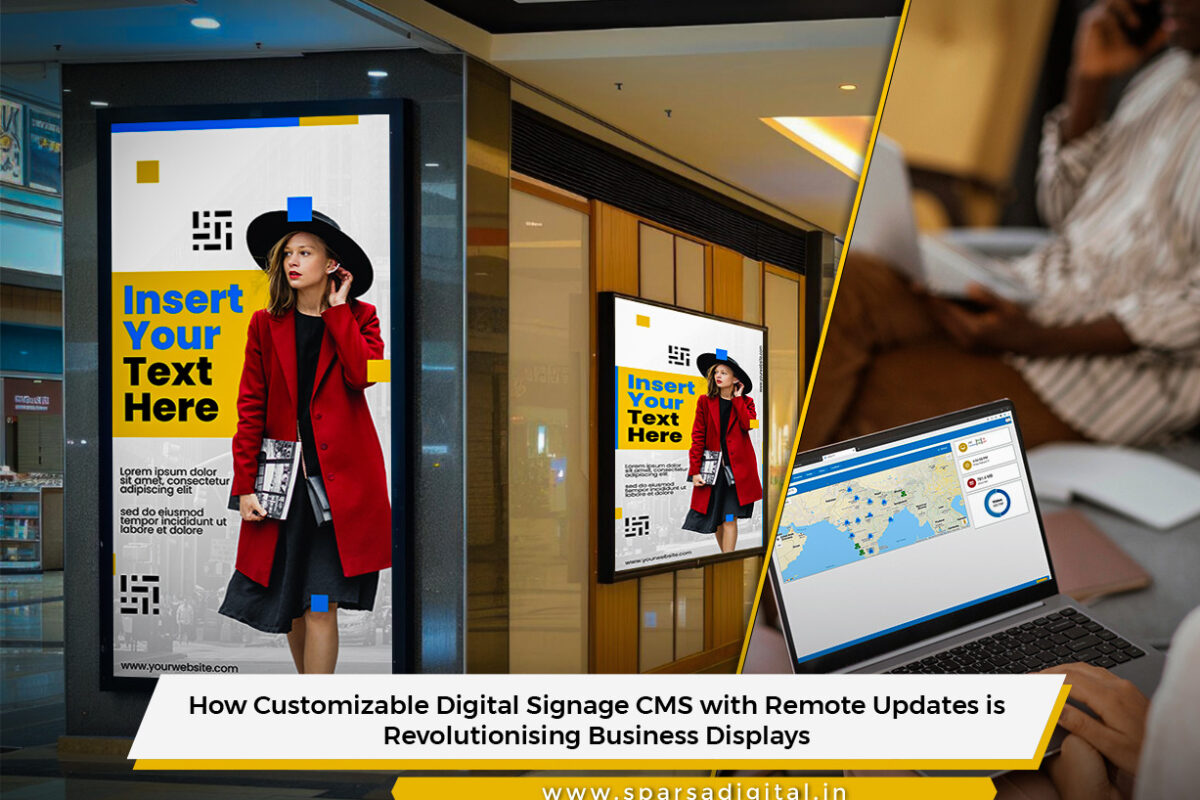
How Customizable Digital Signage CMS with Remote Updates is Revolutionising Business Displays

How Customizable Digital Signage CMS with Remote Updates is Revolutionising Business Displays

In a fast-moving, visually-driven business landscape, communication must be instant, targeted, and impactful. From retail stores and corporate offices to restaurants and transportation hubs, digital displays have become essential tools for delivering real-time information and captivating visual content. However, managing these displays across multiple locations or rapidly updating messages in response to changing conditions used to be a logistical nightmare.

That’s where the combination of a customized digital signage CMS and digital signage remote content update capability has transformed the game. Businesses can now control their screens from anywhere, schedule campaigns, and tailor displays to specific audiences without ever being on-site.

In this blog, we’ll explore how this powerful combination is revolutionising business displays, the benefits for various industries, the technology that makes it possible, and the future of remote-enabled signage.

1. The Evolution of Business Displays

Business displays have come a long way from static posters and printed boards. Early digital screens required manual content loading, often via USB drives, and offered little flexibility. The process was time-consuming, error-prone, and limited to what could be physically delivered to the screen.

The arrival of digital signage remote content update technology changed this forever. Suddenly, a marketing team in one city could control and refresh dozens, even hundreds, of screens around the country in real-time. Combined with the ability to customize digital signage CMS features for each industry’s unique needs, this advancement turned static displays into dynamic, strategic communication tools.

2. What is a Digital Signage CMS?

A Content Management System (CMS) for digital signage is a software platform that allows businesses to create, organize, schedule, and distribute content to their display screens. A customized digital signage CMS offers flexibility to adapt the interface, content formats, and scheduling capabilities to specific business goals.

Key functions of a modern CMS include:

  • Centralized content control for multiple locations.

  • Scheduling content by time, date, or location.

  • Integration with live data sources (weather, social feeds, inventory).

  • User permissions for different team members.

  • Templates for fast content creation.

When paired with digital signage remote content update capabilities, a CMS becomes a powerful central hub for all visual communications.

3. How Remote Content Updates Work

A digital signage remote content update system uses an internet connection to push new media files, schedules, or settings to displays in real-time. This typically involves:

  1. Uploading content to the CMS platform.

  2. Selecting target screens or groups for the update.

  3. Scheduling immediate or timed deployment.

  4. Syncing updates via secure cloud or network connections.

This means a retail chain can change its promotions across all stores in minutes, or a transport operator can update arrival boards instantly when schedules shift.

4. Why Businesses are Choosing Customizable CMS with Remote Updates

The synergy between customized digital signage CMS and digital signage remote content update delivers several game-changing advantages:

4.1 Instant Messaging

Emergencies, flash sales, or breaking news can be displayed in seconds, ensuring your audience always sees timely, relevant information.

4.2 Location-Specific Content

You can customize digital signage CMS rules to deliver unique content to different stores, offices, or regions, all from the same dashboard.

4.3 Reduced Operational Costs

Remote updates eliminate the need for on-site staff to manage screens, cutting travel time and expenses.

4.4 Brand Consistency

Ensures all displays use the same brand templates, colors, and tone, regardless of location.

5. Key Features to Look for in a Customizable CMS

If you’re considering investing in a customized digital signage CMS with digital signage remote content update, look for these must-have features:

  • Drag-and-drop content creation tools for ease of use.

  • Multi-user support with role-based permissions.

  • Automated scheduling for seasonal or time-sensitive campaigns.

  • Cloud-based storage for media assets.

  • Real-time monitoring of display health and playback status.

  • Integration APIs for POS systems, CRMs, and live feeds.

6. Industry Applications

6.1 Retail

Retailers use digital signage remote content update to change pricing, promote limited-time offers, and tailor product displays to local demographics.

6.2 Hospitality

Hotels and restaurants customize digital signage CMS to update menus, event schedules, and welcome messages for guests, often across multiple properties.

6.3 Transportation

Airports, train stations, and bus terminals depend on instant digital signage remote content update to relay real-time schedules, gate changes, and emergency alerts.

6.4 Corporate

Large offices use customized digital signage CMS tools to share internal communications, KPIs, and meeting room bookings across campuses.

7. Benefits of Remote-Enabled, Customizable Signage

  1. Scalability – Easily expand to new locations without complex setup.

  2. Speed – Launch nationwide campaigns in seconds.

  3. Accuracy – Reduce human errors in manual updates.

  4. Engagement – Use targeted, dynamic visuals to capture attention.

  5. Analytics – Track content performance and audience engagement.

8. The Technology Behind It

A digital signage remote content update system typically relies on:

  • Cloud-based servers for global accessibility.

  • Encrypted data transfer for security.

  • Smart media players connected to each display.

  • Responsive CMS interfaces accessible from desktop or mobile.

With a customized digital signage CMS, these technologies can be adapted for your specific workflows, branding, and integration needs.

9. Common Mistakes to Avoid

  • Overloading screens with too much information.

  • Neglecting to customize digital signage CMS templates for readability.

  • Failing to schedule digital signage remote content update checks to ensure delivery.

  • Using low-resolution assets on high-definition displays.

The next generation of customized digital signage CMS platforms will incorporate:

  • AI-driven personalization of content.

  • Voice-controlled updates for hands-free operation.

  • Integration with IoT devices for contextual messaging.

  • 5G connectivity for faster remote updates.

Conclusion

The combination of a customized digital signage CMS and digital signage remote content update capabilities is transforming how businesses communicate. No longer constrained by location or slow manual processes, organizations can deliver targeted, dynamic, and consistent messages to audiences anywhere, anytime.

From boosting sales in retail to improving passenger experiences in transport hubs, this technology is proving to be one of the most valuable tools in modern business communication. As customization and remote capabilities evolve, their impact will only deepen, making them essential for any forward-thinking organization.

FAQs

Q1: Can I control multiple locations with one CMS?
 A: Yes, a customised digital signage CMS allows centralized control of all screens from a single platform.

Q2: How fast can I update my displays remotely?
 A: With a digital signage remote content update, changes can be live in seconds, depending on internet speed.

Q3: Is cloud storage necessary for remote updates?
 A: While not mandatory, cloud storage offers better scalability and accessibility for content management.

Q4: Can I schedule updates in advance?
 A: Absolutely,  most CMS platforms allow you to set schedules for days, weeks, or months ahead.

Q5: What industries benefit most from this technology?
 A: Retail, hospitality, transportation, education, and corporate sectors all see major benefits.

Multi Product Comparison Using Lift & Learn

Unlocking the Future of In-Store Engagement: Multi Product Comparison Using Lift & Learn

In the evolving landscape of brick-and-mortar retail, the line between physical and digital shopping continues to blur. As customers demand personalized, engaging, and information-rich experiences, retailers are embracing new technologies to meet expectations. One such innovative solution that’s revolutionizing physical stores is Lift & Learn, especially when applied for multi product comparison in retail environments.

What is Lift & Learn?

Lift & Learn is an interactive retail technology that uses sensors and digital displays to offer contextual content when a customer picks up (or “lifts”) a product. It’s a form of experiential retail that allows consumers to “learn” more about products in real time, without relying on store associates or static signage.

When integrated with AI and analytics platforms, Lift & Learn systems not only enhance user engagement but also provide retailers with valuable insights into customer behavior, dwell time, and product interest.

The Rise of Retail Lift & Learn

The Retail Lift & Learn experience began primarily in high-end electronics and cosmetics stores but has rapidly spread to categories like home improvement, fashion, and even FMCG. In a world where customers often research online before visiting stores, the ability to compare products hands-on using digital interfaces offers a powerful edge.

The technology typically involves:

  • RFID or weight sensors installed under each product

  • A digital screen placed nearby

  • Real-time software that recognizes lifted items

  • Contextual content such as features, specs, price comparisons, reviews, or video demos

Multi Product Comparison Using Lift & Learn

While Lift & Learn initially focused on single-product storytelling, its real power shines when used for multi product comparison.

Imagine a scenario in a cosmetics store: a customer lifts a foundation bottle from Brand A. A screen lights up showing skin tones, ingredients, price, and reviews. Now, the customer lifts Brand B’s product with their other hand. Instantly, the screen updates to compare both products side-by-side, covering texture, SPF protection, cruelty-free status, and more.

This multi product comparison using Lift & Learn makes decision-making smoother and more informed, eliminating the need to pull out a smartphone for research or flag down a store assistant.

How Multi Product Comparison Works in Retail Lift & Learn

Here’s a simplified flow of how this works:

  1. Setup: Each product is tagged with an RFID chip or placed on a pressure-sensitive platform.

  2. Trigger: When one or more products are lifted, the system identifies which items are selected.

  3. Content Delivery: The screen or tablet displays individual specs or a dynamic side-by-side comparison.

  4. Interaction: Some systems allow further interaction via touchscreens, filtering based on preferences like “vegan only” or “under ₹1000.”

  5. Analytics: The backend tracks lift frequency, combination patterns (e.g., how often Brand A and Brand B are compared), and dwell time.

This seamless multi product comparison using Lift & Learn adds layers of digital convenience to physical shopping.

Benefits of Multi Product Comparison Using Lift & Learn

1. Enhanced Customer Decision-Making

By visually comparing products side-by-side, customers make faster, more confident decisions. They no longer rely solely on memory or packaging cues.

2. Reduces Dependency on Sales Staff

While in-store experts are helpful, they can’t always serve every customer simultaneously. Lift & Learn bridges this gap.

3. Increased Dwell Time

Studies show that interactive displays increase dwell time by up to 40%. More time spent with products = higher chances of conversion.

4. Personalization at Scale

Modern Lift & Learn platforms can connect with loyalty apps or AI to personalize product comparisons based on the customer’s previous preferences or skin tone.

5. Data-Driven Insights for Retailers

Retailers can track:

  • Which products are most compared

  • Conversion rates after lift

  • Regional or demographic preferences

This data can guide stock planning, pricing strategies, and even store layout.

Industries Leveraging Retail Lift & Learn

Beauty & Cosmetics

Comparing lipsticks, moisturizers, and foundations based on ingredients, suitability, and skin tone.

Consumer Electronics

Comparing mobile phones, cameras, headphones by specs, reviews, and deals.

Apparel & Footwear

Highlighting differences in material, size, style recommendations, and availability.

Grocery & FMCG

Lift & Learn kiosks for organic vs. regular produce, nutrition facts, and eco-ratings.

Furniture & Home Decor

Display differences in materials, warranties, fabric care, and 3D renderings of furniture in home spaces.

Real-World Examples of Retail Lift & Learn in Action

1. Samsung Smart Retail Zone

Samsung used Lift & Learn in its experience stores to let customers compare smartphones or smartwatches by lifting two devices at once. The screen immediately offered side-by-side comparisons on battery life, camera specs, and pricing.

2. Sephora Smart Shelf

Sephora deployed smart shelves allowing customers to compare moisturizers by ingredients and customer reviews using Lift & Learn sensors, thereby reducing product returns and increasing upsell potential.

3. Home Depot Interactive Displays

Customers can compare drills or power tools based on torque, weight, battery life, and user ratings using real-time product lift detection.

Retail Design Tips for Implementing Lift & Learn

If you’re considering Retail Lift & Learn in your store, here are best practices:

Product Placement

Ensure sufficient spacing so users can comfortably lift one or more products at a time.

Sensor Accuracy

Use high-quality RFID or weight-based sensors to avoid false triggers.

Content Clarity

Keep comparison content visually clean—use icons, star ratings, and bullet points rather than heavy text.

Accessibility

Ensure the displays are reachable and readable for all demographics.

Integration with POS and CRM

Linking Lift & Learn data with your CRM system helps track customer behavior across offline and online touchpoints.

Challenges in Multi Product Comparison Using Lift & Learn

❌ Initial Setup Cost

Hardware (RFID, screens), installation, and software integration can be expensive.

❌ Maintenance

Sensors and displays need regular checks to ensure accuracy.

❌ Staff Training

Store associates should be trained to explain the tech to customers and troubleshoot if necessary.

❌ Privacy Concerns

If integrated with customer profiles or loyalty apps, retailers must comply with data privacy laws (e.g., GDPR, Indian Data Protection Act).

The Future of Retail Lift & Learn

The next evolution involves voice-enabled Lift & Learn, where a customer can lift a product and ask, “What are the key differences between this and the previous item?”

Additionally, AR integration will allow users to lift a product and see it virtually in their environment (e.g., how a lipstick looks on their skin tone or how a speaker sounds in their room layout).

As AI-powered personalization becomes mainstream, the content shown via Lift & Learn will be hyper-relevant, down to suggesting eco-friendly alternatives or bundling options based on basket analysis.

Q1. What is the Lift & Learn technology used for?

Lift & Learn is used to provide customers with interactive, real-time product information as soon as they pick up a product. It enhances in-store engagement and helps customers make informed purchase decisions.

Q2. How does multi product comparison using Lift & Learn work?

It allows customers to pick up two or more products and receive instant side-by-side comparisons on a digital screen- covering features, prices, reviews, and more.

Q3. What kind of stores benefit most from Retail Lift & Learn?

Retailers in electronics, beauty, home décor, apparel, and even FMCG see strong ROI from implementing Lift & Learn technology.

Q4. Is Lift & Learn expensive to implement?

While there is a setup cost involved (hardware, installation, content creation), many retailers find the ROI compelling due to increased conversions, data insights, and customer satisfaction.

Q5. Can Lift & Learn be integrated with mobile apps or loyalty programs?

Yes, modern systems can sync with customer profiles, offering personalized comparisons and product recommendations based on purchase history or preferences.

Q6. Does this technology collect customer data?

It can, especially when integrated with CRMs or mobile apps. Retailers must ensure data collection is consensual and compliant with privacy laws.

Q7. Can customers compare more than two products?

Depending on the system setup, yes. Some platforms allow comparisons of three or more products, although usability may decrease with screen clutter.

Conclusion

Multi product comparison using Lift & Learn is not just a trend, it’s the future of how consumers interact with products in physical spaces. As retail continues to evolve toward personalization and interactivity, technologies like Retail Lift & Learn are setting the gold standard for what in-store experience should feel like.

Retailers who adopt early will not only boost sales but also gain a treasure trove of insights into consumer preferences, comparison behaviors, and conversion patterns.

So whether you’re a brand, retailer, or technologist, now’s the time to lift, learn, and lead.

Still deciding? Get in touch with our experts at Sparsa Digital, and start your journey now! Connect today.

Revolutionizing Retail Pharmacy Stock Management and Emerging Trends Shaping the Industry

The Future of Retail Pharmacy: The Game-Changing Role of Digital Price Tags in Pharmacy Stores

Table of Contents

  1. Introduction

  2. Understanding the Evolution of Retail Pharmacy

  3. What Drives Digital Transformation in Retail Pharmacy

  4. What Are Digital Price Tags in Pharmacy Stores?

  5. Key Benefits of Digital Price Tags in Pharmacy Stores

  6. Operational Impact on Retail Pharmacy Chains

  7. Case Studies: How Retail Pharmacies Are Adapting

  8. Technical Aspects of Implementation

  9. Regulatory Compliance and Consumer Protection

  10. Challenges and Solutions for Digital Price Tags

  11. Future Trends in Digital Retail Pharmacy Environments

  12. Conclusion

  13. Frequently Asked Questions (FAQs)

1. Introduction

The healthcare industry is undergoing a technological revolution, and at the heart of this transformation lies the evolving retail pharmacy. No longer confined to simply dispensing prescriptions, modern pharmacies are becoming tech-powered customer experience hubs. A standout innovation gaining significant momentum is the use of digital price tags in pharmacy stores. These tags aren’t just replacements for paper labels, they are part of a larger ecosystem of automation, accuracy, and operational efficiency.

As patient expectations shift and competition intensifies, the adoption of digital tools has become more of a necessity than a choice. In this article, we explore how digital price tags in pharmacy stores are changing the way retail pharmacies function, and what this means for the future of the industry.

2. Understanding the Evolution of Retail Pharmacy

Traditionally, a retail pharmacy was a brick-and-mortar business focused mainly on dispensing medications, managing inventory, and offering limited over-the-counter products. Price updates were manual, promotions were printed and posted, and most operations were labor-intensive.

Today, a retail pharmacy must compete with online pharmacies, e-commerce giants, and fast-moving consumer health brands. This shift has forced pharmacies to reconsider how they operate, with many embracing automation, mobile services, personalized marketing, and digital price tags in pharmacy stores as integral components of this transformation.

3. What Drives Digital Transformation in Retail Pharmacy

Several factors are accelerating the digital transformation of the retail pharmacy sector:

  • Consumer Expectation: Customers now expect real-time pricing, personalized experiences, and a seamless checkout process, much like in supermarkets or electronics stores.

  • Frequent Price Fluctuations: Prices in a retail pharmacy can change frequently due to regulatory mandates, supplier adjustments, or promotional offers.

  • Inventory Management Needs: Modern pharmacies carry thousands of SKUs across personal care, supplements, and wellness products. Manual price labeling is inefficient.

  • Compliance Pressures: Pricing accuracy is a legal requirement in many jurisdictions, especially when dealing with prescription and OTC medications.

Digital price tags in pharmacy stores provide a smart solution to address these challenges while enhancing customer trust.

4. What Are Digital Price Tags in Pharmacy Stores?

Digital price tags, also called ESLs (Electronic Shelf Labels), are battery-powered, connected displays used to show real-time pricing and product information. These displays are synced with the central pricing system of the retail pharmacy, allowing instant updates across all shelves and product categories.

In pharmacy stores, where product pricing and labeling regulations are strict, ESLs ensure consistent and up-to-date information. These systems may also feature:

  • Barcode integration

  • Product origin info

  • Promotion alerts

  • Stock availability

  • Multilingual display options

Digital price tags in pharmacy stores are much more than electronic signs, they are precision tools for automation and customer communication.

5. Key Benefits of Digital Price Tags in Pharmacy Stores

The integration of digital price tags in pharmacy stores offers wide-ranging benefits that address both operational efficiency and customer satisfaction.

a. Real-Time Price Updates

When prices change- whether due to a supplier’s update or an in-store promotion: ESLs can instantly reflect those changes across every retail pharmacy outlet.

b. Improved Compliance

Medication prices often come under scrutiny by regulators. ESLs reduce human error and ensure that displayed prices are always correct, reducing legal and reputational risks.

c. Lower Operational Costs

Although the upfront cost of installing digital price tags in pharmacy stores is significant, over time, pharmacies save substantially on printing costs, paper waste, and labor hours.

d. Better Inventory Sync

Price tags can be linked to real-time inventory data, helping staff and customers know what’s in stock and what’s not critical in any retail pharmacy setting.

e. Sustainability

Reducing paper use aligns with green initiatives. Sustainable business practices are now expected from progressive retail pharmacies.

6. Operational Impact on Retail Pharmacy Chains

Implementing digital price tags in pharmacy stores isn’t just about pricing; it transforms how pharmacies operate. Consider the following:

  • Centralized Pricing Control: A head office can push pricing changes across all retail pharmacy branches within seconds.

  • Improved Workforce Allocation: Employees previously dedicated to re-tagging shelves can now be reallocated to customer service roles.

  • Error-Free Promotion Management: Launching a flash sale or weekly deal in a retail pharmacy becomes as easy as clicking a button.

This level of agility provides a strong competitive advantage, particularly for multi-location retail pharmacy chains.

7. Case Studies: How Retail Pharmacies Are Adapting

Case Study 1: Apollo Pharmacy (India)

Apollo, a major retail pharmacy chain, implemented digital price tags in pharmacy stores across high-traffic locations in Bangalore. They reported a 90% reduction in pricing discrepancies and a 30% boost in promotional campaign success rates.

Case Study 2: Walgreens Boots Alliance (USA/UK)

Walgreens piloted digital price tags in pharmacy stores across several states. The result? Faster pricing updates, real-time compliance, and significant paper waste reduction.

Case Study 3: Pharmasave (Canada)

In suburban areas, Pharmasave noticed that ESLs helped smaller teams in stores operate with greater accuracy and less staff training, empowering local pharmacists to focus more on patient care.

8. Technical Aspects of Implementation

Bringing digital price tags in pharmacy stores to life requires infrastructure planning:

  • Network Setup: ESLs use either proprietary wireless networks or low-power Bluetooth/Wi-Fi.

  • Battery Life: Most ESLs offer 5–10 years of battery life, reducing maintenance overhead.

  • CMS Integration: They integrate with Pharmacy Management Systems and POS (Point-of-Sale) systems.

  • Data Security: End-to-end encryption ensures pricing data isn’t compromised.

For a modern retail pharmacy, this isn’t a plug-and-play solution, but with the right vendor, it’s highly scalable.

9. Regulatory Compliance and Consumer Protection

In most countries, retail pharmacy operations are governed by strict consumer protection and health authority regulations. ESL systems must:

  • Display clear pricing and dosage information

  • Support accessibility (e.g., readable fonts, screen contrast)

  • Comply with pharmaceutical pricing laws

Digital price tags in pharmacy stores ensure consistency and transparency, helping stores avoid hefty fines or lawsuits tied to inaccurate pricing.

10. Challenges and Solutions for Digital Price Tags

Despite the advantages, adopting digital price tags in pharmacy stores isn’t without its challenges:

ChallengeSolution
High Initial InvestmentROI is achieved through labor savings and reduced errors
System DowntimeRedundant cloud backups and dual networks
Staff TrainingVendor-led onboarding and continuous learning
Integration IssuesCustom APIs and modular ESL systems

Smart retail pharmacies work with vendors that offer end-to-end onboarding to ensure smooth transitions.

Looking ahead, digital price tags in pharmacy stores will serve as gateways to even more advanced features:

  • AI-Powered Dynamic Pricing: Pricing adjusted in real-time based on demand, stock levels, and time of day

  • Interactive Labels: Tap or scan ESLs to get info, dosage guides, video content, and even pharmacist chat

  • IoT Integration: ESLs connected to motion sensors to track footfall and product interest

  • Personalized Promotions: Offers synced with loyalty cards or mobile apps

The retail pharmacy of the future is automated, intelligent, and highly responsive to both consumer behavior and compliance requirements.

12. Conclusion

The integration of digital price tags in pharmacy stores is not just a futuristic idea, it is the present-day reality reshaping how modern retail pharmacies function. From reducing errors and streamlining operations to enhancing customer trust and ensuring compliance, ESLs are revolutionizing the sector.

As competition rises and regulations tighten, forward-thinking retail pharmacy brands that embrace digital pricing now will be best positioned for growth, trust, and long-term sustainability.

The age of paper price tags is coming to a close, and in its place, a smarter, faster, and more accurate retail pharmacy experience is emerging.

13. Frequently Asked Questions (FAQs)

Q1. What are digital price tags in pharmacy stores?

Digital price tags are electronic labels used to display product pricing in real time within retail pharmacies. They replace traditional paper tags and update prices automatically via a central system.

They reduce human error, enhance customer experience, enable dynamic pricing, and save labor hours, making them ideal for busy retail pharmacy environments.

Q3. Are digital price tags cost-effective for small pharmacy stores?

While the upfront cost is high, long-term savings in labor and error reduction make digital price tags in pharmacy stores worthwhile, even for smaller outlets.

Q4. How do these digital tags ensure compliance in a retail pharmacy?

They eliminate inconsistencies between shelf and system prices, helping retail pharmacies avoid regulatory violations and maintain customer trust.

Q5. What’s the future of digital pricing in pharmacy stores?

Expect integrations with AI, mobile devices, and IoT, turning digital price tags in pharmacy stores into interactive, intelligent tools for both consumers and store managers.