Why Your Business Needs a Digital Standee for Advertising in 2026

Why Your Business Needs a Digital Standee for Advertising in 2026

Marketing and advertising strategies are evolving rapidly. Traditional promotional methods like posters, banners, and printed standees are slowly being replaced by smarter and more engaging technologies. One of the most effective tools transforming the advertising landscape today is the digital standee.

Businesses across retail, hospitality, healthcare, and corporate sectors are realizing why businesses need digital standee solutions for modern marketing. These dynamic displays allow companies to showcase video content, promotions, product information, and brand stories in a visually engaging way.

In 2026, customer attention spans are shorter than ever. Static advertisements often go unnoticed, but moving visuals and dynamic digital content instantly capture attention. This is why many companies are investing in digital signage for advertising as part of their marketing strategy.

What Is a Digital Standee?

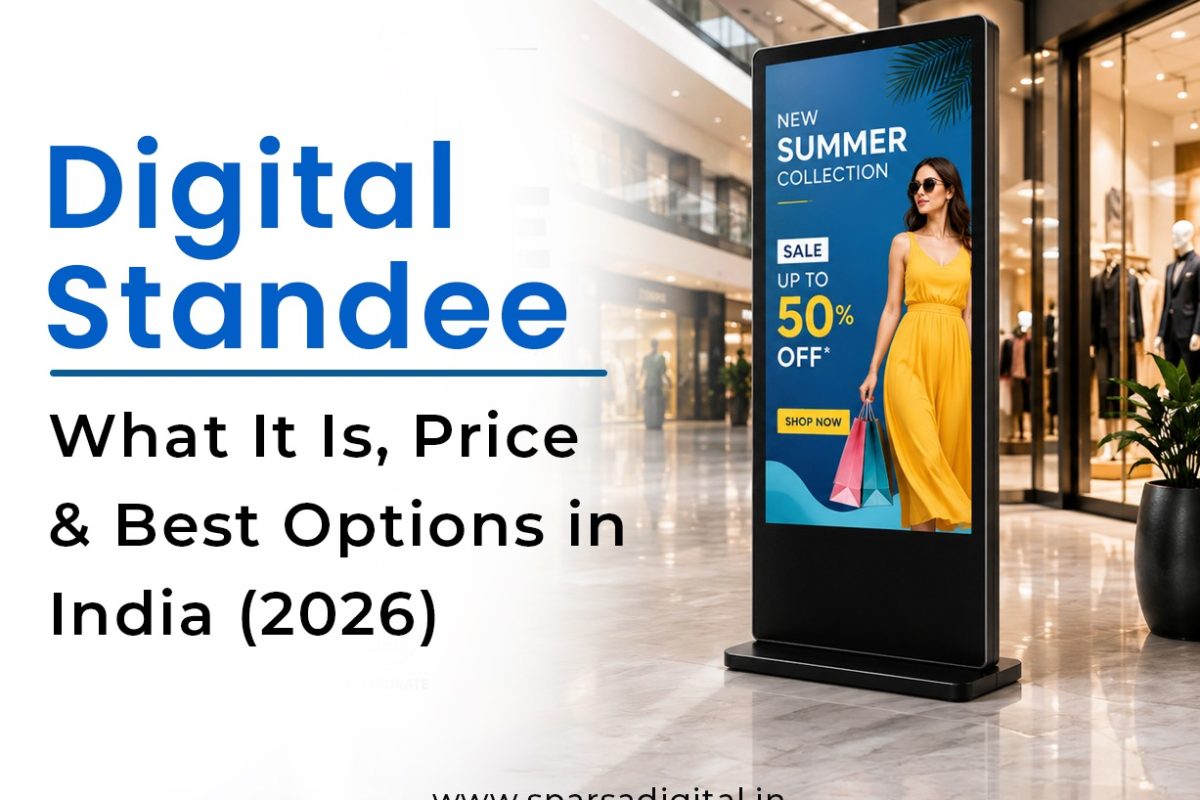
A digital standee is a freestanding digital display screen used for advertising and information sharing in commercial environments. Unlike traditional printed standees, digital standees display dynamic content such as:

  • Videos
  • Animated graphics
  • Product promotions
  • Brand campaigns
  • Slideshows
  • Interactive information

These displays are commonly placed in high-footfall areas such as retail stores, shopping malls, restaurants, airports, and corporate offices.

Businesses that adopt indoor advertising display solutions like digital standees can update their promotional content instantly without printing new materials.

The Rise of Digital Signage for Advertising

Digital signage is growing rapidly worldwide, and India is no exception. With the increasing adoption of smart displays and interactive technology, businesses are moving toward digital signage for advertising to stay competitive.

Several factors are driving this growth:

  • Increasing demand for engaging customer experiences
  • Growth of organized retail and shopping malls
  • Advancements in display technology
  • Affordable digital signage hardware
  • Remote content management systems

Because of these developments, companies are exploring digital display marketing benefits to improve brand communication and customer engagement.

Why Businesses Need Digital Standee in 2026

There are many reasons why businesses are shifting to digital standees for advertising. Let’s explore the most important advantages.

1. Captures Customer Attention Instantly

One of the biggest digital standee advantages is its ability to capture attention quickly.

Human brains naturally respond to motion and light. Moving visuals on a screen stand out much more than static posters.

Digital standees use:

  • High-resolution displays
  • Motion graphics
  • Animated promotions
  • Video advertisements

These elements make them highly effective digital advertising displays for business growth.

When placed near store entrances or checkout areas, digital standees significantly increase visibility and customer engagement.

2. Dynamic Content Improves Customer Engagement

Unlike traditional posters that display a single message, digital standees can showcase multiple messages in rotation.

For example, a retail store can display:

  • New product launches
  • Seasonal offers
  • Brand videos
  • Customer testimonials

This dynamic approach keeps customers engaged for longer periods, increasing the chances of conversion.

This is one of the biggest digital display marketing benefits for modern businesses.

3. Cost-Effective Advertising in the Long Run

Many businesses initially hesitate to invest in digital signage due to the upfront cost. However, digital standees actually reduce advertising costs over time.

Traditional advertising requires frequent printing of posters, banners, and standees whenever promotions change.

With digital standees, businesses can update content instantly through:

  • USB plug-and-play
  • Mobile apps
  • Cloud-based content management systems

Over time, these savings make digital signage a cost-effective indoor advertising display solution.

4. Real-Time Content Updates

One of the biggest advantages of digital signage is flexibility.

Businesses can update their advertising content in real time.

For example:

A restaurant can change menu promotions instantly during peak hours.

Retail stores can highlight flash sales or limited-time offers.

Corporate offices can display announcements or event information.

This flexibility is a major reason why businesses need digital standee technology for modern advertising.

5. Improves Brand Image and Professionalism

Customers often associate modern technology with innovation and professionalism.

Using digital signage helps businesses create a premium brand experience.

A sleek digital display in a store or reception area instantly elevates the overall ambiance.

Compared to printed banners, digital standees look more professional and appealing.

This is especially important for brands that want to position themselves as modern and technology-driven.

6. Supports Multiple Marketing Campaigns

Digital standees allow businesses to run multiple campaigns simultaneously.

For example:

A retail store can display:

  • Discounts
  • Loyalty programs
  • Product launches
  • Brand storytelling content

All these messages can run on a loop without needing multiple physical displays.

This makes digital standees highly efficient digital advertising displays for business growth.

7. Enhances In-Store Customer Experience

Customer experience has become a key factor in purchasing decisions.

Interactive and engaging displays improve the overall shopping experience.

For example:

  • Customers can view product demonstrations
  • Restaurants can show food preparation videos
  • Stores can display styling ideas for clothing

These experiences encourage customers to spend more time inside the store.

As a result, benefits of digital signage in retail stores include higher engagement and increased sales.

8. Easy Integration With Marketing Strategies

Digital standees can be integrated with other marketing channels such as:

  • Social media campaigns
  • QR codes
  • Online promotions
  • Loyalty programs

For example, a digital standee can display a QR code for customers to follow the brand on social media or access exclusive offers.

This integration strengthens omnichannel marketing strategies.

9. Environmentally Friendly Advertising

Traditional advertising generates a significant amount of waste through printed banners and posters.

Digital standees eliminate the need for constant printing.

Businesses can promote their campaigns digitally, reducing paper waste and supporting sustainable marketing practices.

This environmentally friendly approach is becoming increasingly important for brands and consumers alike.

10. Boosts Sales and Conversions

Perhaps the most important reason why businesses need digital standee is its impact on sales.

Digital signage can influence purchasing decisions by:

  • Highlighting promotions
  • Showing product benefits
  • Creating urgency through limited-time offers

Studies show that digital signage increases customer engagement and improves conversion rates.

This makes digital standees one of the most effective indoor advertising display solutions for businesses.

Is Digital Standee Good for Advertising?

Yes, digital standees are extremely effective advertising tools.

Compared to traditional marketing materials, digital displays offer:

  • Higher visibility
  • Better engagement
  • Dynamic content capabilities
  • Real-time updates

Because of these advantages, many companies are shifting their marketing budgets toward digital signage for advertising.

Businesses looking to grow their brand presence should seriously consider adopting digital standee technology.

Digital Standee Marketing Ideas for Businesses

To maximize the impact of digital signage, businesses should use creative marketing strategies.

Here are some effective digital standee marketing ideas.

Showcase Product Demonstrations

Short product demonstration videos help customers understand the value of a product quickly.

This strategy works especially well in:

  • Electronics stores
  • Beauty and skincare outlets
  • Apparel stores

Highlight Limited-Time Offers

Flash sales and limited-time discounts create urgency among customers.

Digital standees can display countdown timers or promotional messages.

Share Customer Testimonials

Displaying customer reviews or testimonials builds trust and credibility.

Customers often rely on peer recommendations before making purchasing decisions.

Promote Social Media Campaigns

Businesses can display their Instagram or social media handles on digital standees.

This encourages customers to engage with the brand online.

Use Interactive Content

Touch-screen digital standees can provide interactive experiences such as:

  • Product catalogs
  • Store directories
  • Custom recommendations

Interactive experiences improve customer engagement and brand recall.

Industries Benefiting From Digital Standee Advertising

Many industries are already leveraging digital signage technology.

Let’s explore some sectors that benefit the most.

Retail Industry

Retail stores use digital standees for:

  • Product promotions
  • Seasonal sales campaigns
  • Store navigation

The benefits of digital signage in retail stores include higher customer engagement and improved product visibility.

Restaurants and Cafes

Restaurants use digital displays for:

  • Menu boards
  • Food promotions
  • Combo offers

Food visuals displayed on digital screens significantly increase order value.

Healthcare Sector

Hospitals and clinics use digital signage for:

  • Patient guidance
  • Health awareness campaigns
  • Appointment information

Digital displays improve communication within healthcare facilities.

Corporate Offices

Companies use digital standees for:

  • Internal communication
  • Visitor information
  • Event announcements

These displays enhance workplace communication and branding.

Shopping Malls

Malls use digital standees for:

  • Brand advertisements
  • Event promotions
  • Store directories

Digital signage also generates advertising revenue for mall operators.

Future of Digital Advertising Displays

The future of advertising is increasingly digital and interactive.

Emerging technologies are enhancing the capabilities of digital standees.

Some upcoming trends include:

  • AI-powered digital signage
  • Personalized advertisements
  • Data-driven marketing displays
  • Cloud-based content management

These innovations will further strengthen the digital display marketing benefits for businesses.

As technology evolves, digital standees will become even more powerful tools for engaging customers and driving sales.

Conclusion

In today’s competitive business environment, traditional advertising methods are no longer enough to capture customer attention. Businesses need smarter and more engaging ways to communicate their brand message.

This is exactly why businesses need digital standee technology in 2026.

Digital standees offer numerous advantages, including dynamic content display, real-time updates, improved customer engagement, and long-term cost savings. They enhance brand visibility, create immersive customer experiences, and support modern marketing strategies.

Whether used in retail stores, restaurants, corporate offices, or healthcare facilities, digital signage is proving to be one of the most effective indoor advertising display solutions available today.

By investing in digital standees, businesses can transform their advertising approach, attract more customers, and drive sustainable growth.

FAQs

Why should businesses use digital standees?

Businesses use digital standees because they attract more attention than traditional posters. They display dynamic content such as videos, promotions, and brand campaigns, making them highly effective for digital signage for advertising and customer engagement.

Is digital standee better than traditional advertising?

Yes, digital standees are more effective than traditional advertising because they allow real-time content updates, dynamic visuals, and multiple marketing messages. These features improve engagement and reduce long-term printing costs.

What industries benefit from digital signage?

Many industries benefit from digital signage, including:

  • Retail stores
  • Restaurants and cafes
  • Shopping malls
  • Hospitals and clinics
  • Corporate offices
  • Airports and transportation hubs

These sectors use digital displays to improve communication, promotions, and customer experience.

How does digital standee increase sales?

Digital standees increase sales by attracting customer attention and highlighting promotions. Visual product demonstrations, limited-time offers, and engaging videos influence purchasing decisions and encourage impulse buying.

Is digital standee good for advertising?

Yes, digital standees are excellent advertising tools. They provide dynamic and engaging content, making them far more effective than static posters or banners for modern marketing.

Best Digital Standee Specifications What to Check Before Buying

Best Digital Standee Specifications: What to Check Before Buying

Digital signage is becoming a powerful marketing tool for modern businesses. From retail stores and shopping malls to corporate offices and hospitals, digital displays are replacing traditional posters and banners. One of the most popular digital advertising tools today is the digital standee.

However, many businesses make the mistake of purchasing a display without properly evaluating its technical specifications. Understanding digital standee specifications is essential to ensure you invest in the right display for your business.

Whether you are planning to install a digital standee in a retail store, restaurant, or corporate lobby, choosing the correct specifications will determine the display quality, durability, and long-term performance of the device.

What Is a Digital Standee?

A digital standee is a freestanding digital display screen designed to showcase promotional content, advertisements, and information in commercial environments. Unlike traditional printed standees, digital standees display dynamic content such as videos, images, animations, and slideshows.

Businesses use digital standees for:

  • Product promotions
  • Brand campaigns
  • Store navigation
  • Event promotions
  • Customer information displays

Because of their versatility, digital standees are widely used as indoor advertising display solutions in modern marketing strategies.

Understanding digital signage display specs ensures you choose a display that delivers the best visual experience for your audience.

Why Understanding Digital Standee Specifications Is Important

When businesses purchase digital signage without understanding the specifications, they often face problems such as:

  • Poor display visibility
  • Low brightness in well-lit areas
  • Slow performance
  • Compatibility issues
  • Limited content options

Knowing the technical features of digital standee helps businesses make smarter buying decisions.

The right specifications ensure:

  • High-quality visuals
  • Better durability
  • Smooth content playback
  • Long-term reliability

This is why understanding how to choose digital standee specifications is crucial before investing in a digital display.

Key Digital Standee Specifications to Check Before Buying

There are several important factors that determine the performance of a digital standee. Let’s explore the most important digital standee specifications businesses should evaluate.

1. Screen Size

Screen size is one of the first factors to consider when purchasing a digital standee.

Common digital standee sizes include:

  • 32 inch
  • 43 inch
  • 49 inch
  • 50 inch
  • 55 inch
  • 65 inch

The ideal screen size depends on the location and viewing distance.

For example:

  • Small retail stores can use 32-43 inch displays
  • Shopping malls and large showrooms often use 49-55 inch displays
  • Large commercial spaces may use 65 inch or larger screens

Choosing the right screen size improves visibility and ensures better customer engagement.

2. Display Resolution

Resolution determines how sharp and clear the content appears on the screen.

Common digital signage resolutions include:

  • HD (1280 × 720)
  • Full HD (1920 × 1080)
  • 4K Ultra HD (3840 × 2160)

For most commercial applications, Full HD resolution is considered the standard.

Businesses that display high-quality videos or detailed graphics may prefer 4K displays.

If you are wondering about the best resolution for digital signage display, Full HD offers an excellent balance between quality and cost.

Higher resolution displays provide:

  • Sharper images
  • Clearer text
  • Better video playback

Resolution is one of the most critical digital standee features for effective advertising.

3. Brightness Level

Brightness determines how visible the display is in different lighting conditions.

Brightness is measured in nits (cd/m²).

Typical brightness levels include:

  • 250-350 nits for basic indoor displays
  • 350-500 nits for commercial indoor displays
  • 700+ nits for high-brightness displays

For most indoor environments, the ideal digital standee brightness for indoor use is between 350 and 500 nits.

Higher brightness ensures better visibility in areas with strong ambient lighting such as malls or storefronts.

Brightness is an important part of digital standee resolution and brightness considerations.

4. Display Panel Type

The type of display panel significantly impacts image quality and viewing angles.

Common panel types include:

IPS Panel

IPS panels provide:

  • Better color accuracy
  • Wider viewing angles
  • Consistent brightness

Most high-quality digital standees use IPS panels.

VA Panel

VA panels offer:

  • Higher contrast ratios
  • Deeper blacks

However, viewing angles may be narrower compared to IPS panels.

For commercial displays, IPS panels are generally preferred.

5. Touch vs Non-Touch Display

Businesses should decide whether they need a touch-screen display.

Non-Touch Digital Standee

This type is commonly used for:

  • Advertisements
  • Promotional videos
  • Brand messaging

It is the most affordable option.

Touch Screen Digital Standee

Touch displays allow customer interaction.

They are commonly used for:

  • Product catalogs
  • Self-service kiosks
  • Store directories

Choosing between touch and non-touch displays is an important part of commercial digital standee features.

6. Operating System

Digital standees usually run on different operating systems.

The most common options include:

Android-Based Digital Standee

Android displays are widely used because they are:

  • Affordable
  • Easy to manage
  • Compatible with many applications

They also support remote content management systems.

Windows-Based Digital Standee

Windows displays offer more powerful computing capabilities.

They are ideal for:

  • Interactive applications
  • Business software integration
  • Complex user interfaces

The operating system should align with your business requirements.

7. Media Playback Support

A good digital standee should support multiple content formats.

Common supported formats include:

Video formats:

  • MP4
  • AVI
  • MOV

Image formats:

  • JPG
  • PNG
  • GIF

Document formats:

  • PDF
  • PowerPoint slides

This ensures smooth content playback and flexibility in advertising campaigns.

8. Connectivity Options

Connectivity plays a major role in content management.

Common connectivity features include:

  • Wi-Fi
  • Ethernet LAN
  • USB ports
  • HDMI ports
  • Bluetooth

These connectivity options allow businesses to easily update content and connect external devices.

Modern digital signage systems also support cloud-based content management through internet connectivity.

9. Content Management System (CMS)

A content management system allows businesses to control and update display content easily.

Advanced CMS features include:

  • Remote content updates
  • Multi-screen management
  • Scheduled content playback
  • Real-time content editing

CMS compatibility is an important part of digital signage display specs.

Businesses managing multiple displays benefit significantly from centralized content management.

10. Build Quality and Design

Since digital standees are placed in public environments, durability is important.

Key design factors include:

  • Metal or aluminum frame
  • Tempered glass screen protection
  • Anti-scratch display surface
  • Stable base stand

High-quality build materials ensure long-term performance and reliability.

11. Viewing Angle

Viewing angle determines how clearly the screen can be seen from different directions.

Standard viewing angles include:

  • 178° horizontal
  • 178° vertical

Wide viewing angles ensure the content remains visible even when customers are not standing directly in front of the display.

This is especially important in busy environments such as malls and retail stores.

12. Energy Efficiency

Energy consumption is another important factor.

Digital standees operate continuously in commercial environments, so energy efficiency helps reduce electricity costs.

Modern displays use LED technology which consumes less power compared to older LCD panels.

Energy-efficient displays are better for both operational cost savings and environmental sustainability.

How to Choose Digital Standee Specifications for Your Business

Choosing the right specifications depends on your business requirements.

Here are some key considerations.

Location of the Display

Where the standee will be placed affects the required brightness, screen size, and resolution.

Examples:

Retail store entrance requires high brightness.

Corporate office lobby may require interactive touch displays.

Content Type

The type of content you plan to display also affects the specifications.

If you plan to show:

  • High-quality videos : choose higher resolution
  • Interactive catalogs : choose touch screens
  • Promotional slides : standard displays work well

Budget

Digital standees are available in a wide price range.

Budget considerations include:

  • Screen size
  • Touch capability
  • Software features
  • Installation services

Balancing performance and cost helps businesses choose the best solution.

Common Mistakes Businesses Make When Buying Digital Standees

Many businesses make avoidable mistakes when purchasing digital signage.

Here are some common errors.

Ignoring Brightness Levels

Low brightness displays may appear dull in well-lit environments.

Choosing the Wrong Screen Size

Displays that are too small may not attract attention.

Ignoring Software Compatibility

Without proper CMS support, content management becomes difficult.

Focusing Only on Price

Low-cost displays may lack durability and advanced features.

Understanding what specifications should a digital standee have helps businesses avoid these mistakes.

Digital signage technology is evolving rapidly.

Some emerging trends include:

  • AI-powered advertising displays
  • Cloud-based content management
  • Interactive touch displays
  • Smart analytics and audience tracking

These innovations will enhance the capabilities of digital standees in the coming years.

Businesses investing in digital signage today are preparing for a smarter and more connected advertising future.

Conclusion

Digital standees are powerful tools for modern advertising and customer engagement. However, selecting the right display requires a clear understanding of the digital standee specifications that influence performance and usability.

Important factors such as screen size, resolution, brightness, connectivity, operating system, and content management capabilities all play a critical role in determining the effectiveness of a digital signage display.

By carefully evaluating these digital standee features, businesses can ensure they choose a display that delivers high-quality visuals, reliable performance, and long-term value.

Understanding how to choose digital standee specifications allows companies to make informed decisions and maximize the impact of their digital advertising investments.

FAQs

What are the key specifications of a digital standee?

The key digital standee specifications include:

  • Screen size
  • Display resolution
  • Brightness level
  • Panel type
  • Operating system
  • Connectivity options
  • Content management system
  • Touch or non-touch functionality

These features determine the display quality and performance.

What brightness is best for indoor digital signage?

For indoor environments, the recommended digital standee brightness for indoor use is between 350 and 500 nits. This ensures good visibility even in brightly lit areas like retail stores and shopping malls.

Which resolution is ideal for digital standee?

Full HD (1920 × 1080) is the most commonly used resolution for digital standees. Businesses that require ultra-high-quality visuals may choose 4K resolution displays.

What features should I look for before buying?

Before purchasing a digital standee, check for:

  • High resolution display
  • Adequate brightness level
  • Reliable operating system
  • Multiple connectivity options
  • Durable build quality
  • Content management software

These commercial digital standee features ensure the display works efficiently for business advertising.

What specifications should a digital standee have?

A good digital standee should include:

  • Full HD or 4K resolution
  • 350–500 nits brightness
  • IPS display panel
  • Wi-Fi and USB connectivity
  • Android or Windows operating system
  • CMS support for content management

These technical features of digital standee ensure high performance and long-term usability.

Digital Standee Near ME How to Choose the right supplier in India

Digital Standee Near Me: How to Choose the Right Supplier in India

Digital technology has transformed the way businesses communicate with customers. From retail stores and shopping malls to corporate offices and restaurants, digital signage solutions are now replacing traditional posters and printed banners. One of the most popular solutions in this space is the digital standee- a sleek and modern display that attracts attention, showcases promotions, and improves customer engagement.

If you have ever searched online for “digital standee near me”, you probably noticed dozens of suppliers claiming to offer the best displays, installation, and pricing. However, choosing the right digital standee supplier in India requires more than just comparing prices.

What Is a Digital Standee?

A digital standee is a freestanding digital display used to showcase advertisements, product information, promotional content, and videos in commercial environments. Unlike traditional static standees, digital standees allow businesses to display dynamic content such as videos, animations, and slideshows.

These displays are commonly used in:

  • Retail stores
  • Shopping malls
  • Restaurants and cafes
  • Corporate offices
  • Hospitals
  • Airports and metro stations
  • Exhibition events and trade shows

When businesses search for digital signage standee near me, they are usually looking for a local supplier who can provide both the hardware and installation services.

Why Businesses Are Searching for Digital Standee Near Me

The demand for digital signage in India has grown rapidly in the past few years. Businesses want modern display solutions that are easy to update and visually engaging.

Here are some reasons why companies are searching for digital standee dealer near me price and local suppliers:

1. Instant Customer Engagement

Digital standees grab attention much faster than printed displays. Motion graphics and video content naturally attract customers.

2. Easy Content Updates

Businesses can update promotions instantly without reprinting banners.

3. Cost-Effective Marketing

Although the initial investment is higher than printed standees, digital signage saves money in the long run.

4. Professional Branding

A digital display improves the overall appearance of stores and offices.

5. Remote Content Management

Many modern digital standees allow remote content updates through software or cloud platforms.

Because of these benefits, businesses are increasingly looking to buy digital standee in India from trusted suppliers.

Types of Digital Standees Available in India

Before searching for digital standee manufacturers in India, it is important to understand the different types of standees available.

1. Non-Touch Digital Standee

This is the most common type of digital standee used in retail stores and malls.

Features include:

  • Video and image playback
  • USB plug-and-play content
  • High brightness displays
  • Automatic looping content

It is ideal for advertisements and promotions.

2. Touch Screen Digital Standee

Touch screen standees allow customers to interact with the display.

Common uses include:

  • Product catalogs
  • Self-service kiosks
  • Store directories
  • Interactive brand experiences

Businesses searching for best digital standee supplier for retail store often choose touch standees for interactive engagement.

3. Android-Based Smart Standee

Android standees come with built-in software and internet connectivity.

Advantages include:

  • Remote content updates
  • App installation capability
  • Cloud-based content management

These standees are popular among companies looking for digital signage display suppliers in India.

4. Windows-Based Digital Kiosk

Windows standees offer higher processing power and compatibility with business software.

They are commonly used in:

  • Banking
  • Hospitals
  • Ticketing systems
  • Corporate environments

Where to Buy Digital Standee in India

If you are wondering where to buy digital standee in India, there are several options available.

1. Direct Manufacturers

Buying directly from digital standee manufacturers in India can provide better pricing and customization options.

Advantages:

  • Lower cost
  • Custom display sizes
  • Better technical support

2. Authorized Dealers

Authorized dealers act as distributors for manufacturers.

Advantages include:

  • Local availability
  • Faster delivery
  • On-site installation services

Businesses often search for digital standee installation service near me when working with dealers.

3. Digital Signage Solution Providers

These companies offer complete solutions including:

  • Hardware
  • Software
  • Installation
  • Maintenance

They are ideal for businesses looking for commercial digital standee supplier services.

How to Choose the Right Digital Standee Supplier in India

Choosing the right supplier is one of the most important steps when buying digital signage.

Here are some key factors you should evaluate.

1. Check the Supplier’s Experience

A reliable digital standee supplier in India should have experience working with different industries.

Look for suppliers who have worked with:

  • Retail brands
  • Restaurants
  • Hospitals
  • Corporate offices
  • Shopping malls

Experience ensures better product reliability and service support.

2. Evaluate Product Quality

Digital standees are long-term investments, so product quality matters.

Check the following specifications:

  • Screen resolution (Full HD or 4K)
  • Brightness level
  • Build quality
  • Display panel type
  • Operating system

High-quality displays last longer and offer better visibility in commercial spaces.

3. Compare Pricing and Packages

When searching for digital standee dealer near me price, you will notice a wide range of pricing options.

Prices depend on:

  • Screen size
  • Touch vs non-touch display
  • Operating system
  • Software features
  • Installation services

Always request detailed quotations before making a purchase.

4. Check Installation Services

Many businesses forget to ask whether the supplier provides installation services.

A professional commercial digital standee supplier should offer:

  • On-site installation
  • Setup support
  • Software configuration
  • Content upload assistance

If you are searching for digital standee installation service near me, ensure that the supplier provides technical support in your city.

5. Ask About Warranty and Support

Digital displays require occasional maintenance.

Make sure the supplier offers:

  • Minimum 1-year warranty
  • Technical support
  • Replacement parts
  • Software updates

Reliable digital signage display suppliers in India usually provide after-sales service packages.

6. Check Content Management Software

Modern digital standees often come with content management systems (CMS).

Important CMS features include:

  • Remote content upload
  • Scheduling content
  • Multi-screen control
  • Analytics and performance tracking

Businesses planning to scale their digital signage network should prioritize CMS compatibility.

Industries Using Digital Standees in India

Digital standees are used across many industries.

Here are some common applications.

Retail Stores

Retailers use digital standees for:

  • Product promotions
  • Seasonal offers
  • Store navigation

This is why many retailers search for the best digital standee supplier for retail store.

Restaurants and Cafes

Restaurants display:

  • Menu boards
  • Promotional offers
  • Food videos

Digital displays increase customer engagement and improve order value.

Hospitals

Hospitals use standees for:

  • Department directions
  • Patient information
  • Health awareness campaigns

Corporate Offices

Corporate offices use digital signage for:

  • Internal communication
  • Visitor information
  • Branding displays

Shopping Malls

Malls use digital standees for:

  • Advertisements
  • Event promotions
  • Store directories

Digital Standee Price in India

Pricing varies depending on screen size and features.

Here is a general price range:

Screen SizeTypeApprox Price
32 InchNon-Touch₹25,000 – ₹40,000
43 InchNon-Touch₹40,000 – ₹60,000
49 InchTouch₹70,000 – ₹1,10,000
55 InchTouch₹1,10,000 – ₹1,80,000

Prices may vary depending on the supplier, software features, and installation services.

Businesses searching for digital standee dealer near me price should always compare quotes from multiple suppliers.

Benefits of Buying from Local Digital Standee Suppliers

Searching for digital standee near me has several advantages.

Faster Installation

Local suppliers can deliver and install the standee quickly.

Easy Maintenance

Technical support becomes easier when the supplier is located nearby.

Lower Shipping Costs

Local delivery reduces transportation costs.

Better Communication

Working with nearby suppliers improves coordination for installation and servicing.

Future of Digital Signage in India

The digital signage industry in India is growing rapidly due to increasing demand from retail, hospitality, healthcare, and corporate sectors.

Emerging trends include:

  • AI-powered signage
  • Interactive touch displays
  • Cloud-based content management
  • Data-driven advertising

As more businesses adopt digital marketing strategies, the demand for digital standee manufacturers in India and signage suppliers will continue to grow.

Conclusion

Digital standees have become a powerful marketing tool for modern businesses. They improve customer engagement, enhance brand visibility, and provide flexible content management compared to traditional advertising displays.

However, choosing the right supplier is crucial. Businesses searching for digital standee near me should evaluate product quality, supplier experience, installation services, pricing, and after-sales support before making a decision.

Whether you want to buy digital standee in India for a retail store, restaurant, hospital, or corporate office, working with a reliable commercial digital standee supplier ensures a smooth installation process and long-term performance.

Investing in the right digital signage solution today can significantly improve your brand communication and customer experience.

FAQs

Where can I buy digital standee near me?

You can buy digital standees from local dealers, digital signage solution providers, or digital standee manufacturers in India. Searching online for digital standee near me will help you find suppliers in your city offering installation and maintenance services.

How to choose a digital standee supplier?

To choose the right digital standee supplier in India, consider the following factors:

  • Product quality and display specifications
  • Supplier experience and portfolio
  • Pricing and installation services
  • Warranty and after-sales support
  • Content management software options

Selecting a reliable supplier ensures long-term performance and support.

What should I check before buying digital standee?

Before purchasing a digital standee, check:

  • Screen resolution and brightness
  • Touch or non-touch functionality
  • Operating system compatibility
  • Content management system
  • Warranty and technical support

These factors help you choose the best digital signage solution for your business.

Do suppliers provide installation services?

Yes, most commercial digital standee suppliers provide installation services. This usually includes on-site setup, software configuration, and initial content upload. Businesses searching for digital standee installation service near me should confirm installation support before purchasing.

What is the average price of digital standee in India?

The average price of digital standees in India ranges from ₹25,000 to ₹1,80,000, depending on screen size, touch functionality, operating system, and software features.

Touch Screen vs Non Touch Digital Standee- Which One Should You Buy

Touch Screen vs Non Touch Digital Standee- Which One Should You Buy?

Digital signage has become one of the most powerful tools for modern businesses. From retail stores and shopping malls to corporate offices and showrooms, digital standees help brands communicate with customers through engaging visuals and real-time promotions.

However, when businesses plan to invest in digital signage, one important question often arises: touch screen vs non touch digital standee- which one should you buy?

Both options serve different purposes. Some businesses need interactive displays to engage customers directly, while others simply require dynamic advertising screens to display promotions.

What Is a Digital Standee?

Before comparing the two types, it’s important to understand what a digital standee is.

A digital standee is a vertical display screen designed to showcase advertising content, product information, promotional videos, or announcements. Unlike traditional printed standees, digital versions allow businesses to display dynamic multimedia content.

A smart digital standee India market solution typically includes:

  • LCD or LED display screen
  • Media player or embedded Android system
  • USB or cloud-based content management
  • Floor-standing vertical design

Digital standees are widely used in:

  • Retail stores
  • Shopping malls
  • Airports
  • Hospitals
  • Restaurants
  • Corporate offices

Depending on business requirements, companies can choose between interactive (touch screen) or non-interactive (non-touch) digital standees.

What Is a Touch Screen Digital Standee?

A touch screen digital standee is an interactive digital display that allows users to interact directly with the screen by tapping, scrolling, or selecting options.

These standees function similarly to smartphones or tablets but on a much larger display.

They are commonly used in environments where businesses want customers to explore products, browse catalogs, or access information independently.

Some common applications include:

  • Product browsing kiosks in showrooms
  • Restaurant digital menus
  • Self-service check-in kiosks
  • Shopping mall directories

Businesses often use these displays to improve digital standee for customer engagement strategies.

What Is a Non Touch Digital Signage Standee?

A non touch digital signage standee is a standard digital display that plays videos, images, or promotional content without allowing user interaction.

Customers simply watch the content displayed on the screen.

These standees are ideal for:

  • Advertising promotions
  • Displaying brand videos
  • Promoting discounts
  • Showing product highlights

Retail stores, supermarkets, and malls commonly install non-touch digital signage standee displays near entrances or high-traffic areas to attract attention.

Touch Screen vs Non Touch Digital Standee- Key Differences

When comparing touch screen vs non touch digital standee, the main difference lies in interactivity and functionality.

Here is a clear comparison.

1. Customer Interaction

Touch Screen Digital Standee

Allows customers to interact directly with the display. They can browse products, search information, or explore menus.

This makes it ideal for digital standee for customer engagement.

Non Touch Digital Signage Standee

Displays content without interaction. Customers only watch the visuals.

Best suited for advertising and announcements.

2. User Experience

Touch Screen Standee

Creates a personalized and interactive experience for users.

For example:

  • Browsing product catalogs
  • Checking pricing information
  • Viewing product demos

This improves customer engagement and product discovery.

Non Touch Standee

Offers a passive viewing experience. Customers see content but cannot interact with it.

However, it is still effective for marketing campaigns.

3. Installation Complexity

Touch screen displays require additional hardware and software to enable interactivity.

Non-touch standees are easier to install because they simply play multimedia content.

Businesses looking for quick installation often prefer non touch digital signage standee solutions.

4. Cost Comparison

Another major factor in the digital standee features comparison is pricing.

Touch screen standees are more expensive due to:

  • Touch sensors
  • Advanced software
  • Interactive UI development

Non-touch standees are more affordable and suitable for basic advertising.

5. Maintenance Requirements

Touchscreen displays require regular cleaning and maintenance since customers frequently touch them.

Non-touch standees require minimal maintenance.

Interactive Digital Standee Benefits

Interactive digital standees offer several advantages for businesses that want to create immersive experiences.

1. Better Customer Engagement

One of the biggest interactive digital standee benefits is the ability to engage customers actively.

Instead of passively watching advertisements, customers can:

  • Explore product catalogs
  • Watch demos
  • Learn about services

This increases the time customers spend interacting with your brand.

2. Self-Service Convenience

Interactive displays reduce the need for staff assistance.

For example:

  • Customers can browse products themselves
  • View pricing information
  • Find store locations

This improves operational efficiency for businesses.

3. Data Collection

Interactive standees can collect valuable data such as:

  • Customer preferences
  • Popular product searches
  • User behavior patterns

Businesses can use this data to improve marketing strategies.

4. Premium Brand Experience

Installing a touch screen standee creates a modern and technologically advanced impression.

Luxury retail stores and high-end showrooms often use these displays to enhance brand perception.

Benefits of Non Touch Digital Signage Standee

While interactive displays are powerful, non touch digital signage standees also offer many benefits.

1. Cost-Effective Advertising

Non-touch standees are significantly more affordable than interactive displays.

Businesses looking for budget-friendly digital signage solutions often choose these displays.

2. Easy Content Management

Updating content on a non-touch standee is extremely simple.

Most displays support:

  • USB plug-and-play
  • Cloud content updates
  • Scheduled playlists

3. Low Maintenance

Because customers do not interact with the screen, maintenance requirements are minimal.

This makes non touch digital signage standee systems suitable for busy environments.

4. Perfect for Advertising

Retailers primarily use digital standees to display:

  • Promotional offers
  • Brand advertisements
  • Product videos

For these purposes, non-touch displays are often sufficient.

Touch Screen Kiosk vs Digital Standee

Businesses sometimes confuse touch screen kiosk vs digital standee solutions.

Although both may have touch capability, they serve different purposes.

Touch Screen Kiosk

A kiosk is typically used for self-service applications such as:

  • Ticket booking
  • Self check-in
  • Order placement
  • Payment processing

These systems often include printers, scanners, or payment terminals.

Touch Screen Digital Standee

A standee focuses more on product browsing and brand engagement rather than transaction processing.

It is usually slimmer and designed primarily for promotional or informational purposes.

Is Touch Screen Digital Standee Worth It?

Many businesses ask: is touch screen digital standee worth it?

The answer depends on your marketing objectives.

A touch screen standee is worth the investment if you want to:

  • Improve customer engagement
  • Provide interactive product catalogs
  • Reduce staff workload
  • Offer self-service experiences

However, if your primary goal is advertising, a non touch digital signage standee may be sufficient.

Interactive vs Non Interactive Digital Signage

Understanding interactive vs non interactive digital signage can help businesses choose the right display.

Interactive Digital Signage

Allows customers to interact with content through touch.

Best for:

  • Product exploration
  • Information lookup
  • Customer engagement

Non Interactive Digital Signage

Displays automated content without interaction.

Best for:

  • Advertising
  • Brand awareness
  • Promotional campaigns

Touch Screen Standee Price India

One of the biggest deciding factors in touch screen vs non touch digital standee comparison is price.

Here is a general overview of touch screen standee price India.

32 Inch Touch Screen Standee

Approximate price range: ₹60,000 – ₹90,000

Suitable for small retail stores or reception areas.

43 Inch Touch Screen Standee

Approximate price range: ₹90,000 – ₹1,40,000

Common choice for showrooms and malls.

50 Inch Touch Screen Standee

Approximate price range: ₹1,30,000 – ₹2,00,000

Ideal for high-traffic commercial environments.

55 Inch Touch Screen Standee

Approximate price range: ₹1,80,000 – ₹3,00,000

Best suited for malls, airports, and large retail outlets.

Smart Digital Standee India- Latest Features

Modern smart digital standee India solutions include several advanced features.

These features improve usability and marketing effectiveness.

Android Operating System

Many digital standees run on Android OS, allowing businesses to install applications and manage content easily.

Cloud Content Management

Cloud CMS systems allow businesses to update content remotely across multiple locations.

WiFi and LAN Connectivity

This enables automatic content updates and remote monitoring.

Scheduling Options

Retailers can schedule different advertisements based on:

  • Time of day
  • Special promotions
  • Events or festivals

Digital Standee for Customer Engagement

Businesses aiming to improve customer interaction should consider installing interactive displays.

A digital standee for customer engagement can help businesses:

  • Encourage product exploration
  • Provide personalized recommendations
  • Increase customer dwell time in stores

Interactive displays are especially effective in:

  • Fashion showrooms
  • Electronics stores
  • Car dealerships
  • Real estate offices

Which Digital Standee Is Best for Business?

The answer depends entirely on your business goals.

Here is a simple guide.

Choose Touch Screen Standee If:

  • You want customers to explore products themselves
  • You want interactive product catalogs
  • Your store offers complex products requiring explanation
  • You want a premium digital experience

Choose Non Touch Standee If:

  • Your main goal is advertising
  • You want to display promotions and videos
  • You need a cost-effective digital display
  • You want easy installation and maintenance

For most retailers, non-touch digital standees are sufficient for marketing purposes.

However, interactive displays offer greater engagement opportunities.

Future of Digital Standees in Business

Digital signage technology continues to evolve rapidly.

Future smart digital standee India solutions may include:

  • AI-powered recommendations
  • Facial recognition analytics
  • Personalized advertising
  • Gesture-based interaction

Businesses that adopt digital signage early will gain a competitive advantage in customer engagement and marketing effectiveness.

FAQs

What is the difference between touch and non-touch digital standee?

A touch screen digital standee allows users to interact with the display by tapping or scrolling, while a non touch digital signage standee only displays promotional content without user interaction.

Which is better for business: interactive or non-interactive?

Both have advantages. Interactive displays are better for customer engagement and product exploration, while non-interactive displays are more affordable and effective for advertising.

Is touch screen standee more expensive?

Yes. Touch screen standee price India is generally higher because it includes touch sensors, interactive software, and advanced hardware components.

Where should you use touch digital standee?

Touch digital standees are best used in environments where customers need to browse information or products, such as retail showrooms, malls, real estate offices, and corporate receptions.

Which digital standee is best for business?

The best choice depends on your needs. Businesses focused on advertising often choose non touch digital signage standees, while those seeking interactive customer engagement prefer touch screen displays.

Is touch screen digital standee worth it?

Yes, if your business benefits from customer interaction, product browsing, or self-service experiences. For basic promotional displays, a non-touch digital standee may be sufficient.

Digital Standee for retail Store.jpg

Digital Standee for Retail Stores : Benefits, Price & Setup Guide

Retail marketing has evolved rapidly in the last decade. Traditional posters, banners, and printed standees are slowly being replaced by interactive and dynamic digital displays that capture attention instantly. One of the most effective tools in modern retail advertising is a digital standee for retail store environments.

From clothing showrooms and supermarkets to shopping malls and electronics stores, digital standees help brands showcase promotions, product launches, and offers in an engaging way. With vibrant visuals, motion graphics, and easy content updates, businesses can communicate with customers more effectively than ever before.

If you’re a retailer looking to enhance in-store marketing, this guide will help you understand everything about retail digital signage standees, including their benefits, pricing, setup process, and best use cases.

What Is a Digital Standee for Retail Store?

A digital standee for retail store is a vertical digital display screen used for advertising, promotions, and product information within a store or showroom. Instead of printed posters, these standees use LCD or LED screens to display videos, images, or promotional content.

A retail digital signage standee usually comes in a slim floor-standing design that can be placed near store entrances, billing counters, aisles, or promotional zones to grab customer attention.

These displays are widely used for:

  • New product launches
  • Seasonal promotions
  • Discount announcements
  • Brand storytelling
  • Customer engagement

Unlike static posters, a digital display standee for showroom marketing allows retailers to update content instantly without printing new materials.

Why Retail Stores Are Switching to Digital Signage

Retailers today operate in a highly competitive environment where attracting customer attention is critical. Traditional marketing materials often fail to stand out in crowded shopping spaces.

A digital standee for retail store marketing solves this challenge by offering motion graphics, bright displays, and interactive content that naturally draw customers toward the message.

Here are a few reasons retail brands are rapidly adopting commercial digital signage for retail:

  • Dynamic and engaging visuals
  • Real-time content updates
  • Lower long-term advertising costs
  • Better customer engagement
  • Professional brand presentation

This makes retail digital signage standees an ideal solution for modern stores and shopping malls.

Key Benefits of Digital Standee for Retail Store

1. High Customer Attention

Digital displays naturally capture attention more effectively than printed posters. Moving visuals and vibrant screens make a digital display standee for showroom marketing highly visible even in crowded retail spaces.

Customers entering a store are more likely to notice a digital screen displaying offers or product videos.

2. Real-Time Content Updates

One major advantage of a digital standee for retail store is the ability to update content instantly.

Retailers can:

  • Change promotions instantly
  • Display festive offers
  • Promote flash sales
  • Highlight new arrivals

This eliminates the need for repeatedly printing banners or standees.

3. Cost-Effective Marketing

While the indoor digital standee price may seem higher initially than printed banners, the long-term cost savings are significant.

You save money on:

  • Printing costs
  • Design updates
  • Physical replacements

Over time, a retail digital signage standee becomes a cost-efficient advertising tool.

4. Professional Brand Image

Digital displays enhance the overall look of a store. A sleek LCD standee for shop advertising creates a premium experience that reflects professionalism and modern branding.

For high-end stores and showrooms, this improves the overall shopping atmosphere.

5. Multi-Purpose Advertising

A commercial digital signage for retail environment can display multiple types of content such as:

  • Promotional offers
  • Product catalogs
  • Video ads
  • Social media feeds
  • Customer testimonials

Retailers can run multiple campaigns using a single digital standee for mall advertising or in-store promotion.

Where Can Retail Digital Signage Standees Be Used?

Digital standees are extremely versatile and can be installed in multiple retail environments.

Clothing Stores

Fashion retailers often use digital displays to show:

  • Model shoots
  • Styling videos
  • Seasonal collections

The best digital standee for clothing store marketing is typically placed near the entrance or trial rooms.

Electronics Showrooms

Electronics stores use digital display standees for showroom marketing to explain product features, specifications, and demonstrations.

This helps customers understand products quickly without needing staff assistance.

Supermarkets

Supermarkets use digital signage standee for supermarket price promotions and product deals.

These standees can highlight:

  • Weekly offers
  • Combo deals
  • Discounted products

Shopping Malls

Malls often install digital standee for mall advertising to promote stores, events, and ongoing sales.

These displays also help guide customers to various sections.

Furniture Stores

Furniture showrooms use retail digital display screen price India solutions to showcase lifestyle videos and interior design inspirations.

Types of Digital Standees Used in Retail

Retail businesses can choose from several types of digital standees depending on their store size and marketing goals.

LCD Digital Standee

An LCD standee for shop advertising is the most common type used in retail stores.

Features include:

  • Full HD display
  • Slim floor standing design
  • USB or cloud content upload
  • Energy efficient screens

These are ideal for small to medium retail stores.

Touchscreen Digital Standee

Some stores install touchscreen standees to allow customers to browse catalogs or explore products interactively.

These are often used in:

  • Electronics showrooms
  • Car showrooms
  • Furniture stores

LED Digital Standee

LED standees are brighter and suitable for high-traffic retail spaces such as malls.

They offer:

  • Larger displays
  • Ultra-bright visuals
  • Higher durability

Indoor Digital Standee Price in India

One of the most common questions retailers ask is about the indoor digital standee price.

The cost varies depending on screen size, features, and technology used.

Here is an approximate pricing range for retail digital display screen price India.

32 Inch Digital Standee

Price range: ₹30,000 – ₹45,000
Best for small stores and boutiques.

43 Inch Digital Standee

Price range: ₹45,000 – ₹70,000
Suitable for mid-sized showrooms.

50 Inch Digital Standee

Price range: ₹70,000 – ₹1,10,000
Common choice for fashion and electronics stores.

55 Inch Digital Standee

Price range: ₹90,000 – ₹1,50,000
Ideal for malls and high-footfall retail environments.

The digital signage standee for supermarket price may vary depending on custom software or CMS features included.

Factors That Affect Digital Standee Price

The indoor digital standee price depends on several factors.

Screen Size

Larger displays cost more but offer better visibility in large retail spaces.

Display Quality

Options include:

  • HD
  • Full HD
  • 4K displays

Higher resolution screens increase the retail digital display screen price India.

Software Features

Some standees include content management systems that allow retailers to schedule promotions remotely.

Build Quality

Premium metal body designs with anti-theft locks or tempered glass screens may cost more.

Touchscreen Capability

Touchscreen digital display standee for showroom environments are more expensive than standard displays.

How to Use Digital Standee in Retail Store

Retailers often ask how to use digital standee in retail store marketing effectively.

Here are some proven strategies.

Place It Near the Entrance

A digital standee placed at the entrance instantly communicates offers and promotions to incoming customers.

Showcase Best-Selling Products

Retailers can highlight top-selling products using videos or lifestyle visuals.

Promote Limited-Time Offers

Digital standees are perfect for flash sales and seasonal promotions.

Display Brand Story

Brands can use digital displays to tell their story and build emotional connection with customers.

Use Motion Graphics

Motion graphics attract more attention than static images and improve engagement.

Setup Guide for Digital Standee in Retail Store

Setting up a digital standee for retail store marketing is surprisingly simple.

Step 1 : Choose the Right Screen Size

Select a screen size depending on your store layout and viewing distance.

Small stores may use 32-inch screens while malls may require 55-inch displays.

Step 2 : Select the Right Location

Ideal placements include:

  • Store entrance
  • Product display zones
  • Billing counters
  • Window displays

Step 3 : Upload Content

Most standees support content upload through:

  • USB
  • WiFi
  • Cloud CMS systems

Retailers can easily update promotions anytime.

Step 4 : Schedule Promotions

Using digital signage software, retailers can schedule ads based on:

  • Time of day
  • Day of the week
  • Special occasions

Step 5 : Maintain Content Freshness

Regularly update visuals and promotions to keep customers engaged.

Best Digital Standee for Clothing Store

Fashion retailers benefit greatly from digital standees.

The best digital standee for clothing store marketing usually has:

  • 43-inch or 50-inch screen
  • Full HD display
  • Vertical video format
  • USB or WiFi content update

Fashion stores can display:

  • Model shoots
  • Styling tips
  • Fashion trends
  • Seasonal collections

This improves brand perception and attracts customers into the store.

Digital Standee for Mall Advertising

Shopping malls are one of the biggest adopters of digital standee for mall advertising.

Mall operators use these displays to promote:

  • Brand stores
  • Restaurant offers
  • Entertainment events
  • Seasonal sales

These displays are placed near escalators, entrances, and walkways where foot traffic is highest.

Retail Digital Display Screen Price India – Buying Tips

If you are planning to buy a digital standee for retail store, consider the following factors before making a purchase.

Check Display Brightness

Retail stores with bright lighting require screens with high brightness levels.

Look for Warranty

Always choose vendors offering at least 1-year warranty.

Compare Software Features

Content scheduling and remote control features make digital signage easier to manage.

Consider Energy Efficiency

Energy-efficient screens help reduce long-term electricity costs.

Future of Digital Signage in Retail

The adoption of commercial digital signage for retail is expected to grow rapidly in the coming years.

Technologies such as:

  • AI-based personalization
  • Interactive displays
  • Cloud-based content management
  • Data-driven advertising

will make retail digital signage standees even more powerful marketing tools.

Retailers who adopt digital displays early will gain a competitive advantage in attracting and engaging customers.

FAQs

How do retail stores use digital standees?

Retail stores use digital standee for retail store marketing to display promotions, discounts, product videos, and brand messaging. These displays are usually placed at store entrances or high-traffic areas to capture customer attention and improve in-store advertising.

Is digital standee good for showroom marketing?

Yes, a digital display standee for showroom environments is highly effective for marketing. It allows showrooms to showcase product demonstrations, promotional offers, and brand videos, helping customers understand products better while enhancing the overall store experience.

What size digital standee is best for retail?

The ideal size depends on store size and viewing distance. Small stores typically use 32-inch or 43-inch digital standees, while large showrooms and malls prefer 50-inch or 55-inch displays for better visibility.

How much does a retail digital standee cost?

The indoor digital standee price in India typically ranges between ₹30,000 and ₹1,50,000, depending on screen size, display quality, software features, and touchscreen capabilities.

How to use digital standee in retail store effectively?

To use a digital standee for retail store marketing effectively, place it near the entrance, display engaging video content, promote limited-time offers, and update promotions regularly to maintain customer interest.

Are digital standees suitable for supermarkets?

Yes, supermarkets frequently use digital signage standee for supermarket price promotions to highlight weekly deals, discounts, and product bundles, helping shoppers quickly identify offers while browsing.

Digital Standee Price in India Complete Buying Guide (2026).

Digital Standee Price in India: Complete Buying Guide (2026)

If you’re planning to invest in digital displays, understanding the digital standee price in India is the first step.

A digital standee is a floor-standing digital screen used for advertising, branding, and customer engagement. You’ll see them in malls, retail stores, hotels, and corporate offices.

But how much does it really cost in 2026?

What is a Digital Standee? (Quick Definition)

A digital standee is a vertical LCD/LED display mounted on a floor stand, used to show videos, ads, menus, or announcements.

It replaces traditional printed standees with dynamic content.

Digital Standee Price in India (2026 Overview)

The digital standee price in India depends on size, screen quality, and features.

💰 Average Price Range

Screen SizePrice Range (₹)Best For
32 inch₹18,000 – ₹30,000Small shops
43 inch₹28,000 – ₹55,000Retail stores
49 inch₹40,000 – ₹75,000Showrooms
55 inch₹55,000 – ₹1,20,000Malls, hotels
65 inch₹90,000 – ₹2,00,000+Large spaces

LCD Digital Standee Price vs LED Standee

Many buyers get confused between LCD and LED options.

📊 Comparison Table

FeatureLCD Digital StandeeLED Digital Standee
PriceLowerHigher
BrightnessModerateHigh
Indoor/OutdoorIndoorBoth
MaintenanceLowMedium
Use CaseRetail, officesOutdoor ads

👉 LCD digital standee price is more affordable and ideal for indoor use.

Digital Standee Price by Use Case

🏬 Digital Standee Price for Retail Store

Retail businesses prefer 43-55 inch models.

  • Price: ₹30,000 – ₹80,000
  • Best for:
    • Offers & promotions
    • Product videos
    • Store navigation

🏢 Commercial Digital Standee Price

Used in malls, airports, and hotels.

  • Price: ₹60,000 – ₹2,00,000+
  • Includes:
    • High brightness screens
    • Metal body
    • 24/7 usage capability

📢 Advertising Standee Display Price

For advertising campaigns and DOOH media.

  • Price: ₹50,000 – ₹1,50,000
  • Features:
    • Remote content control
    • Scheduling software
    • HD/4K display

Digital Signage Standee Price (43 Inch India)

The digital signage standee price 43 inch India is the most searched category.

  • Perfect viewing size
  • Affordable pricing
  • Easy to install

💰 Price Range:

  • ₹28,000 – ₹55,000

Floor Standing Digital Display Price (Detailed Breakdown)

The floor standing digital display price varies based on features.

📌 Basic Models

  • ₹20,000 – ₹35,000
  • USB plug & play
  • Limited features

📌 Smart Models (Android/Cloud)

  • ₹35,000 – ₹80,000
  • WiFi + CMS software
  • Remote updates

📌 Premium Models

  • ₹80,000 – ₹2,00,000+
  • Touch screen
  • 4K display
  • Heavy-duty design

What Affects Digital Standee Cost in India?

Understanding cost factors helps you choose the right model.

🔍 1. Screen Size

Larger screens = higher price.

🔍 2. Display Quality

  • Full HD = Standard
  • 4K = Expensive

🔍 3. Brightness Level

Higher brightness increases cost.

  • Indoor: 250-400 nits
  • Outdoor: 1000+ nits

🔍 4. Software & CMS

Cloud-based systems cost more but offer:

  • Remote control
  • Scheduling
  • Analytics

🔍 5. Touch Screen Feature

Touch-enabled standees are costlier.

Best for:

  • Interactive kiosks
  • Product browsing

🔍 6. Build Quality

  • Plastic body = cheaper
  • Metal body = premium

🔍 7. Installation & Setup

The digital display standee price with installation may include:

  • Mounting
  • Wiring
  • Software setup

💰 Cost: ₹2,000 – ₹10,000 extra

How Much Does Digital Standee Cost in India?

Let’s answer this clearly 👇

👉 A digital standee in India typically costs between ₹25,000 to ₹1,50,000+, depending on size and features.

Digital Standee Price vs Traditional Advertising

📊 Comparison

TypeCostFlexibilityROI
Printed StandeeLowNoLow
Digital StandeeMediumHighHigh

👉 Digital standees offer better long-term ROI.

Benefits of Digital Standee for Businesses

🚀 Why Businesses Are Switching

  • Attracts more attention
  • Displays video content
  • Easy to update ads
  • Saves printing cost
  • Improves brand image

Best Industries Using Digital Standees

  • Retail stores
  • Restaurants & cafes
  • Shopping malls
  • Hospitals
  • Corporate offices
  • Real estate

How to Choose the Right Digital Standee

Here’s a simple buying checklist 👇

✅ Step 1: Choose Screen Size

  • Small store → 32-43 inch
  • Large space → 55+ inch

✅ Step 2: Decide Usage

  • Ads → Standard model
  • Interactive → Touch screen

✅ Step 3: Check Software

Go for cloud CMS if you want control.

✅ Step 4: Set Budget

Match features with budget.

✅ Step 5: Check Warranty

Look for at least 1-year warranty.

Installation Process (Quick Overview)

Steps:

  1. Unbox standee
  2. Assemble stand
  3. Connect power
  4. Install software
  5. Upload content

Maintenance Cost of Digital Standee

Maintenance is usually low.

💰 Estimated Cost:

  • Annual: ₹2,000 – ₹5,000

Includes:

  • Cleaning
  • Software updates
  • Minor repairs

Digital Standee vs LED Video Wall

FeatureDigital StandeeLED Video Wall
CostAffordableExpensive
SetupEasyComplex
Use CaseIndoorLarge outdoor

👉 Choose standee for small to medium spaces.

  • AI-based content targeting
  • Touch + gesture control
  • Integration with mobile apps
  • Cloud-based advertising networks

FAQs

1. What is the price of digital standee in India?

The digital standee price in India ranges from ₹25,000 to ₹1,50,000+, depending on size and features.

2. Which size digital standee is best for business?

A 43-inch or 55-inch standee is best for most businesses. It offers good visibility and value for money.

3. What affects digital standee cost?

Key factors include:

  • Screen size
  • Display quality
  • Brightness
  • Software features
  • Touch functionality

4. Is digital standee good for advertising?

Yes. A digital standee is highly effective for advertising because it:

  • Attracts attention
  • Displays dynamic content
  • Increases engagement

5. How much does digital standee cost in India for retail stores?

For retail stores, the cost is usually between ₹30,000 and ₹80,000.

6. What is digital signage standee price 43 inch in India?

The digital signage standee price 43 inch India typically ranges from ₹28,000 to ₹55,000.

Final Thoughts

A digital standee is a smart investment for modern businesses.

It improves visibility, engagement, and branding.

👉 If you’re planning to buy:

  • Start with a 43-inch model
  • Choose a reliable vendor
  • Focus on software + display quality

In 2026, digital signage is no longer optional; it’s essential.

Conclusion

A digital standee is no longer just a display; it’s a powerful marketing tool.

If you’re comparing the digital standee price in India, the real value lies beyond cost. It helps you:

  • Attract more customers
  • Promote offers instantly
  • Replace recurring printing expenses
  • Create a modern brand image

👉 In simple terms: A digital standee gives you higher visibility and better ROI than traditional signage.

💡 Final Buying Advice

  • Go for a 43-inch or 55-inch model for best value
  • Choose cloud-based CMS for easy content control
  • Invest in good brightness and build quality
  • Always compare price vs features, not just price

📌 Bottom Line

If your business relies on walk-in customers, investing in a digital standee in 2026 is a smart and future-ready decision.

Start with the right size, pick a reliable supplier, and use engaging content!
 👉 And your standee will not just display ads, it will drive real business results 🚀

Digital Standee vs LED Video Wall Which Is Better for Advertising.jpg (1)

Digital Standee vs LED Video Wall: Which Is Better for Advertising?

Choosing the right display can directly impact your marketing results.

If you’re comparing digital standee vs LED video wall, you’re likely deciding where to invest your budget. Both options are powerful, but they serve different purposes.

A digital standee is a floor-standing LCD screen.
An LED video wall is a large modular display made of LED panels.

So, which one is better for advertising in 2026?

This guide will help you:

  • Compare cost, features, and use cases
  • Understand where each works best
  • Make a confident buying decision

What is a Digital Standee?

A digital standee is a vertical LCD display mounted on a floor stand, used for indoor advertising.

It is commonly used in:

  • Retail stores
  • Showrooms
  • Hotels
  • Corporate offices

👉 It replaces printed standees with dynamic content.

What is an LED Video Wall?

An LED video wall is a large display made of multiple LED panels, creating a seamless screen.

It is ideal for:

  • Outdoor advertising
  • Shopping malls
  • Events and concerts
  • Large corporate spaces

👉 It delivers high brightness and large-scale visibility.

Digital Standee vs LED Video Wall

📊 Overview Table

FeatureDigital StandeeLED Video Wall
Display TypeLCDLED Panels
SizeSmall to mediumLarge to very large
CostAffordableExpensive
BrightnessModerateVery high
Best UseIndoorIndoor + Outdoor
InstallationEasyComplex
MaintenanceLowMedium to High

Digital Signage vs LED Display: Key Differences

When comparing digital signage vs LED display, the main difference is scale and technology.

🔍 Digital Signage (Standee)

  • LCD-based display
  • Fixed size
  • Plug-and-play setup
  • Ideal for close viewing

🔍 LED Display (Video Wall)

  • Modular panels
  • Custom size
  • High brightness
  • Ideal for long-distance viewing

👉 Simple takeaway:
Digital signage = targeted indoor marketing
LED display = mass visibility advertising

LED Video Wall vs LCD Standee: Detailed Comparison

Let’s break this down further 👇

1. 💰 Cost Comparison

Cost is one of the biggest deciding factors.

Digital Standee Cost

  • ₹25,000 – ₹1,50,000
  • Budget-friendly
  • Low setup cost

LED Video Wall Cost

  • ₹2,00,000 – ₹20,00,000+
  • Depends on size and pixel pitch
  • High installation cost

👉 lcd standee vs led video wall price comparison:
Digital standees are 5x to 10x cheaper than LED walls.

2. 📏 Size & Viewing Experience

Digital Standee

  • 32-65 inches
  • Best for close viewing (3-10 feet)

LED Video Wall

  • 100+ inches
  • Visible from long distances

👉 Choose based on viewing distance.

3. 🔆 Brightness & Visibility

Digital Standee

  • 250-500 nits
  • Suitable for indoor lighting

LED Video Wall

  • 1000-5000+ nits
  • Works in sunlight

👉 LED walls win in brightness.

4. 🛠️ Installation Complexity

Digital Standee

  • Plug & play
  • No structural changes

LED Video Wall

  • Requires mounting structure
  • Professional installation needed

5. 🎯 Advertising Impact

Digital Standee

  • Personalized messaging
  • Great for in-store promotions

LED Video Wall

  • High impact visuals
  • Ideal for branding and awareness

6. 🔄 Content Flexibility

Both support:

  • Videos
  • Images
  • Slides

But:

  • Digital standees → easier content updates
  • LED walls → better for large-scale visuals

Digital Standee Benefits (Why Businesses Prefer It)

Here are key digital standee benefits 👍

✅ Cost-effective

Lower investment compared to LED walls.

✅ Easy to install

No technical setup required.

✅ Perfect for indoor use

Works well in controlled lighting.

✅ Space-saving

Slim and compact design.

✅ Quick ROI

Ideal for retail promotions.

LED Video Wall Advantages

🚀 High visibility

Can be seen from long distances.

🚀 Outdoor compatibility

Works in sunlight and weather.

🚀 Large display size

Perfect for branding.

🚀 Premium appeal

Creates a strong visual impact.

Digital Standee vs LED Screen for Retail

Retail stores often struggle with this choice.

🏬 Digital Standee for Retail

Best for:

  • Product promotions
  • Offers & discounts
  • Inside store engagement

🏬 LED Video Wall for Retail

Best for:

  • Storefront attraction
  • Mall advertising
  • Brand visibility

👉 Which is better digital standee or led wall for retail?

  • Small store → Digital standee
  • Large showroom/mall → LED wall

Best Display for Indoor Advertising

Let’s answer this clearly!

👉 For indoor advertising, digital standees are usually the best choice.

Why?

  • Affordable
  • Easy to manage
  • Perfect viewing size

LED walls are better only if:

  • Space is large
  • Budget is high

LED Wall vs Digital Signage Cost (Detailed View)

📊 Cost Breakdown Table

Cost FactorDigital StandeeLED Video Wall
Initial CostLowHigh
InstallationMinimalExpensive
MaintenanceLowMedium
Power ConsumptionLowHigh

👉 Digital signage is more economical overall.

When Should You Choose a Digital Standee?

Choose a standee if you want:

  • In-store advertising
  • Budget-friendly solution
  • Quick installation
  • Easy content updates

👉 Ideal for:

  • Retail shops
  • Clinics
  • Restaurants

When Should You Choose an LED Video Wall?

Choose LED wall if you need:

  • Large-scale visibility
  • Outdoor advertising
  • High brightness display

👉 Ideal for:

  • Malls
  • Airports
  • Billboards

Use Case Comparison

📍 Scenario 1: Clothing Store

👉 Digital standee is better

📍 Scenario 2: Shopping Mall Entrance

👉 LED video wall is better

📍 Scenario 3: Restaurant Menu Display

👉 Digital standee works best

📍 Scenario 4: Highway Billboard

👉 LED video wall is required

Installation & Maintenance Comparison

Digital Standee

  • Setup time: 1-2 hours
  • Maintenance: Minimal

LED Video Wall

  • Setup time: Several days
  • Maintenance: Regular

ROI Comparison (Return on Investment)

Digital Standee

  • Low cost
  • Fast ROI

LED Video Wall

  • High cost
  • Long-term ROI
  • AI-powered advertising
  • Smart content targeting
  • Integration with mobile apps
  • Cloud-based display management

FAQs

1. Which is better for indoor advertising: standee or LED wall?

A digital standee is better for indoor use because it is affordable, compact, and easy to install.

2. Is digital standee cheaper than LED video wall?

Yes. A digital standee costs significantly less than an LED video wall.

3. Where should you use digital standee?

You should use digital standees in:

  • Retail stores
  • Offices
  • Restaurants
  • Clinics

4. Can digital standee be used outdoors?

No. Most digital standees are designed for indoor use only.

5. Which is better– digital standee or led wall?

It depends on your needs:

  • Budget + indoor → Digital standee
  • Large scale + outdoor → LED wall

6. What is the best display for indoor advertising?

A digital standee is the best option for most indoor advertising needs.

Final Conclusion: Which One Should You Choose?

There’s no one-size-fits-all answer.

👉 Digital standee vs LED video wall depends on your goal, budget, and space.

💡 Choose Digital Standee if:

  • You want affordable advertising
  • You need indoor display
  • You prefer easy setup

💡 Choose LED Video Wall if:

  • You need high visibility
  • You want outdoor advertising
  • You have a large budget

📌 Bottom Line

  • Digital standee = cost-effective + targeted marketing
  • LED video wall = high-impact + large-scale advertising

👉 Make your decision based on where your audience is.

Because the best display is the one that gets seen and drives action 🚀

Digital-Signage-CMS-for-Education-Powering-Cloud-CMS-Signage-and-Centralized-Campus-Signage

Digital Signage CMS for Education: Powering Cloud CMS Signage and Centralized Campus Signage

Educational institutions today are more complex and connected than ever before. Schools, colleges, universities, and training centers are no longer just places for academic instruction, they are dynamic ecosystems where communication, safety, engagement, and learning intersect. In this evolving environment, traditional notice boards, printed circulars, and manual announcements are proving inadequate.

This is where digital signage CMS for education emerges as a transformative solution. When powered by cloud CMS signage, educational institutions gain the ability to manage content centrally, deliver real-time information, and create a truly centralized campus signage network that enhances communication and learning experiences across campuses.

In this blog, we explore how digital signage CMS works in education, the role of cloud-based content management systems, the importance of centralized campus signage, key benefits, real-world applications, implementation strategies, challenges, and future trends along with detailed FAQs.

What Is Digital Signage CMS for Education?

A digital signage CMS for education is a content management system specifically designed to create, manage, schedule, and distribute digital content across multiple screens within educational environments. These screens may be located in classrooms, hallways, libraries, cafeterias, hostels, auditoriums, and outdoor campus areas.

Unlike generic CMS platforms, education-focused digital signage CMS solutions are built to support:

  • Academic schedules and timetables
  • Campus announcements and alerts
  • Learning content and educational media
  • Event promotions and student engagement content
  • Emergency and safety communication

The CMS acts as the control center for all digital displays, ensuring consistent, timely, and relevant information delivery.

Understanding Cloud CMS Signage in Education

Cloud CMS signage refers to a digital signage content management system hosted on the cloud rather than on local servers. This allows administrators and educators to manage content remotely from any device with internet access.

How Cloud CMS Signage Works

  1. Content is created or uploaded via a web-based dashboard
  2. Content is stored securely in the cloud
  3. Administrators assign content to specific screens or screen groups
  4. Updates are pushed instantly across the network
  5. Screens display content in real time or as scheduled

For educational institutions with multiple buildings or campuses, cloud CMS signage is a game-changer.

Why Education Needs Centralized Campus Signage

Centralized campus signage means managing all digital screens across an institution from a single platform. Whether it’s one school or a university with multiple campuses, centralized control ensures uniform communication and operational efficiency.

The Communication Challenge in Education

Educational institutions deal with:

  • Frequent schedule changes
  • Last-minute announcements
  • Emergency alerts
  • Event promotions
  • Academic updates

Without centralized systems, communication becomes fragmented, slow, and inconsistent.

Centralized campus signage solves this by ensuring that the right message reaches the right audience at the right time.

Key Benefits of Digital Signage CMS for Education

1. Centralized Content Management

With a digital signage CMS for education, administrators can control hundreds of screens from a single dashboard. Content updates no longer require physical access to each display.

This is especially valuable for institutions with large or multi-location campuses.

2. Real-Time Communication

Cloud CMS signage enables instant updates. Whether it’s a class cancellation, weather alert, or exam notice, information can be displayed immediately across relevant screens.

Real-time communication improves responsiveness and trust.

3. Improved Student Engagement

Digital displays with dynamic visuals, videos, and interactive elements attract attention far more effectively than printed notices. Students are more likely to read and respond to digital messages.

4. Cost Savings Over Time

While the initial investment in digital signage infrastructure may seem high, institutions save significantly by reducing:

  • Printing costs
  • Paper waste
  • Manual labor for notice distribution

Centralized campus signage offers long-term operational efficiency.

5. Sustainability and Eco-Friendliness

Cloud-based digital signage reduces paper usage and waste, supporting green campus initiatives and sustainability goals.

Applications of Cloud CMS Signage in Educational Institutions

1. Classroom Communication

Digital signage CMS for education can be integrated into classrooms to display:

  • Daily lesson agendas
  • Visual learning aids
  • Assignment deadlines
  • Live announcements

This supports blended and smart classroom environments.

2. School and College Corridors

In hallways and common areas, centralized campus signage can show:

  • Timetables and room allocations
  • Faculty availability
  • Student achievements
  • Motivational content

These displays keep students informed without overcrowding notice boards.

3. Libraries and Learning Centers

Cloud CMS signage in libraries can be used for:

  • Digital catalogs and directions
  • Library rules and updates
  • Research tips and tutorials
  • Event notifications

This transforms libraries into interactive information hubs.

4. Auditoriums and Event Spaces

Digital signage CMS allows institutions to manage:

  • Event schedules
  • Guest speaker introductions
  • Seating information
  • Live announcements

All content can be updated instantly from a centralized system.

5. Campus Safety and Emergency Alerts

One of the most critical uses of centralized campus signage is emergency communication. Cloud CMS signage enables:

  • Instant campus-wide alerts
  • Evacuation instructions
  • Safety notifications

This ensures fast, consistent communication during critical situations.

6. Cafeterias and Hostels

In cafeterias, digital signage CMS for education can display:

  • Daily menus
  • Nutritional information
  • Timings and announcements

In hostels, screens can show notices, rules, and emergency contacts.

Role of Digital Signage CMS in Multi-Campus Institutions

Universities and large education groups often operate across multiple locations. Managing communication across these campuses is a major challenge.

With cloud CMS signage:

  • Content can be customized for each campus
  • Global announcements can be pushed to all locations
  • Local updates can be managed independently

This balance of centralized control and local flexibility is essential for large institutions.

Features to Look for in a Digital Signage CMS for Education

When choosing a solution, educational institutions should consider the following features:

1. Cloud-Based Access

A true cloud CMS signage platform allows remote access without complex infrastructure.

2. User Roles and Permissions

Different users- administrators, faculty, IT staff should have controlled access levels.

3. Scheduling and Automation

Content should be scheduled by date, time, or event, reducing manual intervention.

4. Multi-Screen and Multi-Zone Support

Centralized campus signage requires grouping and zoning screens for targeted communication.

5. Integration Capabilities

The CMS should integrate with learning management systems (LMS), calendars, and databases.

6. Analytics and Reporting

Challenges in Implementing Centralized Campus Signage

1. Resistance to Change

Staff and faculty may be hesitant to adopt new technology.

Solution: Training sessions and clear demonstrations of benefits.

2. Content Overload

Too much information on screens can reduce effectiveness.

Solution: Clear content guidelines and structured templates.

3. Network and Connectivity Issues

Cloud CMS signage depends on stable internet connectivity.

Solution: Reliable infrastructure and offline fallback options.

Best Practices for Using Cloud CMS Signage in Education

  • Keep content concise and visually clear
  • Rotate messages to avoid screen fatigue
  • Use consistent branding and color schemes
  • Schedule academic and non-academic content strategically
  • Review and update content regularly

The Future of Digital Signage CMS for Education

The future of digital signage CMS for education is driven by innovation and intelligence.

  • AI-powered content recommendations
  • Personalized signage for students and staff
  • Integration with mobile apps and QR codes
  • Data-driven decision-making through analytics
  • Smart campuses with IoT-enabled signage

Cloud CMS signage will become an integral part of digital-first education ecosystems.

Why Centralized Campus Signage Is a Strategic Investment

Centralized campus signage is not just a communication tool- it is a strategic asset that enhances:

  • Institutional efficiency
  • Student experience
  • Campus safety
  • Brand image

Educational institutions that invest in modern signage infrastructure position themselves as forward-thinking and student-centric.

Conclusion

A robust digital signage CMS for education, powered by cloud CMS signage, is essential for building efficient, connected, and responsive educational environments. By adopting centralized campus signage, institutions can streamline communication, enhance learning experiences, and future-proof their campuses.

As education continues to evolve, cloud-based digital signage will play a critical role in shaping smart, informed, and engaged academic communities.

FAQs: Digital Signage CMS for Education

1. What is a digital signage CMS for education?

It is a content management system designed to manage and distribute digital content across educational institution displays.

2. How does cloud CMS signage benefit schools and colleges?

It allows remote content management, real-time updates, scalability, and reduced IT infrastructure costs.

3. What is centralized campus signage?

Centralized campus signage refers to managing all digital displays across a campus or multiple campuses from one platform.

4. Is cloud CMS signage secure for educational data?

Yes, most platforms offer encryption, secure access, and user permission controls.

5. Can digital signage CMS integrate with LMS systems?

Many education-focused CMS platforms support integration with learning management systems.

6. Is digital signage suitable for small schools?

Yes, cloud CMS signage is scalable and works for institutions of all sizes.

7. How often can content be updated?

Content can be updated instantly or scheduled as needed.

8. Does centralized campus signage require constant internet?

The Internet is required for updates, but some systems support offline playback.

9. What types of screens can be managed?

The CMS can manage indoor displays, outdoor LED screens, interactive panels, and video walls.

10. Why should educational institutions invest in digital signage CMS?

It improves communication, reduces operational costs, enhances learning environments, and supports smart campus initiatives.

Transforming Healthcare Communication with Digital OPD Boards, Digital Standees, and LED Video Walls

Improving Healthcare Communication with Digital Signage & LED Displays

The healthcare industry is rapidly adopting modern digital technologies to streamline operations, enhance patient experience, and improve internal communication. Among these technologies, Digital OPD Boards, Digital Standees, and LED Video Walls for digital signage for healthcare are transforming how information is delivered in hospitals, clinics, and healthcare centers.

In this blog, we’ll explore how each of these tools contributes to a smarter, more efficient healthcare environment and why they are becoming indispensable in the digital age.

The Evolution of Hospital Communication

Traditionally, hospitals have relied on whiteboards, paper signs, and verbal announcements to convey information to patients and staff. While functional, these methods often lead to confusion, delays, and a less-than-ideal patient experience. In contrast, digital signage in healthcare offers a dynamic, real-time, and visually engaging solution.

Let’s break down how Digital OPD Boards, Digital Standees, and LED Video Walls are each playing a pivotal role in this digital revolution.

1. Digital OPD Boards: Simplifying Patient Flow

Digital OPD Boards (Outpatient Department Boards) are now a staple in many modern hospitals. These boards display real-time information such as:

  • Doctor availability

  • Appointment schedules

  • Token or queue numbers

  • Patient wait times

  • Consultation room numbers

Benefits of Digital OPD Boards

  • Improved Patient Experience: Patients no longer need to constantly ask staff for updates. They can simply view the board to see when and where they will be seen.

  • Real-Time Updates: Schedules and changes are updated instantly, reducing confusion and congestion.

  • Streamlined Workflow: Front-desk staff can focus on important tasks instead of answering repetitive queries.

Custom Features

Hospitals can customize Digital OPD Boards to include multilingual options, departmental color coding, or even patient instructions, making them user-friendly and inclusive.

View Our Portfolio: Digital OPD Boards for Hospitals

2. Digital Standees: Interactive and Informative

A Digital Standee is a freestanding digital display, often placed at entrances, lobbies, or hallways. Unlike static posters, these smart displays can cycle through multiple messages, graphics, and videos.

How Digital Standees Add Value in Healthcare

  • Health Campaigns & Announcements: Promote awareness about diseases, vaccination drives, or hygiene tips.

  • Navigation Aid: Interactive maps help visitors locate departments or clinics quickly.

  • Doctor Profiles: Introduce physicians, their specialties, consultation hours, and achievements.

  • Self-Service Kiosks: With touchscreen features, digital standees can be used for check-ins, registration, and feedback collection.

Why Digital Standees Are Ideal

Their sleek design, mobility, and versatility make digital standees a cost-effective communication tool for hospitals of all sizes.

3. LED Video Wall for Digital Signage for Healthcare: The Ultimate Visual Experience

An LED Video Wall for digital signage for healthcare is a large display system made up of multiple LED screens. It’s often used in lobbies, conference rooms, or waiting areas.

Key Applications in Healthcare

  • Emergency Alerts: Immediate display of emergency messages or code blue situations.

  • Hospital Announcements: Real-time updates on policy changes, visiting hours, or hospital news.

  • Patient Education: Display informative videos on preventive care, treatment options, or wellness routines.

  • Event Broadcasting: Live-stream medical conferences, surgeries for training, or awareness events.

Advantages of LED Video Walls

  • High Visibility: Eye-catching and visible from a distance.

  • Content Flexibility: Show videos, images, scrolling text, or split-screen messages.

  • Centralized Control: Easily update content across multiple displays from a single system.

Integrating Digital Signage in Healthcare: Best Practices

Implementing Digital OPD Boards, Digital Standees, and LED Video Walls is more than just installing screens. Here are some best practices for success:

1. Centralized Content Management System (CMS)

Use a CMS to control all displays across the facility from one platform. This allows seamless updates, scheduling, and content rotation.

2. Ensure HIPAA Compliance

Avoid displaying sensitive patient data publicly. All content should comply with data privacy laws and institutional protocols.

3. Invest in Quality Hardware

Medical environments demand durable, easy-to-clean, and high-resolution equipment. Choose healthcare-grade displays that can operate 24/7.

4. Keep Content Relevant

Rotate between medical news, patient instructions, wait times, health tips, and doctor availability. Relevance enhances engagement.

5. Train Staff

Educate your administrative and IT staff on managing digital signage effectively, ensuring smooth operation and quick troubleshooting.

FAQs About Digital Signage in Healthcare

Q1: What is the primary use of Digital OPD Boards in hospitals?

A: Digital OPD Boards help patients view real-time appointment schedules, doctor availability, and token numbers. They reduce wait-time confusion and streamline the outpatient process.

Q2: How is a Digital Standee different from a regular display screen?

A: A Digital Standee is a freestanding display, often interactive, designed for mobility and flexibility. It can be used for self-service tasks, announcements, or promotions.

Q3: Can an LED Video Wall be used outdoors?

A: Yes, with weatherproof and high-brightness models, LED video walls can be installed outside hospital premises to display public health messages and navigation directions.

Q4: Is it expensive to install digital signage in healthcare settings?

A: While the initial investment varies based on size and complexity, digital signage systems reduce long-term costs related to printing, staffing, and miscommunication.

Q5: How often should content be updated on these displays?

A: Content should be updated regularly to reflect schedule changes, news, and seasonal health campaigns. Most systems allow scheduling updates in advance.

Conclusion: Embrace the Future of Healthcare Communication

In a fast-paced healthcare environment, timely and effective communication can significantly impact patient satisfaction, operational efficiency, and safety. Digital OPD Boards, Digital Standees, and LED Video Walls for digital signage for healthcare are not just display tools—they’re strategic assets for any medical facility.

From enhancing patient engagement to reducing administrative burdens, digital signage systems are a must-have for forward-thinking hospitals and clinics. As healthcare continues to digitize, adopting these tools is not just beneficial, it’s essential.

Whether you are a small clinic looking for a simple Digital OPD Board or a large hospital planning a fully integrated LED Video Wall, now is the time to modernize your communication and lead the way into the future of patient care.

Digital Standee and Menu Boards

Revolutionizing Communication with Digital Standee and Menu Boards

As businesses adapt to a more digital and customer-centric environment, the use of digital standees and digital menu boards has gained immense popularity. These tools have become essential in enhancing customer experiences, boosting engagement, and streamlining communication, particularly in the retail, hospitality, and food service industries. By replacing traditional paper or static signage with dynamic, engaging digital displays, businesses can effectively capture customer attention and deliver real-time content that’s both visually appealing and informative.

What Are Digital Standees and Digital Menu Boards?

Digital standees are self-standing digital displays used for advertising, promotions, and event information. These sleek, portable displays can be placed in high-traffic areas such as retail stores, malls, and events to grab attention and engage passersby. The key advantage of digital standees is their ability to display vibrant, eye-catching content like videos, images, and animations, creating a more dynamic and interactive experience than traditional posters or banners.

Digital menu boards, on the other hand, are electronic displays used to showcase menus, pricing, and promotions in restaurants, cafes, fast food chains, and other food service establishments. These digital boards replace traditional paper or chalkboard menus with dynamic screens that can be updated remotely, offering businesses flexibility in managing their content. Digital menu boards can display not only menu items and prices but also special offers, nutritional information, or even customer testimonials in a visually appealing manner.

Why Digital Standees and Digital Menu Boards Are Gaining Popularity

  1. Enhanced Customer Engagement
    Digital standees and menu boards create more engaging and interactive experiences for customers. The ability to display moving images, videos, and real-time content allows businesses to capture attention quickly. For instance, a digital standee in a shopping mall could display a short video promoting a sale or upcoming event, which is far more likely to grab attention than a static poster. Similarly, digital menu boards in restaurants can highlight popular dishes, showcase promotions, or even display customer reviews to entice diners.
  2. Real-Time Content Updates
    One of the most significant advantages of digital signage is the ability to update content in real-time. Whether it’s changing a menu item, adding a promotional offer, or updating event details, digital standees and menu boards allow businesses to make instant updates from a central control system. For instance, a digital menu board in a restaurant can display a new seasonal dish or adjust pricing without the need for a physical reprint of menus, which can be time-consuming and costly.
  3. Cost Efficiency
    Traditional printed menus and signage require regular updates, which can be costly due to printing, shipping, and the labor required to change displays. By adopting digital standees and digital menu boards, businesses save money in the long run. The cost of hardware and software installation is offset by the elimination of printing costs, while the flexibility to update content remotely further reduces overhead.
  4. Improved Customer Experience
    Digital signage solutions like digital standees and menu boards improve the overall customer experience. In a restaurant, for example, digital menu boards can highlight high-margin or seasonal dishes, provide nutritional information, or display enticing images of food, all of which can help customers make decisions faster. Similarly, digital standees at an event can provide information in an easily digestible format, ensuring that visitors are well-informed without feeling overwhelmed by static posters or flyers.

Case Study: Starbucks Enhances Customer Engagement with Digital Menu Boards

Starbucks, one of the world’s most recognizable coffeehouse chains, is known for its innovative approach to customer experience. In recent years, the company has rolled out digital menu boards across many of its stores to streamline ordering, improve the aesthetic of their locations, and create a more engaging atmosphere for customers.

Starbucks initially implemented digital menu boards in select high-traffic stores, particularly in locations where customers were likely to make quick decisions, such as busy city centers or malls. The digital boards allowed Starbucks to display high-definition images of beverages, showcase limited-time promotions, and update menu items in real time, all with the click of a button.

The impact of the digital menu boards has been impressive. Not only have customers reported a better experience due to clearer, more visually engaging menus, but Starbucks has also been able to adjust pricing and promotions instantly, reducing errors and improving operational efficiency. For instance, the company can promote special offers, like seasonal drinks or bundled meal deals, and update the boards remotely across all its stores nationwide.

Furthermore, digital menu boards have helped Starbucks create a more modern and consistent brand image. With digital displays, the coffeehouse chain has been able to showcase vibrant imagery of its products, reinforcing its premium offering and aligning with the brand’s aspirational image. The flexibility and scalability of the system have allowed Starbucks to roll out digital signage quickly and efficiently across its global locations.

FAQs About Digital Standees and Digital Menu Boards

Q1: How do digital standees work?

A1: Digital standees are self-standing digital displays that showcase videos, animations, or static images to advertise products, events, or promotions. They typically run on a content management system (CMS), which allows businesses to remotely manage and schedule content. The standees can be set up in high-traffic areas to attract attention and engage potential customers.

Q2: What are the advantages of using digital menu boards in restaurants?

A2: Digital menu boards provide numerous advantages for restaurants, including real-time content updates, enhanced customer engagement, and improved operational efficiency. They can showcase high-definition images of food, update prices or menu items instantly, and highlight promotional offers or seasonal specials. Digital boards also allow for easy customization and improve the overall aesthetic of the restaurant.

Q3: Are digital menu boards energy-efficient?

A3: Yes, digital menu boards are typically energy-efficient, especially when using LED technology. The low power consumption of modern displays helps businesses reduce their energy bills compared to traditional printed signs or posters.

Q4: Can I update the content on my digital signage remotely?

A4: Yes, most digital standees and digital menu boards come with a content management system (CMS) that allows you to update the content remotely. Whether it’s a promotion, price change, or seasonal update, you can make adjustments across multiple locations with ease, often from any internet-enabled device.

Conclusion

Digital standees and digital menu boards are leading the way in creating more dynamic, engaging, and efficient communication strategies for businesses across a wide range of industries. By leveraging these digital signage solutions, companies can not only improve their operational workflows but also enhance the customer experience, increase engagement, and drive sales.