
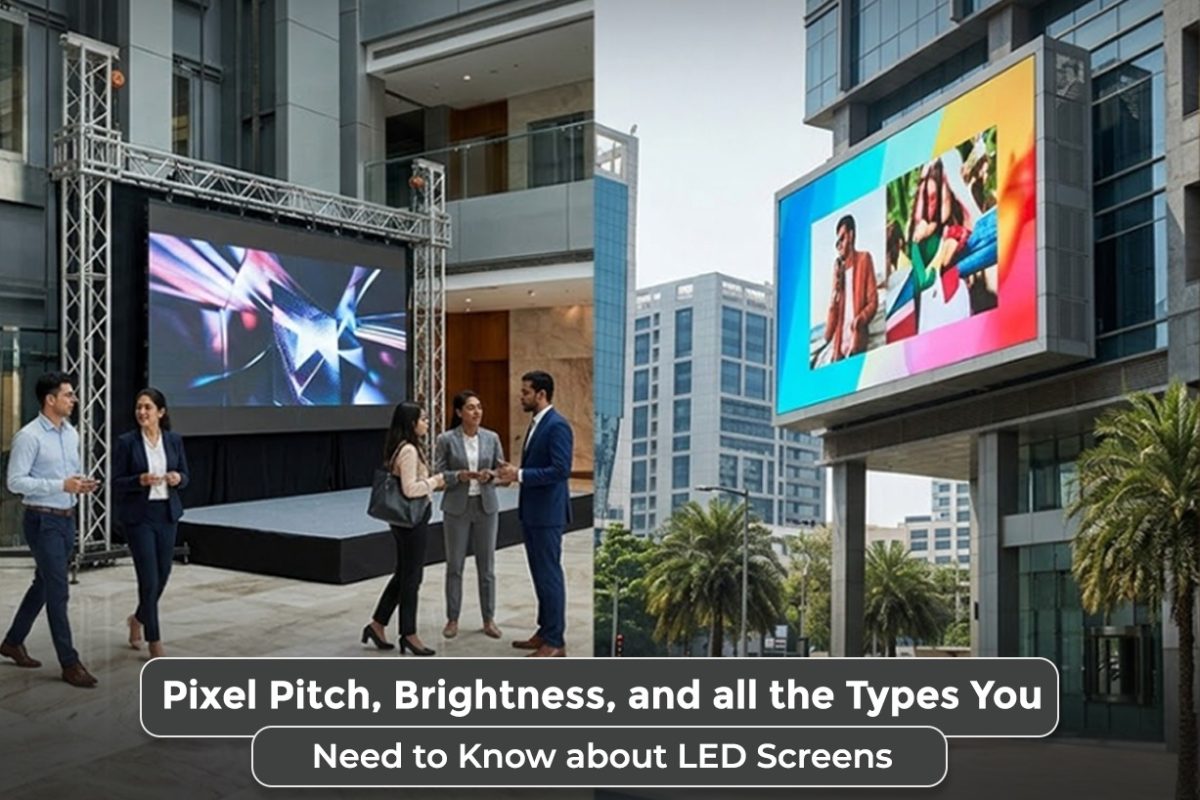
LED Video Wall for Events Price, Size & Rental Guide in India

LED Video Wall for Events: Price, Size & Rental Guide in India

In today’s experience-driven event industry, visual impact is everything. Whether it’s a luxury wedding, a high-energy concert, a corporate launch, or a large-scale exhibition, LED video walls have become the backbone of modern event production. They don’t just display content; they transform spaces, enhance storytelling, and captivate audiences.
If you’re planning an event and exploring LED video wall prices for events in India, this comprehensive guide will walk you through everything you need to know, from pricing, sizes, rental vs purchase decisions, installation costs, and practical insights for event professionals.

Why LED Video Walls Are Essential for Events

Before diving into costs, it’s important to understand why LED walls are dominating the event space:
High brightness even in daylight (ideal for outdoor events)
Seamless large-format display without bezels
Customizable sizes and shapes
Real-time content display (live feed, branding, videos)
Enhanced audience engagement
From wedding stages to concerts and corporate events, LED walls are now a standard, not a luxury.

LED Video Wall Price for Events in India

Let’s address the most important question: what is the LED video wall price for events in India?

1. Rental Pricing (Most Common for Events)

For most event planners, renting is the preferred option.
Average LED Screen Rental Price India (Per Day)

Pixel PitchIndoor/OutdoorPrice Range (Per Sq. Ft./Day)
P2 / P2.5Indoor₹80 – ₹150
P3Indoor₹70 – ₹120
P4Indoor/Outdoor₹60 – ₹100
P6 / P8Outdoor₹50 – ₹90


👉 So, a typical stage LED wall (200 sq. ft.) can cost:
₹12,000 to ₹30,000 per day (basic setup)
₹40,000 to ₹1,00,000+ (premium events with advanced setups)

2. Purchase Cost (For Production Companies)

If you’re considering ownership:
Stage LED Video Wall Cost (Purchase)
Pixel Pitch
Approx Cost (Per Sq. Ft.)

P2₹9,000 – ₹15,000
P3₹7,000 – ₹12,000
P4₹6,000 – ₹10,000
Outdoor₹6,000 – ₹12,000


👉 Total cost for a 200 sq. ft. wall:
₹12 lakh to ₹30 lakh+

LED Wall for Events Price – What Affects It?


The led wall for events price varies significantly depending on multiple factors:
1. Pixel Pitch (Resolution)
Lower pitch (P2, P2.5) = higher clarity = higher cost
Higher pitch (P6, P8) = lower cost, suitable for large outdoor viewing
2. Screen Size
Bigger screens = higher cost
But per sq. ft. rate may reduce slightly for large setups.
3. Indoor vs Outdoor Usage
Outdoor LED walls are more expensive due to weatherproofing
Indoor LED screens are cheaper but offer higher resolution
4. Event Duration
1-day events cost more per day
Multi-day rentals offer discounts
5. Location
Metro cities like Delhi, Mumbai, Bangalore have competitive pricing
Remote locations increase logistics costs
6. Custom Design & Stage Integration
Curved LED walls
LED backdrops + side panels
Interactive displays
All increase costs


LED Video Wall Rental Price Per Day India


Let’s break this down clearly for event planners.
Small Events (50-100 sq. ft.)
₹5,000 – ₹15,000/day


Medium Events (100-300 sq. ft.)
₹15,000 – ₹50,000/day


Large Events (300+ sq. ft.)
₹50,000 – ₹2,00,000+/day


Example: Wedding Stage LED Wall Price
A common query is:
LED Wall Price for Wedding Stage
Typical wedding setup:
Size: 150-250 sq. ft.
Pixel Pitch: P3 or P4
👉 Cost:
₹20,000 – ₹80,000 per day
Premium weddings: ₹1 lakh+


LED Display Screen for Concerts Price
Concerts require large-scale setups with high brightness.


Typical Concert LED Setup:
Size: 500-2000 sq. ft.
Outdoor LED walls (P6/P8)
👉 Cost:
₹1 lakh – ₹10 lakh+ per event
Includes:
Main stage wall
Side screens
Live camera feed integration


LED Display Wall for Stage Events
LED walls are not just screens- they are part of stage design.
Common Uses:
Background visuals
Live streaming audience view
Brand promotions
Dynamic stage themes


Popular LED Stage Configurations:
Single Backdrop Wall
Most common
Cost-effective
Triple Panel Setup
Center + side wings
Used in concerts & corporate events
Curved LED Wall
Premium look
Higher cost
Floor LED Panels
Interactive stage floors
Expensive but visually stunning

What Size LED Screen is Used for Events?

Choosing the right size is critical.

Event TypeRecommended Size
Small weddings8×6 ft
Medium weddings12×8 ft
Corporate events16×10 ft
Concerts20×12 ft or larger
ExhibitionsCustom setups

Viewing Distance Rule:

P3 → Best for close viewing (5-10 ft)
P4 → Medium distance (10-20 ft)
P6+ → Long distance (20+ ft)


Event Stage LED Wall Installation Cost

Installation is often included in rental, but not always.


Typical Installation Costs:

  • Small setup: ₹2,000 – ₹5,000
  • Medium setup: ₹5,000 – ₹15,000
  • Large setup: ₹15,000 – ₹50,000+


What Installation Includes

  • Panel assembly
  • Rigging structure
  • Cabling & power setup
  • Testing


Additional Costs:

  • Transportation
  • Generator/power backup
  • Technicians/operators


Rent vs Buy: Which is Better?


Renting (Best for Most Users)
✔ Lower upfront cost
✔ No maintenance
✔ Latest technology access
✔ Ideal for weddings, one-time events
Buying (Best for Businesses)
✔ Long-term investment
✔ Better ROI for frequent use
✔ Custom setups possible

Quick Comparison:

FactorRentBuy
CostLowHigh
FlexibilityHighMedium
MaintenanceNoneRequired
Best ForEventsProduction companies

How Much Does LED Video Wall Cost for Events?


Let’s simplify this into real-world scenarios:
Scenario 1: Small Wedding
Size: 100 sq. ft.
Cost: ₹8,000 – ₹20,000/day
Scenario 2: Corporate Event
Size: 200 sq. ft.
Cost: ₹20,000 – ₹60,000/day
Scenario 3: Concert/Event Production
Size: 500+ sq. ft.
Cost: ₹1 lakh – ₹5 lakh+


Hidden Costs You Should Know

Many buyers overlook these:
Content creation (₹5,000 – ₹50,000)
Video processing equipment
Backup systems
Power consumption
Setup time charges


Tips to Reduce LED Wall Costs

Choose higher pixel pitch for large venues
Opt for package deals (sound + LED + lighting)
Book early (wedding season prices spike)
Use standard sizes instead of custom designs


Choosing the Right LED Vendor in India


Before finalizing a vendor, check:
Experience in event setups
Portfolio (weddings, concerts, corporate)
Technical team availability
Backup support during event
Quality of panels (brightness, refresh rate)


Interactive LED walls
Transparent LED screens
AR/VR integration
AI-driven visual content
Flexible LED panels

FAQs


1. What is the price of LED video wall for events in India?
The LED video wall price for events in India typically ranges from ₹50 to ₹150 per sq. ft. per day for rentals. Total costs depend on size, pixel pitch, and event requirements.
2. Is it better to rent or buy an LED wall for events?
For most event planners and wedding organizers, renting is more cost-effective. Buying is only recommended for production companies with frequent usage.
3. What size LED screen is used for stage events?
Common sizes range from:
8×6 ft (small events)
12×8 ft (weddings)
16×10 ft or larger (corporate & concerts)
4. How much does LED wall installation cost for events?
Installation can cost between ₹2,000 to ₹50,000 depending on screen size and complexity. Many rental providers include this in their package.
5. What is the LED video wall rental price per day in India?
Rental prices typically range from:
₹5,000 for small setups
₹50,000+ for large events
₹1 lakh+ for concerts and premium setups
6. What is the best LED display wall for stage events?
For stage events:
P3 or P4 for indoor
P6 or higher for outdoor
The choice depends on viewing distance and budget.
7. How much does LED wall cost for wedding stage?
The LED wall price for wedding stage ranges from ₹20,000 to ₹80,000 per day depending on size and design.
8. What is the LED display screen for concert prices?
Concert LED setups can cost anywhere between ₹1 lakh to ₹10 lakh+ depending on scale and complexity.


Conclusion


LED video walls have revolutionized the event industry in India. Whether you’re planning a wedding, corporate event, or concert, understanding the LED video wall price for events in India helps you make smarter, budget-friendly decisions.
From choosing the right size and pixel pitch to deciding between rental and purchase, every factor plays a crucial role in delivering a successful event experience.
For most users, renting remains the most practical and cost-effective option,offering flexibility, scalability, and access to the latest technology without heavy investment.
If you’re an event planner, production company, or wedding organizer, investing time in selecting the right LED setup will not only enhance visual appeal but also elevate the overall audience experience.
 

LED Advertising Screens Cost, Benefits & Buying Guide for Businesses

LED Advertising Screens: Cost, Benefits & Buying Guide for Businesses

In the fast-evolving world of outdoor and digital marketing, LED advertising screens have become a powerful tool for brands to capture attention, increase visibility, and drive revenue. From highways and malls to retail storefronts and corporate buildings, LED displays are transforming how businesses communicate with their audience.

If you’re a business owner, DOOH advertiser, or media buyer looking to understand the led display wall price for advertising, this comprehensive guide will help you evaluate costs, benefits, ROI, and key buying considerations.

What Are LED Advertising Screens?

LED advertising screens are large digital displays that use light-emitting diodes (LEDs) to showcase dynamic content such as videos, images, and animations. Unlike traditional hoardings, they offer flexibility, real-time updates, and high visibility even in bright outdoor conditions.

Types of LED Advertising Displays

1. Outdoor LED Video Walls

  • Used for highways, billboards, and large public spaces
  • Weatherproof and high brightness
  • Ideal for long-distance viewing

2. Indoor LED Screens

  • Used in malls, airports, retail stores
  • Higher resolution (lower pixel pitch)
  • Designed for close viewing

3. LED Billboard Screens

  • Large-format outdoor displays
  • Installed on highways or commercial zones
  • Monetized through ad slots

4. Retail & Storefront LED Displays

  • Smaller screens for brand promotions
  • Used in showrooms and high-street stores

LED Display Wall Price for Advertising

Let’s get straight to the most critical aspect: cost.

1. LED Display Cost Per Sq Ft in India

TypePixel PitchPrice Range (Per Sq. Ft.)
Indoor LEDP2 – P3₹8,000 – ₹15,000
Semi-OutdoorP4 – P5₹6,000 – ₹10,000
Outdoor LEDP6 – P10₹5,000 – ₹12,000

👉 This is the base led display wall price for advertising (purchase cost).

2. Outdoor LED Advertising Screen Price

Outdoor screens are more expensive due to:

  • Waterproofing
  • High brightness (5000-8000 nits)
  • Durable cabinet structure

Price Range:

  • ₹6,000 – ₹12,000 per sq. ft.

3. LED Billboard Screen Price India

A standard billboard size:

  • 20 ft x 10 ft = 200 sq. ft.

Estimated Cost:

  • ₹10 lakh – ₹25 lakh+

Premium locations (metro cities) may increase total investment due to installation and permissions.

4. Digital Advertising LED Screen Price

Smaller digital advertising displays (for shops/malls):

  • ₹1 lakh – ₹10 lakh depending on size and resolution

5. Outdoor LED Video Wall Cost

Large-scale outdoor video walls:

  • ₹15 lakh – ₹1 crore+ (depending on size and configuration)

How Much Does LED Advertising Screen Cost?

Let’s simplify this with real-world scenarios:

Small Business Display

  • Size: 50-100 sq. ft.
  • Cost: ₹3 lakh – ₹10 lakh

Mall Advertising Screen

  • Size: 100-300 sq. ft.
  • Cost: ₹8 lakh – ₹25 lakh

Highway Billboard

  • Size: 200-500 sq. ft.
  • Cost: ₹15 lakh – ₹60 lakh+

Large DOOH Network Screen

  • Size: 500+ sq. ft.
  • Cost: ₹50 lakh – ₹1 crore+

Outdoor LED Advertising Display Cost Per Sq Ft

This is one of the most searched queries.

Typical Cost:

  • ₹5,000 to ₹12,000 per sq. ft.

What Affects Cost Per Sq Ft?

  • Pixel pitch
  • Brightness level
  • Screen size
  • Brand quality
  • Installation complexity

Benefits of LED Advertising Screens for Businesses

1. High Visibility & Attention

LED screens are bright, dynamic, and impossible to ignore, especially in high-traffic areas.

2. Multiple Ads = Higher Revenue

Unlike static hoardings, you can run multiple ads in rotation.

👉 Example:

  • 1 screen = 10 advertisers
  • Revenue multiplies without increasing space

3. Real-Time Content Updates

  • Change ads instantly
  • Run time-based campaigns
  • Target specific audiences

4. Better ROI Compared to Static Hoardings

While initial investment is higher, long-term ROI is significantly better.

5. Long Lifespan

  • Average lifespan: 8-10 years
  • Low maintenance compared to traditional boards

6. Eco-Friendly Advertising

  • Reduces printing waste
  • No recurring flex/banner costs

Are LED Advertising Screens Profitable?

Yes, when placed strategically.

Revenue Model Example:

Billboard in Prime Location

  • Monthly ad slot: ₹20,000
  • 10 advertisers: ₹2,00,000/month

👉 Annual Revenue: ₹24 lakh

ROI Timeline:

  • Investment: ₹20 lakh
  • Break-even: 1-2 years

Key Profit Drivers:

  • Location (high traffic = high ROI)
  • Screen size
  • Ad pricing strategy
  • Demand from advertisers

LED Display for Outdoor Advertising – Key Features

When investing in an outdoor LED screen, look for:

1. Brightness (Nits)

  • Minimum 5000 nits for outdoor visibility

2. Pixel Pitch

  • P6-P10 for highways
  • P4-P6 for urban areas

3. Weatherproofing

  • IP65 rating or higher

4. Refresh Rate

  • 1920 Hz or higher for smooth visuals

5. Viewing Angle

  • Wider angles = better audience reach

LED Display Wall for Hoarding Advertising

Traditional hoardings are rapidly being replaced by LED display walls.

Advantages Over Static Hoardings:

FeatureStatic HoardingLED Display
ContentFixedDynamic
RevenueSingle advertiserMultiple advertisers
MaintenanceHighLow
EngagementLowHigh

Buying Guide : How to Choose the Right LED Advertising Screen

Step 1: Define Your Objective

  • Brand promotion?
  • Ad revenue?
  • Retail engagement?

Step 2: Choose the Right Size

LocationRecommended Size
Retail shop6×4 ft
Mall10×6 ft
Highway20×10 ft or larger

Step 3: Select Pixel Pitch

  • Close viewing → P3/P4
  • Medium → P5/P6
  • Long distance → P8/P10

Step 4: Evaluate Budget

  • Small business: ₹3-10 lakh
  • Medium: ₹10-30 lakh
  • Large DOOH: ₹30 lakh+

Step 5: Check Vendor Credentials

  • Experience in outdoor installations
  • Warranty & service support
  • Previous projects

Step 6: Consider Installation Requirements

  • Structural support
  • Electrical setup
  • Permissions (for outdoor billboards)

Outdoor LED Billboard Price in India

Let’s break it further:

Standard Billboard Cost:

  • ₹15 lakh – ₹30 lakh

Premium Billboard (Metro Cities):

  • ₹30 lakh – ₹1 crore+

Additional Costs:

  • Structure fabrication
  • Government approvals
  • Content management system (CMS)
  • Maintenance

Digital Billboard LED Screen Price – Hidden Costs

Many buyers miss these:

  • Software/CMS: ₹50,000 – ₹2 lakh
  • Installation: ₹1 lakh – ₹5 lakh
  • Electricity bills
  • Annual maintenance

LED Billboard vs LED Video Wall – What’s the Difference?

FeatureLED BillboardLED Video Wall
Use CaseOutdoor adsIndoor & outdoor
SizeLargeFlexible
ContentAdsAds + events
InstallationFixedModular

What Size LED Screen is Best for Outdoor Advertising?

It depends on:

1. Viewing Distance

  • 20-50 ft → Medium screen
  • 50-100 ft → Large screen

2. Location Type

  • Highway → Large format
  • City → Medium format
  • Retail → Small format

General Recommendation:

  • Minimum: 10×6 ft
  • Ideal: 20×10 ft or larger
  • Programmatic DOOH advertising
  • AI-driven ad targeting
  • Interactive LED displays
  • Transparent LED screens
  • Smart city integrations

FAQs

1. How much does an LED billboard cost in India?

The LED billboard screen price in India ranges from ₹10 lakh to ₹1 crore+, depending on size, location, and specifications.

2. Are LED advertising screens profitable for businesses?

Yes. With multiple ad slots and recurring revenue, LED screens can recover investment within 1-2 years if placed in high-traffic areas.

3. What is the difference between LED billboard and an LED video wall?

An LED billboard is typically a large outdoor advertising screen, while an LED video wall can be used both indoors and outdoors for various applications including events and branding.

4. What size LED screen is best for outdoor advertising?

A 20×10 ft screen is considered ideal for most outdoor advertising use cases, especially on highways and commercial zones.

5. How much does LED advertising screen cost?

The cost ranges from ₹5,000 to ₹12,000 per sq. ft., depending on pixel pitch and quality.

6. What is the outdoor advertising LED display cost per sq ft?

Typically between ₹5,000 and ₹12,000 per sq. ft. in India.

7. What is the outdoor LED billboard price in India?

It ranges from ₹15 lakh to ₹1 crore+, including installation and setup.

8. What is the digital billboard LED screen price?

Digital billboard LED screens cost between ₹10 lakh and ₹50 lakh+ depending on size and features.

Conclusion

LED advertising screens are redefining the future of outdoor and digital advertising in India. While the led display wall price for advertising may seem like a significant investment, the long-term benefits- higher visibility, multiple revenue streams, and better ROI. Make it a smart choice for businesses.

Whether you are a DOOH advertising company, mall operator, or highway advertiser, choosing the right LED display can significantly impact your brand visibility and revenue potential.

Invest wisely, choose the right specifications, and focus on high-traffic locations to maximize returns.

Digital Standee vs LED Video Wall Which Is Better for Advertising.jpg (1)

Digital Standee vs LED Video Wall: Which Is Better for Advertising?

Choosing the right display can directly impact your marketing results.

If you’re comparing digital standee vs LED video wall, you’re likely deciding where to invest your budget. Both options are powerful, but they serve different purposes.

A digital standee is a floor-standing LCD screen.
An LED video wall is a large modular display made of LED panels.

So, which one is better for advertising in 2026?

This guide will help you:

  • Compare cost, features, and use cases
  • Understand where each works best
  • Make a confident buying decision

What is a Digital Standee?

A digital standee is a vertical LCD display mounted on a floor stand, used for indoor advertising.

It is commonly used in:

  • Retail stores
  • Showrooms
  • Hotels
  • Corporate offices

👉 It replaces printed standees with dynamic content.

What is an LED Video Wall?

An LED video wall is a large display made of multiple LED panels, creating a seamless screen.

It is ideal for:

  • Outdoor advertising
  • Shopping malls
  • Events and concerts
  • Large corporate spaces

👉 It delivers high brightness and large-scale visibility.

Digital Standee vs LED Video Wall

📊 Overview Table

FeatureDigital StandeeLED Video Wall
Display TypeLCDLED Panels
SizeSmall to mediumLarge to very large
CostAffordableExpensive
BrightnessModerateVery high
Best UseIndoorIndoor + Outdoor
InstallationEasyComplex
MaintenanceLowMedium to High

Digital Signage vs LED Display: Key Differences

When comparing digital signage vs LED display, the main difference is scale and technology.

🔍 Digital Signage (Standee)

  • LCD-based display
  • Fixed size
  • Plug-and-play setup
  • Ideal for close viewing

🔍 LED Display (Video Wall)

  • Modular panels
  • Custom size
  • High brightness
  • Ideal for long-distance viewing

👉 Simple takeaway:
Digital signage = targeted indoor marketing
LED display = mass visibility advertising

LED Video Wall vs LCD Standee: Detailed Comparison

Let’s break this down further 👇

1. 💰 Cost Comparison

Cost is one of the biggest deciding factors.

Digital Standee Cost

  • ₹25,000 – ₹1,50,000
  • Budget-friendly
  • Low setup cost

LED Video Wall Cost

  • ₹2,00,000 – ₹20,00,000+
  • Depends on size and pixel pitch
  • High installation cost

👉 lcd standee vs led video wall price comparison:
Digital standees are 5x to 10x cheaper than LED walls.

2. 📏 Size & Viewing Experience

Digital Standee

  • 32-65 inches
  • Best for close viewing (3-10 feet)

LED Video Wall

  • 100+ inches
  • Visible from long distances

👉 Choose based on viewing distance.

3. 🔆 Brightness & Visibility

Digital Standee

  • 250-500 nits
  • Suitable for indoor lighting

LED Video Wall

  • 1000-5000+ nits
  • Works in sunlight

👉 LED walls win in brightness.

4. 🛠️ Installation Complexity

Digital Standee

  • Plug & play
  • No structural changes

LED Video Wall

  • Requires mounting structure
  • Professional installation needed

5. 🎯 Advertising Impact

Digital Standee

  • Personalized messaging
  • Great for in-store promotions

LED Video Wall

  • High impact visuals
  • Ideal for branding and awareness

6. 🔄 Content Flexibility

Both support:

  • Videos
  • Images
  • Slides

But:

  • Digital standees → easier content updates
  • LED walls → better for large-scale visuals

Digital Standee Benefits (Why Businesses Prefer It)

Here are key digital standee benefits 👍

✅ Cost-effective

Lower investment compared to LED walls.

✅ Easy to install

No technical setup required.

✅ Perfect for indoor use

Works well in controlled lighting.

✅ Space-saving

Slim and compact design.

✅ Quick ROI

Ideal for retail promotions.

LED Video Wall Advantages

🚀 High visibility

Can be seen from long distances.

🚀 Outdoor compatibility

Works in sunlight and weather.

🚀 Large display size

Perfect for branding.

🚀 Premium appeal

Creates a strong visual impact.

Digital Standee vs LED Screen for Retail

Retail stores often struggle with this choice.

🏬 Digital Standee for Retail

Best for:

  • Product promotions
  • Offers & discounts
  • Inside store engagement

🏬 LED Video Wall for Retail

Best for:

  • Storefront attraction
  • Mall advertising
  • Brand visibility

👉 Which is better digital standee or led wall for retail?

  • Small store → Digital standee
  • Large showroom/mall → LED wall

Best Display for Indoor Advertising

Let’s answer this clearly!

👉 For indoor advertising, digital standees are usually the best choice.

Why?

  • Affordable
  • Easy to manage
  • Perfect viewing size

LED walls are better only if:

  • Space is large
  • Budget is high

LED Wall vs Digital Signage Cost (Detailed View)

📊 Cost Breakdown Table

Cost FactorDigital StandeeLED Video Wall
Initial CostLowHigh
InstallationMinimalExpensive
MaintenanceLowMedium
Power ConsumptionLowHigh

👉 Digital signage is more economical overall.

When Should You Choose a Digital Standee?

Choose a standee if you want:

  • In-store advertising
  • Budget-friendly solution
  • Quick installation
  • Easy content updates

👉 Ideal for:

  • Retail shops
  • Clinics
  • Restaurants

When Should You Choose an LED Video Wall?

Choose LED wall if you need:

  • Large-scale visibility
  • Outdoor advertising
  • High brightness display

👉 Ideal for:

  • Malls
  • Airports
  • Billboards

Use Case Comparison

📍 Scenario 1: Clothing Store

👉 Digital standee is better

📍 Scenario 2: Shopping Mall Entrance

👉 LED video wall is better

📍 Scenario 3: Restaurant Menu Display

👉 Digital standee works best

📍 Scenario 4: Highway Billboard

👉 LED video wall is required

Installation & Maintenance Comparison

Digital Standee

  • Setup time: 1-2 hours
  • Maintenance: Minimal

LED Video Wall

  • Setup time: Several days
  • Maintenance: Regular

ROI Comparison (Return on Investment)

Digital Standee

  • Low cost
  • Fast ROI

LED Video Wall

  • High cost
  • Long-term ROI
  • AI-powered advertising
  • Smart content targeting
  • Integration with mobile apps
  • Cloud-based display management

FAQs

1. Which is better for indoor advertising: standee or LED wall?

A digital standee is better for indoor use because it is affordable, compact, and easy to install.

2. Is digital standee cheaper than LED video wall?

Yes. A digital standee costs significantly less than an LED video wall.

3. Where should you use digital standee?

You should use digital standees in:

  • Retail stores
  • Offices
  • Restaurants
  • Clinics

4. Can digital standee be used outdoors?

No. Most digital standees are designed for indoor use only.

5. Which is better– digital standee or led wall?

It depends on your needs:

  • Budget + indoor → Digital standee
  • Large scale + outdoor → LED wall

6. What is the best display for indoor advertising?

A digital standee is the best option for most indoor advertising needs.

Final Conclusion: Which One Should You Choose?

There’s no one-size-fits-all answer.

👉 Digital standee vs LED video wall depends on your goal, budget, and space.

💡 Choose Digital Standee if:

  • You want affordable advertising
  • You need indoor display
  • You prefer easy setup

💡 Choose LED Video Wall if:

  • You need high visibility
  • You want outdoor advertising
  • You have a large budget

📌 Bottom Line

  • Digital standee = cost-effective + targeted marketing
  • LED video wall = high-impact + large-scale advertising

👉 Make your decision based on where your audience is.

Because the best display is the one that gets seen and drives action 🚀

What Size LED Video Wall Do You Need Complete Size & Price Guide

What Size LED Video Wall Do You Need? Complete Size & Price Guide

LED video walls are transforming modern advertising, retail stores, corporate offices, and event venues. Businesses are increasingly adopting LED displays to create immersive visual experiences that attract customers and improve communication. However, before installing a display, one of the most important decisions is selecting the right LED video wall size.

Choosing the wrong size can lead to poor visibility, wasted budget, or inefficient space usage. That is why businesses often look for a LED video wall size and price guide before planning installation.

Understanding LED Video Wall Size

An LED video wall is created by combining multiple LED display panels to form a single large screen. The overall display size depends on the number of panels, panel dimensions, and pixel pitch.

The size of an LED video wall is generally measured in width × height and sometimes also in square meters. For example:

  • 3m × 2m LED wall = 6 square meters
  • 4m × 3m LED wall = 12 square meters
  • 6m × 4m LED wall = 24 square meters

Many suppliers calculate LED wall price per square meter, which helps estimate the total cost based on the display size.

Understanding these measurements is essential when using a LED video wall size calculator or planning a commercial installation.

Why Choosing the Right LED Wall Size Matters

Selecting the correct display size impacts several factors:

1. Visibility

The screen must be large enough for viewers to clearly see the content from a distance.

2. Viewing Distance

The audience distance determines the required pixel pitch and screen size.

3. Content Impact

Larger screens create stronger visual impact for advertising and branding.

4. Budget Planning

The LED video wall price based on size increases as the display area grows.

5. Space Availability

The display should fit the installation location without overwhelming the environment.

Businesses planning LED display wall size for advertising must balance these elements carefully.

How to Calculate LED Video Wall Size

Many businesses use a LED video wall size calculator to determine the ideal display dimensions. However, the process can also be understood manually using a few basic steps.

Step 1: Measure the Installation Area

First, determine the available wall or structure space where the LED wall will be installed.

Example:

  • Wall width: 5 meters
  • Wall height: 3 meters

Maximum possible display size: 5m × 3m

However, the final display size may be smaller depending on viewing distance and budget.

Step 2: Determine Viewing Distance

Viewing distance plays a major role in selecting display size.

Typical recommendations:

Viewing DistanceRecommended Screen Width
3-5 meters2-3 meters
5-10 meters3-5 meters
10-20 meters5-8 meters
20+ meters8+ meters

This step is critical when deciding the LED screen size for advertising board installations.

Step 3: Select Pixel Pitch

Pixel pitch refers to the distance between LED pixels.

Common options include:

  • P1.5 – P2.5: Ultra-high resolution indoor displays
  • P2.5 – P4: Retail stores and corporate environments
  • P4 – P6: Advertising and showrooms
  • P8 – P10: Outdoor billboards

Smaller pixel pitch allows viewers to stand closer to the screen while maintaining clarity.

Step 4: Calculate Number of Panels

Most LED panels come in standard sizes such as:

  • 500mm × 500mm
  • 500mm × 1000mm

Example:

Desired screen size: 4m × 2m

Panel size: 500mm × 500mm

Calculation:

  • Width: 4m ÷ 0.5m = 8 panels
  • Height: 2m ÷ 0.5m = 4 panels

Total panels = 32 LED modules

This is the core principle behind a LED video wall size calculator.

Commercial LED Video Wall Size Guide

Businesses across industries use different screen sizes depending on their requirements. Below is a commercial LED video wall size guide for common applications.

1. Indoor LED Video Wall Size for Retail

Retail stores use LED displays to promote offers, showcase products, and enhance store ambience.

Typical indoor LED video wall size for retail includes:

  • 2m × 1.5m – Small boutiques
  • 3m × 2m – Medium retail stores
  • 4m × 2.5m – Large showrooms
  • 6m × 3m – Shopping malls

For high-end fashion stores and malls, larger LED walls create immersive shopping experiences.

2. Best LED Wall Size for Showroom Display

Showrooms require high visual impact to highlight products such as automobiles, electronics, or furniture.

Common sizes include:

  • 3m × 2m – Compact showrooms
  • 5m × 3m – Automobile showrooms
  • 6m × 4m – Premium experience centers

Choosing the best LED wall size for showroom display depends on showroom layout and viewing distance.

3. LED Video Wall Size for Stage Events

LED walls are widely used in concerts, corporate events, and conferences.

Popular LED video wall size for stage events includes:

  • 6m × 3m – Small events
  • 8m × 4m – Medium events
  • 12m × 6m – Large concerts
  • 20m+ – Stadium events

Event organizers prefer modular displays because they can adjust screen size based on stage design.

4. LED Screen Size for Advertising Boards

Outdoor advertising boards typically require large displays for maximum visibility.

Common LED screen size for advertising board installations:

  • 6m × 3m – Roadside advertising
  • 8m × 4m – Urban billboards
  • 12m × 6m – Highway advertising
  • 20m × 10m – Large digital billboards

Outdoor screens usually use larger pixel pitch because viewers watch from greater distances.

LED Video Wall Price Based on Size

The cost of an LED display is usually calculated per square meter. Therefore, the larger the display, the higher the overall investment.

Below is a general LED wall price per square meter in India:

Pixel PitchPrice Per Sq. Meter (Approx.)
P1.5₹8,00,000 – ₹10,00,000
P2₹6,00,000 – ₹8,00,000
P2.5₹4,50,000 – ₹6,00,000
P3₹3,50,000 – ₹5,00,000
P4₹2,50,000 – ₹3,50,000
P6₹1,80,000 – ₹2,50,000
P10 (Outdoor)₹1,20,000 – ₹1,80,000

These prices can vary based on manufacturer, brightness, installation complexity, and control systems.

LED Video Wall Price Guide Based on Size

Here is a simple LED video wall size and price guide using approximate pricing.

LED Wall SizeAreaEstimated Price Range
2m × 1.5m3 sq. m₹7L – ₹12L
3m × 2m6 sq. m₹15L – ₹30L
4m × 2.5m10 sq. m₹25L – ₹50L
6m × 3m18 sq. m₹45L – ₹90L
8m × 4m32 sq. m₹80L – ₹1.5Cr

This LED video wall price based on size helps businesses estimate budgets before contacting suppliers.

Factors That Affect LED Video Wall Price

Several factors influence the final cost beyond size.

1. Pixel Pitch

Smaller pixel pitch increases price due to higher resolution.

2. Indoor vs Outdoor Displays

Outdoor displays require waterproofing and higher brightness, increasing costs.

3. Installation Structure

Mounting frames, cabinets, and structural support add to expenses.

4. Content Control System

Media players, processors, and software are required to manage content.

5. Maintenance & Warranty

Service contracts and spare modules also impact total cost.

Understanding these elements helps businesses accurately plan the LED video wall size and price guide for their project.

Best Practices for Choosing LED Video Wall Size

To select the right display size, consider the following recommendations.

1. Prioritize Viewing Distance

A screen that is too small may not deliver the desired visual impact.

2. Match Pixel Pitch With Screen Size

High resolution is important for indoor environments where viewers are close.

3. Consider Content Type

Large video content may require wider screens.

4. Plan Future Expansion

Modular LED walls allow easy expansion later.

5. Balance Budget and Visibility

A slightly larger screen can significantly improve advertising effectiveness.

These strategies help businesses make informed decisions when using a commercial LED video wall size guide.

The LED display industry continues to evolve rapidly.

Emerging trends include:

  • Ultra-fine pixel pitch displays for indoor retail
  • Curved LED walls for immersive experiences
  • Transparent LED displays for storefronts
  • Massive LED billboards for DOOH advertising
  • Flexible LED panels for creative installations

These innovations are pushing the boundaries of traditional LED display wall size for advertising.

Conclusion

Selecting the right LED video wall size is one of the most important steps in planning a display installation. Businesses must consider viewing distance, installation space, pixel pitch, and budget before choosing a display.

Using a LED video wall size calculator, companies can easily estimate the number of panels required and determine the total display area. This also helps calculate the LED video wall price based on size.

From retail stores and showrooms to advertising billboards and stage events, the right display size ensures maximum visibility and engagement. By following this LED video wall size and price guide, businesses can confidently choose the ideal LED display that delivers both visual impact and long-term value.

Frequently Asked Questions (FAQs)

What is the standard size of an LED video wall?

There is no single standard size for LED video walls because they are modular. However, common installations include 3m × 2m for retail stores, 6m × 3m for events, and 8m × 4m or larger for advertising billboar

How do you calculate LED video wall size?

To calculate LED video wall size:
Measure the installation area.
Determine the viewing distance.
Select appropriate pixel pitch.
Divide the desired width and height by the LED panel size.
Many companies also use a LED video wall size calculator to simplify this process.

What size LED wall is best for retail stores?

The most common indoor LED video wall size for retail is 3m × 2m or 4m × 2.5m, depending on store size and viewing distance. Larger malls may use screens up to 6m × 3m for maximum visual impact.

Does a larger LED wall increase price?

Yes. LED displays are priced per square meter, so increasing the screen size directly increases the overall cost. Additionally, larger displays may require stronger mounting structures and higher power capacity.

What is the ideal LED screen size for advertising boards?

For roadside advertising boards, the typical LED screen size for advertising board ranges from 6m × 3m to 12m × 6m. Highways and large urban billboards may use even larger displays.

What factors influence LED wall price per square meter?

Several factors influence pricing, including:
Pixel pitch
Display brightness
Indoor or outdoor use
LED brand and technology
Installation structure and control systems

LED Video Wall Price & Buying Guide in India-Sparsa Digital

LED Video Wall Price & Buying Guide in India

In today’s digital age, LED video walls have become the go-to medium for large-format visual communication. From retail stores and corporate lobbies to outdoor billboards and event stages. LED video walls are transforming the way brands engage audiences.

But one question potential buyers always ask is:

“How much does an LED video wall cost in India?”

What Is an LED Video Wall?

An LED video wall is a large-scale digital display made up of multiple modular LED panels. These panels seamlessly tile together to form one large screen that can play video, images, text, or live streaming content.

They offer:

✔ High brightness
✔ Wide viewing angles
✔ Custom shapes and sizes
✔ Long lifespan
✔ Energy efficiency

Because of these advantages, LED walls are now widely used in:

  • Retail stores
  • Corporate events
  • Stadiums
  • Outdoor billboards
  • Control rooms
  • Hotels & malls

How LED Display Pricing Works

Unlike TVs or projectors, LED video walls are priced based on modular metrics such as:

Cost DriverUnit of Measure
Display Modules₹ per sq. ft /
Resolution & Pixel PitchSmaller pitch = higher cost
BrightnessNits level
Indoor vs OutdoorWeatherproofing adds cost
Mounting & AccessoriesStructures, cabling
InstallationSkilled labor
Warranty & SupportExtended support adds price

So when someone asks “how much does an LED video wall cost?” The real answer is: it depends.

Let’s break it down.

LED Video Wall Price in India – What to Expect

As of 2026, led video wall price in India varies widely based on purpose, specs, and location. Generally:

👉 Average range:
₹ 30,000 – ₹ 120,000 per sq ft

Nevertheless:

✔ Low-resolution indoor walls may start lower
✔ High-brightness outdoor walls cost significantly more

Next, we explore exact price ranges in key categories.

Indoor LED Video Wall Price in India

Indoor screens are used in:

📍 Offices
📍 Retail stores
📍 Museums
📍 Reception areas

Typical Costs

Pixel PitchTypical UseApprox. Price (₹/sq ft)
P1.8 -P2.5High clarity displays₹ 60,000 – ₹ 90,000
P2.5 – P3.9Standard indoor panels₹ 40,000 – ₹ 70,000
P4.8 – P6.0Budget/less critical indoor₹ 30,000 – ₹ 50,000

✔ Lower pixel pitch → sharper image → higher cost
✔ Suitable for close viewing distances

If you’re asking “how much does an indoor LED video wall cost?” The answer is generally ₹ 30,000 – ₹ 90,000 per sq ft before installation.

Outdoor LED Video Wall Price in India

Outdoor walls require weatherproofing, higher brightness (often >5000 nits), and rugged construction, which adds up.

Typical Outdoor Pricing

Pixel Pitch (mm)BrightnessPrice (₹/sq ft)
P4.0 – P6.05000+ nits₹ 80,000 – ₹ 1,20,000
P6.0 – P105000+ nits₹ 70,000 – ₹ 1,00,000
P10 – P16Large billboards₹ 60,000 – ₹ 90,000

Outdoor LED video wall price is significantly higher due to:

  • Weatherproof IP rating
  • Anti-glare design
  • Power and cooling considerations
  • Higher brightness modules

In India’s heat and monsoon, quality outdoor walls are worth the premium.

LED Display Wall Price for Advertising

LED walls have become essential for outdoor advertising, roadside billboards, and high footfall zones.

Advertising screen price factors:

✔ Location
✔ Audience size
✔ Brightness requirement
✔ Viewing distance
✔ Screen size

General pricing
Standard commercial advertising walls range from
₹ 70,000 – ₹ 120,000 per sq ft

Remember: Advertising screens often generate revenue, so many buyers look at ROI more than upfront cost.

LED Wall Price for Retail Store

Retail spaces use LED walls for:

🏬 Branding
🎥 Product promotion
📺 Digital signage

Typical Retail LED Wall Costs

Use CasePrice (₹/sq ft)
Store display₹ 45,000 – ₹ 85,000
Interactive store wall₹ 70,000+
Branded facades₹ 90,000+

Retail buyers often prioritize pixel pitch and viewing clarity, since customers are close to the screen.

LED Video Wall Price for Events

Events are a different category, requiring:

🧑‍🎤 Portable setup
🔌 Quick installation
🎬 High brightness visuals

Event rental prices are usually calculated differently:

✔ Per event/day price
✔ With or without operator
✔ With transport included

Event LED video wall price (rental basis):

  • Small events: ₹ 15,000 – ₹ 40,000 per day (per LED panel)
  • Large outdoor events: ₹ 50,000+ per day

Note: These prices don’t represent ownership but rental.

Additional Cost Considerations

When budgeting, also include:

Power backup & UPS
Controller & media players
Content management software
Mounting brackets & rigging
Delivery & logistics
Taxes

All of which add to the final led screen price India.

LED Video Wall Installation Cost

Installation is a specialized field and typically adds:

📌 Installation cost: ₹ 5,000 – ₹ 25,000 per sq ft

This depends on:

✔ Complexity of installation
✔ Height & accessibility
✔ Wall structure reinforcement
✔ Cable management
✔ Labor skill

Professional installation ensures:

✔ Perfect alignment
✔ Safe mounting
✔ Warranty compliance

Neglecting installation quality can lead to:

❌ Panel damage
❌ Uneven display
❌ Higher maintenance costs

So don’t cut corners!

Commercial LED Video Wall Pricing Factors

Let’s summarize what impacts the commercial LED video wall pricing:

🔹 Pixel pitch
🔹 LED chip quality
🔹 Cabinet size & weight
🔹 Brightness (nits)
🔹 Power consumption
🔹 Weatherproofing
🔹 LED controller & processors
🔹 Installation access
🔹 Warranty & after-sales support

Each of these factors can increase or decrease your final cost by 10% – 50% or more.

LED Video Wall Price Calculator (How to Estimate Budget)

Want a quick estimate? Use this simple formula:

Cost = Display material + Installation + Accessories + Support

Let’s say you need a 10 ft × 6 ft indoor wall:

✔ Area = 60 sq ft
✔ Estimated cost = ₹ 60,000 × 60 = ₹ 36,00,000
✔ Installation = ₹ 10,000 × 60 = ₹ 6,00,000
✔ Accessories & setup = ₹ 2,00,000
✔ Total = ₹ 44,00,000

This is a practical way to use a led video wall price calculator in India.

Financing, Renting & Leasing Options

High-end LED walls may cost several lakhs or crores; which is why many businesses choose:

✔ EMI or financing plans
✔ Leasing
✔ Rental for events
✔ Advertising partnership models (zero investment)

Some providers even offer revenue sharing; perfect for billboards and advertising spaces.

How to Evaluate LED Video Wall Quotes

When comparing quotes, always check:

🟡 Pixel pitch and brightness
🟡 Warranty period (min 1-3 years)
🟡 After-sales support
🟡 Availability of spare parts
🟡 Installation and training included?
🟡 Return on Investment (ROI) model

Don’t choose purely on price; quality matters.

FAQs

1. What is the standard LED video wall price per sq ft in India?

The standard range is roughly ₹30,000 – ₹120,000 per sq ft depending on indoor/outdoor use, pixel pitch, and quality.

2. Why is outdoor LED wall price higher than indoor?

Outdoor walls require higher brightness, weatherproofing, rugged construction, and thermal management, all of which add cost.

3. How much does LED video wall installation cost?

Installation typically ranges from ₹ 5,000 to ₹ 25,000 per sq ft based on complexity.

4. Can I get financing for LED video walls in India?

Yes, many vendors provide financing, leasing, or EMI options since the investment can be significant.

5. Is an LED video wall worth the investment?

For advertising, retail branding, and event impact, LED walls deliver high ROI through engagement and revenue potential.

6. How do I calculate the cost of an LED video wall?

Multiply the total area (sq ft) by the average price per sq ft, then add installation and accessories.

7. What is the average LED screen price in India?

Most indoor screens average around ₹ 30,000 – ₹ 90,000 per sq ft, while outdoor screens often cost ₹ 80,000 – ₹ 1,20,000 per sq ft.

8. Does pixel pitch affect price?

Yes. Smaller pixel pitch means higher resolution and higher cost.

Large Format Display and Custom LED Display

Large Format Display and Custom LED Display: Everything You Need to Know Before Buying

In today’s digitally driven business environment, visual communication plays a crucial role in branding, marketing, training, and information sharing. From corporate boardrooms and retail stores to airports, museums, and stadiums, organizations are investing heavily in advanced display technologies. Two solutions that stand out for their flexibility and performance are the large format display and the custom LED display.

A large format display delivers immersive viewing on a grand scale, while a custom LED display allows businesses to design screens in unique shapes, sizes, and configurations tailored to specific needs. Together, these technologies are redefining how brands connect with audiences through powerful, dynamic visuals.

What Is a Large Format Display?

A large format display refers to any digital screen that is significantly larger than a standard television or monitor. Typically starting from 55 inches and extending to wall-sized installations, a large format display is designed to present high-resolution images, videos, dashboards, and interactive content in public and professional environments.

Large format display systems are commonly used in:

  • Corporate meeting rooms and boardrooms
  • Retail showrooms and shopping malls
  • Control rooms and command centers
  • Education and training institutions
  • Airports, railway stations, and public venues

The main goal of a large format display is to ensure maximum visibility, clarity, and impact, even when viewed from a distance or by large audiences.

What Is a Custom LED Display?

A custom LED display is a modular LED screen that is designed and built according to specific project requirements. Unlike standard flat screens, a custom LED display can be created in any size, shape, resolution, or curvature. It can wrap around pillars, form curved walls, create circular structures, or fit into unconventional architectural spaces.

A custom LED display is widely used for:

  • Brand experience centers
  • Retail flagship stores
  • Exhibition booths and trade shows
  • Theaters and stage backdrops
  • Outdoor advertising and landmark installations

The flexibility of a custom LED display allows designers and architects to transform creative concepts into striking visual realities.

Why Choose a Large Format Display for Modern Spaces?

The popularity of the large format display continues to grow because it offers several advantages over traditional projection systems and smaller screens.

1. Superior Visibility and Engagement

A large format display ensures that content remains clear and readable even from long distances. In conference rooms, classrooms, and retail spaces, this improves audience engagement and communication effectiveness.

2. High Resolution and Color Accuracy

Modern large format display panels support Full HD, 4K, and even 8K resolutions. This level of detail is ideal for product demos, data visualization, and immersive video playback.

3. Professional Appearance

A sleek large format display enhances the visual appeal of interiors and reflects a modern, technology-driven brand image.

4. Reliability and Long Operating Life

Commercial-grade large format display systems are built for extended daily operation, making them suitable for mission-critical environments such as control rooms and broadcast studios.

The Power of a Custom LED Display

While a large format display works best for standard flat-screen installations, a custom LED display unlocks unlimited design possibilities.

Creative Freedom

A custom LED display can be designed in curved, cylindrical, wave-shaped, or irregular formats. This makes it ideal for architectural integration and experiential marketing.

Scalability

Because it is built from modular LED panels, a custom LED display can be expanded or reconfigured at any time. Businesses can start small and scale up as their needs grow.

Indoor and Outdoor Versatility

Custom LED display systems are available for both indoor and outdoor environments, with brightness levels and weather protection tailored to the installation site.

Seamless Large Screens

Unlike tiled LCD walls that may show visible bezels, a custom LED display creates a seamless surface that enhances visual continuity.

Large Format Display vs. Custom LED Display

Both technologies serve different purposes, and understanding their differences helps in choosing the right solution.

  • A large format display is ideal for flat-wall installations, boardrooms, classrooms, and digital signage networks where simplicity and standard sizes are preferred.
  • A custom LED display is best for creative environments, large venues, curved walls, and unique branding installations where flexibility and scale matter most.

In many advanced projects, organizations combine both large format display panels and custom LED display systems to achieve the perfect balance of performance and design.

Key Technical Specifications to Consider

When selecting a large format display or a custom LED display, several technical factors influence performance and longevity.

Resolution and Pixel Pitch

  • Large format display panels usually offer 4K or 8K resolution.
  • Custom LED display systems are defined by pixel pitch, which determines viewing distance and image sharpness.

Brightness

Indoor large format display units typically operate between 350 and 700 nits, while custom LED display systems can exceed 5,000 nits for outdoor visibility.

Refresh Rate

A high refresh rate ensures smooth video playback, especially important for broadcast studios and live events.

Viewing Angle

Wide viewing angles ensure consistent color and brightness across the entire screen.

Durability

Commercial-grade large format display panels and professional custom LED display modules are designed for long-term reliability and continuous operation.

Applications Across Industries

The combination of large format display and custom LED display technologies serves a wide range of industries.

Retail and Shopping Malls

Retailers use large format display screens for digital promotions and brand storytelling. A custom LED display in a storefront or atrium creates a stunning focal point that attracts customers and increases dwell time.

Corporate Offices

Boardrooms rely on large format display panels for presentations, video conferencing, and collaboration. Lobbies and experience centers often feature a custom LED display to showcase corporate achievements and branding.

Control Rooms and Command Centers

Mission-critical environments depend on large format display walls and custom LED display systems for real-time monitoring and data visualization.

Education and Training

Universities and training centers use large format display solutions for digital classrooms, while auditoriums benefit from custom LED display backdrops for events and lectures.

Events and Entertainment

Concerts, exhibitions, and theaters use custom LED display installations for stage design and immersive experiences, supported by large format display screens for auxiliary content.

Installation Process

Proper installation is essential for both large format display systems and custom LED display projects.

  1. Site survey and planning – Assess viewing distance, ambient light, and mounting structure.
  2. Design and layout – Finalize screen size, resolution, and configuration.
  3. Mounting and cabling – Install brackets, frames, and power connections.
  4. Panel or module assembly – Align large format display panels or assemble custom LED display modules.
  5. Calibration and testing – Adjust brightness, color balance, and alignment for uniform visuals.

Maintenance and Best Practices

To extend the life of your large format display and custom LED display:

  • Clean screens regularly with approved materials
  • Maintain proper ventilation and temperature control
  • Schedule periodic calibration
  • Replace faulty modules or panels promptly
  • Use surge protection and stable power supplies

With proper care, both systems can operate efficiently for more than 8 to 10 years.

Pricing and Cost Factors

The cost of a large format display and a custom LED display depends on:

  • Screen size and resolution
  • Panel or module quality
  • Brightness and refresh rate
  • Installation complexity
  • Control systems and software

In India, large format display prices typically start from ₹1.5 lakh and can go higher based on size and brand. A custom LED display is usually priced per square foot and may range from ₹6,000 to ₹20,000 per square foot depending on specifications and environment.

Choosing the Right Display Partner

When investing in a large format display or a custom LED display, select a supplier who offers:

  • Certified commercial-grade products
  • Custom design and engineering support
  • Professional installation services
  • Long-term warranty and spare availability
  • Proven project experience

A reliable partner ensures smooth execution and long-term performance.

Conclusion

The large format display and the custom LED display are powerful tools for modern visual communication. While a large format display delivers clarity, simplicity, and professional presentation, a custom LED display offers creative freedom, scalability, and immersive impact.

By choosing the right technology and working with an experienced integrator, businesses can transform ordinary spaces into engaging digital environments that inform, inspire, and influence audiences.

Frequently Asked Questions (FAQs)

1. What is the main difference between a large format display and a custom LED display?

A large format display is a standard flat-panel screen, while a custom LED display is a modular system that can be built in any shape or size.

2. Which is better for a boardroom?

A large format display is usually the best choice for boardrooms due to its simplicity and high resolution.

3. Can a custom LED display be used outdoors?

Yes, outdoor-grade custom LED display systems are designed with high brightness and weather protection.

4. How long does a large format display last?

Commercial large format display panels typically last 50,000 to 70,000 hours with proper maintenance.

5. Is calibration necessary for a custom LED display?

Yes, calibration ensures uniform brightness and color across all LED modules.

6. What viewing distance is ideal for a custom LED display?

The ideal distance depends on pixel pitch, usually calculated as pixel pitch (in mm) multiplied by 1,000.

7. Can large format display panels be combined into a video wall?

Yes, multiple large format display panels can be tiled together to create a video wall.

8. Are custom LED displays energy efficient?

Modern custom LED display systems use energy-efficient LEDs and smart power management.

9. Can content be updated remotely?

Yes, both large format display and custom LED display systems support remote content management.

10. Which option is more expensive?

A custom LED display generally costs more than a standard large format display due to customization and scale.

Transforming Healthcare Communication with Digital OPD Boards, Digital Standees, and LED Video Walls

Improving Healthcare Communication with Digital Signage & LED Displays

The healthcare industry is rapidly adopting modern digital technologies to streamline operations, enhance patient experience, and improve internal communication. Among these technologies, Digital OPD Boards, Digital Standees, and LED Video Walls for digital signage for healthcare are transforming how information is delivered in hospitals, clinics, and healthcare centers.

In this blog, we’ll explore how each of these tools contributes to a smarter, more efficient healthcare environment and why they are becoming indispensable in the digital age.

The Evolution of Hospital Communication

Traditionally, hospitals have relied on whiteboards, paper signs, and verbal announcements to convey information to patients and staff. While functional, these methods often lead to confusion, delays, and a less-than-ideal patient experience. In contrast, digital signage in healthcare offers a dynamic, real-time, and visually engaging solution.

Let’s break down how Digital OPD Boards, Digital Standees, and LED Video Walls are each playing a pivotal role in this digital revolution.

1. Digital OPD Boards: Simplifying Patient Flow

Digital OPD Boards (Outpatient Department Boards) are now a staple in many modern hospitals. These boards display real-time information such as:

  • Doctor availability

  • Appointment schedules

  • Token or queue numbers

  • Patient wait times

  • Consultation room numbers

Benefits of Digital OPD Boards

  • Improved Patient Experience: Patients no longer need to constantly ask staff for updates. They can simply view the board to see when and where they will be seen.

  • Real-Time Updates: Schedules and changes are updated instantly, reducing confusion and congestion.

  • Streamlined Workflow: Front-desk staff can focus on important tasks instead of answering repetitive queries.

Custom Features

Hospitals can customize Digital OPD Boards to include multilingual options, departmental color coding, or even patient instructions, making them user-friendly and inclusive.

View Our Portfolio: Digital OPD Boards for Hospitals

2. Digital Standees: Interactive and Informative

A Digital Standee is a freestanding digital display, often placed at entrances, lobbies, or hallways. Unlike static posters, these smart displays can cycle through multiple messages, graphics, and videos.

How Digital Standees Add Value in Healthcare

  • Health Campaigns & Announcements: Promote awareness about diseases, vaccination drives, or hygiene tips.

  • Navigation Aid: Interactive maps help visitors locate departments or clinics quickly.

  • Doctor Profiles: Introduce physicians, their specialties, consultation hours, and achievements.

  • Self-Service Kiosks: With touchscreen features, digital standees can be used for check-ins, registration, and feedback collection.

Why Digital Standees Are Ideal

Their sleek design, mobility, and versatility make digital standees a cost-effective communication tool for hospitals of all sizes.

3. LED Video Wall for Digital Signage for Healthcare: The Ultimate Visual Experience

An LED Video Wall for digital signage for healthcare is a large display system made up of multiple LED screens. It’s often used in lobbies, conference rooms, or waiting areas.

Key Applications in Healthcare

  • Emergency Alerts: Immediate display of emergency messages or code blue situations.

  • Hospital Announcements: Real-time updates on policy changes, visiting hours, or hospital news.

  • Patient Education: Display informative videos on preventive care, treatment options, or wellness routines.

  • Event Broadcasting: Live-stream medical conferences, surgeries for training, or awareness events.

Advantages of LED Video Walls

  • High Visibility: Eye-catching and visible from a distance.

  • Content Flexibility: Show videos, images, scrolling text, or split-screen messages.

  • Centralized Control: Easily update content across multiple displays from a single system.

Integrating Digital Signage in Healthcare: Best Practices

Implementing Digital OPD Boards, Digital Standees, and LED Video Walls is more than just installing screens. Here are some best practices for success:

1. Centralized Content Management System (CMS)

Use a CMS to control all displays across the facility from one platform. This allows seamless updates, scheduling, and content rotation.

2. Ensure HIPAA Compliance

Avoid displaying sensitive patient data publicly. All content should comply with data privacy laws and institutional protocols.

3. Invest in Quality Hardware

Medical environments demand durable, easy-to-clean, and high-resolution equipment. Choose healthcare-grade displays that can operate 24/7.

4. Keep Content Relevant

Rotate between medical news, patient instructions, wait times, health tips, and doctor availability. Relevance enhances engagement.

5. Train Staff

Educate your administrative and IT staff on managing digital signage effectively, ensuring smooth operation and quick troubleshooting.

FAQs About Digital Signage in Healthcare

Q1: What is the primary use of Digital OPD Boards in hospitals?

A: Digital OPD Boards help patients view real-time appointment schedules, doctor availability, and token numbers. They reduce wait-time confusion and streamline the outpatient process.

Q2: How is a Digital Standee different from a regular display screen?

A: A Digital Standee is a freestanding display, often interactive, designed for mobility and flexibility. It can be used for self-service tasks, announcements, or promotions.

Q3: Can an LED Video Wall be used outdoors?

A: Yes, with weatherproof and high-brightness models, LED video walls can be installed outside hospital premises to display public health messages and navigation directions.

Q4: Is it expensive to install digital signage in healthcare settings?

A: While the initial investment varies based on size and complexity, digital signage systems reduce long-term costs related to printing, staffing, and miscommunication.

Q5: How often should content be updated on these displays?

A: Content should be updated regularly to reflect schedule changes, news, and seasonal health campaigns. Most systems allow scheduling updates in advance.

Conclusion: Embrace the Future of Healthcare Communication

In a fast-paced healthcare environment, timely and effective communication can significantly impact patient satisfaction, operational efficiency, and safety. Digital OPD Boards, Digital Standees, and LED Video Walls for digital signage for healthcare are not just display tools—they’re strategic assets for any medical facility.

From enhancing patient engagement to reducing administrative burdens, digital signage systems are a must-have for forward-thinking hospitals and clinics. As healthcare continues to digitize, adopting these tools is not just beneficial, it’s essential.

Whether you are a small clinic looking for a simple Digital OPD Board or a large hospital planning a fully integrated LED Video Wall, now is the time to modernize your communication and lead the way into the future of patient care.

P1.8 Indoor LED Video Walls

P1.8 Indoor LED Video Walls: Features, Benefits & Use Cases

The digital display market is evolving rapidly, driven by technological advancements and the growing demand for high-quality, versatile display solutions. Among the most exciting innovations in this field are the P1.8 indoor active LED video wall and active LED screens. These technologies are redefining how we experience visual content, with applications spanning from commercial and retail spaces to entertainment venues and corporate environments.

In this blog, we will explore what makes P1.8 indoor active LED video walls and active LED screens so revolutionary. We will delve into their technical features, benefits, and practical applications, as well as their impact on various industries. Whether you’re a business owner looking to enhance your marketing strategy or a tech enthusiast curious about the future of display technology, this post will provide valuable insights into the world of advanced LED display solutions.

Understanding P1.8 Indoor Active LED Video Wall Technology

At the heart of this innovation is the P1.8 indoor active LED video wall. The term “P1.8” refers to the pixel pitch, which is the distance between the centers of two adjacent pixels on the LED screen. In this case, the pixel pitch is 1.8 millimeters, making it one of the finest pixel pitches available for indoor LED video walls. The smaller the pixel pitch, the higher the resolution and the clearer the image. This is especially important in environments where high-definition content is crucial, such as in retail displays, control rooms, and corporate presentations.

Indoor LED Video Wall

An “indoor” active LED video wall is specifically designed for use in indoor environments, where factors such as ambient light and space limitations need to be carefully considered. The active LED technology refers to the use of LEDs that can actively control each pixel’s brightness and color, offering more accurate and dynamic visuals compared to traditional passive displays.


Key Features of P1.8 Indoor Active LED Video Walls

  1. Ultra-high Resolution: With a pixel pitch of just 1.8mm, P1.8 LED video walls offer exceptionally sharp and clear visuals, even when viewed from up close. This makes them ideal for settings like trade shows, retail stores, and museums, where fine details are important.
  2. High Brightness: The high brightness levels of P1.8 LED video walls ensure that content remains visible and vibrant, even in well-lit indoor environments. This is particularly important in spaces with strong overhead lighting or large windows that let in a lot of natural light.
  3. Wide Viewing Angles: LED video walls offer wide viewing angles, allowing viewers to enjoy clear, consistent visuals from virtually any position in the room. This is crucial in large spaces like auditoriums or conference rooms, where the audience may be spread out.
  4. Seamless Integration: P1.8 LED video walls are designed to be modular, meaning individual panels can be seamlessly connected to create a large, unified display. This flexibility allows businesses to customize the size and shape of their video walls to fit the specific dimensions of their space.
  5. Energy Efficiency: Active LED technology is highly energy-efficient, ensuring that your video wall remains cost-effective in terms of power consumption. Despite their high brightness and resolution, P1.8 LED video walls use significantly less energy than traditional display technologies.
  6. Long Lifespan: LED technology is known for its longevity. P1.8 indoor active LED video walls can last for tens of thousands of hours, making them a durable investment for businesses and institutions.

The Rise of Active LED Screens

While LED video walls have become increasingly popular for large-scale displays, active LED screens are also gaining traction as versatile and dynamic solutions for various applications. Active LED screens, as opposed to passive displays, utilize advanced technology to control each individual pixel’s brightness, color, and refresh rate. This gives active LED screens a significant edge in terms of visual quality, responsiveness, and overall performance.

Active LED screens can be used in a variety of settings, from digital signage in retail stores to interactive displays in museums or corporate offices. Thanks to their modular nature, these screens can be customized to fit specific display requirements, ensuring that businesses can create unique visual experiences for their audiences.

Advantages of Active LED Screens

  1. Superior Image Quality: The ability to control each pixel actively allows for more precise color reproduction and higher contrast ratios, ensuring vibrant, realistic images. Active LED screens provide an enhanced viewing experience, with crisp details even in fast-moving video content.
  2. Customizable Size and Shape: Like P1.8 indoor active LED video walls, active LED screens can be built to any size or shape, making them highly adaptable to different environments. Whether you need a small display for a retail counter or a massive wall-sized screen for a stadium, active LED screens can be tailored to your needs.
  3. Flexibility in Content Display: Active LED screens can display static images, videos, and even live content. With their high refresh rate and ability to display smooth, continuous motion, these screens are perfect for events, presentations, or digital signage applications.
  4. Interactive Capabilities: Many active LED screens feature touch-sensitive technology, allowing users to interact with the display. This opens up new possibilities for engaging customers, providing them with personalized experiences, or even offering interactive advertisements and product demos.
  5. Enhanced Durability: Active LED screens are built to withstand the wear and tear of frequent use. Their robust construction and advanced technology ensure that they can handle the demands of both indoor and outdoor environments.
  6. Energy-Efficiency and Low Maintenance: Active LED screens are energy-efficient and require minimal maintenance, making them a cost-effective long-term investment for businesses. Their long lifespan and low power consumption contribute to reduced operational costs over time.

Practical Applications of P1.8 Indoor Active LED Video Walls and Active LED Screens

The versatility of P1.8 indoor active LED video walls and active LED screens makes them suitable for a wide range of applications across different industries. Let’s take a look at some of the most common use cases for these advanced display solutions.

1. Retail and Digital Signage

In the retail world, capturing the attention of customers is paramount. P1.8 indoor active LED video walls are perfect for creating eye-catching digital signage that attracts passersby and encourages them to engage with the brand. Whether it’s promoting a new product, displaying an advertisement, or showcasing customer testimonials, the high resolution and vibrant visuals of LED video walls ensure that the message is delivered with maximum impact.

Active LED screens are also ideal for interactive retail experiences. For example, touch-enabled displays can allow customers to explore products, browse catalogs, or even make purchases directly from the screen, offering a seamless and engaging shopping experience.

2. Corporate and Conference Rooms

In corporate settings, P1.8 indoor active LED video walls are transforming boardrooms, meeting spaces, and conference rooms into dynamic environments for collaboration and communication. The high resolution and seamless design of the video walls make them perfect for presentations, video conferences, and live streaming events.

Active LED screens also play a crucial role in corporate settings, providing interactive solutions for brainstorming sessions, team meetings, and collaborative workshops. These screens can display real-time data, team updates, or digital whiteboards that foster collaboration and creativity.

3. Control Rooms and Command Centers

For mission-critical applications such as command centers, security monitoring, and network operation centers, P1.8 indoor active LED video walls offer unmatched clarity and reliability. Operators can monitor multiple video feeds and data sources simultaneously, with each screen providing detailed, high-resolution images for quick decision-making.

Active LED screens can be incorporated into control room setups to provide customized displays for different data types or to facilitate real-time communication between teams.

4. Entertainment and Events

In the entertainment industry, P1.8 indoor active LED video walls and active LED screens are increasingly being used in live events, concerts, theaters, and sports arenas. These screens are used to display stunning visuals, interactive content, or live footage, engaging audiences and enhancing the overall experience.

The ability to create large-scale, immersive displays with high resolution and vibrant colors makes these technologies particularly popular for events where visual impact is essential. The flexibility and scalability of LED screens also allow event organizers to design custom setups tailored to specific venues or event requirements.

5. Education and Museums

Educational institutions and museums are also adopting active LED technology to create interactive learning experiences. In classrooms and lecture halls, P1.8 indoor active LED video walls can be used to display educational videos, presentations, and visual aids in stunning detail.

Museums can benefit from active LED screens by using them to create immersive exhibits, providing visitors with interactive displays that enhance their learning experience. These screens can display dynamic content, 3D models, and even allow visitors to interact with exhibits using touch technology.

Conclusion

The P1.8 indoor active LED video wall and active LED screens represent the future of visual displays, offering high resolution, versatility, and advanced features that meet the needs of a wide range of industries. From retail and entertainment to corporate and educational applications, these display solutions are transforming the way businesses and institutions engage with their audiences.

As the demand for high-quality, interactive, and immersive displays continues to grow, the future of active LED technology looks incredibly bright.

Active LED Displays and Active LED Video Walls

Active LED Displays for High-Impact Visual Communication

In the world of modern visual technology, Active LED Displays and Active LED Video Walls have emerged as powerful solutions for a wide range of applications. From retail spaces and concert stages to corporate boardrooms and sports arenas, these high-impact visual tools are transforming the way we experience digital content. In this blog post, we’ll explore the benefits, technology, and applications of Active LED Displays and Active LED Video Walls, highlighting their advantages in comparison to traditional display methods.

What Are Active LED Displays?

An Active LED Display refers to a digital screen made up of light-emitting diodes (LEDs) that are individually powered to produce light. Unlike traditional passive LED displays, where the LEDs simply emit light when the screen is powered, an active LED display is designed to use more sophisticated technology to produce sharper, brighter, and more dynamic images.

What Is an Active LED Video Wall?

An Active LED Video Wall is a large-scale display system made up of multiple smaller Active LED screens seamlessly integrated to create one unified, immersive visual experience. The display panels, connected in a matrix, work in concert to deliver a larger-than-life viewing experience. Active LED Video Walls can composed of hundreds or even thousands of individual pixels, making them ideal for applications where high resolution and large-scale visuals are required.

Advantages of Active LED Displays

1. Superior Image Quality

Active LED displays produce brighter, sharper images compared to traditional display technologies like LCD or plasma. Each pixel is actively controlled, allowing for more vibrant colors, higher contrast ratios, and improved picture detail. The superior brightness of Active LED displays also ensures that the image remains visible even in bright environments.

2. Energy Efficiency

One of the most notable benefits of Active LED technology is its energy efficiency. LED displays consume less power than traditional displays like CRTs or LCDs, making them a more sustainable option in both commercial and residential settings. The individual control over each pixel also ensures that only the necessary amount of energy is used at any given time, further optimizing power consumption.

Product Banner (1)

3. Thin, Lightweight Design

Active LED displays are known for their sleek, thin design. Unlike bulky cathode ray tube (CRT) televisions or early flat-screen models, LED screens can produced in ultra-thin configurations. This makes them highly versatile and ideal for installations where space is limited or where aesthetics are crucial.

4. Longevity and Durability

LEDs have a long lifespan compared to other forms of display technology. An Active LED display typically lasts for tens of thousands of hours, ensuring that businesses or organizations that invest in these systems get many years of use. Moreover, LEDs are highly durable and less prone to damage, making them suitable for use in public spaces, outdoor environments, and high-traffic areas.

Advantages of Active LED Video Walls

1. Scalability and Flexibility

The most significant advantage of an Active LED Video Wall is its scalability. These video walls are made up of multiple individual panels, so they can configured to meet the specific size and aspect ratio requirements of any given project. Whether you’re looking to install a video wall for a small retail store or a massive stadium, Active LED Video Walls can customized to fit the space and purpose.

2. Seamless Viewing Experience

When properly aligned, Active LED Video Walls create a seamless visual experience. The bezels between individual panels are minimal, ensuring that viewers can enjoy a continuous image with no visible gaps or interruptions. This makes them ideal for applications where visual continuity is critical, such as immersive art installations, live events, or corporate presentations.

3. High-Resolution Visuals

Active LED Video Walls can configured to deliver ultra-high-definition resolution, including 4K and even 8K. This level of resolution provides crisp, detailed images that are essential for large-scale displays in settings like sports arenas, trade shows, and exhibitions. Whether the audience is close to the display or at a distance, Active LED Video Walls maintain their high-quality performance.

4. Versatile Application

Active LED Video Walls are used in a wide variety of settings, thanks to their versatility. From outdoor digital signage and entertainment venues to control rooms and corporate offices, these video walls are increasingly being deployed in nearly every industry. Their ability to adapt to different lighting conditions, such as bright sunlight or dark environments, makes them suitable for both indoor and outdoor use.

Key Applications of Active LED Displays and Active LED Video Walls

1. Retail and Advertising

In the retail industry, Active LED Displays are used to capture the attention of passersby, displaying high-definition images and dynamic content that can change in real-time. These displays are often used in storefronts, shopping malls, and airports to promote products, services, and brand messages. Active LED Video Walls take this a step further by providing an immersive shopping experience, creating large-scale installations that attract and engage customers.

2. Event and Entertainment Industry

The event and entertainment industries have quickly adopted Active LED Video Walls for concerts, festivals, conferences, and live shows. These video walls allow event organizers to create stunning visual effects and engage audiences with dynamic content. For large stages, multiple LED panels are arranged to create expansive, high-resolution screens that can display everything from live performances to special effects.

3. Corporate and Control Room Applications

Active LED Video Walls are increasingly popular in corporate environments, particularly in command centers and control rooms. These spaces require real-time monitoring and quick access to large amounts of data, and Active LED Video Walls are perfect for displaying multiple sources of information on a single, large screen. In this context, the ability to show crisp and clear data from various sources is crucial, and LED technology ensures that information is visible even in challenging lighting conditions.

4. Sports and Stadiums

Sports arenas use Active LED Video Walls to display live game footage, replays, player statistics, and advertisements. These large-format displays help enhance the spectator experience by providing high-definition visuals and the ability to zoom in on key moments of the game. The flexibility of Active LED Video Walls also allows for different content to shown during breaks or halftime, such as sponsor advertisements or fan engagement activities.

5. Transportation and Public Spaces

From train stations to airports, Active LED Displays are transforming public spaces by providing travelers with real-time information, such as flight schedules, arrival/departure times, and emergency alerts. In addition, public service campaigns or advertisements can displayed on large video walls, ensuring that important messages reach a wide audience.

Conclusion

Active LED Displays and Active LED Video Walls represent the cutting edge of visual technology. With their ability to deliver high-quality, dynamic images with exceptional brightness, color accuracy, and energy efficiency, these systems have become indispensable tools in a wide array of industries. Their scalability, versatility, and superior performance make them ideal for everything from small retail installations to large-scale event productions. As technology continues to advance, we can expect even more innovations in LED display systems, further enhancing their capabilities and applications.

If you’re considering upgrading your digital signage, event display, or public communication system, investing in Active LED Displays or Active LED Video Walls is a forward-thinking choice that can provide long-lasting value and impact.

The Future of Advertising LED Video Walls and Billboard Advertising

The Future of Advertising Using LED Displays & Digital Billboards

In the realm of advertising, capturing the audience’s attention has always been a critical challenge. As technology advances, traditional methods are being complemented and often surpassed by digital innovations. Among the most impactful of these innovations are LED video walls and billboard advertising. These modern advertising tools offer unparalleled opportunities for engagement, creativity, and effectiveness. This blog delves into the world of LED video walls and billboard advertising, exploring their significance, applications, advantages, and the future trends shaping their evolution.

Understanding LED Video Walls

What Are LED Video Walls?

LED video walls are large displays composed of multiple LED panels seamlessly tiled together to form a single, continuous screen. These video walls offer high-resolution visuals, vibrant colors, and the ability to display dynamic content, making them an ideal choice for various advertising and communication purposes. They are used in a wide range of settings, from retail stores and sports arenas to corporate offices and public spaces.

Applications of LED Video Walls

  1. Retail Environments: In retail stores, LED video walls are used to create immersive shopping experiences. They can display promotional content, product showcases, and interactive advertisements that attract and engage customers.
  2. Sports Venues: Sports arenas and stadiums utilize LED video walls to display live game footage, replays, advertisements, and crowd engagement content. These displays enhance the spectator experience and provide a platform for targeted advertising.
  3. Corporate Settings: In corporate environments, LED video walls are used for presentations, video conferencing, and internal communications. They provide a visually impactful way to convey information and enhance collaboration.
  4. Public Spaces: LED video walls are increasingly found in public spaces such as airports, train stations, and city squares. They display important information, advertisements, and entertainment content to engage and inform the public.
  5. Entertainment Venues: Concerts, theaters, and other entertainment venues use LED video walls to enhance performances with dynamic visuals, creating a more engaging and memorable experience for the audience.

Benefits of LED Video Walls

  1. High Visibility: LED video walls are bright and highly visible, even in outdoor or brightly lit environments. This ensures that the displayed content can be seen clearly from a distance.
  2. Dynamic Content: Unlike static displays, LED video walls can display dynamic and interactive content. This includes videos, animations, and real-time data, making the advertising more engaging and effective.
  3. Scalability: LED video walls can be customized to fit various sizes and shapes, making them versatile for different locations and purposes. This scalability allows for creative and unique display configurations.
  4. Durability: LED panels are designed to be durable and long-lasting, making them suitable for both indoor and outdoor use. They can withstand various weather conditions and provide reliable performance over time.
  5. Cost-Effective: While the initial investment in LED video walls may be high, they offer long-term cost savings due to their durability and low maintenance requirements. They also provide a higher return on investment through increased engagement and advertising effectiveness.

Exploring Billboard Advertising

What Is Billboard Advertising?

Billboard advertising involves the use of large outdoor displays to promote products, services, or messages to a wide audience. Traditional billboards use printed posters, while modern billboards, known as digital billboards, utilize LED technology to display dynamic content. Billboard advertising is a staple of outdoor advertising and is commonly seen along highways, in city centers, and at various public locations.

Applications of Billboard Advertising

  1. Highways and Roads: Billboards along highways and major roads capture the attention of drivers and passengers, providing an effective way to reach a large and diverse audience.
  2. Urban Areas: In city centers and urban areas, billboards are strategically placed to target pedestrians, commuters, and shoppers. They are often used to promote events, products, and services relevant to the urban demographic.
  3. Public Transportation: Billboards in and around public transportation hubs, such as bus stops, train stations, and airports, target commuters and travelers, offering high visibility and frequent exposure.
  4. Event Venues: Billboards near event venues, such as stadiums, concert halls, and convention centers, reach attendees and passersby, promoting upcoming events and related products or services.
  5. Retail Locations: Billboards near retail locations and shopping malls drive foot traffic by advertising special offers, new products, and in-store promotions.

Benefits of Billboard Advertising

  1. Wide Reach: Billboards are strategically placed in high-traffic areas, ensuring exposure to a large and diverse audience. This wide reach makes them an effective tool for brand awareness and mass marketing.
  2. High Impact: The large size and prominent placement of billboards create a high-impact visual presence. This helps in capturing the attention of passersby and leaving a lasting impression.
  3. Cost-Effective: Compared to other forms of advertising, billboards offer a cost-effective way to reach a broad audience. The cost per impression is relatively low, making it an attractive option for advertisers.
  4. Continuous Exposure: Billboards provide continuous exposure to the advertised message, 24/7. This constant presence reinforces brand recall and increases the likelihood of consumer action.
  5. Versatility: With digital billboards, advertisers can display dynamic and time-sensitive content. This versatility allows for creative campaigns and real-time updates, enhancing the effectiveness of the advertising.

Conclusion

LED video walls and billboard advertising are at the forefront of the advertising industry, offering powerful tools for capturing audience attention and delivering impactful messages. Their ability to display dynamic and engaging content, coupled with their wide reach and high visibility, makes them invaluable assets for advertisers. As technology continues to evolve, these advertising solutions will become even more sophisticated, providing enhanced functionality and greater opportunities for creativity and engagement.

By embracing LED video walls and digital billboards, advertisers can stay ahead of the competition, optimize their campaigns, and deliver memorable experiences to their audience. The integration of advanced technologies such as IoT, AI, AR, and VR will further drive the evolution of these advertising tools, making them indispensable in the future of advertising. As we move forward, the focus on sustainability, accuracy, and customer engagement will continue to shape the development of LED video walls and billboard advertising, ensuring their relevance and impact in the ever-changing advertising landscape.