
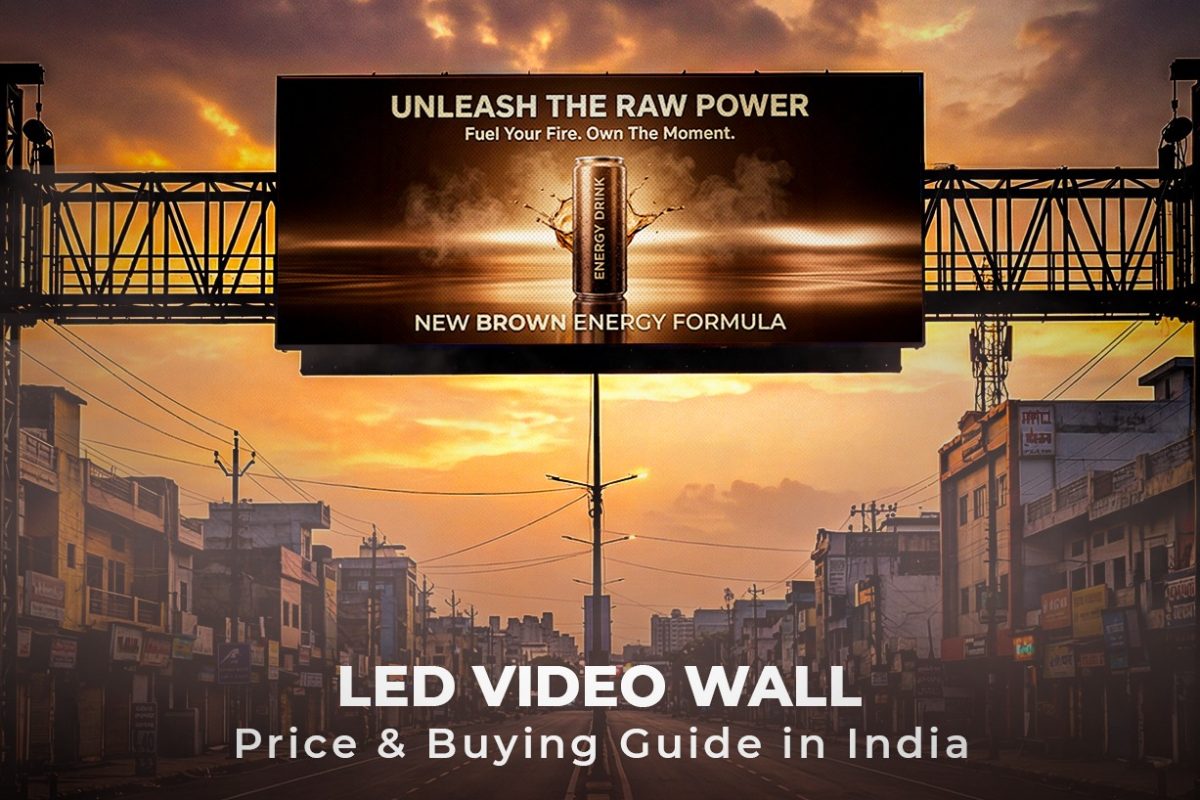
LED Video Wall Price & Buying Guide in India-Sparsa Digital

LED Video Wall Price & Buying Guide in India

In today’s digital age, LED video walls have become the go-to medium for large-format visual communication. From retail stores and corporate lobbies to outdoor billboards and event stages. LED video walls are transforming the way brands engage audiences.

But one question potential buyers always ask is:

“How much does an LED video wall cost in India?”

What Is an LED Video Wall?

An LED video wall is a large-scale digital display made up of multiple modular LED panels. These panels seamlessly tile together to form one large screen that can play video, images, text, or live streaming content.

They offer:

✔ High brightness
✔ Wide viewing angles
✔ Custom shapes and sizes
✔ Long lifespan
✔ Energy efficiency

Because of these advantages, LED walls are now widely used in:

  • Retail stores
  • Corporate events
  • Stadiums
  • Outdoor billboards
  • Control rooms
  • Hotels & malls

How LED Display Pricing Works

Unlike TVs or projectors, LED video walls are priced based on modular metrics such as:

Cost DriverUnit of Measure
Display Modules₹ per sq. ft /
Resolution & Pixel PitchSmaller pitch = higher cost
BrightnessNits level
Indoor vs OutdoorWeatherproofing adds cost
Mounting & AccessoriesStructures, cabling
InstallationSkilled labor
Warranty & SupportExtended support adds price

So when someone asks “how much does an LED video wall cost?” The real answer is: it depends.

Let’s break it down.

LED Video Wall Price in India – What to Expect

As of 2026, led video wall price in India varies widely based on purpose, specs, and location. Generally:

👉 Average range:
₹ 30,000 – ₹ 120,000 per sq ft

Nevertheless:

✔ Low-resolution indoor walls may start lower
✔ High-brightness outdoor walls cost significantly more

Next, we explore exact price ranges in key categories.

Indoor LED Video Wall Price in India

Indoor screens are used in:

📍 Offices
📍 Retail stores
📍 Museums
📍 Reception areas

Typical Costs

Pixel PitchTypical UseApprox. Price (₹/sq ft)
P1.8 -P2.5High clarity displays₹ 60,000 – ₹ 90,000
P2.5 – P3.9Standard indoor panels₹ 40,000 – ₹ 70,000
P4.8 – P6.0Budget/less critical indoor₹ 30,000 – ₹ 50,000

✔ Lower pixel pitch → sharper image → higher cost
✔ Suitable for close viewing distances

If you’re asking “how much does an indoor LED video wall cost?” The answer is generally ₹ 30,000 – ₹ 90,000 per sq ft before installation.

Outdoor LED Video Wall Price in India

Outdoor walls require weatherproofing, higher brightness (often >5000 nits), and rugged construction, which adds up.

Typical Outdoor Pricing

Pixel Pitch (mm)BrightnessPrice (₹/sq ft)
P4.0 – P6.05000+ nits₹ 80,000 – ₹ 1,20,000
P6.0 – P105000+ nits₹ 70,000 – ₹ 1,00,000
P10 – P16Large billboards₹ 60,000 – ₹ 90,000

Outdoor LED video wall price is significantly higher due to:

  • Weatherproof IP rating
  • Anti-glare design
  • Power and cooling considerations
  • Higher brightness modules

In India’s heat and monsoon, quality outdoor walls are worth the premium.

LED Display Wall Price for Advertising

LED walls have become essential for outdoor advertising, roadside billboards, and high footfall zones.

Advertising screen price factors:

✔ Location
✔ Audience size
✔ Brightness requirement
✔ Viewing distance
✔ Screen size

General pricing
Standard commercial advertising walls range from
₹ 70,000 – ₹ 120,000 per sq ft

Remember: Advertising screens often generate revenue, so many buyers look at ROI more than upfront cost.

LED Wall Price for Retail Store

Retail spaces use LED walls for:

🏬 Branding
🎥 Product promotion
📺 Digital signage

Typical Retail LED Wall Costs

Use CasePrice (₹/sq ft)
Store display₹ 45,000 – ₹ 85,000
Interactive store wall₹ 70,000+
Branded facades₹ 90,000+

Retail buyers often prioritize pixel pitch and viewing clarity, since customers are close to the screen.

LED Video Wall Price for Events

Events are a different category, requiring:

🧑‍🎤 Portable setup
🔌 Quick installation
🎬 High brightness visuals

Event rental prices are usually calculated differently:

✔ Per event/day price
✔ With or without operator
✔ With transport included

Event LED video wall price (rental basis):

  • Small events: ₹ 15,000 – ₹ 40,000 per day (per LED panel)
  • Large outdoor events: ₹ 50,000+ per day

Note: These prices don’t represent ownership but rental.

Additional Cost Considerations

When budgeting, also include:

Power backup & UPS
Controller & media players
Content management software
Mounting brackets & rigging
Delivery & logistics
Taxes

All of which add to the final led screen price India.

LED Video Wall Installation Cost

Installation is a specialized field and typically adds:

📌 Installation cost: ₹ 5,000 – ₹ 25,000 per sq ft

This depends on:

✔ Complexity of installation
✔ Height & accessibility
✔ Wall structure reinforcement
✔ Cable management
✔ Labor skill

Professional installation ensures:

✔ Perfect alignment
✔ Safe mounting
✔ Warranty compliance

Neglecting installation quality can lead to:

❌ Panel damage
❌ Uneven display
❌ Higher maintenance costs

So don’t cut corners!

Commercial LED Video Wall Pricing Factors

Let’s summarize what impacts the commercial LED video wall pricing:

🔹 Pixel pitch
🔹 LED chip quality
🔹 Cabinet size & weight
🔹 Brightness (nits)
🔹 Power consumption
🔹 Weatherproofing
🔹 LED controller & processors
🔹 Installation access
🔹 Warranty & after-sales support

Each of these factors can increase or decrease your final cost by 10% – 50% or more.

LED Video Wall Price Calculator (How to Estimate Budget)

Want a quick estimate? Use this simple formula:

Cost = Display material + Installation + Accessories + Support

Let’s say you need a 10 ft × 6 ft indoor wall:

✔ Area = 60 sq ft
✔ Estimated cost = ₹ 60,000 × 60 = ₹ 36,00,000
✔ Installation = ₹ 10,000 × 60 = ₹ 6,00,000
✔ Accessories & setup = ₹ 2,00,000
✔ Total = ₹ 44,00,000

This is a practical way to use a led video wall price calculator in India.

Financing, Renting & Leasing Options

High-end LED walls may cost several lakhs or crores; which is why many businesses choose:

✔ EMI or financing plans
✔ Leasing
✔ Rental for events
✔ Advertising partnership models (zero investment)

Some providers even offer revenue sharing; perfect for billboards and advertising spaces.

How to Evaluate LED Video Wall Quotes

When comparing quotes, always check:

🟡 Pixel pitch and brightness
🟡 Warranty period (min 1-3 years)
🟡 After-sales support
🟡 Availability of spare parts
🟡 Installation and training included?
🟡 Return on Investment (ROI) model

Don’t choose purely on price; quality matters.

FAQs

1. What is the standard LED video wall price per sq ft in India?

The standard range is roughly ₹30,000 – ₹120,000 per sq ft depending on indoor/outdoor use, pixel pitch, and quality.

2. Why is outdoor LED wall price higher than indoor?

Outdoor walls require higher brightness, weatherproofing, rugged construction, and thermal management, all of which add cost.

3. How much does LED video wall installation cost?

Installation typically ranges from ₹ 5,000 to ₹ 25,000 per sq ft based on complexity.

4. Can I get financing for LED video walls in India?

Yes, many vendors provide financing, leasing, or EMI options since the investment can be significant.

5. Is an LED video wall worth the investment?

For advertising, retail branding, and event impact, LED walls deliver high ROI through engagement and revenue potential.

6. How do I calculate the cost of an LED video wall?

Multiply the total area (sq ft) by the average price per sq ft, then add installation and accessories.

7. What is the average LED screen price in India?

Most indoor screens average around ₹ 30,000 – ₹ 90,000 per sq ft, while outdoor screens often cost ₹ 80,000 – ₹ 1,20,000 per sq ft.

8. Does pixel pitch affect price?

Yes. Smaller pixel pitch means higher resolution and higher cost.

Indoor vs Outdoor LED Video Wall-Sparsa Digital

Indoor vs Outdoor LED Video Wall – Which One Should You Choose?

When investing in digital display technology, one of the biggest decisions businesses face is choosing between an indoor vs outdoor LED video wall. While both offer stunning visuals and high engagement, they are designed for very different environments and purposes.

If you’re planning a retail upgrade, corporate installation, or outdoor advertising setup, this guide will help you understand the key differences, benefits, pricing factors, brightness levels, and use cases; so you can confidently choose the right solution.

Let’s break it down in detail.

Understanding LED Video Walls

An LED video wall is a large-format display made up of modular LED panels seamlessly connected to form one unified screen. Unlike LCD displays, LED walls offer:

  • Seamless design (no bezels)
  • High brightness levels
  • Long lifespan
  • Customizable sizes and shapes
  • Better visibility in various lighting conditions

However, the real difference lies in whether the LED wall is built for indoor or outdoor use.

What Is an Indoor LED Video Wall?

An indoor LED video wall is designed specifically for controlled environments such as:

  • Retail stores
  • Shopping malls
  • Corporate offices
  • Conference rooms
  • Hotels
  • Control rooms
  • Exhibition halls

Indoor LED screens are optimized for closer viewing distances and moderate ambient lighting.

Indoor LED Video Wall Benefits

Let’s explore the key indoor LED video wall benefits:

1. Superior Image Clarity at Close Distance

Indoor LED walls usually have smaller pixel pitch (P1.2 to P3.9), meaning the pixels are placed closer together. This results in:

  • Higher resolution
  • Sharper text and graphics
  • Crisp visuals for close viewing

This is especially important in retail and office environments where viewers stand only a few feet away.

2. Lower Brightness Requirement

Indoor spaces don’t need extreme brightness. Most indoor LED walls operate between:

800 to 1500 nits

This reduces:

  • Power consumption
  • Heat output
  • Overall operating costs

3. Sleek and Lightweight Design

Indoor cabinets are:

  • Slim
  • Lightweight
  • Easy to mount on walls
  • Aesthetically refined

Perfect for luxury retail stores or premium office lobbies.

4. Ideal for Controlled Environments

Indoor LED screen applications typically include:

  • Brand storytelling
  • Digital signage
  • Corporate dashboards
  • Video conferencing backdrops
  • Product promotions
  • Interactive displays

For businesses asking “which LED wall is best for retail?”

 indoor LED walls are usually the top choice.

What Is an Outdoor LED Video Wall?

Outdoor LED walls are built for challenging environments such as:

  • Highways
  • Building facades
  • Stadiums
  • Transit hubs
  • DOOH advertising networks

They are engineered to withstand harsh weather and direct sunlight.

Outdoor LED Video Wall Advantages

Here are the major outdoor LED video wall advantages:

1. Extremely High Brightness

Outdoor screens operate between:

5000 to 8000+ nits

This ensures visibility even in direct sunlight.

When doing an LED wall brightness comparison, outdoor walls are significantly brighter than indoor versions.

2. Weatherproof Construction

Outdoor LED displays feature:

  • IP65 or higher protection rating
  • Waterproof casing
  • Dust resistance
  • UV-resistant coating

They are designed for India’s:

  • Heat
  • Monsoons
  • Dust conditions

3. Designed for Long Viewing Distance

Outdoor LED walls generally use larger pixel pitches (P4 to P16). This is suitable because viewers stand farther away, often 20 to 200 meters.

4. Ideal for DOOH Advertising

For businesses investing in digital billboards, the outdoor LED video wall for DOOH advertising is unmatched.

DOOH (Digital Out-of-Home) advertising allows:

  • Real-time content updates
  • Multiple advertisers on one screen
  • Higher revenue potential

If you’re looking for the best LED wall for advertising, outdoor LED displays are typically the answer for roadside and public campaigns.

Indoor vs Outdoor LED Video Wall: Core Differences

Now let’s directly compare indoor vs outdoor LED video wall systems.

Indoor LED WallOutdoor LED Wall:
Brightness Comparison800 – 1500 nits5000 – 8000+ nitsIn an LED wall brightness comparison, outdoor screens are 4-6 times brighter.
Why? Because sunlight washes out low-brightness displays.
Pixel Pitch DifferencesSmaller pixel pitch (P1.2 – P3.9)
Better for close viewing
Larger pixel pitch (P4 – P16)
Suitable for distance viewing
Smaller pitch = sharper visuals = higher cost.
Weather ProtectionNot waterproof
Not dust resistant
Fully sealed
Weather-resistant
Corrosion-protected
Using an indoor screen outdoors can permanently damage it.
Installation ComplexityWall-mounted
Ceiling-hung
Less structural reinforcement
Steel structures
Wind load calculations
Foundation support
Electrical weatherproofing
Outdoor setups are more complex and expensive to install.
Cost DifferencesIndoor LED walls generally cost less due to:
Lower brightness components
No weatherproofing
Lighter cabinets
Outdoor LED video walls cost more because of:
High brightness modules
IP-rated enclosures
Structural frameworks

Which LED Wall Is Best for Retail?

Retail spaces need:

  • High clarity
  • Close viewing resolution
  • Elegant design
  • Energy efficiency

For this reason, indoor LED video walls are typically the best option.

An indoor LED wall for retail store helps with:

  • Product launches
  • Brand storytelling
  • Window displays
  • Promotions
  • Interactive experiences

Retailers benefit from vibrant visuals without excessive brightness.

Indoor LED Wall for Corporate Offices

Corporate offices use LED walls for:

  • Reception branding
  • Boardroom backdrops
  • Data visualization
  • Company presentations
  • Live dashboards

An indoor LED wall for corporate offices delivers:

  • Professional aesthetics
  • Seamless video conferencing backdrop
  • Clear text readability

It enhances corporate image and communication efficiency.

Outdoor LED Video Wall for DOOH Advertising

Outdoor advertising demands:

  • Maximum visibility
  • 24/7 operation
  • High durability
  • Remote content control

An outdoor LED video wall for DOOH advertising is ideal for:

  • Highway billboards
  • Airport advertising
  • Metro stations
  • Stadiums

These systems can generate advertising revenue, making them strong ROI investments.

When Should You Choose Indoor LED Walls / Outdoor LED Walls ?

When Should You Choose Indoor LED Walls?When Should You Choose Outdoor LED Walls?
The screen will be inside a buildingThe display faces direct sunlight
Viewers are within 3–10 meters It’s installed on a building facade
Aesthetic appearance matters It’s used for public advertising
Content includes text-heavy visuals Long-distance visibility is required
Power efficiency is a concern It must withstand rain and dust

Common Mistakes to Avoid

  1. Choosing indoor screens for semi-outdoor areas
  2. Ignoring brightness requirements
  3. Overpaying for unnecessary pixel pitch
  4. Not considering maintenance access
  5. Focusing only on price instead of application

Understanding your use case is critical.

Cost vs Value Consideration

While indoor walls are cheaper upfront, outdoor LED walls can generate revenue through advertising.

So instead of asking:

“Which is cheaper?”

Ask:

“Which serves my business objective better?”

Maintenance and Lifespan

Indoor LED walls:Outdoor LED walls:
Lower exposure to environmental damageRequire periodic inspection
Generally longer lifespan with minimal maintenanceMay need weather-related maintenance

However, both can last 8-10 years with proper care.

Energy Consumption Comparison

Outdoor LED walls consume more power due to higher brightness.

Indoor walls:

  • Lower energy bills
  • Better suited for long operating hours indoors

Final Decision Guide

Ask yourself:

  1. Where will the screen be installed?
  2. What is the average viewing distance?
  3. Will it face direct sunlight?
  4. Is the goal branding or advertising revenue?
  5. What is your available budget?

Your answers will clearly point toward either indoor or outdoor LED video walls.

FAQs

1. What is the main difference between indoor vs outdoor LED video wall?

The primary difference is brightness and weatherproofing. Outdoor walls are much brighter and built to withstand environmental conditions.

2. Which LED wall is best for retail?

Indoor LED walls are best for retail stores due to high resolution and close viewing clarity.

3. Can indoor LED screens be used outdoors?

No. Indoor screens lack waterproofing and high brightness required for outdoor environments.

4. What are indoor LED screen applications?

Indoor LED screens are used in retail stores, corporate offices, malls, conference rooms, and exhibitions.

5. What are outdoor LED video wall advantages?

High brightness, weather resistance, long-distance visibility, and suitability for DOOH advertising.

6. What is the brightness difference between indoor and outdoor LED walls?

Indoor screens typically range from 800–1500 nits, while outdoor screens range from 5000-8000+ nits.

7. Which LED display is best for outdoor use?

An IP65-rated outdoor LED display with high brightness and durable structure is best for outdoor use.

Conclusion

Choosing between an indoor vs outdoor LED video wall comes down to environment, purpose, and audience distance.

If you need:

✔ High-resolution visuals for close viewing → Choose Indoor
✔ Maximum visibility under sunlight → Choose Outdoor
✔ Corporate branding solution → Indoor LED wall
✔ Revenue-generating billboard → Outdoor LED wall

Understanding the technical and functional differences ensures your investment delivers long-term value.