
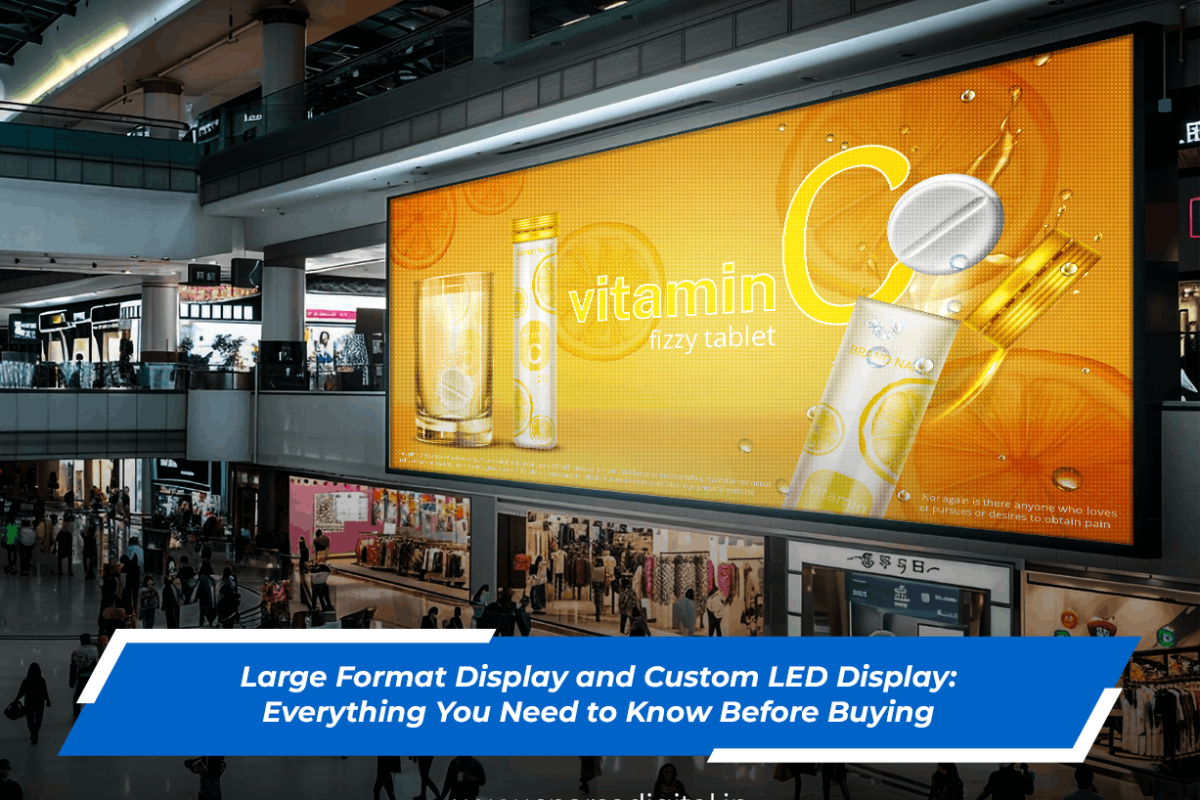
Large Format Display and Custom LED Display

Large Format Display and Custom LED Display: Everything You Need to Know Before Buying

In today’s digitally driven business environment, visual communication plays a crucial role in branding, marketing, training, and information sharing. From corporate boardrooms and retail stores to airports, museums, and stadiums, organizations are investing heavily in advanced display technologies. Two solutions that stand out for their flexibility and performance are the large format display and the custom LED display.

A large format display delivers immersive viewing on a grand scale, while a custom LED display allows businesses to design screens in unique shapes, sizes, and configurations tailored to specific needs. Together, these technologies are redefining how brands connect with audiences through powerful, dynamic visuals.

What Is a Large Format Display?

A large format display refers to any digital screen that is significantly larger than a standard television or monitor. Typically starting from 55 inches and extending to wall-sized installations, a large format display is designed to present high-resolution images, videos, dashboards, and interactive content in public and professional environments.

Large format display systems are commonly used in:

  • Corporate meeting rooms and boardrooms
  • Retail showrooms and shopping malls
  • Control rooms and command centers
  • Education and training institutions
  • Airports, railway stations, and public venues

The main goal of a large format display is to ensure maximum visibility, clarity, and impact, even when viewed from a distance or by large audiences.

What Is a Custom LED Display?

A custom LED display is a modular LED screen that is designed and built according to specific project requirements. Unlike standard flat screens, a custom LED display can be created in any size, shape, resolution, or curvature. It can wrap around pillars, form curved walls, create circular structures, or fit into unconventional architectural spaces.

A custom LED display is widely used for:

  • Brand experience centers
  • Retail flagship stores
  • Exhibition booths and trade shows
  • Theaters and stage backdrops
  • Outdoor advertising and landmark installations

The flexibility of a custom LED display allows designers and architects to transform creative concepts into striking visual realities.

Why Choose a Large Format Display for Modern Spaces?

The popularity of the large format display continues to grow because it offers several advantages over traditional projection systems and smaller screens.

1. Superior Visibility and Engagement

A large format display ensures that content remains clear and readable even from long distances. In conference rooms, classrooms, and retail spaces, this improves audience engagement and communication effectiveness.

2. High Resolution and Color Accuracy

Modern large format display panels support Full HD, 4K, and even 8K resolutions. This level of detail is ideal for product demos, data visualization, and immersive video playback.

3. Professional Appearance

A sleek large format display enhances the visual appeal of interiors and reflects a modern, technology-driven brand image.

4. Reliability and Long Operating Life

Commercial-grade large format display systems are built for extended daily operation, making them suitable for mission-critical environments such as control rooms and broadcast studios.

The Power of a Custom LED Display

While a large format display works best for standard flat-screen installations, a custom LED display unlocks unlimited design possibilities.

Creative Freedom

A custom LED display can be designed in curved, cylindrical, wave-shaped, or irregular formats. This makes it ideal for architectural integration and experiential marketing.

Scalability

Because it is built from modular LED panels, a custom LED display can be expanded or reconfigured at any time. Businesses can start small and scale up as their needs grow.

Indoor and Outdoor Versatility

Custom LED display systems are available for both indoor and outdoor environments, with brightness levels and weather protection tailored to the installation site.

Seamless Large Screens

Unlike tiled LCD walls that may show visible bezels, a custom LED display creates a seamless surface that enhances visual continuity.

Large Format Display vs. Custom LED Display

Both technologies serve different purposes, and understanding their differences helps in choosing the right solution.

  • A large format display is ideal for flat-wall installations, boardrooms, classrooms, and digital signage networks where simplicity and standard sizes are preferred.
  • A custom LED display is best for creative environments, large venues, curved walls, and unique branding installations where flexibility and scale matter most.

In many advanced projects, organizations combine both large format display panels and custom LED display systems to achieve the perfect balance of performance and design.

Key Technical Specifications to Consider

When selecting a large format display or a custom LED display, several technical factors influence performance and longevity.

Resolution and Pixel Pitch

  • Large format display panels usually offer 4K or 8K resolution.
  • Custom LED display systems are defined by pixel pitch, which determines viewing distance and image sharpness.

Brightness

Indoor large format display units typically operate between 350 and 700 nits, while custom LED display systems can exceed 5,000 nits for outdoor visibility.

Refresh Rate

A high refresh rate ensures smooth video playback, especially important for broadcast studios and live events.

Viewing Angle

Wide viewing angles ensure consistent color and brightness across the entire screen.

Durability

Commercial-grade large format display panels and professional custom LED display modules are designed for long-term reliability and continuous operation.

Applications Across Industries

The combination of large format display and custom LED display technologies serves a wide range of industries.

Retail and Shopping Malls

Retailers use large format display screens for digital promotions and brand storytelling. A custom LED display in a storefront or atrium creates a stunning focal point that attracts customers and increases dwell time.

Corporate Offices

Boardrooms rely on large format display panels for presentations, video conferencing, and collaboration. Lobbies and experience centers often feature a custom LED display to showcase corporate achievements and branding.

Control Rooms and Command Centers

Mission-critical environments depend on large format display walls and custom LED display systems for real-time monitoring and data visualization.

Education and Training

Universities and training centers use large format display solutions for digital classrooms, while auditoriums benefit from custom LED display backdrops for events and lectures.

Events and Entertainment

Concerts, exhibitions, and theaters use custom LED display installations for stage design and immersive experiences, supported by large format display screens for auxiliary content.

Installation Process

Proper installation is essential for both large format display systems and custom LED display projects.

  1. Site survey and planning – Assess viewing distance, ambient light, and mounting structure.
  2. Design and layout – Finalize screen size, resolution, and configuration.
  3. Mounting and cabling – Install brackets, frames, and power connections.
  4. Panel or module assembly – Align large format display panels or assemble custom LED display modules.
  5. Calibration and testing – Adjust brightness, color balance, and alignment for uniform visuals.

Maintenance and Best Practices

To extend the life of your large format display and custom LED display:

  • Clean screens regularly with approved materials
  • Maintain proper ventilation and temperature control
  • Schedule periodic calibration
  • Replace faulty modules or panels promptly
  • Use surge protection and stable power supplies

With proper care, both systems can operate efficiently for more than 8 to 10 years.

Pricing and Cost Factors

The cost of a large format display and a custom LED display depends on:

  • Screen size and resolution
  • Panel or module quality
  • Brightness and refresh rate
  • Installation complexity
  • Control systems and software

In India, large format display prices typically start from ₹1.5 lakh and can go higher based on size and brand. A custom LED display is usually priced per square foot and may range from ₹6,000 to ₹20,000 per square foot depending on specifications and environment.

Choosing the Right Display Partner

When investing in a large format display or a custom LED display, select a supplier who offers:

  • Certified commercial-grade products
  • Custom design and engineering support
  • Professional installation services
  • Long-term warranty and spare availability
  • Proven project experience

A reliable partner ensures smooth execution and long-term performance.

Conclusion

The large format display and the custom LED display are powerful tools for modern visual communication. While a large format display delivers clarity, simplicity, and professional presentation, a custom LED display offers creative freedom, scalability, and immersive impact.

By choosing the right technology and working with an experienced integrator, businesses can transform ordinary spaces into engaging digital environments that inform, inspire, and influence audiences.

Frequently Asked Questions (FAQs)

1. What is the main difference between a large format display and a custom LED display?

A large format display is a standard flat-panel screen, while a custom LED display is a modular system that can be built in any shape or size.

2. Which is better for a boardroom?

A large format display is usually the best choice for boardrooms due to its simplicity and high resolution.

3. Can a custom LED display be used outdoors?

Yes, outdoor-grade custom LED display systems are designed with high brightness and weather protection.

4. How long does a large format display last?

Commercial large format display panels typically last 50,000 to 70,000 hours with proper maintenance.

5. Is calibration necessary for a custom LED display?

Yes, calibration ensures uniform brightness and color across all LED modules.

6. What viewing distance is ideal for a custom LED display?

The ideal distance depends on pixel pitch, usually calculated as pixel pitch (in mm) multiplied by 1,000.

7. Can large format display panels be combined into a video wall?

Yes, multiple large format display panels can be tiled together to create a video wall.

8. Are custom LED displays energy efficient?

Modern custom LED display systems use energy-efficient LEDs and smart power management.

9. Can content be updated remotely?

Yes, both large format display and custom LED display systems support remote content management.

10. Which option is more expensive?

A custom LED display generally costs more than a standard large format display due to customization and scale.


Transforming Healthcare Communication with Digital OPD Boards, Digital Standees, and LED Video Walls

Improving Healthcare Communication with Digital Signage & LED Displays

The healthcare industry is rapidly adopting modern digital technologies to streamline operations, enhance patient experience, and improve internal communication. Among these technologies, Digital OPD Boards, Digital Standees, and LED Video Walls for digital signage for healthcare are transforming how information is delivered in hospitals, clinics, and healthcare centers.

In this blog, we’ll explore how each of these tools contributes to a smarter, more efficient healthcare environment and why they are becoming indispensable in the digital age.

The Evolution of Hospital Communication

Traditionally, hospitals have relied on whiteboards, paper signs, and verbal announcements to convey information to patients and staff. While functional, these methods often lead to confusion, delays, and a less-than-ideal patient experience. In contrast, digital signage in healthcare offers a dynamic, real-time, and visually engaging solution.

Let’s break down how Digital OPD Boards, Digital Standees, and LED Video Walls are each playing a pivotal role in this digital revolution.

1. Digital OPD Boards: Simplifying Patient Flow

Digital OPD Boards (Outpatient Department Boards) are now a staple in many modern hospitals. These boards display real-time information such as:

  • Doctor availability

  • Appointment schedules

  • Token or queue numbers

  • Patient wait times

  • Consultation room numbers

Benefits of Digital OPD Boards

  • Improved Patient Experience: Patients no longer need to constantly ask staff for updates. They can simply view the board to see when and where they will be seen.

  • Real-Time Updates: Schedules and changes are updated instantly, reducing confusion and congestion.

  • Streamlined Workflow: Front-desk staff can focus on important tasks instead of answering repetitive queries.

Custom Features

Hospitals can customize Digital OPD Boards to include multilingual options, departmental color coding, or even patient instructions, making them user-friendly and inclusive.

View Our Portfolio: Digital OPD Boards for Hospitals

2. Digital Standees: Interactive and Informative

A Digital Standee is a freestanding digital display, often placed at entrances, lobbies, or hallways. Unlike static posters, these smart displays can cycle through multiple messages, graphics, and videos.

How Digital Standees Add Value in Healthcare

  • Health Campaigns & Announcements: Promote awareness about diseases, vaccination drives, or hygiene tips.

  • Navigation Aid: Interactive maps help visitors locate departments or clinics quickly.

  • Doctor Profiles: Introduce physicians, their specialties, consultation hours, and achievements.

  • Self-Service Kiosks: With touchscreen features, digital standees can be used for check-ins, registration, and feedback collection.

Why Digital Standees Are Ideal

Their sleek design, mobility, and versatility make digital standees a cost-effective communication tool for hospitals of all sizes.

3. LED Video Wall for Digital Signage for Healthcare: The Ultimate Visual Experience

An LED Video Wall for digital signage for healthcare is a large display system made up of multiple LED screens. It’s often used in lobbies, conference rooms, or waiting areas.

Key Applications in Healthcare

  • Emergency Alerts: Immediate display of emergency messages or code blue situations.

  • Hospital Announcements: Real-time updates on policy changes, visiting hours, or hospital news.

  • Patient Education: Display informative videos on preventive care, treatment options, or wellness routines.

  • Event Broadcasting: Live-stream medical conferences, surgeries for training, or awareness events.

Advantages of LED Video Walls

  • High Visibility: Eye-catching and visible from a distance.

  • Content Flexibility: Show videos, images, scrolling text, or split-screen messages.

  • Centralized Control: Easily update content across multiple displays from a single system.

Integrating Digital Signage in Healthcare: Best Practices

Implementing Digital OPD Boards, Digital Standees, and LED Video Walls is more than just installing screens. Here are some best practices for success:

1. Centralized Content Management System (CMS)

Use a CMS to control all displays across the facility from one platform. This allows seamless updates, scheduling, and content rotation.

2. Ensure HIPAA Compliance

Avoid displaying sensitive patient data publicly. All content should comply with data privacy laws and institutional protocols.

3. Invest in Quality Hardware

Medical environments demand durable, easy-to-clean, and high-resolution equipment. Choose healthcare-grade displays that can operate 24/7.

4. Keep Content Relevant

Rotate between medical news, patient instructions, wait times, health tips, and doctor availability. Relevance enhances engagement.

5. Train Staff

Educate your administrative and IT staff on managing digital signage effectively, ensuring smooth operation and quick troubleshooting.

FAQs About Digital Signage in Healthcare

Q1: What is the primary use of Digital OPD Boards in hospitals?

A: Digital OPD Boards help patients view real-time appointment schedules, doctor availability, and token numbers. They reduce wait-time confusion and streamline the outpatient process.

Q2: How is a Digital Standee different from a regular display screen?

A: A Digital Standee is a freestanding display, often interactive, designed for mobility and flexibility. It can be used for self-service tasks, announcements, or promotions.

Q3: Can an LED Video Wall be used outdoors?

A: Yes, with weatherproof and high-brightness models, LED video walls can be installed outside hospital premises to display public health messages and navigation directions.

Q4: Is it expensive to install digital signage in healthcare settings?

A: While the initial investment varies based on size and complexity, digital signage systems reduce long-term costs related to printing, staffing, and miscommunication.

Q5: How often should content be updated on these displays?

A: Content should be updated regularly to reflect schedule changes, news, and seasonal health campaigns. Most systems allow scheduling updates in advance.

Conclusion: Embrace the Future of Healthcare Communication

In a fast-paced healthcare environment, timely and effective communication can significantly impact patient satisfaction, operational efficiency, and safety. Digital OPD Boards, Digital Standees, and LED Video Walls for digital signage for healthcare are not just display tools—they’re strategic assets for any medical facility.

From enhancing patient engagement to reducing administrative burdens, digital signage systems are a must-have for forward-thinking hospitals and clinics. As healthcare continues to digitize, adopting these tools is not just beneficial, it’s essential.

Whether you are a small clinic looking for a simple Digital OPD Board or a large hospital planning a fully integrated LED Video Wall, now is the time to modernize your communication and lead the way into the future of patient care.

P1.8 Indoor LED Video Walls

P1.8 Indoor LED Video Walls: Features, Benefits & Use Cases

The digital display market is evolving rapidly, driven by technological advancements and the growing demand for high-quality, versatile display solutions. Among the most exciting innovations in this field are the P1.8 indoor active LED video wall and active LED screens. These technologies are redefining how we experience visual content, with applications spanning from commercial and retail spaces to entertainment venues and corporate environments.

In this blog, we will explore what makes P1.8 indoor active LED video walls and active LED screens so revolutionary. We will delve into their technical features, benefits, and practical applications, as well as their impact on various industries. Whether you’re a business owner looking to enhance your marketing strategy or a tech enthusiast curious about the future of display technology, this post will provide valuable insights into the world of advanced LED display solutions.

Understanding P1.8 Indoor Active LED Video Wall Technology

At the heart of this innovation is the P1.8 indoor active LED video wall. The term “P1.8” refers to the pixel pitch, which is the distance between the centers of two adjacent pixels on the LED screen. In this case, the pixel pitch is 1.8 millimeters, making it one of the finest pixel pitches available for indoor LED video walls. The smaller the pixel pitch, the higher the resolution and the clearer the image. This is especially important in environments where high-definition content is crucial, such as in retail displays, control rooms, and corporate presentations.

Indoor LED Video Wall

An “indoor” active LED video wall is specifically designed for use in indoor environments, where factors such as ambient light and space limitations need to be carefully considered. The active LED technology refers to the use of LEDs that can actively control each pixel’s brightness and color, offering more accurate and dynamic visuals compared to traditional passive displays.


Key Features of P1.8 Indoor Active LED Video Walls

  1. Ultra-high Resolution: With a pixel pitch of just 1.8mm, P1.8 LED video walls offer exceptionally sharp and clear visuals, even when viewed from up close. This makes them ideal for settings like trade shows, retail stores, and museums, where fine details are important.
  2. High Brightness: The high brightness levels of P1.8 LED video walls ensure that content remains visible and vibrant, even in well-lit indoor environments. This is particularly important in spaces with strong overhead lighting or large windows that let in a lot of natural light.
  3. Wide Viewing Angles: LED video walls offer wide viewing angles, allowing viewers to enjoy clear, consistent visuals from virtually any position in the room. This is crucial in large spaces like auditoriums or conference rooms, where the audience may be spread out.
  4. Seamless Integration: P1.8 LED video walls are designed to be modular, meaning individual panels can be seamlessly connected to create a large, unified display. This flexibility allows businesses to customize the size and shape of their video walls to fit the specific dimensions of their space.
  5. Energy Efficiency: Active LED technology is highly energy-efficient, ensuring that your video wall remains cost-effective in terms of power consumption. Despite their high brightness and resolution, P1.8 LED video walls use significantly less energy than traditional display technologies.
  6. Long Lifespan: LED technology is known for its longevity. P1.8 indoor active LED video walls can last for tens of thousands of hours, making them a durable investment for businesses and institutions.

The Rise of Active LED Screens

While LED video walls have become increasingly popular for large-scale displays, active LED screens are also gaining traction as versatile and dynamic solutions for various applications. Active LED screens, as opposed to passive displays, utilize advanced technology to control each individual pixel’s brightness, color, and refresh rate. This gives active LED screens a significant edge in terms of visual quality, responsiveness, and overall performance.

Active LED screens can be used in a variety of settings, from digital signage in retail stores to interactive displays in museums or corporate offices. Thanks to their modular nature, these screens can be customized to fit specific display requirements, ensuring that businesses can create unique visual experiences for their audiences.

Advantages of Active LED Screens

  1. Superior Image Quality: The ability to control each pixel actively allows for more precise color reproduction and higher contrast ratios, ensuring vibrant, realistic images. Active LED screens provide an enhanced viewing experience, with crisp details even in fast-moving video content.
  2. Customizable Size and Shape: Like P1.8 indoor active LED video walls, active LED screens can be built to any size or shape, making them highly adaptable to different environments. Whether you need a small display for a retail counter or a massive wall-sized screen for a stadium, active LED screens can be tailored to your needs.
  3. Flexibility in Content Display: Active LED screens can display static images, videos, and even live content. With their high refresh rate and ability to display smooth, continuous motion, these screens are perfect for events, presentations, or digital signage applications.
  4. Interactive Capabilities: Many active LED screens feature touch-sensitive technology, allowing users to interact with the display. This opens up new possibilities for engaging customers, providing them with personalized experiences, or even offering interactive advertisements and product demos.
  5. Enhanced Durability: Active LED screens are built to withstand the wear and tear of frequent use. Their robust construction and advanced technology ensure that they can handle the demands of both indoor and outdoor environments.
  6. Energy-Efficiency and Low Maintenance: Active LED screens are energy-efficient and require minimal maintenance, making them a cost-effective long-term investment for businesses. Their long lifespan and low power consumption contribute to reduced operational costs over time.

Practical Applications of P1.8 Indoor Active LED Video Walls and Active LED Screens

The versatility of P1.8 indoor active LED video walls and active LED screens makes them suitable for a wide range of applications across different industries. Let’s take a look at some of the most common use cases for these advanced display solutions.

1. Retail and Digital Signage

In the retail world, capturing the attention of customers is paramount. P1.8 indoor active LED video walls are perfect for creating eye-catching digital signage that attracts passersby and encourages them to engage with the brand. Whether it’s promoting a new product, displaying an advertisement, or showcasing customer testimonials, the high resolution and vibrant visuals of LED video walls ensure that the message is delivered with maximum impact.

Active LED screens are also ideal for interactive retail experiences. For example, touch-enabled displays can allow customers to explore products, browse catalogs, or even make purchases directly from the screen, offering a seamless and engaging shopping experience.

2. Corporate and Conference Rooms

In corporate settings, P1.8 indoor active LED video walls are transforming boardrooms, meeting spaces, and conference rooms into dynamic environments for collaboration and communication. The high resolution and seamless design of the video walls make them perfect for presentations, video conferences, and live streaming events.

Active LED screens also play a crucial role in corporate settings, providing interactive solutions for brainstorming sessions, team meetings, and collaborative workshops. These screens can display real-time data, team updates, or digital whiteboards that foster collaboration and creativity.

3. Control Rooms and Command Centers

For mission-critical applications such as command centers, security monitoring, and network operation centers, P1.8 indoor active LED video walls offer unmatched clarity and reliability. Operators can monitor multiple video feeds and data sources simultaneously, with each screen providing detailed, high-resolution images for quick decision-making.

Active LED screens can be incorporated into control room setups to provide customized displays for different data types or to facilitate real-time communication between teams.

4. Entertainment and Events

In the entertainment industry, P1.8 indoor active LED video walls and active LED screens are increasingly being used in live events, concerts, theaters, and sports arenas. These screens are used to display stunning visuals, interactive content, or live footage, engaging audiences and enhancing the overall experience.

The ability to create large-scale, immersive displays with high resolution and vibrant colors makes these technologies particularly popular for events where visual impact is essential. The flexibility and scalability of LED screens also allow event organizers to design custom setups tailored to specific venues or event requirements.

5. Education and Museums

Educational institutions and museums are also adopting active LED technology to create interactive learning experiences. In classrooms and lecture halls, P1.8 indoor active LED video walls can be used to display educational videos, presentations, and visual aids in stunning detail.

Museums can benefit from active LED screens by using them to create immersive exhibits, providing visitors with interactive displays that enhance their learning experience. These screens can display dynamic content, 3D models, and even allow visitors to interact with exhibits using touch technology.

Conclusion

The P1.8 indoor active LED video wall and active LED screens represent the future of visual displays, offering high resolution, versatility, and advanced features that meet the needs of a wide range of industries. From retail and entertainment to corporate and educational applications, these display solutions are transforming the way businesses and institutions engage with their audiences.

As the demand for high-quality, interactive, and immersive displays continues to grow, the future of active LED technology looks incredibly bright.

Active LED Displays and Active LED Video Walls

Active LED Displays for High-Impact Visual Communication

In the world of modern visual technology, Active LED Displays and Active LED Video Walls have emerged as powerful solutions for a wide range of applications. From retail spaces and concert stages to corporate boardrooms and sports arenas, these high-impact visual tools are transforming the way we experience digital content. In this blog post, we’ll explore the benefits, technology, and applications of Active LED Displays and Active LED Video Walls, highlighting their advantages in comparison to traditional display methods.

What Are Active LED Displays?

An Active LED Display refers to a digital screen made up of light-emitting diodes (LEDs) that are individually powered to produce light. Unlike traditional passive LED displays, where the LEDs simply emit light when the screen is powered, an active LED display is designed to use more sophisticated technology to produce sharper, brighter, and more dynamic images.

What Is an Active LED Video Wall?

An Active LED Video Wall is a large-scale display system made up of multiple smaller Active LED screens seamlessly integrated to create one unified, immersive visual experience. The display panels, connected in a matrix, work in concert to deliver a larger-than-life viewing experience. Active LED Video Walls can composed of hundreds or even thousands of individual pixels, making them ideal for applications where high resolution and large-scale visuals are required.

Advantages of Active LED Displays

1. Superior Image Quality

Active LED displays produce brighter, sharper images compared to traditional display technologies like LCD or plasma. Each pixel is actively controlled, allowing for more vibrant colors, higher contrast ratios, and improved picture detail. The superior brightness of Active LED displays also ensures that the image remains visible even in bright environments.

2. Energy Efficiency

One of the most notable benefits of Active LED technology is its energy efficiency. LED displays consume less power than traditional displays like CRTs or LCDs, making them a more sustainable option in both commercial and residential settings. The individual control over each pixel also ensures that only the necessary amount of energy is used at any given time, further optimizing power consumption.

Product Banner (1)

3. Thin, Lightweight Design

Active LED displays are known for their sleek, thin design. Unlike bulky cathode ray tube (CRT) televisions or early flat-screen models, LED screens can produced in ultra-thin configurations. This makes them highly versatile and ideal for installations where space is limited or where aesthetics are crucial.

4. Longevity and Durability

LEDs have a long lifespan compared to other forms of display technology. An Active LED display typically lasts for tens of thousands of hours, ensuring that businesses or organizations that invest in these systems get many years of use. Moreover, LEDs are highly durable and less prone to damage, making them suitable for use in public spaces, outdoor environments, and high-traffic areas.

Advantages of Active LED Video Walls

1. Scalability and Flexibility

The most significant advantage of an Active LED Video Wall is its scalability. These video walls are made up of multiple individual panels, so they can configured to meet the specific size and aspect ratio requirements of any given project. Whether you’re looking to install a video wall for a small retail store or a massive stadium, Active LED Video Walls can customized to fit the space and purpose.

2. Seamless Viewing Experience

When properly aligned, Active LED Video Walls create a seamless visual experience. The bezels between individual panels are minimal, ensuring that viewers can enjoy a continuous image with no visible gaps or interruptions. This makes them ideal for applications where visual continuity is critical, such as immersive art installations, live events, or corporate presentations.

3. High-Resolution Visuals

Active LED Video Walls can configured to deliver ultra-high-definition resolution, including 4K and even 8K. This level of resolution provides crisp, detailed images that are essential for large-scale displays in settings like sports arenas, trade shows, and exhibitions. Whether the audience is close to the display or at a distance, Active LED Video Walls maintain their high-quality performance.

4. Versatile Application

Active LED Video Walls are used in a wide variety of settings, thanks to their versatility. From outdoor digital signage and entertainment venues to control rooms and corporate offices, these video walls are increasingly being deployed in nearly every industry. Their ability to adapt to different lighting conditions, such as bright sunlight or dark environments, makes them suitable for both indoor and outdoor use.

Key Applications of Active LED Displays and Active LED Video Walls

1. Retail and Advertising

In the retail industry, Active LED Displays are used to capture the attention of passersby, displaying high-definition images and dynamic content that can change in real-time. These displays are often used in storefronts, shopping malls, and airports to promote products, services, and brand messages. Active LED Video Walls take this a step further by providing an immersive shopping experience, creating large-scale installations that attract and engage customers.

2. Event and Entertainment Industry

The event and entertainment industries have quickly adopted Active LED Video Walls for concerts, festivals, conferences, and live shows. These video walls allow event organizers to create stunning visual effects and engage audiences with dynamic content. For large stages, multiple LED panels are arranged to create expansive, high-resolution screens that can display everything from live performances to special effects.

3. Corporate and Control Room Applications

Active LED Video Walls are increasingly popular in corporate environments, particularly in command centers and control rooms. These spaces require real-time monitoring and quick access to large amounts of data, and Active LED Video Walls are perfect for displaying multiple sources of information on a single, large screen. In this context, the ability to show crisp and clear data from various sources is crucial, and LED technology ensures that information is visible even in challenging lighting conditions.

4. Sports and Stadiums

Sports arenas use Active LED Video Walls to display live game footage, replays, player statistics, and advertisements. These large-format displays help enhance the spectator experience by providing high-definition visuals and the ability to zoom in on key moments of the game. The flexibility of Active LED Video Walls also allows for different content to shown during breaks or halftime, such as sponsor advertisements or fan engagement activities.

5. Transportation and Public Spaces

From train stations to airports, Active LED Displays are transforming public spaces by providing travelers with real-time information, such as flight schedules, arrival/departure times, and emergency alerts. In addition, public service campaigns or advertisements can displayed on large video walls, ensuring that important messages reach a wide audience.

Conclusion

Active LED Displays and Active LED Video Walls represent the cutting edge of visual technology. With their ability to deliver high-quality, dynamic images with exceptional brightness, color accuracy, and energy efficiency, these systems have become indispensable tools in a wide array of industries. Their scalability, versatility, and superior performance make them ideal for everything from small retail installations to large-scale event productions. As technology continues to advance, we can expect even more innovations in LED display systems, further enhancing their capabilities and applications.

If you’re considering upgrading your digital signage, event display, or public communication system, investing in Active LED Displays or Active LED Video Walls is a forward-thinking choice that can provide long-lasting value and impact.

The Future of Advertising LED Video Walls and Billboard Advertising

The Future of Advertising Using LED Displays & Digital Billboards

In the realm of advertising, capturing the audience’s attention has always been a critical challenge. As technology advances, traditional methods are being complemented and often surpassed by digital innovations. Among the most impactful of these innovations are LED video walls and billboard advertising. These modern advertising tools offer unparalleled opportunities for engagement, creativity, and effectiveness. This blog delves into the world of LED video walls and billboard advertising, exploring their significance, applications, advantages, and the future trends shaping their evolution.

Understanding LED Video Walls

What Are LED Video Walls?

LED video walls are large displays composed of multiple LED panels seamlessly tiled together to form a single, continuous screen. These video walls offer high-resolution visuals, vibrant colors, and the ability to display dynamic content, making them an ideal choice for various advertising and communication purposes. They are used in a wide range of settings, from retail stores and sports arenas to corporate offices and public spaces.

Applications of LED Video Walls

  1. Retail Environments: In retail stores, LED video walls are used to create immersive shopping experiences. They can display promotional content, product showcases, and interactive advertisements that attract and engage customers.
  2. Sports Venues: Sports arenas and stadiums utilize LED video walls to display live game footage, replays, advertisements, and crowd engagement content. These displays enhance the spectator experience and provide a platform for targeted advertising.
  3. Corporate Settings: In corporate environments, LED video walls are used for presentations, video conferencing, and internal communications. They provide a visually impactful way to convey information and enhance collaboration.
  4. Public Spaces: LED video walls are increasingly found in public spaces such as airports, train stations, and city squares. They display important information, advertisements, and entertainment content to engage and inform the public.
  5. Entertainment Venues: Concerts, theaters, and other entertainment venues use LED video walls to enhance performances with dynamic visuals, creating a more engaging and memorable experience for the audience.

Benefits of LED Video Walls

  1. High Visibility: LED video walls are bright and highly visible, even in outdoor or brightly lit environments. This ensures that the displayed content can be seen clearly from a distance.
  2. Dynamic Content: Unlike static displays, LED video walls can display dynamic and interactive content. This includes videos, animations, and real-time data, making the advertising more engaging and effective.
  3. Scalability: LED video walls can be customized to fit various sizes and shapes, making them versatile for different locations and purposes. This scalability allows for creative and unique display configurations.
  4. Durability: LED panels are designed to be durable and long-lasting, making them suitable for both indoor and outdoor use. They can withstand various weather conditions and provide reliable performance over time.
  5. Cost-Effective: While the initial investment in LED video walls may be high, they offer long-term cost savings due to their durability and low maintenance requirements. They also provide a higher return on investment through increased engagement and advertising effectiveness.

Exploring Billboard Advertising

What Is Billboard Advertising?

Billboard advertising involves the use of large outdoor displays to promote products, services, or messages to a wide audience. Traditional billboards use printed posters, while modern billboards, known as digital billboards, utilize LED technology to display dynamic content. Billboard advertising is a staple of outdoor advertising and is commonly seen along highways, in city centers, and at various public locations.

Applications of Billboard Advertising

  1. Highways and Roads: Billboards along highways and major roads capture the attention of drivers and passengers, providing an effective way to reach a large and diverse audience.
  2. Urban Areas: In city centers and urban areas, billboards are strategically placed to target pedestrians, commuters, and shoppers. They are often used to promote events, products, and services relevant to the urban demographic.
  3. Public Transportation: Billboards in and around public transportation hubs, such as bus stops, train stations, and airports, target commuters and travelers, offering high visibility and frequent exposure.
  4. Event Venues: Billboards near event venues, such as stadiums, concert halls, and convention centers, reach attendees and passersby, promoting upcoming events and related products or services.
  5. Retail Locations: Billboards near retail locations and shopping malls drive foot traffic by advertising special offers, new products, and in-store promotions.

Benefits of Billboard Advertising

  1. Wide Reach: Billboards are strategically placed in high-traffic areas, ensuring exposure to a large and diverse audience. This wide reach makes them an effective tool for brand awareness and mass marketing.
  2. High Impact: The large size and prominent placement of billboards create a high-impact visual presence. This helps in capturing the attention of passersby and leaving a lasting impression.
  3. Cost-Effective: Compared to other forms of advertising, billboards offer a cost-effective way to reach a broad audience. The cost per impression is relatively low, making it an attractive option for advertisers.
  4. Continuous Exposure: Billboards provide continuous exposure to the advertised message, 24/7. This constant presence reinforces brand recall and increases the likelihood of consumer action.
  5. Versatility: With digital billboards, advertisers can display dynamic and time-sensitive content. This versatility allows for creative campaigns and real-time updates, enhancing the effectiveness of the advertising.

Conclusion

LED video walls and billboard advertising are at the forefront of the advertising industry, offering powerful tools for capturing audience attention and delivering impactful messages. Their ability to display dynamic and engaging content, coupled with their wide reach and high visibility, makes them invaluable assets for advertisers. As technology continues to evolve, these advertising solutions will become even more sophisticated, providing enhanced functionality and greater opportunities for creativity and engagement.

By embracing LED video walls and digital billboards, advertisers can stay ahead of the competition, optimize their campaigns, and deliver memorable experiences to their audience. The integration of advanced technologies such as IoT, AI, AR, and VR will further drive the evolution of these advertising tools, making them indispensable in the future of advertising. As we move forward, the focus on sustainability, accuracy, and customer engagement will continue to shape the development of LED video walls and billboard advertising, ensuring their relevance and impact in the ever-changing advertising landscape.

Active LED Screens and LED Display Technology

Exploring the Wonders of Active LED Screens and LED Display Technology

In the realm of visual communication, technology has played a pivotal role in transforming static displays into dynamic, vibrant experiences. LED display screens have emerged as trailblazers in this evolution, providing businesses, events, and public spaces with an unparalleled means of engaging their audience. In this blog post, we will delve into the fascinating world of active LED screens and LED display technology, exploring their applications, benefits, and the innovative ways in which they are reshaping visual communication.

Understanding Active LED Screens

Active LED display represent a cutting-edge advancement in display technology. Unlike traditional displays, which rely on passive technology, active LED screens incorporate light-emitting diodes (LEDs) that emit light when an electric current is applied. These screens are often characterized by their high brightness, vibrant colors, and the ability to display dynamic content with exceptional clarity.

Key Features of Active LED Screens:

Brightness and Visibility: Active LED screens are renowned for their high brightness levels, making them visible even in well-lit environments. This feature is particularly beneficial for outdoor advertising, storefront displays, and large-scale events.

Energy Efficiency: LED technology is inherently energy-efficient, consuming less power compared to traditional display technologies. This not only reduces operational costs but also aligns with sustainable practices, making LED screens an environmentally friendly choice.

Flexible Design and Customization: LED screens are available in various sizes and can be customized to fit specific spaces and requirements. This flexibility allows for creative and innovative display setups, making them ideal for diverse applications.

Durability and Longevity: LED screens are known for their robust construction and longevity. The absence of fragile components, such as filaments or glass tubes, contributes to their durability, making them suitable for both indoor and outdoor use.

LED Display Screen Technology

1. Pixel Pitch and Resolution:

Pixel pitch refers to the distance between individual pixels on an LED display screen. A smaller pixel pitch results in higher resolution and sharper image quality. This is crucial for applications where detailed visuals are essential, such as product showcases or video presentations.

2. Refresh Rate:

The refresh rate determines how frequently the image on the screen is redrawn per second. A higher refresh rate results in smoother motion, making LED screens suitable for applications like video playback and dynamic content.

3. Color Reproduction:

LED display screens offer impressive color reproduction capabilities. The technology allows for a wide color gamut, ensuring vibrant and accurate representation of images and videos.

4. Modularity and Scalability:

LED screens are often modular, allowing for easy customization and scalability. This modular design enables users to create displays of various sizes and configurations, making them suitable for both small-scale installations and large-scale productions.

Benefits of LED Display Screen Technology

Dynamic Content Delivery: LED display screens enable the seamless delivery of dynamic content, capturing attention and conveying messages effectively. This is especially advantageous in environments where information needs to be updated frequently.

Versatility in Design: The flexibility and customization options of LED display screens allow for versatile design possibilities. Businesses can create unique and eye-catching displays that align with their brand identity and communication goals.

Energy Efficiency: LED technology is inherently energy-efficient, consuming less power compared to traditional display technologies. This not only reduces operational costs but also contributes to sustainability efforts.

Longevity and Reliability: LED display screens are known for their durability and longevity. With no fragile components like filaments or glass tubes, these screens can withstand the rigors of continuous operation, making them a reliable choice for various applications.

High Visibility in Various Environments: The high brightness levels of LED screens ensure visibility in various environments, including well-lit outdoor spaces. This makes them suitable for applications such as outdoor advertising, sports stadiums, and storefront displays.

Best Practices for Implementing LED Display Screens

Define Clear Objectives: Clearly outline your communication goals and objectives before implementing LED display screens. Understanding the purpose of the display will guide content creation and overall strategy.

Consider Environment and Placement: Assess the environmental conditions and placement of LED screens. Factors such as ambient lighting, viewing distances, and potential obstructions should be considered to optimize visibility and impact.

Content Strategy and Design: Develop a content strategy that aligns with your brand identity and communication goals. Ensure that visuals are designed with the display’s specifications in mind, considering factors like resolution and color reproduction.

Regular Maintenance and Updates: Implement a regular maintenance schedule to ensure that LED screens are functioning optimally. Keep content updated to prevent stagnation and to align with changing communication needs.

User Training and Support: Provide training to content creators and administrators to ensure proficiency in managing and updating content on LED display screens. This includes understanding the features and capabilities of the display technology.

Conclusion

Active LED screens and LED display technology have redefined the landscape of visual communication, offering businesses and organizations unprecedented opportunities to engage, inform, and captivate their audience. From vibrant outdoor advertising to immersive entertainment experiences, the applications of LED display screens are diverse and continually evolving. The technological advancements, versatility in design, and energy-efficient nature of LED screens make them a preferred choice for a wide range of industries.

Illuminating the Future_ Unveiling the Wonders of LED Video Walls and Active LED Technology

LED & Active LED Technology: Advancing Modern Display Solutions

In the ever-evolving landscape of visual communication, LED technology has emerged as a beacon of innovation. LED video walls, characterized by vibrant displays and dynamic visuals, have revolutionized the way we experience content in various settings. Additionally, the advent of active LED technology has further enhanced the capabilities of LED displays, offering unprecedented levels of interactivity and engagement. In this blog, we will explore the fascinating world of LED video walls and delve into the transformative potential of active LED technology, uncovering their applications, benefits, and the underlying technology that powers these captivating displays.

LED Video Walls: A Visual Symphony

Understanding LED Technology:

LED Basics: LED, or Light Emitting Diode, is a semiconductor device that emits light when an electric current passes through it. LEDs are energy-efficient, durable, and capable of producing brilliant colors, making them ideal for creating stunning visual displays.

LED vs. Other Display Technologies: LED technology has several advantages over traditional display technologies, such as LCD and plasma. LEDs offer better contrast ratios, wider viewing angles, and superior color accuracy. They are also more energy-efficient and environmentally friendly, consuming less power and generating less heat.

The Evolution of LED Video Walls:

Pixel Pitch and Resolution: Pixel pitch refers to the distance between individual pixels on an LED display. Smaller pixel pitch values result in higher resolution and sharper images. Advances in LED technology have allowed for finer pixel pitches, enabling the creation of high-resolution video walls suitable for close-viewing applications.

Types of LED Video Walls:

Indoor LED Video Walls: Designed for use in indoor environments, these displays offer vibrant colors and high brightness levels. They find applications in retail spaces, corporate offices, control rooms, and entertainment venues.

Outdoor LED Video Walls: Built to withstand the elements, outdoor LED displays are waterproof and resistant to environmental factors. They are commonly used for advertising, signage, and public displays in outdoor settings.

Key Features and Benefits:

Flexibility and Customization: LED displays offer flexibility in terms of size, shape, and configuration. Video walls can be customized to fit specific spaces, allowing for creative and engaging installations.

Energy Efficiency: Compared to traditional display technologies, LED video walls consume less power, contributing to energy efficiency and reduced operating costs.

Active LED Technology: Pioneering Interactivity

Introduction to Active LED Displays:

Interactive Display Basics: Active LED displays go beyond traditional static content by incorporating interactive features. These displays respond to touch, gestures, or other input methods, enabling users to actively engage with the content.

Multi Touch Capabilities: Active LED displays often support multi touch functionality, allowing multiple users to interact with the screen simultaneously. This capability is particularly valuable in collaborative environments, such as classrooms and meeting rooms.

Applications of Active LED Displays:

Corporate Collaboration: Active LED displays enhance collaboration in corporate environments by enabling interactive presentations, brainstorming sessions, and virtual meetings. These displays promote engagement and foster creativity among team members.

Retail and Wayfinding: Active LED displays in retail settings provide customers with interactive product information, virtual try-on experiences, and wayfinding solutions. These displays create immersive shopping experiences and help customers make informed decisions.

Technology Behind Active LED Displays:

Touch Sensing Technologies: Active LED displays utilize various touch sensing technologies, including infrared, capacitive, and optical sensing. Each technology has its unique advantages and is chosen based on factors such as accuracy, responsiveness, and durability.

Gesture Recognition: Some active LED displays incorporate gesture recognition technology, allowing users to interact with content through gestures such as swiping, pinching, and rotating. Gesture-based interactions add a layer of intuitiveness to the user experience.

Benefits of Active LED Technology:

Enhanced Engagement: The interactive nature of active LED displays captivates audiences and encourages active participation. Whether in a classroom, boardroom, or retail space, these displays create memorable and engaging experiences.

Collaboration and Productivity: Active LED displays promote collaboration by providing a shared platform for brainstorming, ideation, and problem-solving. In corporate settings, they contribute to increased productivity and innovation.

Customizable Applications: The versatility of active LED displays allows for a wide range of applications, from interactive presentations to virtual simulations. The ability to customize content and interactions makes these displays suitable for diverse industries.

Conclusion

As we navigate the digital landscape, LED technology continues to redefine our visual experiences. LED video walls, with their vibrant displays and customizable configurations, offer a canvas for creativity in various environments. The advent of active LED technology takes interactivity to new heights, transforming passive viewing into dynamic engagement. From classrooms and boardrooms to retail spaces and public venues, the synergy of LED video walls and active LED displays illuminates the future of visual communication. As these technologies continue to advance, we can anticipate even more immersive and interactive experiences that will shape the way we connect with information and each other.

Unveiling-the-Brilliance-of-LED-Video-Walls-and-LED-Signs

LED Displays & LED Signage: Enhancing Visual Communication

In the realm of visual communication, LED technology has emerged as a trailblazer, transforming the landscape of advertising, entertainment, and information dissemination. LED video walls and LED signs have become integral elements in modern urban environments, captivating audiences with their vibrant displays and dynamic capabilities. This blog will delve into the intricacies of LED technology, exploring the evolution, applications, advantages, and future prospects of LED video walls and signs.

The Evolution of LED Technology

The journey of LED technology began with humble origins, evolving from basic light-emitting diodes to the sophisticated displays we see today. Initially used for indicator lights, LEDs gradually progressed to larger applications, including alphanumeric displays. The breakthrough came with the development of full-color LEDs, paving the way for vibrant and visually stunning displays. The continuous refinement of LED technology has resulted in higher resolutions, enhanced color accuracy, and improved energy efficiency.

Understanding LED Video Walls

LED video walls represent a fusion of art and technology, creating immersive and captivating visual experiences. These walls consist of an array of LED modules seamlessly tiled together to form a cohesive and seamless display. The modular nature of LED video walls allows for scalability, enabling the creation of displays of virtually any size and shape. From sports arenas to shopping malls, LED video walls have found applications in diverse settings, captivating audiences with high-resolution imagery and dynamic content.

Applications of LED Video Walls

a. Entertainment Venues: LED video walls have become a staple in entertainment venues, providing concert-goers and sports enthusiasts with larger-than-life visual experiences. The versatility of LED video walls allows for the creation of interactive and engaging displays that enhance the overall entertainment value.

b. Retail Environments: In retail settings, LED video walls serve as attention-grabbing displays for advertising and branding. These walls can be customized to showcase product promotions, advertisements, and brand messaging, creating an immersive shopping experience for customers.

c. Control Rooms: LED video walls find crucial applications in control rooms, where real-time data monitoring and decision-making are essential. The high resolution and seamless integration capabilities make LED video walls an ideal choice for command centers and control rooms in sectors such as transportation, utilities, and security.

The Advantages of LED Video Walls

a. Brightness and Visibility: LED technology offers exceptional brightness, ensuring optimal visibility even in well-lit environments. This makes LED video walls ideal for outdoor advertising and daytime events.

b. Energy Efficiency: Compared to traditional display technologies, LEDs are more energy-efficient, contributing to sustainability efforts. The low power consumption of LED video walls makes them a cost-effective and environmentally friendly choice.

c. Flexibility and Customization: The modular nature of LED video walls allows for creative and customizable displays. From curved installations to unconventional shapes, LED video walls offer unparalleled flexibility in design.

d. Longevity and Reliability: LEDs have a longer lifespan compared to traditional display technologies, contributing to the overall cost-effectiveness of LED video walls. Additionally, LEDs are known for their reliability, providing uninterrupted performance over extended periods.

LED Signs: Illuminating the Information Highway

a. Outdoor Advertising: LED signs have revolutionized outdoor advertising, providing businesses with dynamic and eye-catching displays. Whether on billboards, storefronts, or roadside signs, LED technology ensures that messages are delivered with maximum impact.

b. Wayfinding and Information Displays: LED signs play a crucial role in guiding people through complex environments. From airports to shopping centers, LED signs provide clear and dynamic wayfinding information, enhancing the overall visitor experience.

c. Digital Menus: In the hospitality industry, LED signs have become popular for digital menus. The dynamic nature of LED displays allows for easy updates and customization of menu items, contributing to a modern and efficient dining experience.

The Future of LED Technology

As technology continues to advance, the future of LED displays holds exciting possibilities. Innovations in materials, manufacturing processes, and display technologies are likely to result in even higher resolutions, improved energy efficiency, and expanded applications. The integration of AI and smart technologies may further enhance the interactivity and adaptability of LED displays, opening up new avenues for communication and engagement.

Conclusion

LED video walls and LED signs have transcended the boundaries of traditional display technologies, reshaping the way we perceive and interact with visual information. From the evolution of LED technology to the myriad applications and advantages, these displays have become indispensable in various industries. As we look towards the future, the continued innovation in LED technology promises to bring about even more dazzling and immersive visual experiences, further cementing LED displays as beacons of brilliance in the digital landscape.

In conclusion, LED video walls and LED signs have reshaped the visual landscape, offering unparalleled possibilities in terms of design, communication, and engagement. As technology continues to advance, these displays will likely play an even more significant role in how information is presented and consumed, making them a beacon of innovation in the digital age. The journey from traditional displays to the brilliance of LEDs is not just a technological evolution but a transformative force shaping the way we experience the world around us.

Wish to get started? Connect with our experts at Sparsa Digital today, and wait no more. Our team of seasoned experts ensure delivering the highest quality of solutions considering business’ needs and requirements. It is never too late to begin. Schedule your appointment with us now!

Illuminating-Brilliance-Exploring-the-Features-of-LED-Video-wall

Key Features of LED & Outdoor LED Display Systems

In the dynamic world of visual communication, LED video walls have carved a niche for themselves as powerful and captivating displays. With their versatility and unmatched visual impact, these technological wonders are redefining how information is conveyed and experienced. Both indoor and outdoor LED video walls boast an array of features that make them integral to various applications, from corporate presentations to live events. In this comprehensive blog, we will delve deep into the features that make LED video walls and outdoor LED video walls stand out in the realm of visual technology.

1. Astonishing Visual Quality: A Feast for the Eyes

At the heart of LED video walls lies their unparalleled visual quality. These displays mesmerize viewers with their vibrant colors, high contrast ratios, and remarkable brightness levels. The combination of these factors results in a display that is both vivid and immersive. Whether it’s a product launch, a live concert, or a corporate event, LED video walls ensure that the content displayed is nothing short of a visual spectacle.

2. Modular Marvel: Customization at its Best

The modular design of LED video walls is a game-changer in the world of display technology. These walls are composed of smaller individual LED panels that can seamlessly interconnected to create a larger screen of any size or aspect ratio. This modular nature empowers designers and creators to tailor the display to fit specific spaces, whether it’s a small conference room or a sprawling concert stage. The flexibility to create custom-sized displays is a feature that sets LED video walls apart.

3. Versatility Beyond Boundaries: Indoor and Outdoor Applications

LED video walls find applications in diverse settings, both indoors and outdoors. Indoors, they enhance the ambiance of spaces like auditoriums, boardrooms, and retail environments. The captivating displays can utilized for presentations, dynamic branding, and creating immersive experiences for the audience.

Outdoor LED video walls, on the other hand, are engineered to withstand the challenges of the elements. These rugged displays are designed to function flawlessly in outdoor settings, making them perfect for open-air concerts, sports events, and even large-scale advertising billboards that demand attention in bustling urban areas.

4. Energy Efficiency: A Bright Future with Less Energy

Despite their luminous brilliance, LED video walls are remarkably energy-efficient. LEDs, or Light Emitting Diodes, are renowned for their low power consumption compared to traditional display technologies. This energy efficiency not only translates to lower operational costs but also aligns with sustainability goals by reducing energy consumption and carbon footprint.

5. Durability Beyond Expectations: Withstanding Nature’s Fury

Outdoor LED video walls are built to endure the challenges posed by nature. These displays are constructed with weather-resistant materials and robust designs that can withstand rain, wind, extreme temperatures, and other outdoor conditions. This durability ensures that the display remains functional and visually appealing, regardless of the weather.

6. Content Management at Your Fingertips: Remote Control and Real-time Updates

Many LED video walls come equipped with sophisticated content management systems that enable users to control and update the displayed content remotely. This feature is particularly valuable for businesses and event organizers, as it allows them to make real-time adjustments to the content without the need for physical access to the display. This capability enhances the versatility and adaptability of LED video walls for dynamic events and changing scenarios.

7. Captivating Attention: Turning Heads with Dynamic Displays

When it comes to grabbing attention, LED video walls excel. Their vibrant and dynamic displays are practically impossible to ignore, making them a powerful tool for advertising, branding, and promotional campaigns. Whether it’s a bustling city center or a busy trade show, LED video walls ensure that the message gets noticed.

8. Creative Freedom: Curved and Shaped Displays

LED video walls offer creative freedom with their ability to curved or shaped. This innovative design feature allows architects and designers to break away from the confines of traditional flat displays and experiment with dynamic, curved installations. This flexibility in design opens up new possibilities for creating visually stunning and immersive environments.

9. Reliability Redefined: Consistency in Performance

LED technology is renowned for its reliability. The individual LEDs that constitute these video walls have long lifespans, and even if one LED were to fail, it would not necessarily lead to a complete display failure. This inherent redundancy ensures that LED video walls remain operational and reliable over extended periods, making them suitable for critical applications where consistent performance is essential.

10. Immersive Experiences: Transforming Spaces into Realms

Both indoor and outdoor LED video walls have the capability to create immersive experiences. In entertainment venues, these displays can transport audiences to otherworldly realms, transforming the ordinary into the extraordinary. In corporate settings, LED video walls engage stakeholders in compelling presentations that are visually captivating and intellectually stimulating.

Conclusion

LED video walls and outdoor LED video walls have emerged as pioneering tools in the world of visual technology. Their extraordinary visual quality, modular design, adaptability, and durability make them indispensable for a wide range of applications, from advertising and entertainment to education and information dissemination. As technology continues to advance, we can only anticipate further innovations that will push the boundaries of what LED video walls can achieve, ushering in a new era of immersive and captivating visual experiences.

Looking for the right partner to begin with? We, at Sparsa Digital, can help you start on a strong note. We make sure that our clientele experience the best of all worlds. Connect with our team today and get started. From discovering amazing possibilities to unleashing the complete potential of LED video walls, we have got you covered. Schedule your appointment today!

LED Video Wall

Evolution of LED Display Technology in Modern Visual Systems

In the world of digital displays, LED technology has emerged as a game-changer, transforming the way we consume visual content. LED video walls, in particular, have revolutionized the advertising, entertainment, and information dissemination industries. With their stunning visuals, vibrant colors, and dynamic capabilities, LED video walls have become the preferred choice for large-scale displays in various settings. In this blog post, we will explore the fascinating world of LED video walls, focusing on the advancements in active LED displays and their impact on the industry.

The Rise of LED Video Walls

The journey of LED video walls began with the development of Light Emitting Diodes (LEDs) in the early 1960s. Initially, LEDs were small and used as indicator lights in electronic devices. However, with advancements in technology, LEDs became brighter, more energy-efficient, and capable of producing a wide range of colors. This led to their application in video displays, ultimately giving birth to LED video walls.

Understanding LED Video Walls

LED video walls are large-scale displays created by combining individual LED modules seamlessly. These modules consist of thousands of tiny LEDs grouped together to form pixels, which collectively create an image or video on the wall. LED video walls offer several advantages over traditional displays, such as LCD or projection screens, including superior brightness, contrast ratios, and viewing angles.

The Power of Active LED Displays

Active LED displays represent the next evolution in LED video wall technology. Unlike traditional LED displays, which are passive, active LED displays incorporate intelligent circuitry within each LED module. This circuitry allows for individual control and management of each pixel, resulting in improved image quality, enhanced contrast, and greater color accuracy. The use of active LED displays has transformed the viewing experience, making it more immersive and captivating.

Advancements in Active LED Technology

a. Miniaturization: One significant advancement in active LED technology is the miniaturization of LEDs. Smaller LEDs enable manufacturers to create video walls with higher pixel density, resulting in sharper and more detailed images. Additionally, smaller LEDs are more energy-efficient, contributing to reduced power consumption and environmental sustainability.

b. High Dynamic Range (HDR): Active LED displays are capable of supporting High Dynamic Range, which allows for a broader range of colors, deeper blacks, and brighter whites. HDR technology enhances the visual experience by providing more vivid and lifelike imagery.

c. Flexible and Curved Displays: Active LED displays offer flexibility in terms of form factor. Manufacturers can create curved or flexible LED video walls, allowing for seamless integration into various architectural environments. This versatility opens up new possibilities for creative installations and architectural designs.

d. Interactive Capabilities: Active LED displays can also incorporate interactive features, enabling user engagement and interaction. Touch-enabled LED walls can be used in retail spaces, museums, and other public venues to provide a unique and immersive experience for visitors.

Applications of LED Video Walls

The versatility and impact of LED video walls have led to their widespread adoption across various industries. Some notable applications include:

a. Advertising and Marketing: LED video walls have become a staple in advertising and marketing campaigns, providing eye-catching and dynamic displays that captivate audiences. They are commonly used in retail stores, outdoor billboards, and event venues to promote products and brands effectively.

b. Entertainment and Events: LED video walls have revolutionized the entertainment industry, creating visually stunning backdrops for concerts, music festivals, and stage productions. Their ability to display high-resolution videos and captivating graphics enhances the overall experience for both performers and audiences.

c. Control Rooms and Command Centers: LED video walls find extensive use in control rooms and command centers, providing real-time monitoring and visualization of critical data. Their large format and high-resolution displays enable operators to analyze complex information effectively and make informed decisions.

d. Sports Arenas and Stadiums: LED video walls have become an integral part of sports arenas and stadiums, enhancing the spectator experience with live video feeds, replays, and engaging graphics. They create an immersive environment, bringing fans closer to the action on the field.

Future Trends and Possibilities

As technology continues to advance, the future of LED video walls looks promising. Some potential trends and possibilities include:

a. MicroLED Technology: MicroLED technology holds the potential for even smaller LED pixels, enabling ultra-high-resolution displays with exceptional image quality.

b. Seamless Integration: LED video walls are expected to seamlessly integrate with other technologies, such as augmented reality (AR) and virtual reality (VR), creating immersive and interactive experiences.

c. Energy Efficiency: Continued advancements in LED technology will lead to even greater energy efficiency, making LED video walls a sustainable choice for large-scale displays.

Conclusion

LED video walls, with their active LED displays, have transformed the visual landscape, captivating audiences across various industries. The advancements in active LED technology have unlocked new possibilities, enabling stunning visuals, enhanced color accuracy, and interactive capabilities. From advertising to entertainment, LED video walls have become the go-to choice for delivering impactful and immersive experiences. As technology continues to evolve, we can expect LED video walls to push boundaries further and redefine the way we engage with visual content in the future.

Sparsa Digital
Privacy Overview

This website uses cookies so that we can provide you with the best user experience possible. Cookie information is stored in your browser and performs functions such as recognising you when you return to our website and helping our team to understand which sections of the website you find most interesting and useful.