

Table of contents
In the rapidly evolving world of education and business communication, the smart board has become one of the most essential tools for interactive learning and collaboration. Whether you’ve seen a smartboard in a classroom, a corporate meeting room, or a training center, these devices are transforming how information is presented and absorbed.
This comprehensive guide covers everything you need to know about smart boards, including how they work, different types, features, comparisons, and who should invest in one in 2026.
What is a Smart Board?
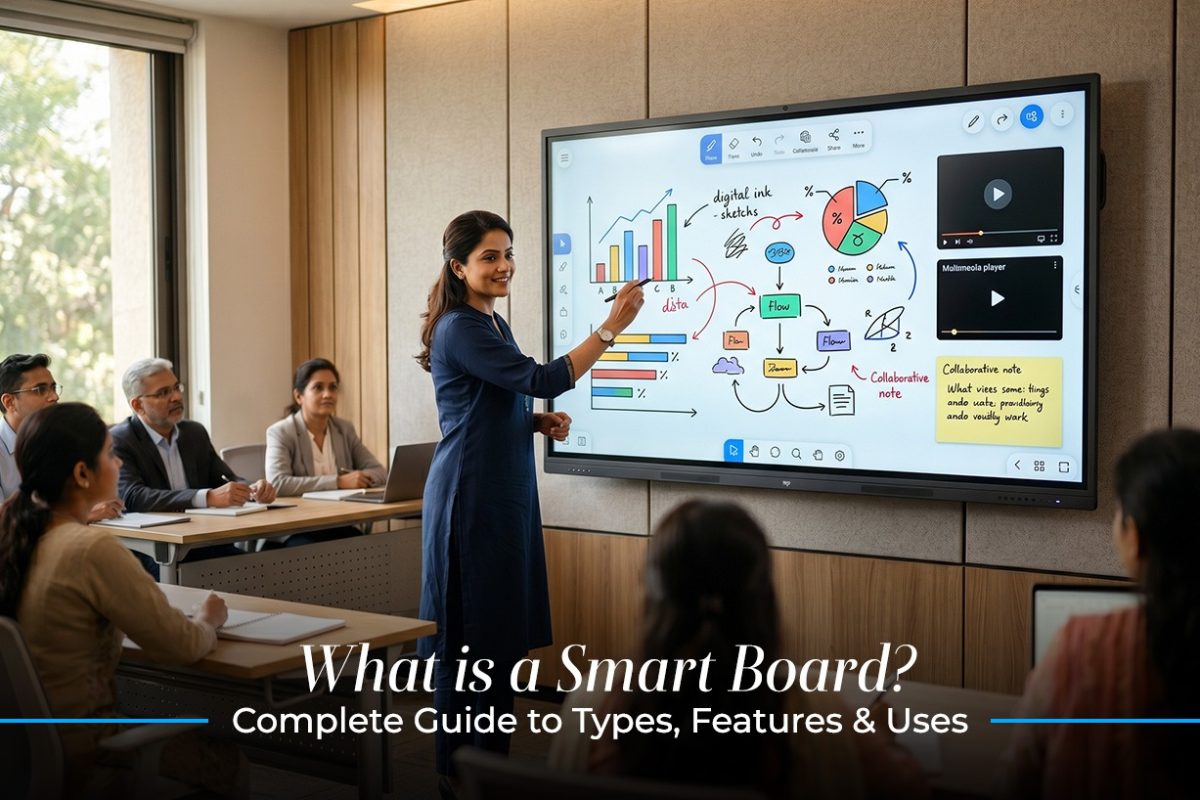
A smart board is an interactive digital display that functions like a traditional whiteboard but with advanced technological capabilities. It allows users to write, draw, present, and interact with content using touch, stylus, or even gestures.
Unlike a standard whiteboard, a smart white board connects to a computer or operates as a standalone device, enabling multimedia presentations, real-time collaboration, and internet access. A smart interactive board combines hardware and software to create a dynamic environment for learning and communication.
Today’s smart boards are often referred to as smart tech boards or touch boards, reflecting their intuitive touchscreen functionality. Whether you’re teaching students or presenting to a team, a smartboard offers far more flexibility than traditional tools.
How Does a Smart Board Work?
A smart board works by integrating display technology with touch-sensitive input and computing power. Here’s a simplified breakdown of how a smartboard operates:
- Display Panel: Most modern smart boards use LED or LCD panels to display high-resolution visuals.
- Touch Technology: Infrared, capacitive, or resistive touch layers detect user input.
- Software Integration: Built-in or connected software enables writing, drawing, and app usage.
- Connectivity: Wi-Fi, Bluetooth, HDMI, and USB allow connection to devices and the internet.
When you interact with a smart interactive board, your touch is detected and translated into digital input, making it possible to control presentations, annotate documents, or browse content.
Many smart board images and demos show how seamlessly users can switch between writing notes and playing videos, something impossible with a traditional board.
Types of Smart Boards
There are several types of smart boards available in 2026, each suited for different needs and budgets.
1. Interactive Whiteboards
These are classic smartboards that require a projector. The smart white board surface detects touch while the projector displays content.
Best for: Schools with existing projector setups.
2. Interactive Flat Panels (IFPs)
These are all-in-one displays with built-in screens, eliminating the need for projectors. Popular options include interactive panels from Sparsa Digital and similar devices.
Best for: Modern classrooms and offices.
3. LED Smart Boards
These are large-format displays made of LED panels, ideal for auditoriums and large conference spaces.
4. Portable Smart Boards
Compact and mobile, these smart tech boards can be moved easily between rooms.
5. Touch Boards with Cloud Integration
These advanced touch boards allow real-time collaboration across locations, making them perfect for hybrid work environments.
Each type of smartboard comes with unique features, so choosing the right one depends on your specific use case.
Smart Board vs Regular Whiteboard
A smart board offers several advantages over a traditional whiteboard:
| Feature | Smart Board | Regular Whiteboard |
| Interactivity | High (touch-enabled) | None |
| Multimedia Support | Yes | No |
| Storage | Digital saving | Manual only |
| Collaboration | Real-time | Limited |
| Connectivity | Internet-enabled | None |
While a regular whiteboard is simple and cost-effective, a smart white board provides a more engaging and efficient experience.
Smart Board vs Interactive Display
The terms smart board and interactive display are often used interchangeably, but there are subtle differences.
- A smart board traditionally refers to interactive whiteboards that may require a projector.
- An interactive display (like a smart interactive board) is typically a standalone unit with a built-in screen.
Modern smartboards blur this distinction, as most now function as fully integrated displays. When comparing smart board images online, you’ll notice that newer models look more like large tablets than boards.
Who Should Buy a Smart Board?
A smart board is a valuable investment for various users:
1. Educational Institutions
Schools and colleges benefit from interactive teaching using smartboards.
2. Corporate Offices
Smart tech boards enhance presentations, brainstorming, and collaboration.
3. Training Centers
Trainers can use a smart interactive board for engaging sessions.
4. Content Creators
Creators can use smart board pictures and visuals for tutorials and online teaching.
5. Government & Public Sector
Smart boards help digitize learning and communication.
If your work involves presentations, teaching, or collaboration, a smartboard can significantly improve efficiency.
FAQs
1. What is the price of a smart board in India?
The price of a smart board ranges from ₹50,000 to ₹5,00,000 depending on size, features, and brand.
2. Is a smart board worth it?
Yes, a smartboard enhances engagement, improves collaboration, and saves time, making it a worthwhile investment.
3. Can I use a smart board without the internet?
Yes, most smart boards can function offline for basic tasks like writing and presenting.
4. What is the difference between a smart board and a touch board?
A touch board is a type of smart board that focuses on touchscreen interaction, while a smartboard includes broader features.
5. Are smart boards suitable for home use?
Yes, especially for online teaching, homeschooling, or content creation.
6. How long does a smart board last?
A high-quality smart white board can last 5-10 years with proper maintenance.
7. Do smart boards require a projector?
Only older models. Most modern smart interactive boards are standalone devices.
8. What features should I look for in a smart board?
Look for screen size, touch responsiveness, connectivity options, and software compatibility.
Conclusion
A smart board is no longer a luxury. It has become an essential tool in modern education, corporate environments, and even content creation spaces. As digital transformation continues to accelerate in 2026, smart boards are bridging the gap between traditional teaching methods and interactive, technology-driven experiences.
Unlike conventional tools, a smartboard offers a dynamic, engaging, and highly efficient way to present information. From seamless multimedia integration to real-time collaboration, a smart interactive board empowers users to communicate ideas more effectively. Whether it’s a classroom full of students, a corporate brainstorming session, or an online training workshop, the impact of a smart white board is both immediate and long-lasting.
One of the biggest advantages of investing in a smart board is its versatility. A single smart tech board can replace multiple tools- projectors, whiteboards, screens, and even collaboration software; making it a cost-effective solution in the long run. With features like cloud storage, screen sharing, and touch-enabled interaction, modern touch boards are designed to adapt to evolving user needs.
Additionally, the availability of various types, from basic smartboards to advanced options, means there is a solution for every budget and requirement. When you explore smart board images or a smart board picture online, you’ll notice how sleek, intuitive, and user-friendly these devices have become over time.
For educators, a smart board transforms passive learning into active participation. For businesses, it enhances productivity and collaboration. For creators, it opens up new possibilities for engaging and interactive content. This wide range of applications makes smart boards one of the most impactful technological investments today.
As we move further into a digitally connected world, the role of the smart board will only continue to grow. Choosing the right smartboard depends on your specific needs, but one thing is certain: adopting this technology is a step toward smarter communication, better engagement, and more effective outcomes.
If you’re considering upgrading your workspace, classroom, or studio, now is the perfect time to explore the possibilities of a smart board and embrace the future of interactive technology.