
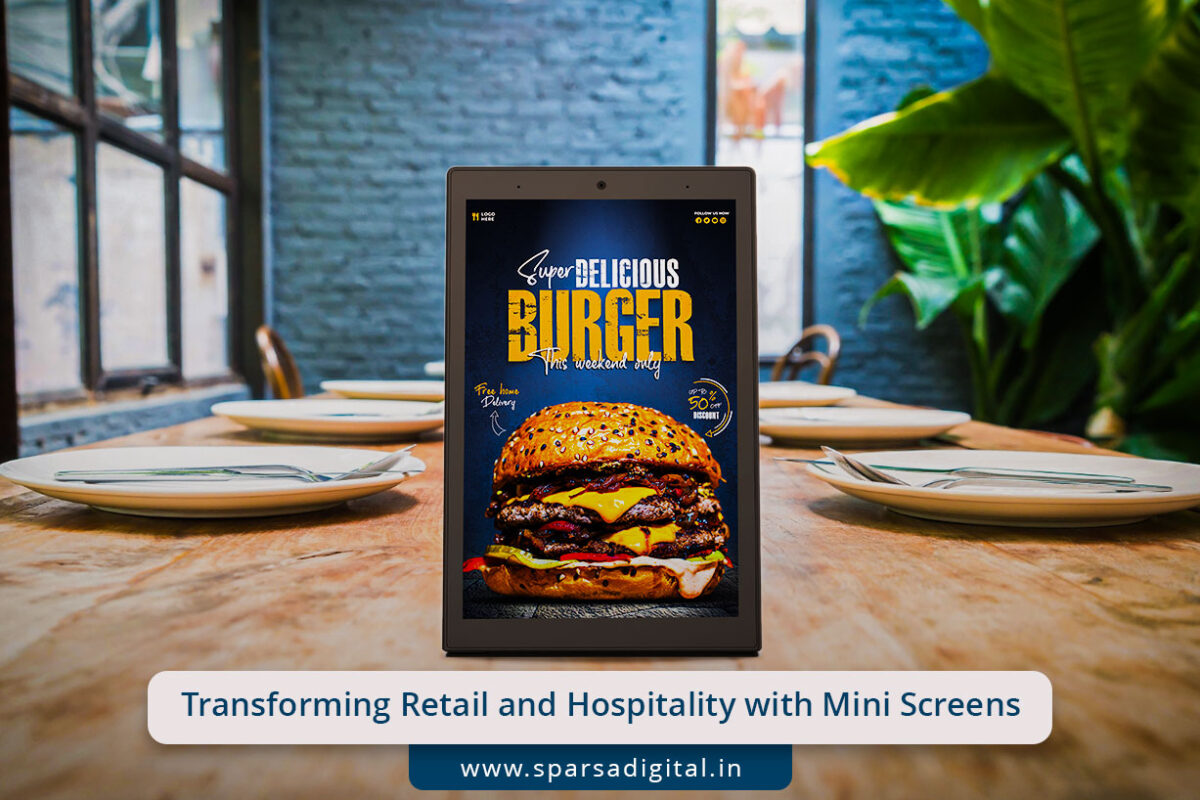
Transforming Retail and Hospitality with Mini Screens

Transforming Retail and Hospitality with Mini Screens, Mini Displays & Interactive Digital Table Tents

In an age where attention spans are short and digital engagement is king, businesses are actively seeking innovative ways to capture customer interest. Enter mini screens, mini displays, and interactive digital table tents, technologies that are redefining how brands communicate in physical spaces like restaurants, retail stores, hospitality venues, events, and more.

These compact, smart, and engaging devices bring content to life at eye level, enabling real-time interaction, product discovery, promotions, and personalized experiences. Whether placed on a restaurant table, store shelf, or reception desk, they serve as a bridge between the physical and digital world.

In this article, we explore the rise of these technologies, their applications, benefits, design tips, real-world use cases, and answer some of the most commonly asked questions.

What Are Mini Screens and Mini Displays?

Mini screens and mini displays are small-sized digital screens typically ranging from 3 to 10 inches, designed to deliver high-impact content in tight spaces. These displays are commonly used for:

  • Product promotions

  • QR code redirection

  • Menu boards

  • Customer feedback collection

  • Branding or visual storytelling

Depending on their functionality, they can be static (looping video or image content) or interactive (touch-enabled, responsive UI).

They come in various form factors- desktop-mounted screens, freestanding displays, clip-on shelf screens, or even battery-powered portable units.

What is an Interactive Digital Table Tent?

An interactive digital table tent is a modern upgrade to traditional printed table cards or tent-style signs found on restaurant tables or checkout counters. Unlike static signage, these table tents:

  • Feature small digital screens (mini screens)

  • Allow touch interaction

  • Display rotating or real-time content

  • Can be battery-powered, rechargeable, or connected to Wi-Fi

Common uses include digital menus, feedback forms, promotional offers, product information, customer reviews, and even games or quizzes.

In restaurants, hotels, showrooms, and exhibitions, interactive digital table tents turn every tabletop into a storytelling opportunity.

Applications Across Industries

1. Hospitality & Dining

Mini displays are revolutionizing the way menus, promotions, and feedback are handled.

  • Interactive Menus: Let guests browse food options, view ingredients, filter based on allergens, and even place orders.

  • Upsell Offers: Showcase combo deals, happy hour specials, or dessert promos with animation and video.

  • Feedback Collection: With a single tap, customers can rate service, provide suggestions, or scan a QR for longer surveys.

2. Retail Environments

Mini screens placed on shelves or counters allow product discovery and comparison.

  • Product Explainers: A small screen beside a product explaining features, benefits, and usage instructions.

  • Brand Storytelling: Communicate the brand’s values or journey through video content.

  • Cross-selling: “Complete the Look” or “Buy Together” options on mini displays near fashion accessories or gadgets.

3. Events & Exhibitions

At trade shows and expos, where competition for attention is fierce, mini displays shine.

  • Booth Introductions: Let attendees explore offerings without waiting for a rep.

  • Interactive Demos: Touchscreen product walkthroughs.

  • Lead Capture: Quick digital forms embedded in table tents or countertop displays.

4. Healthcare & Clinics

Provide important information while patients wait.

  • Treatment Information: Animated explainers on treatments or processes.

  • Health Tips: Seasonal advice or FAQs shown via mini displays in waiting rooms.

  • Appointment Booking: Patients can scan a QR or fill a basic form using interactive digital table tents.

5. Hospitality & Front Desks

Hotel lobbies and concierge desks use mini screens for:

  • Check-in Instructions

  • City Guide Recommendations

  • Real-time Weather or Traffic Updates

Benefits of Using Mini Screens and Interactive Digital Table Tents

1. Space-Efficient Communication

With shrinking attention spans and limited counter space, mini displays offer maximum message delivery in a compact footprint.

2. Real-Time Content Updates

Thanks to cloud-based content management systems (CMS), promotions and messages can be updated instantly across locations.

3. Personalization Opportunities

Mini screens connected to CRM or loyalty apps can show targeted offers or greet customers by name.

4. Improved Customer Engagement

Touch-based table tents invite interaction, offering a richer and more memorable customer experience than static signage.

5. Data Collection

Interactive digital table tents can collect valuable insights, button taps, preferences, feedback scores, and more.

6. Sustainability

Replacing printed tent cards and brochures with digital displays reduces paper waste and print costs over time.

Design Tips for Effective Mini Displays

To get the most out of your mini screens and interactive table tents, consider these design tips:

Keep It Simple

Use short phrases, large fonts, and clear CTAs (Call-to-Actions). The screen real estate is small, so avoid clutter.

Use Motion Wisely

A short animation or video loop can grab attention but don’t overuse: it should enhance, not distract.

Prioritize Interaction

For interactive displays, make navigation intuitive. Use touch targets that are large enough and responsive.

Add Mobile Connectivity

Include a QR code or NFC tag that lets users continue the experience on their phone.

Ensure Power Management

Use energy-efficient screens. For battery-powered devices, provide charging docks or replaceable battery options.

Enable Wi-Fi/Bluetooth

Connectivity allows syncing with your POS, CRM, or CMS in real-time.

Mini Screens vs Tablets: What’s the Difference?

Though tablets are often used as digital kiosks or feedback tools, mini displays and interactive digital table tents are purpose-built for passive or semi-interactive use in high-traffic areas.

FeatureMini Screens/DisplaysTablets
CostLowerHigher
Form FactorSlim, focusedBulky, multipurpose
Power SourceBattery or USBBattery only
PurposeDedicated displayGeneral purpose
SecurityUsually fixedTheft risk if untethered
InteractivityOptionalHigh

If your goal is to display rotating content or offer light interaction, mini displays are more efficient and cost-effective.

🔮 AI Personalization

Smart mini screens will soon use facial recognition or NFC cards to greet returning customers and offer tailored content.

📡 Real-Time Analytics

Track dwell time, interaction heatmaps, and content performance to optimize messaging.

💬 Voice Assistance

Voice-activated table tents in hospitality settings could allow guests to request water, ask for recommendations, or play games.

🌍 Sustainability Focus

More businesses are moving towards eco-friendly digital signage to replace disposable printed materials.

🧩 Modular Displays

Future displays will be modular, allowing businesses to connect multiple mini screens for a multi-angle, immersive display wall.

Real-World Use Cases

🏨 Marriott Bonvoy Lounges

Marriott uses interactive digital table tents in their premium lounges to offer guests personalized service information, beverage recommendations, and in-room booking offers.

🛍️ Nykaa Luxe Retail Stores

Nykaa integrates mini displays near makeup products to display tutorials, reviews, and skin tone match suggestions, helping buyers make quick decisions.

🍽️ Haldiram’s Digital Menu Table Tents

Popular Indian food chain Haldiram’s has begun deploying interactive digital table tents that let customers browse menus, see combo suggestions, and call waiters: all from their table.

🧳 Indigo Airlines Counters

Mini displays at check-in counters offer real-time flight updates, baggage allowance tips, and customer feedback prompts in multiple languages.

Challenges to Keep in Mind

While this technology is transformative, some challenges need addressing:

  • Initial investment in hardware and content design

  • Battery management in high-use environments

  • Staff training to troubleshoot or assist with customer interaction

  • Security of unattended devices in public spaces

  • Multilingual support for diverse audience bases

Choosing a reliable provider and planning your content strategy are key to overcoming these challenges.

Q1. What are mini screens used for in retail and hospitality?

Mini screens are small digital displays used to show promotional content, product information, digital menus, and more in limited spaces like counters, tables, or shelves.

Q2. How are interactive digital table tents different from static ones?

Interactive digital table tents allow touch-based interaction and real-time updates, unlike static table tents which are printed and unchanging.

Q3. Are mini displays expensive?

Prices vary based on screen size, interactivity, and features. Basic models start from ₹3,000–₹7,000, while interactive ones with touch and connectivity can go up to ₹20,000+.

Q4. Can content on mini displays be updated remotely?

Yes. Most modern mini displays and digital table tents come with cloud-based content management systems (CMS) that allow remote updates across locations.

Q5. Do mini displays require Wi-Fi?

Not always. While Wi-Fi enables real-time content syncing, many systems work offline with preloaded content or USB updates.

Q6. Where can interactive digital table tents be used?

Anywhere with foot traffic- restaurants, cafes, salons, showrooms, event booths, clinics, and even classrooms.

Q7. Can customers place orders using a mini display?

Yes, if the screen is interactive and linked to a POS or order management system, customers can browse items and place orders directly.

Q8. Are these devices environmentally friendly?

Digital table tents reduce the need for printing menus, brochures, and table cards, making them more eco-friendly over time, especially with energy-efficient screens.

Conclusion

Mini screens, mini displays, and interactive digital table tents are no longer just tech novelties, they’re the new standard for customer engagement in physical spaces. By combining space efficiency, interactivity, and personalization, they elevate the customer experience while enabling real-time communication and measurable insights.

From table-top menus to shelf-edge product explainers, these compact powerhouses are reshaping how we connect with customers in the real world- one screen at a time.

Whether you’re a restaurateur, retailer, event manager, or hotelier, adopting this technology isn’t just smart, it’s essential for staying relevant in today’s experience-driven economy.

Enhancing Customer Engagement with Digital Table Talkers and Mini Displays

Enhancing Customer Engagement with Digital Table Talkers and Mini Displays

In today’s fast-paced, tech-savvy world, businesses are continuously looking for innovative ways to engage their customers and create memorable experiences. Traditional forms of communication like printed menus, posters, and brochures are being replaced by more dynamic and interactive digital solutions. Among these solutions, digital table talkers and mini displays have emerged as powerful tools that enhance customer engagement, improve marketing strategies, and create a more personalized experience.

What Are Digital Table Talkers and Mini Displays?

Digital Table Talkers are small, digital screens placed on tables, countertops, or other customer-facing surfaces. These devices are typically used in restaurants, cafés, and retail settings to display dynamic content, such as promotional messages, menus, product recommendations, or customer reviews. Digital table talkers replace traditional static paper signage, offering a modern, interactive alternative that can be updated in real-time.

Mini Displays, on the other hand, are small-sized digital screens that can be used in a variety of settings, from retail displays and point-of-sale (POS) systems to hotel lobbies or trade shows. These compact digital screens can be used to show product information, ads, or other dynamic content, often serving as supplemental displays to larger signage or screens in the environment.

Together, digital table talkers and mini displays are changing how businesses interact with their customers. They bring a fresh, engaging element to the customer experience while providing businesses with the flexibility to manage and update content with ease.

Key Benefits of Digital Table Talkers and Mini Displays

Both digital table talkers and mini displays offer a wide range of benefits for businesses looking to enhance their customer engagement and marketing efforts. Let’s look at some of the primary advantages of using these digital solutions:

1. Dynamic Content Delivery

One of the most significant benefits of digital table talkers and mini displays is their ability to deliver dynamic, up-to-date content. Unlike traditional paper menus or static displays, digital screens can show videos, animations, live feeds, and interactive content. For example, in a restaurant setting, digital table talkers can feature daily specials, limited-time offers, and even customer reviews, all of which can be easily updated in real-time through centralized management software.

For retailers, mini displays can showcase promotional videos, highlight new arrivals, or display personalized offers based on customer preferences. The ability to change content quickly ensures that the display is always fresh and relevant to the audience.

2. Enhanced Customer Experience

Digital table talkers and mini displays create an immersive and engaging environment for customers. In restaurants, for example, digital table talkers can be used to showcase a menu with images, videos, and detailed product descriptions. This is particularly useful for introducing new menu items or specials, as it allows customers to view high-quality visuals before making a choice. Similarly, mini displays can be used to highlight product features or provide interactive demos for customers in retail stores.

By offering a more engaging and informative experience, businesses can increase customer satisfaction and potentially boost sales. Customers appreciate having access to real-time, visually appealing content that helps them make more informed decisions.

3. Improved Efficiency and Cost Savings

Traditional signage requires constant updates, which can be time-consuming and costly. Digital table talkers and mini displays simplify the process by allowing businesses to update content remotely, ensuring that messaging remains relevant without the need for physical signage changes. For example, a restaurant can update its menu or daily specials across multiple digital table talkers simultaneously with just a few clicks of a button.

Moreover, businesses save money on printing costs, as digital displays eliminate the need for paper menus, posters, and flyers. This reduction in operational costs makes digital signage a more cost-effective long-term solution for businesses.

4. Increased Revenue Opportunities

Digital table talkers and mini displays also present revenue-generating opportunities. For instance, in a restaurant setting, digital table talkers can feature promotional advertisements or upsell items such as desserts, drinks, or special pairings. Restaurants can use these devices to promote items with high profit margins or those that are underperforming, encouraging customers to make additional purchases.

Retailers can also utilize mini displays at checkout counters or product displays to feature impulse buy items or special promotions. The ability to showcase ads and promotions right where customers make purchase decisions increases the likelihood of additional sales and higher revenue.

5. Customization and Personalization

One of the most powerful features of digital table talkers and mini displays is their ability to be personalized for individual customers. For example, in a restaurant, the content displayed on a digital table talker could be tailored to a specific customer’s preferences, showing them their favorite items or suggesting new dishes based on past orders. This creates a more personalized and engaging dining experience.

Similarly, in a retail setting, mini displays can be used to show personalized promotions or offers based on the customer’s previous shopping behavior. By utilizing customer data and preferences, businesses can create a more customized experience that drives loyalty and increases the chances of repeat business.

Conclusion

Digital table talkers and mini displays are powerful tools that are reshaping how businesses communicate with customers. These devices provide an opportunity to deliver dynamic, real-time content that enhances customer engagement, increases sales, and reduces operational costs. Whether in restaurants, retail, hospitality, or events, businesses are discovering the numerous benefits of digital signage solutions.

As customer expectations continue to evolve, the demand for interactive and personalized experiences will only grow. Digital table talkers and mini displays are at the forefront of this shift, offering businesses a way to stay ahead of the curve while delivering exceptional customer experiences. By embracing these technologies, businesses can create lasting impressions, drive engagement, and ultimately increase revenue.

Table Talkers and Mini Displays

Enhancing Customer Engagement with Digital Table Talkers and Mini Displays

In the modern business landscape, providing an engaging and interactive customer experience has become essential. One of the most innovative tools in this area is the digital table talker. These compact, versatile devices are transforming how businesses communicate with customers, especially in settings such as restaurants, retail stores, hotels, and events. Paired with the growing use of mini displays, which offer similar functionality but in a more portable form, businesses are harnessing these technologies to deliver dynamic content that informs, entertains, and persuades customers effectively.

This blog will explore how digital table talkers and mini displays are revolutionizing customer interactions, their advantages, and best practices for incorporating them into your business strategy.

What Are Digital Table Talkers?

A digital table talker is a small, interactive digital display typically placed on tables, counters, or any customer-facing surfaces. These displays can show a range of content, from menu options and promotional offers to interactive advertisements and customer surveys. Unlike traditional static table talkers, which are paper or plastic holders that display printed materials, digital table talkers offer the flexibility of dynamic content, which can be updated remotely and in real time.

These digital devices are often used in the hospitality industry, where they can enhance the dining experience by displaying menus, special offers, or even entertainment such as trivia and games. Digital table talkers can also provide businesses with valuable data by tracking customer engagement, preferences, and feedback.

The Rise of Mini Displays

Mini displays are compact digital screens, often smaller than traditional monitors, that serve a similar purpose to digital table talkers. They can be used in a variety of business environments, from retail stores and reception areas to event spaces and kiosks. Mini displays provide businesses with a versatile platform for showcasing products, services, promotions, or information in an eye-catching and engaging format.

The compact nature of mini displays makes them ideal for areas with limited space, as they can easily fit into various environments without overwhelming the space. Similar to digital table talkers, mini displays offer high-quality visuals, dynamic content capabilities, and the ability to update content remotely.

Applications of Digital Table Talkers and Mini Displays

1. Restaurants and Hospitality

In the restaurant industry, digital table talkers are a game-changer. They provide customers with interactive menus, which can be updated to reflect daily specials, promotions, or seasonal dishes. Customers can even place orders or make requests directly through the digital table talker, streamlining the service process and improving customer satisfaction.

In addition, mini displays in restaurant lobbies or waiting areas can be used to advertise special offers, upcoming events, or loyalty programs, helping to increase customer engagement beyond the dining table.

2. Retail Environments

In retail, mini displays can be placed on counters, shelves, or in-store kiosks to provide customers with product information, price details, and promotions. Interactive displays can allow customers to browse product catalogues, check stock availability, or view video demonstrations. This improves the customer experience by offering convenience and engaging content that enhances the shopping journey.

For example, mini displays in fashion stores can showcase product variations, such as different colors or sizes, helping customers make quicker decisions and increasing sales.

3. Hotels and Event Spaces

In the hospitality sector, digital table talkers and mini displays are used to display important information such as event schedules, room service menus, or local attractions. For example, in a hotel lobby, mini displays can show upcoming events, weather forecasts, or guest promotions. In conference or event venues, digital table talkers can display schedules, room assignments, or sponsor advertisements, making it easier for attendees to navigate and stay informed.

4. Customer Feedback and Surveys

Digital displays are also effective for gathering customer feedback. Digital table talkers in restaurants, for example, can feature quick surveys or customer satisfaction questionnaires. Customers can interact with these displays to rate their experience, offer feedback, or sign up for loyalty programs. This not only improves customer engagement but also provides businesses with valuable insights into customer preferences and areas for improvement.

Best Practices for Implementing Digital Table Talkers and Mini Displays

  1. Keep Content Simple and Visual: The success of digital table talkers and mini displays largely depends on the content displayed. Use high-quality images, videos, and short, clear text to keep content visually appealing and easy to digest. Overcrowding the display with too much information can overwhelm the viewer and reduce engagement.
  2. Update Content Regularly: Regularly update content to keep the information fresh and relevant. Whether it’s new promotions, menu changes, or seasonal offers, keeping the display content up-to-date ensures that customers are always presented with timely information.
  3. Leverage Interactive Features: Take full advantage of the interactive capabilities of digital displays. Whether it’s allowing customers to place orders, browse products, or participate in surveys, interactivity creates a more engaging experience that encourages longer interactions.
  4. Optimize for Space and Placement: Make sure the digital displays are placed in high-traffic, visible areas where customers can easily access them. In restaurants, placing digital table talkers at every table ensures that every customer has the opportunity to engage with the content.
  5. Monitor and Analyze Performance: Use the analytics features of digital table talkers and mini displays to track customer engagement and identify trends. Adjust your content strategy based on these insights to optimize performance and improve customer interactions.

Conclusion

Digital table talkers and mini displays are innovative tools that can significantly enhance customer engagement in various business sectors. Whether used in restaurants, retail environments, hotels, or events, these digital devices provide an interactive, visually appealing way to deliver dynamic content, personalize messaging, and gather valuable insights.

By leveraging these technologies, businesses can create more engaging customer experiences, streamline communication, and drive customer loyalty. As digital technology continues to evolve, digital table talkers and mini displays will remain an essential part of modern customer engagement strategies, offering businesses a cost-effective and efficient way to stay connected with their audience.

Digital table Talkers

5 Top Benefits of Digital Table Talkers that Everyone Should Know

Digital table talkers are an extraordinary method for getting the notice of your clients. At the point when your clients enter your business environment, their advantage would be in the items you offer and the limits they can get. As opposed to giving a verbal lesson, having digital table talkers and pull-up pennants are more compelling.

Digital table talkers are cost effective for organizations. You can have a great deal of data put into the table talkers but make it look sweet and trendy, similarly as would be the situation with tweaked pull-up pennants.

What are digital table talkers?

At the point when you go to a café, you would by and large track down a card on the table. These cards are table talkers who commonly have data concerning extraordinary dishes or limits and offers that the café has. The café can give you significant data when you find a spot at the table and before you even draw in with a host or a server.

Thus, digital table talkers are an incredible method for giving important data via interactive screens. The vast majority block out when you attempt to verbally give them data. Yet, if they have a card in their grasp that has the pertinent data, they would focus harder.

One shouldn’t mistake digital table talkers for paper flyers. Table talkers and flyers are unique. A digital table talker is to a greater extent a card as opposed to a paper. It is normally three-sided or two-sided, yet fitting your needs can be modified.

These digital table talkers can utilized for numerous reasons. In meetings or at weddings, table talkers can utilized to show table numbers or even names of where the visitors can sit. It needn’t bother with being a straightforward number all things considered. You can tweak the cards with a topic for the event, which can oblige any draw-up pennants you could likewise have in the area.

Advantages of digital table talkers:

1) Catching the client’s eye

You might have a few incredible arrangements on offer that would be helpful to your clients. Be that as it may, on the off chance that they don’t get to see them, they won’t ever work with you. You can set up limited-time pull-up flags, however, one more method for standing out for a client is with the assistance of digital table talkers.

Taking into account table talkers have numerous sides, you might show various offers which can engage various clients. With only one table talker, you can contact clients searching for altogether various arrangements.

You could have an alternate plan for each board, so the client can see there are various offers. Along these lines, you will not need to stress your clients will just set to the side of the card in the wake of perusing just a single side of it.

2) Featuring new items and offers

At the point when you have ordinary clients coming into your business, you don’t need to stress over educating them concerning what items you offer. Be that as it may, when you have another item or another deal, you would have to draw it out into the open.

The most effective way to do that would be through digital table talkers. At the point when you put it on the table, your clients will see it and need to take a gander at what’s going on with it. Along these lines, you will want to advise them regarding the new items or offers in any event, when they have not gotten some information about it.

Digital table talkers are likewise a successful method for attempting and getting your clients keen on the new items without being an issue. On the off chance that you just verbally confront them and educate them concerning the new things you have on offer, they may not take it benevolent. It might mean certain doom for their business with you.

However, these digital table talkers let you move beyond that ponderousness. You can have them put clandestinely before them without appearing to promote the items strongly. It likewise gives the client the fulfillment they went with the choice to pick the item or deal all alone.

3) Pointing out less famous items

You don’t have to invest some part of your energy into selling items that are now famous. Your clients will be aware of them and will rush toward them with practically no requirement for goading. In any case, it’s not just about your well-known items. You should figure out how to sell your less famous items as well.

The most ideal way to do that is through digital table talkers. While special draw-up pennants can utilized for the famous items, your less popular items, and offers can given more openness through table talkers.

Indeed, even at eateries, there is no genuine requirement for placing every one of your contributions in a single goliath menu. You can have a different table talker for the less popular dishes, which can get the notice of your benefactors. You then, at that point, get the opportunity to move these dishes into the well-known class.

4) Keep steady over occasional patterns

Many organizations have items that are intended for a specific occasion or a celebration. Christmas and Halloween are the famous celebrations during which organizations go all on a mission to set up special draw-up flags of items and offers. You can take the assistance of table talkers too.

Digital table talkers are downplayed and can be very viable for clients who might wind up seeing too many draw-up standards on their way over to your business place. You can have the celebration offered before them with great plans that draw in clients. It would be more straightforward for them to look into what you bring to the table and put in their requests.

5) Valuable for a wide range of businesses

There is no limitation on which industry can profit from the utilization of table talkers. It can go from retail shops to even spas and nail salons. Indeed, even corporate workplaces can have table talkers with some item data that clients can look at when they visit.

Supporting a reason

Table talkers aren’t guarantee to tied in with advancing an item. They can utilized for advancing and supporting a reason. Flyers are for the most part utilize in these cases, however, they are all less disregarded by the designated crowd.

Nonetheless, a digital table talker can have a greater effect in these cases. Clinics and specialist workplaces are explicitly appropriate for this. For example, to point out to individuals that they need to get themselves well-being to determine the status of a normal premise, a table talker is probably going to get the job done. The table talkers force the peruser to investigate.

Conclusion

While you can have limited time to pull up flags all over the place, you can likewise take the assistance of digital table talkers to assist with driving the advancement of your items and administrations. You can get your plan and finish them or you can take the assistance of formats that are promptly accessible.

Involving digital table talkers for limited-time purposes can assist with promoting your items into deals. Considerably less popular items can get a lift with the assistance of table talkers. You can involve them for support a reason or in any event, for an occasional proposition that you may not be having at all as the year progresses. Table talkers give the right road to this large number of needs.