
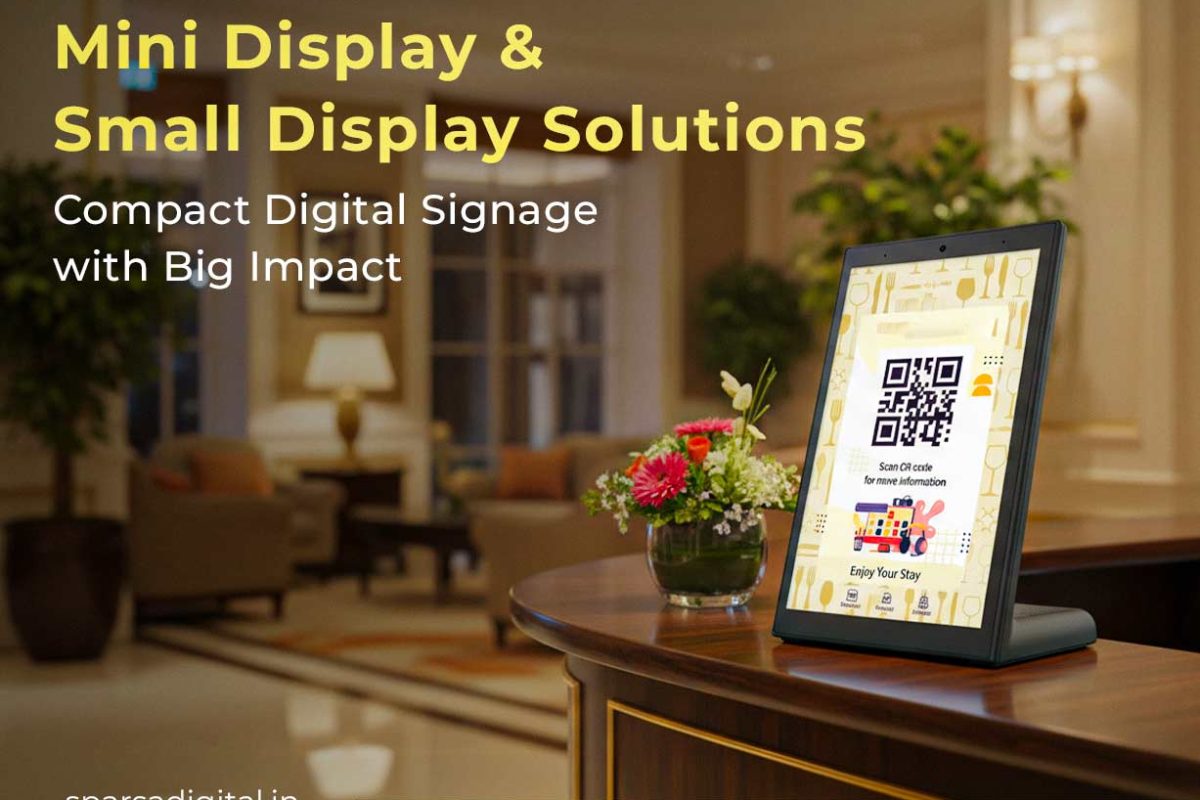
Small Display Solutions

Mini Display & Small Display Solutions: Compact Digital Signage with Big Impact

Table of Contents

  1. Introduction to Mini Display and Small Display Technology
  2. What Is a Mini Display?
  3. What Is a Small Display?
  4. Why Mini Display and Small Display Matter in Modern Spaces
  5. Mini Display vs Large Digital Screens
  6. Common Use Cases of Mini Display and Small Display
  7. Elevator Signage Using Mini Display Solutions
  8. L Shape Signage: Horizontal and Vertical Display Innovation
  9. Horizontal Mini Display Applications
  10. Vertical Small Display Applications
  11. Design Advantages of Mini Display Installations
  12. Content Strategy for Small Display Screens
  13. Industries Benefiting from Mini Display and Small Display
  14. Installation and Maintenance Considerations
  15. Choosing the Right Mini Display for Your Business
  16. Future Trends in Mini Display and Small Display Technology
  17. Conclusion
  18. FAQs

1. Introduction to Mini Display and Small Display Technology

Digital signage has evolved far beyond large LED video walls and oversized screens. Today, mini display and small display solutions are redefining how brands communicate in limited spaces. These compact digital screens are designed to deliver high-impact messaging without overwhelming the environment.

From elevator signage to L shape signage configurations, mini display systems allow businesses to utilize corners, narrow walls, counters, and vertical columns efficiently. Their flexibility, affordability, and ease of deployment make them an essential component of modern digital communication strategies.

2. What Is a Mini Display?

A mini display is a compact digital screen typically ranging from 7 to 21 inches, designed for close-viewing environments. Despite its small size, a mini display offers high resolution, vibrant colors, and dynamic content playback.

Mini display units are often used where space is limited but attention is guaranteed, such as elevators, reception desks, shelves, and waiting areas. Their compact footprint makes them ideal for targeted messaging rather than broad visual impact.

3. What Is a Small Display?

A small display is slightly larger than a mini display, usually ranging from 22 to 32 inches. While still compact, a small display provides more screen real estate for detailed visuals, multiple content zones, or interactive elements.

Small display screens are commonly used in horizontal and vertical signage, menu boards, wayfinding systems, and informational panels. They strike a balance between size, visibility, and cost efficiency.

4. Why Mini Display and Small Display Matter in Modern Spaces

Modern architecture prioritizes clean lines, minimalism, and efficient space utilization. This is where mini displays and small display solutions shine.

Key reasons they matter:

  • Perfect fit for confined areas
  • Lower power consumption
  • Cost-effective digital transformation
  • Seamless integration with interiors
  • Ideal for targeted communication

Whether used in elevator signage or L shape signage layouts, these displays enhance user experience without visual clutter.

5. Mini Display vs Large Digital Screens

Large screens are designed for mass visibility, while mini display and small display systems focus on precision messaging.

FeatureMini Display / Small DisplayLarge Displays
Space requirementMinimalHigh
Viewing distanceCloseLong
Content styleFocused, conciseBroad, immersive
Installation costLowerHigher
Ideal useElevators, counters, corridorsLobbies, auditoriums

For businesses looking to communicate effectively in compact zones, a mini display often delivers better ROI.

6. Common Use Cases of Mini Display and Small Display

Mini display and small display solutions are widely used across industries:

  • Elevator signage
  • Retail shelves and counters
  • Hotel corridors
  • Corporate reception areas
  • Healthcare waiting rooms
  • Educational institutions
  • Cafes and quick-service restaurants

Their adaptability to horizontal and vertical formats further expands their application scope.

7. Elevator Signage Using Mini Display Solutions

Elevator signage is one of the most impactful applications of mini display technology. Elevators guarantee captive audiences, making them ideal for brand messaging, announcements, and wayfinding.

Benefits of mini display in elevator signage:

  • High attention retention
  • Compact design fits narrow walls
  • Dynamic content updates
  • Safe and compliant installation

A small display can also be used in premium elevators to show ads, building information, or emergency messages in vertical orientation.

8. L Shape Signage: Horizontal and Vertical Display Innovation

L shape signage combines two screens- one horizontal and one vertical, to create a seamless visual corner experience. This configuration is particularly effective in entrances, corridors, and elevator lobbies.

Using mini display or small display screens in L shape signage allows:

  • Multi-angle visibility
  • Better content segmentation
  • Enhanced brand storytelling
  • Efficient use of corner spaces

L shape signage transforms otherwise unused corners into engaging digital touchpoints.

9. Horizontal Mini Display Applications

A horizontal mini display is ideal for content that flows naturally from left to right, such as:

  • Promotional banners
  • Brand messages
  • Directional signage
  • Short video loops

Horizontal mini display screens are commonly installed above elevators, along corridors, or at eye level in retail spaces. Their wide aspect ratio ensures content is easy to consume quickly.

10. Vertical Small Display Applications

Vertical small display units are perfect for portrait-style content such as:

  • Advertisements
  • Informational posters
  • Wayfinding instructions
  • Building directories

Its work exceptionally well in elevator signage, pillars, and narrow wall sections. When paired with mini display units, they create visually cohesive digital ecosystems.

11. Design Advantages of Mini Display Installations

Designers prefer mini displays and small display systems because they complement modern interiors rather than dominate them.

Design advantages include:

  • Sleek and lightweight form factor
  • Flexible mounting options
  • Custom bezels and frames
  • Minimal wiring visibility

Mini display installations blend seamlessly into premium environments like hotels, offices, and luxury retail spaces.

12. Content Strategy for Small Display Screens

Content for mini display and small display screens should be concise, visually clear, and action-oriented.

Best practices:

  • Use large fonts
  • Limit text per slide
  • Focus on one message at a time
  • Use motion sparingly
  • Optimize content for horizontal and vertical orientation

Effective content ensures that even a small display leaves a lasting impression.

13. Industries Benefiting from Mini Display and Small Display

Retail

Mini display screens enhance shelf-level promotions and product education.

Corporate Offices

Small display units improve internal communication and elevator signage.

Hospitality

Hotels use mini display solutions for guest information and branding.

Healthcare

Small display screens deliver queue updates and health awareness messages.

Education

Mini display units provide announcements and navigation assistance.

14. Installation and Maintenance Considerations

Installing a mini display or small display is simpler than large signage systems, but proper planning is still essential.

Considerations include:

  • Viewing angle
  • Mounting height
  • Power and network access
  • Content management system compatibility

Routine maintenance ensures consistent performance and long-term reliability.

15. Choosing the Right Mini Display for Your Business

When selecting a mini display or small display, evaluate:

  • Screen size and resolution
  • Brightness level
  • Orientation support (horizontal & vertical)
  • Mounting flexibility
  • Content update frequency

For elevator signage or L shape signage, ensure the display is durable and optimized for continuous operation.

The future of mini display and small display solutions is driven by:

  • Higher resolution in compact screens
  • Smart CMS integration
  • Touch and interactive capabilities
  • AI-driven content scheduling

As businesses move toward hyper-targeted communication, mini display technology will continue to gain momentum.

17. Conclusion

In a world where space is increasingly limited and attention spans are shorter than ever, mini display and small display solutions prove that size does not define impact. From elevator signage that captures attention in confined spaces to L shape signage that smartly combines horizontal and vertical screens, these compact displays unlock new possibilities for digital communication.

Mini display technology allows brands to deliver precise, targeted messages exactly where audiences are most engaged. Meanwhile, small display screens offer the perfect balance between visibility and space efficiency, making them ideal for modern interiors, smart buildings, and high-traffic environments. Their flexibility in orientation, ease of installation, and cost-effectiveness make them a practical choice across industries, from retail and hospitality to corporate offices and healthcare facilities.

As digital signage continues to evolve, mini display and small display systems will play a critical role in shaping immersive yet subtle communication experiences. Businesses that adopt these compact digital solutions today are not just optimizing space, they are future-proofing their communication strategy with smarter, more efficient visual storytelling.

18. FAQs

What is the ideal size for a mini display?

A mini display typically ranges from 7 to 21 inches, depending on viewing distance and content type.

How is a small display different from a mini display?

A small display is slightly larger, offering more space for detailed content while remaining compact.

Are mini display screens suitable for elevator signage?

Yes, mini display solutions are perfect for elevator signage due to limited space and captive audiences.

Can mini display screens be installed vertically?

Absolutely. Mini display and small display screens support both horizontal and vertical orientations.

What is L shape signage?

L shape signage uses two screens arranged at right angles, often combining horizontal and vertical displays.

Do small display screens support dynamic content?

Yes, most small display systems support videos, animations, and real-time updates.

Are mini display solutions cost-effective?

Mini display installations are generally more affordable than large digital signage systems.

Which industries use mini displays the most?

Retail, corporate offices, hospitality, healthcare, and education heavily rely on mini display and small display solutions.

Transforming Retail and Hospitality with Mini Screens

Transforming Retail and Hospitality with Mini Screens, Mini Displays & Interactive Digital Table Tents

In an age where attention spans are short and digital engagement is king, businesses are actively seeking innovative ways to capture customer interest. Enter mini screens, mini displays, and interactive digital table tents, technologies that are redefining how brands communicate in physical spaces like restaurants, retail stores, hospitality venues, events, and more.

These compact, smart, and engaging devices bring content to life at eye level, enabling real-time interaction, product discovery, promotions, and personalized experiences. Whether placed on a restaurant table, store shelf, or reception desk, they serve as a bridge between the physical and digital world.

In this article, we explore the rise of these technologies, their applications, benefits, design tips, real-world use cases, and answer some of the most commonly asked questions.

What Are Mini Screens and Mini Displays?

Mini screens and mini displays are small-sized digital screens typically ranging from 3 to 10 inches, designed to deliver high-impact content in tight spaces. These displays are commonly used for:

  • Product promotions

  • QR code redirection

  • Menu boards

  • Customer feedback collection

  • Branding or visual storytelling

Depending on their functionality, they can be static (looping video or image content) or interactive (touch-enabled, responsive UI).

They come in various form factors- desktop-mounted screens, freestanding displays, clip-on shelf screens, or even battery-powered portable units.

What is an Interactive Digital Table Tent?

An interactive digital table tent is a modern upgrade to traditional printed table cards or tent-style signs found on restaurant tables or checkout counters. Unlike static signage, these table tents:

  • Feature small digital screens (mini screens)

  • Allow touch interaction

  • Display rotating or real-time content

  • Can be battery-powered, rechargeable, or connected to Wi-Fi

Common uses include digital menus, feedback forms, promotional offers, product information, customer reviews, and even games or quizzes.

In restaurants, hotels, showrooms, and exhibitions, interactive digital table tents turn every tabletop into a storytelling opportunity.

Applications Across Industries

1. Hospitality & Dining

Mini displays are revolutionizing the way menus, promotions, and feedback are handled.

  • Interactive Menus: Let guests browse food options, view ingredients, filter based on allergens, and even place orders.

  • Upsell Offers: Showcase combo deals, happy hour specials, or dessert promos with animation and video.

  • Feedback Collection: With a single tap, customers can rate service, provide suggestions, or scan a QR for longer surveys.

2. Retail Environments

Mini screens placed on shelves or counters allow product discovery and comparison.

  • Product Explainers: A small screen beside a product explaining features, benefits, and usage instructions.

  • Brand Storytelling: Communicate the brand’s values or journey through video content.

  • Cross-selling: “Complete the Look” or “Buy Together” options on mini displays near fashion accessories or gadgets.

3. Events & Exhibitions

At trade shows and expos, where competition for attention is fierce, mini displays shine.

  • Booth Introductions: Let attendees explore offerings without waiting for a rep.

  • Interactive Demos: Touchscreen product walkthroughs.

  • Lead Capture: Quick digital forms embedded in table tents or countertop displays.

4. Healthcare & Clinics

Provide important information while patients wait.

  • Treatment Information: Animated explainers on treatments or processes.

  • Health Tips: Seasonal advice or FAQs shown via mini displays in waiting rooms.

  • Appointment Booking: Patients can scan a QR or fill a basic form using interactive digital table tents.

5. Hospitality & Front Desks

Hotel lobbies and concierge desks use mini screens for:

  • Check-in Instructions

  • City Guide Recommendations

  • Real-time Weather or Traffic Updates

Benefits of Using Mini Screens and Interactive Digital Table Tents

1. Space-Efficient Communication

With shrinking attention spans and limited counter space, mini displays offer maximum message delivery in a compact footprint.

2. Real-Time Content Updates

Thanks to cloud-based content management systems (CMS), promotions and messages can be updated instantly across locations.

3. Personalization Opportunities

Mini screens connected to CRM or loyalty apps can show targeted offers or greet customers by name.

4. Improved Customer Engagement

Touch-based table tents invite interaction, offering a richer and more memorable customer experience than static signage.

5. Data Collection

Interactive digital table tents can collect valuable insights, button taps, preferences, feedback scores, and more.

6. Sustainability

Replacing printed tent cards and brochures with digital displays reduces paper waste and print costs over time.

Design Tips for Effective Mini Displays

To get the most out of your mini screens and interactive table tents, consider these design tips:

Keep It Simple

Use short phrases, large fonts, and clear CTAs (Call-to-Actions). The screen real estate is small, so avoid clutter.

Use Motion Wisely

A short animation or video loop can grab attention but don’t overuse: it should enhance, not distract.

Prioritize Interaction

For interactive displays, make navigation intuitive. Use touch targets that are large enough and responsive.

Add Mobile Connectivity

Include a QR code or NFC tag that lets users continue the experience on their phone.

Ensure Power Management

Use energy-efficient screens. For battery-powered devices, provide charging docks or replaceable battery options.

Enable Wi-Fi/Bluetooth

Connectivity allows syncing with your POS, CRM, or CMS in real-time.

Mini Screens vs Tablets: What’s the Difference?

Though tablets are often used as digital kiosks or feedback tools, mini displays and interactive digital table tents are purpose-built for passive or semi-interactive use in high-traffic areas.

FeatureMini Screens/DisplaysTablets
CostLowerHigher
Form FactorSlim, focusedBulky, multipurpose
Power SourceBattery or USBBattery only
PurposeDedicated displayGeneral purpose
SecurityUsually fixedTheft risk if untethered
InteractivityOptionalHigh

If your goal is to display rotating content or offer light interaction, mini displays are more efficient and cost-effective.

🔮 AI Personalization

Smart mini screens will soon use facial recognition or NFC cards to greet returning customers and offer tailored content.

📡 Real-Time Analytics

Track dwell time, interaction heatmaps, and content performance to optimize messaging.

💬 Voice Assistance

Voice-activated table tents in hospitality settings could allow guests to request water, ask for recommendations, or play games.

🌍 Sustainability Focus

More businesses are moving towards eco-friendly digital signage to replace disposable printed materials.

🧩 Modular Displays

Future displays will be modular, allowing businesses to connect multiple mini screens for a multi-angle, immersive display wall.

Real-World Use Cases

🏨 Marriott Bonvoy Lounges

Marriott uses interactive digital table tents in their premium lounges to offer guests personalized service information, beverage recommendations, and in-room booking offers.

🛍️ Nykaa Luxe Retail Stores

Nykaa integrates mini displays near makeup products to display tutorials, reviews, and skin tone match suggestions, helping buyers make quick decisions.

🍽️ Haldiram’s Digital Menu Table Tents

Popular Indian food chain Haldiram’s has begun deploying interactive digital table tents that let customers browse menus, see combo suggestions, and call waiters: all from their table.

🧳 Indigo Airlines Counters

Mini displays at check-in counters offer real-time flight updates, baggage allowance tips, and customer feedback prompts in multiple languages.

Challenges to Keep in Mind

While this technology is transformative, some challenges need addressing:

  • Initial investment in hardware and content design

  • Battery management in high-use environments

  • Staff training to troubleshoot or assist with customer interaction

  • Security of unattended devices in public spaces

  • Multilingual support for diverse audience bases

Choosing a reliable provider and planning your content strategy are key to overcoming these challenges.

Q1. What are mini screens used for in retail and hospitality?

Mini screens are small digital displays used to show promotional content, product information, digital menus, and more in limited spaces like counters, tables, or shelves.

Q2. How are interactive digital table tents different from static ones?

Interactive digital table tents allow touch-based interaction and real-time updates, unlike static table tents which are printed and unchanging.

Q3. Are mini displays expensive?

Prices vary based on screen size, interactivity, and features. Basic models start from ₹3,000–₹7,000, while interactive ones with touch and connectivity can go up to ₹20,000+.

Q4. Can content on mini displays be updated remotely?

Yes. Most modern mini displays and digital table tents come with cloud-based content management systems (CMS) that allow remote updates across locations.

Q5. Do mini displays require Wi-Fi?

Not always. While Wi-Fi enables real-time content syncing, many systems work offline with preloaded content or USB updates.

Q6. Where can interactive digital table tents be used?

Anywhere with foot traffic- restaurants, cafes, salons, showrooms, event booths, clinics, and even classrooms.

Q7. Can customers place orders using a mini display?

Yes, if the screen is interactive and linked to a POS or order management system, customers can browse items and place orders directly.

Q8. Are these devices environmentally friendly?

Digital table tents reduce the need for printing menus, brochures, and table cards, making them more eco-friendly over time, especially with energy-efficient screens.

Conclusion

Mini screens, mini displays, and interactive digital table tents are no longer just tech novelties, they’re the new standard for customer engagement in physical spaces. By combining space efficiency, interactivity, and personalization, they elevate the customer experience while enabling real-time communication and measurable insights.

From table-top menus to shelf-edge product explainers, these compact powerhouses are reshaping how we connect with customers in the real world- one screen at a time.

Whether you’re a restaurateur, retailer, event manager, or hotelier, adopting this technology isn’t just smart, it’s essential for staying relevant in today’s experience-driven economy.

Revolutionizing Vertical Spaces via Elevator Digital Signage and Mini Screens

Revolutionizing Vertical Spaces via Elevator Digital Signage and Mini Screens

In the fast-paced world of digital communication, businesses and building managers are constantly searching for innovative ways to grab attention. One of the most effective and increasingly popular methods is the use of elevator digital signage and mini screens. These tools are transforming otherwise mundane elevator rides into powerful moments of communication and engagement.

Whether you’re a property manager of a high-rise, an advertiser looking for fresh ad real estate, or a corporate leader aiming to boost internal communications, elevator digital signage offers a sleek and impactful solution. In this post, we’ll explore everything you need to know about elevator digital signage and mini screens—from benefits and applications to installation tips and frequently asked questions.

What is Elevator Digital Signage?

Elevator digital signage refers to the installation of digital screens inside or near elevators, which display content such as advertisements, announcements, weather updates, news, or custom media. These screens vary in size but are often designed as mini screens to fit the limited space inside elevators.

These digital displays can be mounted on elevator doors, walls, or even integrated into the control panels. With content controlled remotely through cloud-based platforms, elevator digital signage offers flexibility and real-time updates with minimal manual intervention.

Why Use Elevator Digital Signage?

Elevators are a captive environment. Think about it—how often do you pull out your phone in an elevator? Not always possible, especially in signal-dead zones. This gives digital screens a distinct advantage in capturing attention. Here are a few key benefits:

1. High Engagement Rates

Elevator passengers are a captive audience with little to distract them. As a result, mini screens in elevators see significantly higher engagement compared to traditional billboards or even large-scale digital signage in open spaces.

2. Targeted Messaging

You can tailor content based on time of day, building demographics, or even specific floors. For instance, a corporate office might use the screens for HR announcements in the morning and motivational quotes in the afternoon.

3. Revenue Generation

For property managers, selling ad space on elevator digital signage creates a passive income stream. Brands love it because it guarantees impressions in premium locations.

4. Modernization & Aesthetic Appeal

Installing sleek mini screens gives your building a futuristic, high-tech feel. It’s a simple way to modernize your environment without a full-scale renovation.

5. Real-time Updates

Thanks to cloud-based CMS (Content Management Systems), elevator digital signage can be updated instantly. Whether it’s an emergency alert or a last-minute event, your message gets through instantly.

Common Use Cases

Here are a few industries and locations where elevator digital signage and mini screens make a big impact:

1. Commercial Buildings

Office complexes use digital signage for internal communication, branding, or leasing information. It’s also a great platform for emergency alerts.

2. Hotels

Display concierge services, restaurant menus, or local attractions right in the elevator. This enhances the guest experience and promotes on-site amenities.

3. Hospitals

Use mini screens to share wayfinding information, health tips, or important announcements with patients and visitors.

4. Shopping Malls

Advertise stores, discounts, and events as shoppers travel between floors. Elevators become an extension of the mall’s marketing.

5. Residential Towers

From community announcements to package delivery notifications, digital signage makes life smoother for residents and building managers alike.

Types of Elevator Digital Signage

Not all screens are created equal. Choosing the right type depends on your goals and elevator configuration.

1. Wall-mounted Mini Screens

Perfect for elevators with some wall space. These are compact, easy to install, and cost-effective.

2. Flush-mounted Displays

Built directly into the elevator wall or panel, offering a sleek and integrated look.

3. Door-mounted Screens

Placed on elevator doors (inside or outside), these grab attention as soon as someone waits for the elevator.

4. Ceiling-mounted Displays

While less common, ceiling-mounted screens can be effective when floor and wall space is limited.

Features to Look For

When selecting an elevator digital signage system, look for these essential features:

  • High-resolution Display: Crisp visuals are essential in smaller spaces.

  • Durability: Must withstand vibrations and elevator movement.

  • Remote Content Management: Easily update content via cloud CMS.

  • Scheduling Capabilities: Change messages based on time, date, or audience.

  • Interactive Touchscreen (optional): Especially useful in hotels or hospitals for quick info access.

How to Install Mini Screens in Elevators

1. Site Assessment

Start by evaluating the elevator’s dimensions, wall type, power sources, and connectivity options.

2. Choose the Right Screen Size

Mini screens generally range from 7 to 21 inches. For most elevators, 10-15 inch screens strike the right balance between visibility and space.

3. Ensure Connectivity

Wi-Fi is ideal for cloud content updates, but some systems also support 4G or Ethernet connections.

4. Mounting

Use vibration-proof mounts and ensure the screens are securely fastened. Screens should be placed at eye level for maximum visibility.

5. Power Source

Plan for continuous power supply. Some setups may require dedicated lines, while others can tap into existing elevator lighting circuits.

6. Compliance & Safety

Always consult local building codes and fire regulations before installation. Safety is paramount in vertical transportation.

Elevator Digital Signage Content Ideas

Content is king; even on a 10-inch screen. Here are some content ideas to keep viewers engaged:

  • News & weather updates

  • Building announcements

  • Inspirational quotes

  • Tenant directories

  • QR codes for promotions

  • Branded animations

  • Emergency alerts

  • Real-time social media feeds

Remember, content should be short, visual, and loop seamlessly.

Elevator Digital Signage vs. Traditional Advertising

FeatureElevator Digital SignageTraditional Signage
EngagementHighVariable
Real-time updatesYesNo
Content customizationHighLow
Space efficiencyExcellentModerate
Cost over timeLow (after setup)Recurring

Digital wins almost every time, especially in terms of ROI, flexibility, and aesthetics.

As technology evolves, so do the possibilities:

  • AI-powered content scheduling

  • Voice-activated screens

  • Integration with building management systems

  • Personalized content via mobile sync

  • Eco-friendly, low-power LED panels

Soon, elevators may become full-fledged communication hubs, not just a way to get from A to B.

FAQs About Elevator Digital Signage and Mini Screens

Q1: Are elevator digital signage screens safe to install?

Yes. When installed by certified professionals and compliant with local regulations, they are perfectly safe. Always use vibration-proof mounts and power surge protection.

Q2: What kind of content can I display?

Anything visual—text, video, animations, news tickers, weather updates, and even interactive elements (if your screen supports it).

Q3: How do I update the content on my screens?

Most systems use a cloud-based CMS that lets you update and schedule content remotely in real time.

Q4: Do these systems work during power outages?

Not typically, unless you have a backup power system. Emergency content is best managed through the building’s primary systems.

Q5: How durable are mini screens in elevators?

Mini screens designed for elevators are built to handle vibration, motion, and extended usage. Look for IP-rated and shockproof models.

Q6: Can I use elevator signage for advertising?

Absolutely. You can sell ad space to local businesses or use it to promote in-building services.

Q7: What about privacy concerns?

Content should be general and not tied to individual users unless explicit consent is given (e.g., syncing with mobile apps).

Final Thoughts

Elevator digital signage and mini screens are reshaping how we communicate in vertical spaces. They’re not just about ads- they’re about engagement, information, and innovation. Whether you’re managing a corporate tower or designing a new luxury residential complex, this tech offers an unbeatable blend of style and substance.

By making elevators smarter, you’re not just elevating people- you’re elevating experiences.

Want to get started with elevator digital signage in your building?
Book your call with us at Sparsa Digital today and turn your elevators into communication powerhouses. Schedule your appointment now!

The Future of Dining Mini Displays and Menu Display Boards

The Future of Dining: Mini Displays and Menu Display Boards

Introduction

The digital transformation has taken the restaurant and hospitality industry by storm. Among the most notable innovations are mini displays (digital table tops) and menu display boards. These cutting-edge tools have revolutionized how restaurants engage with customers, making information more accessible and enhancing the overall dining experience.

The Rise of Mini Display (Digital Table Tops)

Mini displays, often referred to as digital table tops, have become an integral part of modern dining experiences. These compact yet powerful devices allow customers to browse the menu, place orders, and even make payments without requiring direct interaction with waitstaff. Such automation enhances efficiency and improves customer satisfaction by reducing wait times.
Restaurants, cafes, and even fast-food chains are investing in digital table tops to offer a more interactive and engaging experience. They not only provide a modern touch but also serve as an effective marketing tool, displaying promotions and personalized recommendations to customers.

Menu Display Boards: A Digital Revolution

Traditional printed menus are gradually being replaced by menu display boards, which are digital screens showcasing the restaurant’s offerings. These displays are commonly found at quick-service restaurants, coffee shops, and even fine-dining establishments. They allow for real-time updates, ensuring that menus remain accurate and appealing.
With dynamic content, menu display boards can highlight special offers, combo deals, and even high-margin items, influencing customer purchasing decisions. The digital format eliminates the need for constant reprinting, reducing costs and improving sustainability.

Check Our Menu board Product Below

Benefits of Using Digital Menu Displays

Improved Customer Experience
Digital displays provide customers with visually appealing and easy-to-read menus. They can feature high-resolution images, animations, and videos that make food items more enticing. The interactive nature of mini displays (digital table tops) further enhances engagement, offering a seamless ordering experience.
Easy Content Management
One of the biggest advantages of digital menu solutions is the ability to update content in real time. Restaurant owners can quickly modify menu items, prices, or promotions without incurring additional printing costs. Whether introducing seasonal specials or modifying ingredients, menu display boards ensure that information remains current.

Enhanced Marketing Opportunities
Digital signage allows for targeted advertising and promotions. Mini displays (digital table tops) can be programmed to display promotions based on time of day, customer preferences, or inventory levels. Restaurants can also use them to upsell items by suggesting add-ons or meal upgrades.

How to Choose the Right Digital Table Top and Menu Display Board

When selecting a mini display (digital table top) or menu display board, consider the following factors:
Screen Size & Resolution: Ensure that the display is clear and easy to read.
Interactivity: Some digital table tops come with touchscreen capabilities for enhanced engagement.
Software & Integration: Choose a system that integrates well with your POS (Point of Sale) system.
Durability: Displays in a restaurant setting should be sturdy and resistant to spills or damage.
Customization: The ability to tailor content to reflect your brand’s identity is essential.

As technology advances, digital displays will continue to evolve. Some emerging trends include:
AI-Powered Menus: Personalized recommendations based on customer history and preferences.
Voice Command Integration: Enabling hands-free interaction with mini displays (digital table tops).


Augmented Reality (AR): Allowing customers to visualize dishes in 3D before ordering.
Contactless Payments: Further streamlining the ordering and payment process.

Conclusion

The adoption of mini displays (digital table tops) and menu display boards is transforming the restaurant industry. These digital solutions enhance customer experience, streamline operations, and provide powerful marketing tools. As technology continues to evolve, businesses that leverage these innovations will stay ahead of the competition.
Furthermore, digital menu solutions contribute to sustainability by reducing paper waste and printing costs. They also provide an opportunity to gather valuable customer insights through data analytics, allowing businesses to refine their offerings and tailor promotions effectively. With the integration of AI and machine learning, future digital menus will be even more intuitive, making dining experiences more seamless and personalized.
Investing in mini displays (digital table tops) and menu display boards is not just about keeping up with trends; it’s about creating an enhanced and engaging experience that drives customer satisfaction and business growth. By embracing these advancements, restaurants can build stronger relationships with their customers while optimizing their operations for maximum efficiency.

FAQs

1. What are the benefits of using digital table tops in restaurants?
Mini displays (digital table tops) improve efficiency, reduce wait times, and offer an interactive experience. They also help with upselling and targeted marketing.
2. Are digital menu display boards expensive to maintain?
While the initial investment may be higher than traditional menus, digital menu boards reduce printing costs and allow for instant updates, making them cost-effective in the long run.
3. Can digital table tops integrate with existing POS systems?
Yes, many mini displays (digital table tops) are designed to integrate seamlessly with modern POS systems, ensuring smooth operations.
4. Do digital menus improve sales?
Yes, menu display boards can highlight promotions, suggest add-ons, and display high-margin items, influencing customer decisions and boosting sales.
5. Are digital menus suitable for all types of restaurants?
Yes, from fast food to fine dining, digital menus and mini displays (digital table tops) can enhance operations and customer experience across various restaurant types.
By incorporating mini displays (digital table tops) and menu display boards, businesses can improve service efficiency, enhance engagement, and ultimately increase profitability.

Enhancing Customer Engagement with Digital Table Talkers and Mini Displays

Enhancing Customer Engagement with Digital Table Talkers and Mini Displays

In today’s fast-paced, tech-savvy world, businesses are continuously looking for innovative ways to engage their customers and create memorable experiences. Traditional forms of communication like printed menus, posters, and brochures are being replaced by more dynamic and interactive digital solutions. Among these solutions, digital table talkers and mini displays have emerged as powerful tools that enhance customer engagement, improve marketing strategies, and create a more personalized experience.

What Are Digital Table Talkers and Mini Displays?

Digital Table Talkers are small, digital screens placed on tables, countertops, or other customer-facing surfaces. These devices are typically used in restaurants, cafés, and retail settings to display dynamic content, such as promotional messages, menus, product recommendations, or customer reviews. Digital table talkers replace traditional static paper signage, offering a modern, interactive alternative that can be updated in real-time.

Mini Displays, on the other hand, are small-sized digital screens that can be used in a variety of settings, from retail displays and point-of-sale (POS) systems to hotel lobbies or trade shows. These compact digital screens can be used to show product information, ads, or other dynamic content, often serving as supplemental displays to larger signage or screens in the environment.

Together, digital table talkers and mini displays are changing how businesses interact with their customers. They bring a fresh, engaging element to the customer experience while providing businesses with the flexibility to manage and update content with ease.

Key Benefits of Digital Table Talkers and Mini Displays

Both digital table talkers and mini displays offer a wide range of benefits for businesses looking to enhance their customer engagement and marketing efforts. Let’s look at some of the primary advantages of using these digital solutions:

1. Dynamic Content Delivery

One of the most significant benefits of digital table talkers and mini displays is their ability to deliver dynamic, up-to-date content. Unlike traditional paper menus or static displays, digital screens can show videos, animations, live feeds, and interactive content. For example, in a restaurant setting, digital table talkers can feature daily specials, limited-time offers, and even customer reviews, all of which can be easily updated in real-time through centralized management software.

For retailers, mini displays can showcase promotional videos, highlight new arrivals, or display personalized offers based on customer preferences. The ability to change content quickly ensures that the display is always fresh and relevant to the audience.

2. Enhanced Customer Experience

Digital table talkers and mini displays create an immersive and engaging environment for customers. In restaurants, for example, digital table talkers can be used to showcase a menu with images, videos, and detailed product descriptions. This is particularly useful for introducing new menu items or specials, as it allows customers to view high-quality visuals before making a choice. Similarly, mini displays can be used to highlight product features or provide interactive demos for customers in retail stores.

By offering a more engaging and informative experience, businesses can increase customer satisfaction and potentially boost sales. Customers appreciate having access to real-time, visually appealing content that helps them make more informed decisions.

3. Improved Efficiency and Cost Savings

Traditional signage requires constant updates, which can be time-consuming and costly. Digital table talkers and mini displays simplify the process by allowing businesses to update content remotely, ensuring that messaging remains relevant without the need for physical signage changes. For example, a restaurant can update its menu or daily specials across multiple digital table talkers simultaneously with just a few clicks of a button.

Moreover, businesses save money on printing costs, as digital displays eliminate the need for paper menus, posters, and flyers. This reduction in operational costs makes digital signage a more cost-effective long-term solution for businesses.

4. Increased Revenue Opportunities

Digital table talkers and mini displays also present revenue-generating opportunities. For instance, in a restaurant setting, digital table talkers can feature promotional advertisements or upsell items such as desserts, drinks, or special pairings. Restaurants can use these devices to promote items with high profit margins or those that are underperforming, encouraging customers to make additional purchases.

Retailers can also utilize mini displays at checkout counters or product displays to feature impulse buy items or special promotions. The ability to showcase ads and promotions right where customers make purchase decisions increases the likelihood of additional sales and higher revenue.

5. Customization and Personalization

One of the most powerful features of digital table talkers and mini displays is their ability to be personalized for individual customers. For example, in a restaurant, the content displayed on a digital table talker could be tailored to a specific customer’s preferences, showing them their favorite items or suggesting new dishes based on past orders. This creates a more personalized and engaging dining experience.

Similarly, in a retail setting, mini displays can be used to show personalized promotions or offers based on the customer’s previous shopping behavior. By utilizing customer data and preferences, businesses can create a more customized experience that drives loyalty and increases the chances of repeat business.

Conclusion

Digital table talkers and mini displays are powerful tools that are reshaping how businesses communicate with customers. These devices provide an opportunity to deliver dynamic, real-time content that enhances customer engagement, increases sales, and reduces operational costs. Whether in restaurants, retail, hospitality, or events, businesses are discovering the numerous benefits of digital signage solutions.

As customer expectations continue to evolve, the demand for interactive and personalized experiences will only grow. Digital table talkers and mini displays are at the forefront of this shift, offering businesses a way to stay ahead of the curve while delivering exceptional customer experiences. By embracing these technologies, businesses can create lasting impressions, drive engagement, and ultimately increase revenue.

Table Talkers and Mini Displays

Enhancing Customer Engagement with Digital Table Talkers and Mini Displays

In the modern business landscape, providing an engaging and interactive customer experience has become essential. One of the most innovative tools in this area is the digital table talker. These compact, versatile devices are transforming how businesses communicate with customers, especially in settings such as restaurants, retail stores, hotels, and events. Paired with the growing use of mini displays, which offer similar functionality but in a more portable form, businesses are harnessing these technologies to deliver dynamic content that informs, entertains, and persuades customers effectively.

This blog will explore how digital table talkers and mini displays are revolutionizing customer interactions, their advantages, and best practices for incorporating them into your business strategy.

What Are Digital Table Talkers?

A digital table talker is a small, interactive digital display typically placed on tables, counters, or any customer-facing surfaces. These displays can show a range of content, from menu options and promotional offers to interactive advertisements and customer surveys. Unlike traditional static table talkers, which are paper or plastic holders that display printed materials, digital table talkers offer the flexibility of dynamic content, which can be updated remotely and in real time.

These digital devices are often used in the hospitality industry, where they can enhance the dining experience by displaying menus, special offers, or even entertainment such as trivia and games. Digital table talkers can also provide businesses with valuable data by tracking customer engagement, preferences, and feedback.

The Rise of Mini Displays

Mini displays are compact digital screens, often smaller than traditional monitors, that serve a similar purpose to digital table talkers. They can be used in a variety of business environments, from retail stores and reception areas to event spaces and kiosks. Mini displays provide businesses with a versatile platform for showcasing products, services, promotions, or information in an eye-catching and engaging format.

The compact nature of mini displays makes them ideal for areas with limited space, as they can easily fit into various environments without overwhelming the space. Similar to digital table talkers, mini displays offer high-quality visuals, dynamic content capabilities, and the ability to update content remotely.

Applications of Digital Table Talkers and Mini Displays

1. Restaurants and Hospitality

In the restaurant industry, digital table talkers are a game-changer. They provide customers with interactive menus, which can be updated to reflect daily specials, promotions, or seasonal dishes. Customers can even place orders or make requests directly through the digital table talker, streamlining the service process and improving customer satisfaction.

In addition, mini displays in restaurant lobbies or waiting areas can be used to advertise special offers, upcoming events, or loyalty programs, helping to increase customer engagement beyond the dining table.

2. Retail Environments

In retail, mini displays can be placed on counters, shelves, or in-store kiosks to provide customers with product information, price details, and promotions. Interactive displays can allow customers to browse product catalogues, check stock availability, or view video demonstrations. This improves the customer experience by offering convenience and engaging content that enhances the shopping journey.

For example, mini displays in fashion stores can showcase product variations, such as different colors or sizes, helping customers make quicker decisions and increasing sales.

3. Hotels and Event Spaces

In the hospitality sector, digital table talkers and mini displays are used to display important information such as event schedules, room service menus, or local attractions. For example, in a hotel lobby, mini displays can show upcoming events, weather forecasts, or guest promotions. In conference or event venues, digital table talkers can display schedules, room assignments, or sponsor advertisements, making it easier for attendees to navigate and stay informed.

4. Customer Feedback and Surveys

Digital displays are also effective for gathering customer feedback. Digital table talkers in restaurants, for example, can feature quick surveys or customer satisfaction questionnaires. Customers can interact with these displays to rate their experience, offer feedback, or sign up for loyalty programs. This not only improves customer engagement but also provides businesses with valuable insights into customer preferences and areas for improvement.

Best Practices for Implementing Digital Table Talkers and Mini Displays

  1. Keep Content Simple and Visual: The success of digital table talkers and mini displays largely depends on the content displayed. Use high-quality images, videos, and short, clear text to keep content visually appealing and easy to digest. Overcrowding the display with too much information can overwhelm the viewer and reduce engagement.
  2. Update Content Regularly: Regularly update content to keep the information fresh and relevant. Whether it’s new promotions, menu changes, or seasonal offers, keeping the display content up-to-date ensures that customers are always presented with timely information.
  3. Leverage Interactive Features: Take full advantage of the interactive capabilities of digital displays. Whether it’s allowing customers to place orders, browse products, or participate in surveys, interactivity creates a more engaging experience that encourages longer interactions.
  4. Optimize for Space and Placement: Make sure the digital displays are placed in high-traffic, visible areas where customers can easily access them. In restaurants, placing digital table talkers at every table ensures that every customer has the opportunity to engage with the content.
  5. Monitor and Analyze Performance: Use the analytics features of digital table talkers and mini displays to track customer engagement and identify trends. Adjust your content strategy based on these insights to optimize performance and improve customer interactions.

Conclusion

Digital table talkers and mini displays are innovative tools that can significantly enhance customer engagement in various business sectors. Whether used in restaurants, retail environments, hotels, or events, these digital devices provide an interactive, visually appealing way to deliver dynamic content, personalize messaging, and gather valuable insights.

By leveraging these technologies, businesses can create more engaging customer experiences, streamline communication, and drive customer loyalty. As digital technology continues to evolve, digital table talkers and mini displays will remain an essential part of modern customer engagement strategies, offering businesses a cost-effective and efficient way to stay connected with their audience.

Revolutionizing Retail The Power of Digital Signage and Mini Displays

Revolutionizing Retail: The Power of Digital Signage and Mini Displays

In the fast-paced and ever-evolving world of retail, staying ahead of the competition requires constant innovation and adaptation. One of the most significant technological advancements transforming the retail landscape today is the advent of digital signage and mini displays. These cutting-edge tools are redefining how retailers communicate with customers, enhance the shopping experience, and drive sales. This blog explores the transformative power of retail digital signage and mini displays, examining their benefits, applications, and future trends in the industry.

Understanding Retail Digital Signage and Mini Displays

Digital Signage refers to the use of digital screens to display content such as advertisements, promotions, and informational messages. These screens can range from large LED displays in storefront windows to small screens integrated into shelves or counters. Mini Displays, a subset of digital signage, are smaller screens designed for close-range viewing, often used in point-of-sale (POS) systems, product displays, and interactive kiosks.

The Advantages of Retail Digital Signage

Retail digital signage offers numerous advantages over traditional static signage, making it a valuable asset for modern retailers. Here are some key benefits:

  1. Dynamic Content:
  • Unlike static signs, digital signage can display dynamic content, including videos, animations, and real-time updates. This ability to change content on the fly allows retailers to keep their messaging fresh and engaging.
  1. Enhanced Customer Engagement:
  • Digital signage captures attention more effectively than traditional signage. Bright screens, moving images, and interactive elements can attract customers and keep them engaged, leading to a more memorable shopping experience.
  1. Targeted Messaging:
  • With digital signage, retailers can tailor messages to specific audiences. Content can be customized based on factors such as time of day, customer demographics, and purchasing behavior, making marketing efforts more effective.
  1. Increased Sales and Upselling:
  • Digital displays can highlight promotions, new products, and special offers, encouraging impulse purchases and upselling. For instance, a screen near a checkout counter might promote accessories that complement a customer’s purchase.
  1. Cost-Effective and Sustainable:
  • While the initial investment in digital signage can be significant, it often proves cost-effective in the long run. Digital signs reduce the need for printed materials, lowering ongoing costs and environmental impact.
  1. Real-Time Updates:
  • Digital signage allows for instant content updates, enabling retailers to respond quickly to market trends, inventory changes, and customer feedback. This agility is crucial in today’s fast-paced retail environment.

Applications of Retail Digital Signage

Digital signage can be utilized in a variety of ways within the retail environment, enhancing both operational efficiency and customer experience. Here are some common applications:

  1. Storefront Displays:
  • Large digital screens in storefront windows can attract passersby, showcasing promotional content, brand messages, and eye-catching visuals to draw customers into the store.
  1. In-Store Promotions:
  • Inside the store, digital signage can be used to promote sales, highlight new arrivals, and provide information about products. Strategically placed screens can guide customers through the store and influence purchasing decisions.
  1. Interactive Kiosks:
  • Interactive kiosks equipped with mini displays allow customers to browse product catalogs, check prices, and access additional information. These kiosks can enhance the shopping experience by providing a self-service option.
  1. Wayfinding and Information:
  • Digital signs can help customers navigate large stores or shopping malls, providing directions, store directories, and event information. This improves customer convenience and satisfaction.
  1. Queue Management:
  • In busy retail environments, digital signage can manage queues by displaying estimated wait times, promotional content, and entertainment, reducing perceived waiting time and improving the overall experience.
  1. Point-of-Sale (POS) Displays:
  • Mini displays at checkout counters can promote last-minute add-ons, loyalty programs, and special offers. These screens can also provide transaction information and enhance the efficiency of the checkout process.
  1. Product Displays:
  • Mini displays integrated into product shelves or stands can offer detailed product information, reviews, and usage tips. This can help customers make informed purchasing decisions and increase product sales.

The Role of Mini Displays in Retail

Mini displays, while smaller in size, play a crucial role in enhancing the retail experience. Their compact form factor allows for versatile placement and usage, providing several unique advantages:

  1. Space Efficiency:
  • Mini displays are ideal for retail environments with limited space. They can be mounted on shelves, counters, and even within products themselves, maximizing the use of available space.
  1. Personalized Customer Interaction:
  • Due to their proximity to customers, mini displays offer a more personalized interaction. For example, a mini display near a product can provide tailored information or recommendations based on customer preferences.
  1. Enhanced Product Visibility:
  • By integrating mini displays into product displays, retailers can draw attention to specific items, providing detailed information and highlighting key features. This can increase product visibility and drive sales.
  1. Improved Customer Service:
  • Mini displays can serve as digital assistants, offering customers quick access to product information, stock availability, and other queries. This reduces the need for staff intervention and enhances customer service.
  1. Interactive Experiences:
  • Many mini displays feature touchscreens, enabling interactive experiences such as virtual try-ons, product customization, and interactive product demos. These experiences can differentiate a store from competitors and increase customer engagement.

Case Studies: Successful Implementation of Digital Signage and Mini Displays

To illustrate the impact of digital signage and mini displays in retail, let’s explore some real-world examples of successful implementation:

  1. Nike’s Interactive Stores:
  • Nike has integrated digital signage and interactive mini displays into its flagship stores. Customers can use touchscreen displays to customize shoes, explore product features, and receive personalized recommendations. This interactive experience has helped Nike boost customer engagement and sales.
  1. McDonald’s Self-Service Kiosks:
  • McDonald’s has rolled out self-service kiosks equipped with mini displays in many of its restaurants. These kiosks allow customers to place orders, customize meals, and make payments, improving order accuracy and reducing wait times. The result has been increased customer satisfaction and higher sales per transaction.
  1. Sephora’s Digital Shopping Assistant:
  • Beauty retailer Sephora uses mini displays in the form of digital shopping assistants within its stores. These assistants provide personalized product recommendations, tutorials, and reviews, helping customers make informed purchasing decisions. This initiative has led to higher customer satisfaction and increased sales.

Conclusion

Retail digital signage and mini displays are powerful tools that are revolutionizing the retail industry. By offering dynamic content, enhancing customer engagement, and providing targeted messaging, these technologies are helping retailers stay competitive in a rapidly changing market. From storefront displays to interactive kiosks and personalized product information, the applications of digital signage and mini displays are vast and varied.

In an age where customer experience is paramount, the integration of digital signage and mini displays into retail strategies is not just an option but a necessity. By leveraging the power of these technologies, retailers can transform their stores into dynamic, engaging, and efficient environments that meet the needs of today’s savvy consumers.

Elevator Digital Signage and Mini Digital Signage

Elevator Digital Signage and Mini Digital Signage Reshaping the Vertical Communication Landscape

In the fast-paced, technologically driven world we live in, digital signage has become a powerful tool for communication. Elevator digital signage and mini digital signage represent innovative applications of this technology, transforming the way we receive information in confined spaces and on a smaller scale. This blog aims to explore the evolution, benefits, diverse applications, and future potential of elevator and mini digital signage, delving into the impact they have on user experience, advertising, and information dissemination.

The Evolution of Digital Signage

The inception of digital signage can be traced back to the early days of computing when displays evolved from simple text and graphics to more sophisticated multimedia presentations. The integration of digital content in public spaces gained momentum with the advent of high-definition screens and improved display technologies. Digital signage quickly migrated from traditional billboards to dynamic, interactive displays, ushering in a new era of communication.

Understanding Elevator Digital Signage

Elevator digital signage represents a unique and effective means of communication within the confined spaces of elevators. Traditionally, elevators were considered dead spaces in terms of advertising and information dissemination. However, the integration of digital signage has turned elevators into engaging communication channels.

a. Purpose and Placement:

Elevator digital signage serves multiple purposes, including advertising, information sharing, and entertainment. Placed strategically within elevators, these displays captivate a captive audience during the short duration of their journey, making effective use of what was previously an overlooked space.

b. Dynamic Content:

Elevator digital signage allows for the display of dynamic content, ranging from advertisements to news updates and building announcements. The ability to tailor content to specific demographics and time frames enhances the impact of the messages conveyed.

c. Interactive Features:

Some elevator digital signage systems incorporate touch or motion sensors, enabling interactive experiences for users. This feature can be particularly engaging, offering a unique and memorable way for brands to connect with their audience.

Applications of Elevator Digital Signage

a. Advertising and Branding:

Elevator digital signage provides a valuable platform for advertisers to reach a targeted audience. Whether promoting products, services, or upcoming events, these displays offer a captive audience with high visibility.

b. Building Information:

Elevator digital signage is often used to relay important building information such as emergency procedures, maintenance schedules, and facility updates. This ensures that occupants are well-informed while using the elevator.

c. Entertainment and Engagement:

Elevator rides can be transformed into engaging experiences through the integration of entertaining content. This could include short videos, trivia, or interactive games, making the journey more enjoyable for passengers.

The Advantages of Elevator Digital Signage

a. High Visibility:

Elevator digital signage benefits from its unique placement, guaranteeing high visibility and attention from a captive audience. Users are more likely to engage with content displayed within the confined space of an elevator.

b. Targeted Messaging:

The ability to tailor content to specific demographics, time of day, or building events allows for targeted messaging. This ensures that the information displayed is relevant and resonates with the audience.

c. Space Optimization:

Elevator digital signage optimizes otherwise unused space within elevators, maximizing the potential for communication and advertising. This is especially valuable in densely populated urban areas where elevators are a common mode of transportation.

d. Ease of Content Management:

Modern elevator digital signage systems come equipped with user-friendly content management systems, allowing for easy updates and scheduling. This flexibility ensures that content remains relevant and timely.

Mini Digital Signage: A Compact Revolution 

While elevator digital signage utilizes confined spaces effectively, mini digital signage takes the concept further by bringing dynamic displays to a smaller scale. Mini digital signage typically involves compact screens or displays strategically placed in areas where larger screens may not be practical.

a. Small Footprint:

Mini digital signage is characterized by its small footprint, making it suitable for areas with limited space. These displays can be seamlessly integrated into various environments, including retail spaces, waiting areas, and public transportation.

b. Point-of-Sale Applications:

In retail environments, mini digital signage finds applications at point-of-sale locations. These displays can showcase promotions, product information, and advertisements, influencing purchasing decisions at the point of interaction with customers.

c. Wayfinding and Information Points:

Mini digital signage is effective for providing wayfinding information in public spaces. Placed strategically, these displays guide individuals through complex environments, enhancing the overall visitor experience in malls, airports, and large facilities.

d. Interactive Kiosks:

Some mini digital signage installations take the form of interactive kiosks, allowing users to access information, browse products, or even place orders. This interactive element enhances user engagement and provides a modern and efficient means of communication.

The Advantages of Mini Digital Signage 

a. Flexibility in Placement:

Mini digital signage offers flexibility in terms of placement, allowing for strategic positioning in areas where larger displays may be impractical. This adaptability ensures that information is conveyed effectively in diverse environments.

b. Enhanced Engagement:

Due to their compact nature, mini digital signage often attracts more focused attention. Users are more likely to engage with content displayed on smaller screens in close proximity, leading to increased message retention.

c. Cost-Effectiveness:

The smaller size of mini digital signage can translate into cost savings, both in terms of initial investment and ongoing operational expenses. These displays are often more budget-friendly while still delivering impactful communication.

d. Scalability:

Mini digital signage solutions are scalable, allowing businesses to deploy multiple displays across various locations. This scalability ensures that information reaches a wider audience, whether in a retail chain or a public transportation network.

Synchronized Strategies: Elevator and Mini Digital Signage Working Together

Integrating both elevator and mini digital signage into a comprehensive communication strategy can amplify the impact of visual messaging. The synchronized use of these displays allows for a cohesive and immersive experience, enhancing brand recall and information retention.

a. Complementary Messaging:

Elevator digital signage can be utilized for broader, attention-grabbing messages, while mini digital signage can provide more detailed or specific information in closer proximity. Together, they create a harmonious communication ecosystem.

b. Brand Consistency:

Employing consistent branding and messaging across both elevator and mini digital signage ensures a unified brand image. This consistency contributes to brand recall and strengthens the overall impact of the communication strategy.

c. User Journey Enhancement:

By strategically placing mini digital signage at key touch points along a user’s journey, businesses can guide individuals through spaces more effectively. Elevator digital signage can serve as a starting point, creating anticipation for what users will encounter in other areas with mini displays.

Conclusion

Elevator digital signage and mini digital signage have transcended traditional communication boundaries, transforming confined spaces and smaller environments into powerful channels for information, advertising, and engagement. From the evolution of digital signage to the unique applications and advantages of these specific implementations, the journey of visual communication has reached new heights.

As we look towards the future, the continued innovation in technology promises to bring about even more dynamic and immersive experiences. The synchronization of elevator and mini digital signage, coupled with advancements such as AR integration and smart sensors, will undoubtedly redefine the landscape of visual communication. Elevating communication through innovation, these digital signage solutions will continue to shape user experiences, influence consumer behavior, and contribute to the ever-evolving tapestry of modern communication.

The Rise of Digital Tent Cards and Mini Displays

The Rise of Digital Tent Cards and Mini Displays: Unveiling the Future of Marketing

In the fast-paced world of marketing, staying ahead of the curve is crucial for businesses seeking to capture the attention of their target audience. As traditional marketing methods continue to evolve, digital innovations are becoming increasingly prominent. One such innovation that is revolutionizing the marketing landscape is the integration of digital tent cards and mini displays. In this blog post, we will explore the concept, advantages, applications, and future prospects of these digital marketing tools.

Understanding Digital Tent Cards

A. Definition and Functionality:

Digital tent cards are a modern take on the traditional paper-based tent cards often used in restaurants, hotels, and events. The digital version incorporates electronic displays, enabling businesses to showcase dynamic content such as promotions, menus, and branding messages in a visually engaging manner. These cards typically consist of a compact screen, a processor, and customizable software.

B. Advantages Over Traditional Tent Cards:

1. Dynamic Content: Unlike static paper tent cards, digital tent cards allow businesses to display dynamic and interactive content, providing a more engaging experience for customers.

2. Real-time Updates: Digital tent cards can be updated in real-time, allowing businesses to adapt to changing promotions, menus, or events instantly.

3. Cost-effective: While the initial investment may be higher, digital tent cards can be cost-effective in the long run, as they eliminate the need for continuous printing and distribution of paper-based cards.

Mini Displays: A Compact Revolution in Marketing

A. Mini Displays Defined:

Mini displays refer to compact digital screens that can be strategically placed in various locations to capture the attention of a target audience. These displays are versatile and can used for a wide range of purposes, from product showcases to interactive presentations.

B. Key Features and Components:

1. Size and Portability: Mini displays are compact and portable, making them suitable for both indoor and outdoor settings.

2. Touchscreen Technology: Many mini displays feature touch screen capabilities, allowing users to interact with the content being displayed, creating an immersive experience.

3. Connectivity: Mini displays are often equipped with connectivity options such as Wi-Fi and Bluetooth, enabling seamless integration with other devices and systems.

Applications in Marketing

A. Hospitality Industry:

1. Digital Menus: Restaurants and cafes can enhance the dining experience by replacing traditional menus with interactive digital versions, featuring vivid images and detailed descriptions.

2. Event Promotion: Hotels and event venues can use digital tent cards to promote upcoming events, conferences, or special offers to guests.

B. Retail Sector:

1. Product Displays: Retailers can use mini displays to showcase product features, demonstrations, and customer reviews, influencing purchasing decisions.

2. In-store Promotions: Digital tent cards can strategically placed within a store to highlight ongoing promotions, discounts, or loyalty programs.

C. Corporate Environments:

1. Conferences and Trade Shows: Businesses can utilize digital tent cards to display schedules, speaker profiles, and sponsor information during conferences and trade shows.

2. Reception Areas: Mini displays can serve as interactive information hubs in corporate reception areas, providing visitors with relevant company information and announcements.

Future Prospects and Innovations

A. Integration with Augmented Reality (AR) and Virtual Reality (VR):

1. Immersive Experiences: The integration of AR and VR technologies with digital tent cards and mini displays has the potential to create immersive and interactive marketing experiences.

2. Enhanced Product Visualization: Retailers can leverage AR to allow customers to visualize products in their own space before making a purchase.

B. Artificial Intelligence (AI) Integration:

1. Personalized Content: AI algorithms can analyze customer preferences and behaviors to deliver personalized content on digital tent cards and mini displays.

2. Predictive Analytics: Businesses can use AI to predict trends and optimize content strategy for maximum impact.

Conclusion

In conclusion, the era of digital tent cards and mini displays marks a paradigm shift in marketing strategies. The dynamic and interactive nature of these tools opens up a world of possibilities for businesses to engage with their audience in innovative ways. As technology continues to advance, the integration of features like AR, VR, and AI holds the promise of even more exciting developments in the realm of digital marketing. Embracing these technologies today can position businesses at the forefront of the marketing landscape, ensuring they captivate and retain the attention of their target audience in the digital age.

Still wondering where to start? We are here to help. Connect with our experts at Sparsa Digital today to dive into the sea of endless possibilities. Digital tent cards and mini displays are just a tip of the iceberg, there is so much more digital signage has to offer. With varied applications in industries such as healthcare, entertainment, retail and more; the latest technology is here to make your life easier. We, at Sparsa Digital, make sure that your business makes the most out of the invested sum ensuring productivity all the way up. Book your appointment today, and get started now!