
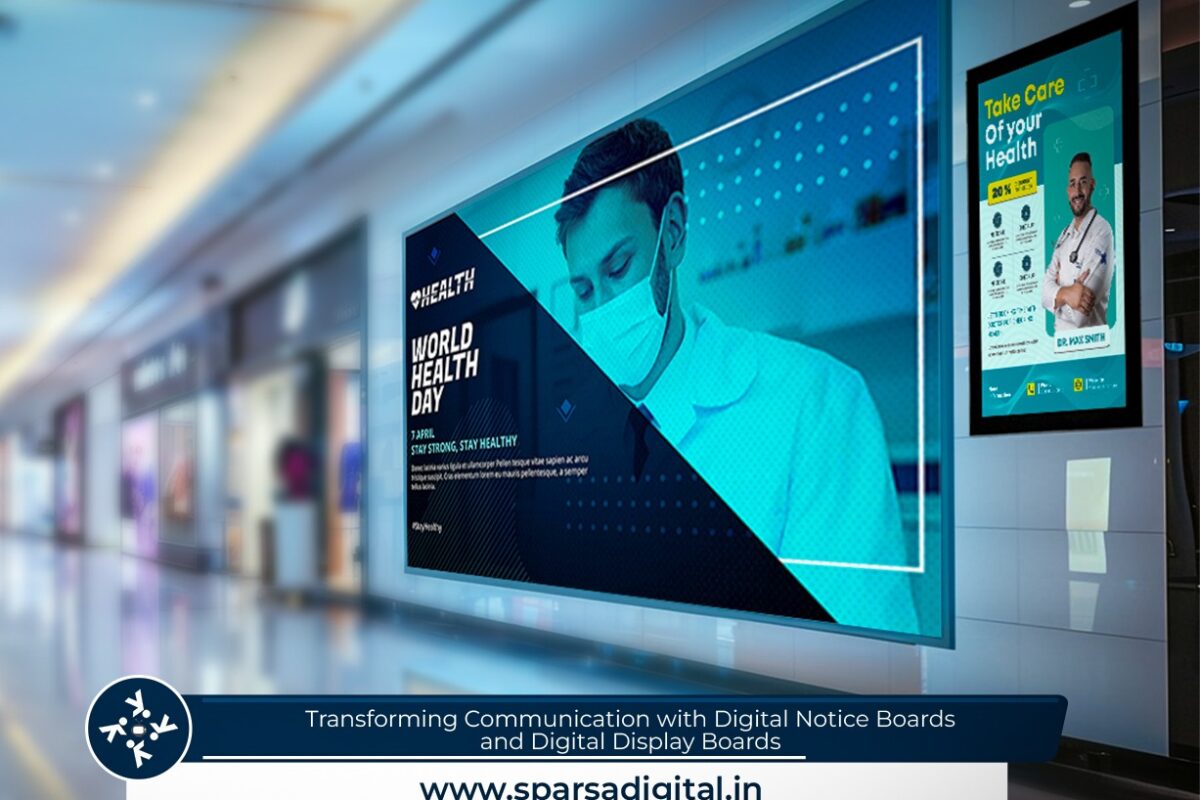
Digital Notice Boards and Digital Display Boards

Transforming Communication with Digital Notice Boards and Digital Display Boards

In today’s fast-paced, digitally-driven world, businesses, educational institutions, and public organizations are increasingly adopting digital notice boards and digital display boards to communicate with their audiences more effectively. These digital solutions are revolutionizing the way information is shared, making it more dynamic, interactive, and efficient. Whether for internal communication, announcements, or public displays, these digital tools offer a modern alternative to traditional paper-based methods, creating a more engaging and streamlined experience for everyone involved.

What Are Digital Notice Boards and Digital Display Boards?

Digital notice boards are electronic screens designed to display important information such as announcements, event schedules, news updates, and emergency alerts. These boards replace traditional cork boards, whiteboards, and posters, offering the advantage of real-time updates, multimedia content, and remote management.

Digital display boards serve a similar purpose but are often more expensive, used in settings like public spaces, transportation hubs, and large corporate offices. These boards can display a variety of content including advertisements, news feeds, interactive maps, and much more. Digital display boards are typically larger and more versatile than digital notice boards, providing greater flexibility in terms of the content and format they can present.

Why Digital Notice Boards and Digital Display Boards Are Essential

  1. Real-Time Updates and Flexibility
    One of the major advantages of digital notice boards and digital display boards is the ability to update content instantly. In traditional notice boards, updating content can be time-consuming and requires physical changes. With digital solutions, content can be updated remotely and in real time, allowing organizations to communicate new information, schedule changes, or urgent announcements instantly.
  2. Increased Engagement
    Digital boards are visually appealing and can display dynamic content such as videos, images, and animations. This dynamic aspect makes it more likely that people will engage with the content displayed. For example, a digital display board in a shopping mall could showcase promotional videos, store openings, and seasonal sales in a visually engaging way, drawing in more attention from passersby.
  1. Environmentally Friendly
    By eliminating the need for paper and physical materials, digital notice boards are an environmentally friendly alternative. Businesses and institutions no longer need to print new flyers, posters, or notices, reducing paper waste and helping organizations move toward a more sustainable future.
  2. Improved Communication
    Digital notice boards and display boards help organizations communicate more effectively. Whether it’s displaying emergency alerts, internal communications, event schedules, or customer-facing promotions, these digital solutions ensure that information is delivered clearly, consistently, and in a timely manner. Additionally, digital display boards can display multiple messages at once, ensuring that different groups of people receive the information most relevant to them.
  3. Cost-Effective Over Time
    While the initial investment in digital signage technology might be higher than traditional methods, the long-term cost savings are significant. Businesses save on the costs of printing, shipping, and labor associated with traditional notice boards. With digital boards, content updates can be done quickly and remotely, without needing to print new materials or manually post information.

Case Study: A School’s Use of Digital Notice Boards to Improve Communication

A high school in New York City decided to replace its traditional bulletin boards with digital notice boards in order to enhance communication with students, faculty, and staff. The school wanted to provide real-time updates on events, schedules, and important announcements, as well as reduce the clutter of paper notices that often went unnoticed.

The school installed digital notice boards in key areas: the main hallway, cafeteria, and near classrooms. These boards were connected to a central content management system that allowed administrators to update the boards with announcements, event reminders, and emergency alerts in real-time. The system also allowed for multimedia content such as videos of school events, photos from extracurricular activities, and motivational messages.

The result was a significant improvement in student engagement and information dissemination. Students no longer missed important announcements or deadlines, and faculty and staff could easily share updates with the entire school community. The digital boards also provided a more modern and visually appealing way of communicating, which was well-received by students and staff alike. Additionally, the school saved time and money by eliminating the need to print and distribute paper notices.

FAQs About Digital Notice Boards and Digital Display Boards

Q1: How are digital notice boards different from traditional notice boards?

A1: Traditional notice boards require physical updates, such as pinning papers or flyers to a board. Digital notice boards, on the other hand, use screens to display content that can be updated remotely and instantly. This allows for more dynamic, engaging, and up-to-date information, without the need for paper or physical labor.

Q2: Can digital notice boards and display boards be used outdoors?

A2: Yes, digital notice boards and digital display boards can be used outdoors, but it’s important to choose screens designed for outdoor environments. These screens are built to withstand weather conditions such as rain, heat, and sunlight. They are often enclosed in weather-resistant casings and have high brightness levels to ensure visibility in direct sunlight.

Q3: How do I update the content on digital display boards?

A3: Digital notice boards and digital display boards can be updated via a content management system (CMS). This system allows you to control and schedule content remotely, ensuring that updates are timely and consistent across multiple boards. Many CMS platforms offer user-friendly interfaces that can be accessed from any internet-enabled device.

Q4: Are digital notice boards energy-efficient?

A4: Yes, digital notice boards are generally energy-efficient, especially when using modern LED screens. These displays consume less power compared to traditional lighting-based signage, and their long lifespan means that they require fewer replacements.

Q5: Are digital display boards suitable for all types of businesses?

A5: Yes, digital display boards are versatile and can be used in various industries, including retail, education, healthcare, hospitality, and corporate offices. They are particularly useful in high-traffic areas where clear, up-to-date communication is essential, such as shopping malls, airports, and hospitals.

Conclusion

With benefits like real-time content updates, reduced paper waste, and increased engagement, these digital solutions are quickly becoming an essential tool for organizations of all sizes. Whether you’re a school, business, or public institution, adopting digital notice boards and digital display boards can improve communication, save time, and create a more modern and professional image.

Elevating Communication The Power of Digital Signage Software and Displays (1)-min

Elevating Communication: The Power of Digital Signage Software and Displays

In today’s fast-paced, technology-driven world, effective communication is more critical than ever. Businesses, organizations, and institutions are continually seeking innovative ways to convey messages and engage with their audiences. Enter digital signage software and digital signage displays—game-changing tools that transform how information is shared. This blog delves into the benefits, functionalities, and future of digital signage, showcasing why investing in these technologies is essential for modern communication strategies.

Understanding Digital Signage

What is Digital Signage?

Digital signage refers to electronic displays used to showcase content, information, and advertisements. These displays can be found in various environments, including retail stores, corporate offices, transportation hubs, educational institutions, and healthcare facilities. Digital signage solutions typically consist of screens, digital signage software, and content management systems that allow users to create, schedule, and manage content effortlessly.

The Role of Digital Signage Software

Digital signage software acts as the backbone of digital signage systems. It enables users to design content, schedule displays, and manage multiple screens from a centralized platform. This software varies in complexity and features, catering to different business needs, from simple content displays to advanced interactive experiences.

Benefits of Digital Signage

1. Enhanced Communication

Digital signage allows for dynamic communication, delivering timely information to target audiences. Whether it’s promoting sales, sharing news, or providing wayfinding assistance, digital signage can convey messages more effectively than traditional static signs.

2. Increased Engagement

Interactive digital signage displays can engage audiences in ways that static displays cannot. Touchscreen technology allows users to interact with content, leading to higher retention rates and a more memorable experience.

3. Cost-Effectiveness

While the initial investment in digital signage software and displays may be higher than traditional signage, the long-term savings are significant. Digital signage eliminates the need for printing and replacing physical signs, allowing businesses to update content instantly and without additional costs.

4. Flexibility and Scalability

Digital signage systems can be easily scaled to meet the needs of a growing business. Whether you want to add more displays or expand content offerings, digital signage solutions can adapt quickly. This flexibility is especially beneficial for businesses with multiple locations, as they can manage all displays from a single platform.

5. Real-Time Updates

With digital signage software, businesses can update their content in real-time. This capability is particularly useful for industries like retail, where promotions change frequently. Digital signage allows businesses to react promptly to market trends, customer behaviours, and urgent messages.

Key Features of Digital Signage Software

1. User-Friendly Interface

Modern digital signage software typically offers an intuitive, user-friendly interface that allows users to create and manage content without extensive technical knowledge. Drag-and-drop functionality and customizable templates streamline the design process, making it accessible for everyone.

2. Content Scheduling

One of the most valuable features of digital signage software is its ability to schedule content for specific times and dates. This feature allows businesses to plan promotional campaigns in advance, ensuring that the right messages reach the audience at the right time.

3. Remote Management

Many digital signage solutions provide remote management capabilities, enabling users to control displays from anywhere with internet access. This feature is particularly beneficial for businesses with multiple locations, as it allows for centralized management of all digital signage displays.

4. Interactive Capabilities

Interactive digital signage displays take audience engagement to the next level. With touchscreens, users can navigate through content, access additional information, and even participate in surveys or contests, enhancing the overall experience.

5. Analytics and Reporting

Understanding the effectiveness of digital signage campaigns is crucial. Many digital signage software solutions come with analytics tools that track viewer engagement, content performance, and audience demographics. This data helps businesses refine their strategies for better results.

Choosing the Right Digital Signage Solution

When selecting digital signage software and displays, several factors should be considered:

1. Business Needs

Evaluate what you want to achieve with digital signage. Are you looking to promote products, provide information, or engage customers? Understanding your objectives will help you choose the right solution.

2. Scalability

Choose a digital signage solution that can grow with your business. If you plan to expand or add more displays in the future, ensure the software can accommodate these changes without significant upgrades.

3. Integration Capabilities

Look for software that integrates well with your existing systems, such as customer relationship management (CRM) tools, social media platforms, and content management systems. Integration can enhance functionality and streamline processes.

4. Support and Training

Consider the level of support and training provided by the software vendor. Comprehensive training resources and responsive customer support are essential for ensuring successful implementation and ongoing usage.

5. Cost

While digital signage can save money in the long run, it’s essential to consider the initial investment. Evaluate the total cost of ownership, including hardware, software licenses, and any additional fees for content creation or updates.

Applications of Digital Signage

1. Retail

Retail businesses use digital signage to showcase promotions, highlight new products, and provide information about store events. Interactive displays can also enhance the shopping experience by guiding customers through the store.

2. Corporate Communication

In corporate environments, digital signage is an effective tool for internal communication. Companies can display important announcements, share employee achievements, and provide updates on projects and events.

3. Education

Educational institutions use digital signage to share announcements, display schedules, and provide wayfinding assistance. Interactive displays can enhance learning experiences by engaging students with educational content.

4. Transportation

Airports, train stations, and bus terminals utilize digital signage to provide real-time information about arrivals and departures. These displays improve passenger experience and enhance operational efficiency.

5. Healthcare

Hospitals and clinics use digital signage to provide important information to patients and visitors. Displays can share wait times, health tips, and wayfinding assistance, improving overall patient experience.

Conclusion

In an era where communication methods are rapidly evolving, digital signage software and displays stand out as powerful tools for engaging audiences and enhancing information dissemination. By investing in these technologies, businesses can transform their communication strategies, leading to increased engagement, improved customer experiences, and a stronger brand presence.

As digital signage continues to advance, staying informed about the latest trends and technologies is essential for businesses looking to leverage its full potential. Whether you’re a retailer, educator, corporate entity, or healthcare provider, digital signage offers endless possibilities for enhancing communication and connecting with your audience.

Embrace the future of communication with digital signage software and displays, and watch your organization thrive in a visually driven world!

The Evolution and Impact of Digital Advertising Boards and Traditional Advertising Boards for Shops

The Evolution and Impact of Digital Advertising Boards and Traditional Advertising Boards for Shops

In today’s fast-paced world, businesses continually seek innovative ways to capture consumer attention. Traditional advertising methods have been the cornerstone of marketing for decades, but with the advent of technology, new forms of advertising have emerged. Among these, digital advertising boards and traditional advertising boards for shops play crucial roles. This blog will delve into their evolution, benefits, and the impact they have on businesses and consumers alike.

The Rise of Advertising Boards

Advertising boards have been a staple in the marketing industry for centuries. From hand-painted signs to large printed billboards, they have evolved significantly, reflecting changes in technology and consumer behavior. These boards serve as a visual medium to convey messages, promote products, and enhance brand visibility.

Traditional Advertising Boards for Shops

Traditional advertising boards, often seen outside retail shops, have been used for years to attract customers. These boards, made of various materials like wood, metal, or plastic, display essential information about the shop, including the name, logo, and promotional messages.

Key Features and Benefits

1. Visibility: Placed strategically, these boards can catch the attention of passersby and potential customers.

2. Cost-Effective: Compared to other forms of advertising like TV or radio, traditional boards are relatively inexpensive.

3. Customization: Businesses can tailor the design and message according to their branding and target audience.

4. Durability: Made from robust materials, these boards can withstand various weather conditions, making them a long-lasting advertising tool.

Limitations

Despite their benefits, traditional advertising boards have limitations. They lack the dynamic and interactive features of digital media. Updating the content requires physical changes, which can be time-consuming and costly.

The Advent of Digital Advertising Boards

With the digital revolution, the advertising landscape has transformed dramatically. Digital advertising boards have emerged as a powerful tool, offering dynamic and interactive content that traditional boards cannot match.

Key Features and Benefits

1. Dynamic Content: Unlike static traditional boards, digital boards can display multiple messages and animations, attracting more attention.

2. Remote Updates: Content can be updated remotely in real-time, providing flexibility and efficiency.

3. Interactive Features: Some digital boards include touchscreens and interactive elements, enhancing customer engagement.

4. Analytics: Digital boards can collect data on viewer interactions, providing valuable insights for businesses to refine their marketing strategies.

Use Cases

1. Retail Stores: Digital boards can showcase product promotions, special offers, and interactive content to engage customers.

2. Malls: These boards serve as directories, advertisements, and entertainment, enhancing the overall shopping experience.

3. Restaurants: Menus, special offers, and order statuses can be displayed dynamically, improving customer service and satisfaction.

Comparative Analysis: Digital vs. Traditional Advertising Boards

Both traditional and digital advertising boards have their unique advantages and drawbacks. Here’s a comparative analysis to understand their impact better.

Cost

– Traditional Boards: Initial setup costs are lower, but maintenance and content updates can add up over time.

– Digital Boards: Higher initial investment, but long-term savings in content updates and maintenance.

Flexibility

– Traditional Boards: Limited to static content; changes require physical alterations.

– Digital Boards: Highly flexible, allowing real-time content updates and multiple messages.

Engagement

– Traditional Boards: Less interactive; relies on visual appeal alone.

– Digital Boards: Highly engaging with dynamic content, animations, and interactivity.

Data and Analytics

– Traditional Boards: No data collection capabilities.

– Digital Boards: Can track viewer interactions and provide valuable analytics.

The Future of Advertising Boards

The future of advertising boards lies in integrating traditional and digital elements to create a cohesive marketing strategy. Businesses can leverage the strengths of both to maximize their reach and engagement.

Integration of Traditional and Digital Boards

Combining traditional and digital advertising boards can create a synergistic effect. For example, a shop could use a traditional board for its brand logo and name while utilizing a digital board to display dynamic content like promotions and interactive features. This approach can provide a stable brand presence with the flexibility of digital media.

Technological Advancements

Emerging technologies such as augmented reality (AR) and artificial intelligence (AI) are set to revolutionize digital advertising boards. AR can provide immersive experiences, while AI can offer personalized content based on consumer behavior and preferences.

Sustainability

As businesses become more environmentally conscious, the sustainability of advertising boards is gaining importance. Digital boards, despite their electronic nature, can be more sustainable in the long run due to reduced waste from frequent updates. Traditional boards can also contribute to sustainability by using eco-friendly materials and recyclable components.

Practical Tips for Businesses

1. Assess Your Needs: Determine your advertising goals, target audience, and budget to choose the right type of advertising board.

2. Design Matters: Invest in high-quality design for both traditional and digital boards to ensure they are visually appealing and effectively convey your message.

3. Location is Key: Place your advertising boards in high-traffic areas where they will be seen by the most potential customers.

4. Keep Content Fresh: Regularly update the content on both traditional and digital boards to keep your messaging relevant and engaging.

5. Measure Impact: Use analytics from digital boards to understand viewer behavior and adjust your strategies accordingly.

By following these tips, businesses can maximize the impact of their advertising boards and achieve their marketing objectives.

Conclusion

Advertising boards, whether traditional or digital, remain a vital component of marketing strategies for shops. While traditional boards offer cost-effective, durable, and customizable options, digital boards provide dynamic, interactive, and data-driven solutions. By understanding the strengths and limitations of each type, businesses can make informed decisions to enhance their advertising efforts.

The key to successful advertising lies in the strategic integration of both traditional and digital elements, leveraging technological advancements, and prioritizing sustainability. As the advertising landscape continues to evolve, businesses that adapt and innovate will be best positioned to capture consumer attention and drive growth.

Revolutionizing Advertising The Power of Digital Display Screens and OOH Advertising Software

The Power of OOH Advertising Software and Digital Display Screens: Revolutionizing Advertising

In today’s fast-paced world, advertising has evolved into a dynamic and multifaceted industry. Traditional methods like print, radio, and television advertisements have gradually been supplemented, and in some cases, replaced by digital advertising solutions. Among these innovative solutions, digital display screens and Out-of-Home (OOH) advertising software have emerged as powerful tools for marketers to reach their target audiences effectively. This blog explores the significance of digital display screens in advertising, delves into the capabilities of OOH advertising software, and examines their combined impact on the advertising landscape.

The Benefit of Digital Display Screens for Advertising

Digital display screens for advertising have revolutionized the way businesses communicate with consumers. Unlike static billboards or posters, digital screens offer dynamic content delivery, allowing advertisers to showcase engaging visuals, videos, and interactive experiences. This versatility enables brands to captivate audiences with compelling storytelling and immersive advertisements.

One of the key advantages of digital display screens for advertising is their ability to adapt and update content in real-time. Whether it’s promoting new products, announcing special offers, or delivering relevant information, advertisers can quickly modify their messaging to align with changing market trends and consumer preferences. This agility enhances the effectiveness of advertising campaigns, ensuring that brands stay relevant and impactful in a competitive landscape.

Moreover, digital display screens for advertising provide unparalleled targeting capabilities. Through geotargeting and audience segmentation, advertisers can deliver personalized content to specific locations or demographics, maximizing the relevance and impact of their messages. This targeted approach not only enhances engagement but also improves the return on investment (ROI) for advertising spend.

Furthermore, digital display screens offer valuable metrics and analytics that enable advertisers to measure the performance of their campaigns accurately. From impressions and click-through rates to dwell time and conversion metrics, advertisers gain valuable insights into the effectiveness of their messaging, allowing for continuous optimization and improvement.

The Evolution of Out-of-Home Advertising Software

Complementing the capabilities of digital display screens is the emergence of advanced Out-of-Home (OOH) advertising software. OOH advertising software serves as the backbone of digital out-of-home (DOOH) advertising networks, facilitating the management, scheduling, and delivery of content across a network of digital screens.

At its core, OOH advertising software streamlines the process of campaign management, allowing advertisers to plan, execute, and monitor their advertising initiatives seamlessly. From content creation and scheduling to campaign deployment and performance tracking, OOH advertising software provides a centralized platform for advertisers to oversee every aspect of their campaigns.

One of the key features of OOH advertising software is its ability to optimize content delivery based on various factors such as time of day, audience demographics, and environmental conditions. By leveraging data analytics and artificial intelligence (AI), advertisers can deliver targeted messages at the right time and place, maximizing the effectiveness of their campaigns.

Additionally, OOH advertising software enables advertisers to integrate dynamic content feeds, such as weather updates, social media feeds, or live event streams, into their campaigns. This dynamic content not only enhances engagement but also ensures that advertisements remain relevant and timely in a rapidly evolving environment.

Moreover, OOH advertising software provides robust analytics and reporting capabilities, allowing advertisers to measure the impact of their campaigns with precision. From audience reach and engagement metrics to conversion tracking and ROI analysis, advertisers gain actionable insights that drive informed decision-making and campaign optimization.

The Synergy of Digital Display Screens and OOH Advertising Software

When combined, digital display screens and OOH advertising software create a synergistic partnership that amplifies the effectiveness of advertising campaigns. By leveraging the dynamic capabilities of digital display screens for advertising and the advanced functionalities of OOH advertising software, advertisers can deliver highly targeted, contextually relevant content to their audiences, driving engagement and conversions.

One of the key advantages of this synergy is the ability to deliver personalized and immersive experiences to consumers. By harnessing data analytics and AI algorithms, advertisers can tailor content to individual preferences, behaviors, and contextual factors, creating a more meaningful connection with their target audience.

Furthermore, the integration of digital display screens and OOH advertising software enables advertisers to adapt their messaging in real-time based on changing market dynamics and consumer trends. Whether it’s leveraging social media trends, responding to current events, or capitalizing on local insights, advertisers can ensure that their messages remain timely, relevant, and impactful.

Moreover, the synergy of digital display screens and OOH advertising software enhances the measurability and accountability of advertising campaigns. By tracking key performance indicators (KPIs) and analyzing campaign data in real-time, advertisers can optimize their strategies on the fly, maximizing the ROI of their advertising spend.

Case Studies: Success Stories in Digital Out-of-Home Advertising

To illustrate the power of digital display screens and OOH advertising software, let’s explore some real-world success stories:

  • Coca-Cola’s Dynamic Content Strategy: Coca-Cola leveraged OOH advertising software to deploy dynamic content across a network of digital display screens in high-traffic areas. By integrating real-time data feeds and interactive elements, Coca-Cola created immersive experiences that resonated with consumers, driving brand engagement and loyalty.
  • Nike’s Hyper-Local Campaigns: Nike used OOH advertising software to execute hyper-localized campaigns tailored to specific neighborhoods and communities. By analyzing location data and consumer insights, Nike delivered personalized messages to audiences, fostering a sense of community and connection with the brand.
  • McDonald’s Real-Time Promotions: McDonald’s utilized digital display screens and OOH advertising software to launch real-time promotions based on weather conditions and time of day. By offering targeted discounts on hot beverages during cold weather or refreshing treats during hot days, McDonald’s drove foot traffic and sales at its locations.

Conclusion

In conclusion, digital display screens and OOH advertising software have transformed the advertising landscape, offering marketers powerful tools to engage, target, and measure the impact of their campaigns effectively. By leveraging the dynamic capabilities of digital display screens and the advanced functionalities of OOH advertising software, advertisers can deliver personalized, contextually relevant content to their audiences, driving engagement, and conversions. As technology continues to evolve, the synergy between digital display screens and OOH advertising software will play an increasingly vital role in shaping the future of advertising, enabling brands to connect with consumers in innovative and impactful ways.

Digital Signage Display

Enhancing Corporate Communication with Digital Signage Displays

In the fast-paced world of corporate environments, effective communication is vital for success. Whether it’s disseminating important information to employees, showcasing products and services to clients, or creating an engaging workplace environment, communication lies at the heart of corporate culture. In recent years, digital signage displays have emerged as powerful tools for enhancing communication within corporate settings. From office lobbies to conference rooms, digital signage has transformed the way businesses engage with their audience. In this blog post, we’ll explore the concept of corporate digital signage, its benefits, and how businesses can leverage digital signage displays to improve communication and enhance the overall corporate experience.

Understanding Corporate Digital Signage

Corporate digital signage refers to the use of digital displays, such as LCD or LED screens, to convey information, messages, and multimedia content within a corporate environment. These displays are strategically placed in high-traffic areas such as lobbies, hallways, conference rooms, and employee break rooms to ensure maximum visibility and impact. Unlike traditional static signs or posters, digital signage offers dynamic, interactive, and customizable content delivery, making it ideal for capturing attention and engaging viewers.

Benefits of Corporate Digital Signage

  • Enhanced Communication: Digital signage provides a dynamic platform for delivering targeted messages to employees, clients, and visitors. Whether it’s company news, event announcements, or safety reminders, digital displays ensure that information is conveyed effectively and efficiently.
  • Increased Engagement: Interactive features such as touchscreen displays or QR code integration enable viewers to interact with content, fostering greater engagement and participation. This interactivity can be leveraged for training sessions, product demonstrations, or interactive maps within corporate facilities.
  • Cost-Effective: While initial setup costs may be higher than traditional signage, digital displays offer long-term cost savings by eliminating the need for printing and distributing physical materials. Updates and changes to content can be made remotely, reducing operational costs associated with manual maintenance.
  • Brand Building: Digital signage serves as a powerful branding tool, allowing businesses to showcase their brand identity, values, and offerings in a visually compelling manner. Consistent branding across all digital displays reinforces brand recognition and strengthens corporate identity.
  • Real-Time Updates: Unlike static signage, digital displays enable real-time updates and dynamic content scheduling. This flexibfacility allows businesses to react quickly to changing circumstances, such as emergency notifications, schedule changes, or promotional updates.
  • Data Analytics: Many digital signage platforms offer built-in analytics tools that provide insights into viewer demographics, content engagement, and effectiveness. This data can be invaluable for refining content strategies, optimizing message delivery, and measuring the impact of digital signage campaigns.

Applications of Digital Signage in Corporate Settings

  1. Internal Communication: Digital signage can be used to disseminate internal communications such as company news, HR updates, employee recognition programs, and safety reminders. By displaying relevant information in key areas, businesses can keep employees informed and engaged.
  2. Wayfinding and Navigation: In large corporate campuses or office buildings, digital signage can serve as interactive wayfinding tools, helping employees and visitors navigate complex environments. Interactive maps, directional signage, and floor directories can streamline navigation and improve the overall visitor experience.
  3. Meeting Room Signage: Digital displays outside meeting rooms can provide real-time information about room availability, scheduled meetings, and booking status. Integrating with calendar systems ensures that meeting room information is accurate and up-to-date, reducing scheduling conflicts and improving efficiency.
  4. Corporate Branding and Messaging: Digital signage offers opportunities for businesses to showcase their brand identity, values, and corporate messaging. Whether it’s highlighting company achievements, promoting corporate social responsibility initiatives, or reinforcing brand values, digital displays can effectively communicate corporate identity to employees and visitors alike.
  5. Training and Education: Digital signage can be utilized for employee training and education purposes, providing access to interactive training modules, instructional videos, and informational content. This can be particularly beneficial for onboarding new employees, communicating corporate policies, or delivering compliance training.
  6. Visitor Welcome and Information: In corporate lobbies or reception areas, digital signage can welcome visitors, provide visitor instructions, and showcase company highlights. Interactive displays can offer self-service check-in options, visitor registration forms, and directory assistance, enhancing the visitor experience and improving operational efficiency.

Best Practices for Implementing Corporate Digital Signage

  • Define Objectives: Clearly outline your communication objectives and target audience to ensure that your digital signage strategy aligns with business goals.
  • Content Strategy: Develop a content strategy that includes a mix of informational, promotional, and interactive content tailored to the needs and interests of your audience.
  • Design Considerations: Pay attention to visual design elements such as color schemes, typography, and branding guidelines to create visually appealing and cohesive content.
  • Placement and Visibility: Place digital displays in high-traffic areas where they are easily visible and accessible to employees, clients, and visitors.
  • Content Management System (CMS): Choose a reliable CMS platform that offers ease of use, content scheduling, remote management, and analytics capabilities.
  • Regular Updates and Maintenance: Keep content fresh and relevant by regularly updating and refreshing digital signage content. Ensure that displays are properly maintained and functioning optimally at all times.
  • Training and Support: Provide training and support to content creators and administrators to ensure proficiency in using digital signage tools and platforms.

Conclusion

Corporate digital signage represents a powerful communication tool that can transform the way businesses engage with their audience. By leveraging digital displays strategically placed throughout corporate environments, businesses can enhance communication, increase engagement, and reinforce their brand identity. From internal communications and wayfinding to branding and training, the applications of digital signage in corporate settings are vast and varied. By adopting best practices for implementation and content management, businesses can unlock the full potential of digital signage to create dynamic and impactful corporate environments.

FAQs

Q: Is meeting room booking integration possible with digital signage?

A: Absolutely. Digital room booking panels are one of the most popular uses. You can display room availability, upcoming bookings, and instantly reserve spaces via touchscreens or NFC-enabled systems integrated with Outlook, Google Calendar, or other scheduling platforms.

Q: What software or CMS is used for managing corporate digital signage?

A: Cloud-based CMS platforms allow you to control, schedule, and monitor multiple screens remotely — push instant updates, videos, live data, or customized playlists per screen zone.

Q: Is digital signage expensive to maintain?

A: Not necessarily. With energy-efficient screens, reliable CMS, and cloud management, running costs are minimal after the initial setup.

Q: Where can digital signage be used in a corporate office?

A: Reception areas, Meeting rooms, Cafeterias and break zones, Lobbies and waiting areas, Employee workspaces, Elevator lobbies

Cafe-Digital-Solutions

Café Digital Signage and Display Boards: A Revolution in Hospitality

In the rapidly evolving landscape of the hospitality industry, cafes have become more than just places to enjoy a cup of coffee. They have transformed into multifunctional spaces where people gather for work, socialize, and seek immersive experiences. In this context, café digital signage and display boards have emerged as crucial tools for enhancing customer engagement, improving operational efficiency, and driving business growth. This comprehensive essay delves into the importance of café digital signage and display boards, exploring their myriad benefits, applications, and the future trends that are shaping this technology.

The Digital Transformation of Cafés

The Changing Dynamics of Café Culture

Café culture has undergone a significant transformation in recent years. No longer are cafes merely places to grab a quick coffee; they have become integral parts of our daily lives. Customers now expect more than just a caffeine fix when they visit cafes. They seek unique experiences, whether it’s savoring artisanal brews, working remotely, or immersing themselves in the café’s ambiance.

This shift in customer expectations has led café owners to rethink their business strategies. They must adapt to cater to a diverse clientele, ranging from students and professionals to tourists and remote workers. As a result, the role of technology in enhancing the café experience has become increasingly prominent.

The Rise of Café Digital Signage

One of the most notable technological advancements in the café industry is the adoption of digital signage and display boards. These digital tools have evolved beyond being simple menu boards; they now serve as dynamic, interactive, and informative assets that contribute to the overall customer experience.

Café digital signage encompasses a range of technologies, including digital table tops, digital menu boards, interactive kiosks, mini displays, and more. These devices are strategically placed within cafes to deliver targeted content, engage customers, and streamline operations. The importance of café digital signage can be understood through various dimensions.

Enhancing Customer Engagement

Visual Appeal and Aesthetic Enhancement

Café digital signage allows café owners to create visually appealing displays that captivate customers’ attention. High-resolution screens, vibrant colors, and dynamic content can transform the café’s ambiance, making it more inviting and attractive. This visual appeal not only draws in new customers but also encourages repeat visits.

Dynamic Menu Boards

One of the primary applications of café digital signage is in displaying menus. Unlike traditional printed menus, digital menu boards can be updated in real-time, enabling café owners to make instant changes to prices, offerings, and promotions. This flexibility is crucial in a dynamic industry where seasonal ingredients, limited-time offers, and price fluctuations are common.

Moreover, digital menu boards can showcase menu items with rich imagery and engaging animations, making it easier for customers to make informed choices. This enhances the overall dining experience, particularly in cafes that emphasize aesthetics and culinary artistry.

Personalized Content

Café digital signage can collect and analyze customer data, such as preferences, purchase history, and demographic information. With this data, cafes can deliver personalized content to customers. For example, a regular customer who frequently orders lattes might be shown special promotions on premium coffee blends, while a student studying at the café could receive notifications about quiet study areas and available power outlets.

Personalization not only boosts customer engagement but also increases the likelihood of upselling and cross-selling, thereby driving revenue growth.

Interactive Touchpoints

Interactive kiosks such as hanging displays provide customers with engaging touchpoints that go beyond traditional ordering. Customers can browse menus, customize their orders, and even provide feedback directly through these interfaces. This interactivity adds an element of fun and convenience to the café experience, especially for tech-savvy customers.

Additionally, interactive displays can be used for gamification and loyalty programs, encouraging customers to return to the café for rewards and discounts.

Operational Efficiency and Cost Savings

Streamlining Ordering and Payment Processes

Café digital signage is not just about enhancing the customer experience; it also plays a crucial role in improving operational efficiency. Automated ordering and payment processes reduce the burden on staff, allowing them to focus on other essential tasks, such as food preparation and customer service.

Self-order kiosks are a prime example of this efficiency. Customers can place their orders independently, reducing wait times during peak hours and minimizing order errors. This leads to higher customer satisfaction and increased throughput, ultimately boosting revenue.

Real-time Inventory Management

Digital signage can be integrated with inventory management systems to provide real-time updates on ingredient availability. Café owners can monitor stock levels, track expiration dates, and receive alerts when items need to be restocked. This helps reduce food wastage and ensures that customers are always offered menu items that are fresh and available.

Additionally, the integration of digital signage with point-of-sale (POS) systems streamlines order processing, inventory tracking, and sales reporting, making it easier for café owners to manage their businesses efficiently.

Cost-effective Marketing

Traditional marketing methods, such as print advertising and promotional materials, can be costly and less effective in reaching a wide audience. Café digital signage offers a cost-effective alternative for promoting specials, events, and loyalty programs. Content can be updated instantly, eliminating the need for printing and distribution expenses.

Furthermore, digital signage allows for scheduling content to be displayed at specific times or days, maximizing the impact of marketing campaigns. For example, a café can promote breakfast specials in the morning and shift to afternoon tea promotions later in the day.

Data-driven Insights

Gathering Customer Data

Café digital signage is not just a one-way communication tool; it also serves as a data collection point. Through the use of sensors and analytics, café owners can gather valuable customer data. This includes foot traffic patterns, peak hours, popular menu items, and customer demographics.

This data can used to make informed decisions regarding menu offerings, pricing strategies, staffing levels, and marketing campaigns. For example, if data shows that a particular coffee blend is popular among early morning customers, the café can prioritize its availability during those hours.

Continuous Improvement

By analyzing data from digital signage and display boards, café owners can identify areas for improvement. They can track the performance of different menu items, monitor customer wait times, and assess the effectiveness of promotions.

Continuous improvement is essential for staying competitive in the café industry. By making data-driven decisions, cafes can enhance their operations, refine their offerings, and ensure that they consistently meet customer expectations.

Conclusion

Café digital signage and display boards have emerged as indispensable tools in the modern hospitality industry. They play a multifaceted role in enhancing customer engagement, improving operational efficiency, and facilitating data-driven decision-making. These digital assets provide visual appeal, interactivity, and personalization that align with evolving customer expectations.

Furthermore, café digital signage offers adaptability and flexibility to respond to changing market conditions and customer preferences. It is a cost-effective means of marketing and streamlining operations, ultimately contributing to revenue growth and sustainability.

As the café industry continues to evolve, we can expect to see further innovations in digital signage technology. Integration with mobile apps, augmented reality experiences, sustainability messaging, AI-powered recommendations, and enhanced analytics are all on the horizon, promising to elevate the café experience to new heights.

In this dynamic landscape, café owners and operators who harness the power of digital signage will be well-positioned to thrive in an industry where innovation and customer-centricity are key to success.

Level-Up-Advertising-Game-with-Help-of-Right-Digital-Displays

How Digital Displays Help Brands Elevate Their Advertising Strategy

Digital display boards and digital billboards have revolutionized the advertising landscape, offering a multitude of benefits that traditional static signage simply cannot match. In an increasingly digital age, these dynamic advertising mediums have become crucial tools for businesses and marketers to effectively communicate their messages to a wider audience. This article explores the numerous advantages of using digital display boards and digital billboards for advertising purposes.

1. Attention-Grabbing Visuals:

One of the most significant benefits of digital display boards and billboards is their ability to capture attention through vibrant and dynamic visuals. Moving images, animations, and videos are far more attention-grabbing than static images. This allows advertisers to create compelling content that engages viewers and leaves a lasting impression.

2. Flexibility and Real-Time Updates:

Digital display boards offer unmatched flexibility. Advertisers can easily change their content in real-time, allowing for timely promotions, announcements, and adjustments. This flexibility is particularly useful for time-sensitive campaigns, special events, or changes in marketing strategies.

3. Cost-Effective Over Time:

While the initial investment for setting up digital display boards and billboards might be higher compared to traditional signage, they tend to be more cost-effective over time. This is because digital content can be updated without the need for physical reprinting or replacement, saving on production and installation costs in the long run.

4. Enhanced Targeting Capabilities:

Digital advertising allows for precise targeting based on factors such as location, time of day, audience demographics, and even weather conditions. This ensures that the right message reaches the right audience at the right time, leading to higher engagement and conversion rates.

5. Interactivity and Engagement:

Digital display boards can be made interactive, allowing viewers to engage directly with the content. This can include touch screens that offer additional information, games, surveys, or the ability to make purchases directly from the display. Interactivity increases engagement and provides a memorable experience for viewers.

6. Increased Visibility at Night:

Digital billboards for advertising are illuminated, ensuring visibility day and night. This 24/7 visibility extends the reach of advertising efforts, capturing the attention of audiences during evening hours when traditional signage might go unnoticed.

7. Environmental Considerations:

Digital display boards are environmentally friendly compared to traditional print signage, which often requires paper, ink, and other materials. By reducing the need for physical production and disposal, digital advertising contributes to a greener environment.

8. A/B Testing and Analytics:

Digital advertising allows for A/B testing, where different versions of content can displayed to measure which is more effective. Additionally, analytics tools provide valuable insights into how many people viewed the content, for how long, and whether they interacted with it. This data helps advertisers refine their strategies for better results.

9. Integration with Digital Media:

Digital display boards and billboards can seamlessly integrate with social media feeds, live streams, and other online content. This creates opportunities for real-time engagement, hashtag campaigns, and cross-channel promotions, bridging the gap between physical and digital marketing efforts.

10. Showcasing Creativity:

Digital displays provide a canvas for creativity, enabling advertisers to experiment with innovative content formats and storytelling techniques. Dynamic visuals, animations, and videos enable advertisers to craft memorable and emotionally resonant campaigns.

11. Reduced Print Waste:

Traditional print advertising can generate a significant amount of waste due to constant updates and changes. Digital displays eliminate this waste, contributing to more sustainable advertising practices.

12. Integration with Data Feeds:

Digital billboards for advertising can be linked to data feeds, allowing advertisers to display real-time information such as stock prices, sports scores, weather updates, or news headlines. This dynamic content keeps the advertising relevant and engaging.

In conclusion, digital display boards and digital billboards offer a wide range of benefits that make them highly effective tools for modern advertising. Their ability to capture attention, provide real-time updates, offer interactivity, and enhance targeting capabilities make them indispensable for businesses and marketers looking to reach their target audience in engaging and memorable ways. As technology continues to advance, these benefits will only grow, solidifying the importance of digital displays in the advertising landscape.

Still wondering how to move forward? You have just landed in the right place. Sparsa Digital focuses on providing technology cum media solutions to its customers. Core objective of the services is to assist the brands in engaging with their in store audience, with customized Audio Video solutions focussed on creating product awareness, generating leads, pushing offers, getting feedback, increasing sales conversions and also to address other specific brand needs.

While successfully managing CMS for 12000 + screens of 100+ brands on a daily basis, Sparsa Digital is a leading service provider in this sector. Their customers vary in businesses, as basic as Street Pan Shops, Liquor shops to best Five star hotels, Restaurant, Automobile showrooms, Leading multi speciality hospitals & Chain of clinics etc. Get in touch with the leading experts today, and start today!

The Power of Digital Standees and digital display board

The Power of Digital Standees and Digital Display Boards

Revolutionize Advertising Harnessing The Power of Digital Standees and Digital Display Boards

In today’s technologically advanced world, traditional advertising methods are being rapidly replaced by innovative digital solutions. Among the most prominent advancements in the advertising industry are digital standees and digital display boards. These cutting-edge tools are transforming the way businesses engage with their target audience, providing dynamic and captivating experiences. This blog post explores the concept and impact of digital standees and digital display boards, highlighting their benefits, applications, and the future they hold in the realm of advertising.

Understanding Digital Standees

Digital standees, also known as digital signage or electronic displays, refer to large digital screens that display multimedia content. They are designed to capture attention and deliver engaging messages in various settings, such as retail stores, airports, hotels, and exhibitions. Digital standees utilize LCD or LED panels, offering high-resolution visuals and vibrant colors.

Benefits of Digital Standees

Dynamic Content: Digital standees enable businesses to showcase dynamic and interactive content, including videos, animations, and live updates. This versatility enhances engagement and improves brand visibility.

Targeted Messaging: With digital standees, businesses can easily tailor their messages to specific demographics, locations, or timeframes. This personalization allows for targeted advertising, maximizing the impact of the display.

Cost Efficiency: Digital standees eliminate the need for printing and distributing physical materials, reducing costs associated with traditional advertising methods. Additionally, content can updated remotely, saving time and resources.

Applications of Digital Standees

Retail and Shopping Malls: Digital standees in retail environments can attract customers, display promotions, and provide product information, enhancing the overall shopping experience.

Transportation Hubs: Airports, train stations, and bus terminals utilize digital standees to deliver real-time travel information, advertisements, and entertainment to passengers.

Hospitality Industry: Hotels and resorts leverage digital standees to provide guests with relevant information, event schedules, and wayfinding assistance.

Exploring Digital Display Boards

Digital display boards, often referred to as LED display boards or digital billboards, are large electronic screens used for outdoor advertising. They are built using LED technology, allowing for high brightness and visibility in daylight and nighttime conditions.

Benefits of Digital Display Boards

Attention-Grabbing Impact: Digital display boards offer captivating visuals with vivid colors, animations, and video capabilities. They attract attention and create a lasting impression on viewers, increasing brand awareness.

Flexibility and Real Time Updates: Digital display boards provide the flexibility to change content quickly and easily. Advertisers can update messages, promotions, or schedules remotely and in real-time, adapting to changing marketing needs.

Cost-Effective Advertising: While the initial investment for digital display boards may be higher than traditional billboards, they offer long-term cost savings by eliminating printing and installation expenses associated with static advertisements.

Applications of Digital Display Boards

Outdoor Advertising: Digital display boards are prominently used in outdoor advertising spaces, such as highways, city centers, and sports arenas. They deliver impactful messages to a wide audience, reaching commuters, pedestrians, and event attendees.

Event Promotion: Digital display boards are effective in promoting concerts, festivals, and sporting events. They provide event details, ticket information, and sponsor advertisements, generating excitement and boosting ticket sales.

Public Safety and Emergency Messaging: Digital display boards can utilized by local authorities to convey emergency alerts, weather updates, or public safety information effectively.

The Future of Digital Standees and Digital Display Boards

Technological Advancements

Increased Interactivity: Future iterations of digital standees and display boards may incorporate touchscreens and gesture-based controls, allowing users to interact with the content directly.

Artificial Intelligence Integration: AI-powered systems could enable personalized and context-aware advertising, tailoring content based on viewer demographics, preferences, and behavior.

Environmental Considerations

Energy Efficiency: Manufacturers are developing energy-efficient display technologies, minimizing power consumption and reducing the environmental footprint of digital standees and display boards.

Sustainability: Future advancements may focus on incorporating recyclable and eco-friendly materials, ensuring a more sustainable approach to manufacturing and disposal.

Integration with IoT and Big Data

Data-Driven Advertising: Integration with IoT devices and big data analytics can enable digital standees and display boards to deliver targeted advertising based on real-time data, further enhancing their effectiveness.

Smart Cities: As cities become more connected, digital standees and display boards can serve as information hubs, providing real-time updates on public transportation, events, and city services.

Conclusion

Digital standees and digital display boards have revolutionized the advertising landscape by offering dynamic, engaging, and targeted messaging. With their attention-capturing abilities, real-time updates, and adaptable nature, innovative advertising tools are vital in various industries. Technology advances promise interactivity, AI integration, and sustainability for digital standees and display boards. Leveraging IoT and big data, these tools will transform urban spaces into smart cities. Embracing their potential, businesses and advertisers can connect with audiences in captivating ways, creating memorable brand experiences in the digital era.

Digital-Display-Boards

Digital Display Boards: Top Trends of the Global Display Market in 2023

Studies show that the global Digital Display Boards market will show a CAGR of 7.91% for the gauge time of 2021-2028.

Developing commercial centre’s for the show customer industry are significant driving variables behind the extension of the market. That includes wide usage of digital signage as well.

The display usually incorporates a screen, a PC yield surface, and a projection surface that shows messages, graphic images utilizing a cathode beam tube, light-discharging diode, fluid gem show, or different advancements.

It very well to apply TV, cell phones, tablets, PCs, vehicles, public vehicles, and numerous different areas.

The developing interest in OLED-based items, mechanical headways and the advancement of brilliant wearable gadgets, and the adaptable gadget industry’s extension are key market drivers affecting the presentation market development.

The use of natural light-discharging diodes separates cell phones and TVs is driving the presentation market forward. Another component driving the market extension is the utilization of mechanically prevalent, lightweight, meagre, and energy-effective presentations.

Besides, the developing fame of shrewd wearables among buyers is projected to fuel show market development in the figure time of 2021 to 2028.

Moreover, the high reception of shrewd mirrors and brilliant presentations in different end-use ventures can set out adequate open doors for the global display market.

A digital display boards plays an important role in the display market. Worldwide ensuring that the audience gets adequate information, as and when required.

Scope of Digital Signage in Global Digital Display Boards Market

The worldwide display market is fragmented based on plain view type, item and end-use, and innovation.

The development among these sections will assist you with investigating development fragments in the ventures, and furnish the clients. With an important market outline and market bits of knowledge to assist them in settling on essential choices for ID of centre with promoting applications:

Based on display type. The display market is fragment into level board show, adaptable board show, and straightforward board show.

Based on resources. The display market is fragment into car shows, brilliant wearable, tablet, auto show, TV, cell phone, PC screen, and PC and signage.

Based on technology. The display market is fragment into direct-view LED, miniature LED, OLED and LCD.

Based on end-use. The global display market is portioned into

Auto

Medical care

Safeguard and Aviation

Schooling

Sports and Diversion

Purchaser

Retail and Friendliness

Banking

Monetary administrations and protection

Transportation and modern, and other industries.

Digital display boards are part of a bigger game, i.e. the global display market. Currently, the market is experiencing a paradigm shift in user demands. That allows businesses to showcase their best via digital signage.

However, the following mentioned are the current top trends in the global digital display boards market as per the current year:

Prioritize brand purpose: It is very important to give utmost priority to your brand’s message. It ensures that your target audience knows your objective and goals going forward.

This is exactly where digital signage comes into play. It gives you the liberty to maximize the use of images, video, and other graphic content to interact with the audience. Taking digital display boards into further use.

Leverage User-Generated Content: Brands don’t need to overstretch themselves and produce all of their promoting content all alone. An incredible method for easing up the responsibility in promoting groups feature clients is to use client-produced content (UGC).

UGC is more bona fide and reliable because it comes from a brand’s clients and promoters 90% of clients trust UGC to illuminate their buying choices.

Focus More on Conversational Marketing: As a general rule, the overwhelming advertising patterns today are those that are exceptionally centred around brands taking on a more conversational and individual tone.

This is otherwise called conversational advertising, which endeavours to lay out a one-on-one, ongoing association among clients and those promoting to them.

The objective of conversational advertising is to upgrade client collaboration and experience by giving moment arrangements, bringing about more elevated levels of client steadfastness and fulfilment.

Go for Programmatic Advertising: When it comes to displaying advertising and marketing, things are turning increasingly programmatic. Its easily done with the help of digital signage.

Programmatic advertising is essentially nothing more than real-time bidding. This technique of automatic ad buying helps brands reach larger audiences across the world in a faster, more efficient manner.

Digital display boards can be a huge asset here if used in the right manner

Got to know what you have been missing? Get started with a customized solution as per your business needs today, and ensure the highest ROI in budget.

Connect with our experts at Sparsa Digital, and lead your venture into a world full of endless opportunities. Making the best use out of digital display boards as per the global display trends!

Digital Notice Boards

Digital Notice Boards and Their Importance

More on Digital Notice Boards and Their Importance

Digital notice boards are becoming increasingly popular in a variety of settings, including schools, businesses, and public spaces. Here are some reasons why digital notice boards are important:

Real-time updates:

These can be updated in real-time, which means that important information can be communicated to a large group of people quickly and efficiently. This is particularly important in emergencies where timely communication can make a significant difference.

Cost-effective:

Traditional notice boards, such as bulletin boards or printed posters, can be expensive to maintain and update. Digital notice boards, on the other hand, are a cost-effective solution as they do not require printing or physical maintenance.

Versatility:

Digital notice boards can be used for a variety of purposes, including sharing news, displaying event schedules, and providing directions. They can also be customized to suit the needs of different audiences, such as students, employees, or visitors.

Interactivity:

Some digital notice boards can be interactive, allowing viewers to engage with the content and access additional information. This can be particularly useful in educational settings where students can access digital resources or in business settings where employees can access training materials.

Sustainability:

Digital notice boards are a sustainable option as they eliminate the need for paper or other physical materials. This can reduce waste and help organisations meet their sustainability goals.

Aesthetically pleasing:

These are visually engaging, incorporating images and videos to convey information. This can be particularly useful in settings where attention-grabbing displays are important, such as retail stores or trade shows.

All in all, digital notice boards are important because they offer a cost-effective, versatile, and sustainable way to communicate important information to a large audience. With real-time updates, interactivity, and the ability to customize content, digital notice boards can be an effective tool for organisations of all kinds.

More on Digital Information Boards / Digital Notice Boards

Digital information boards have become a ubiquitous feature in many public spaces, from airports and shopping malls to corporate offices and educational institutions. Here are some reasons why digital they are important:

Instant access to information:

Digital information boards provide instant access to a wide range of information, such as news updates, schedules, and event listings. This is particularly important in settings where people are constantly on the move, as they can quickly check the board for the latest information.

Customizable content:

Digital information boards can customized to display a wide range of content, including text, images, and videos. This allows organizations to tailor their messages to different audiences and convey information more engagingly and effectively.

Real-time updates:

They are easily updated in real-time, allowing organizations to communicate important information quickly and efficiently. This is particularly important in emergencies, where timely communication can make a significant difference.

Cost-effective:

Digital information boards are a cost-effective solution compared to traditional printed materials, such as brochures and posters. They do not require printing or physical maintenance and can updated remotely, saving organizations time and money.

Environmental sustainability:

These are environmentally sustainable options as they eliminate the need for paper or other physical materials. This can reduce waste and help organisations meet their sustainability goals.

Improved engagement:

Digital information boards can be more engaging than traditional static displays, as they can incorporate animations and interactive elements. This can help to capture people’s attention and convey information more effectively.

Conclusion

In conclusion, digital information boards are an important tool for organizations looking to communicate information quickly and effectively. With customizable content, real-time updates, and cost-effective operation, they offer a versatile and sustainable solution for a wide range of settings. Additionally, their engaging and interactive features can help to improve engagement and drive better outcomes.

Both- digital notice boards and digital information boards play a vital role in today’s fast pace world. These contribute much greater in all types of organisations, irrespective of their niche or genre. Whether it is hospitality, healthcare, travel, retail, entertainment or more, these digital boards know how to do things rightfully.

Looking forward to a customised solution for your business? We are here to help. Connect with us today and get started. Get a solution tailored to your needs without spending any extra time or money. Trust the best, and forget the rest!