
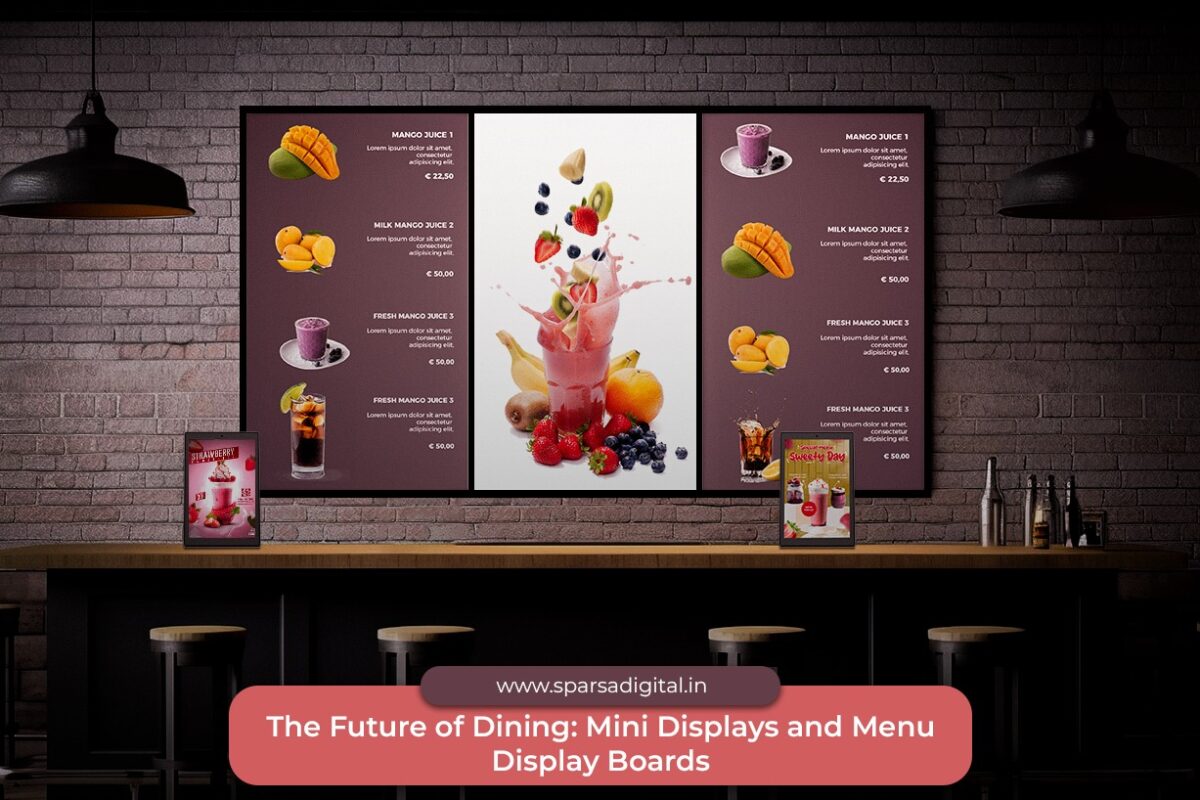
The Future of Dining Mini Displays and Menu Display Boards

The Future of Dining: Mini Displays and Menu Display Boards

Introduction

The digital transformation has taken the restaurant and hospitality industry by storm. Among the most notable innovations are mini displays (digital table tops) and menu display boards. These cutting-edge tools have revolutionized how restaurants engage with customers, making information more accessible and enhancing the overall dining experience.

The Rise of Mini Display (Digital Table Tops)

Mini displays, often referred to as digital table tops, have become an integral part of modern dining experiences. These compact yet powerful devices allow customers to browse the menu, place orders, and even make payments without requiring direct interaction with waitstaff. Such automation enhances efficiency and improves customer satisfaction by reducing wait times.
Restaurants, cafes, and even fast-food chains are investing in digital table tops to offer a more interactive and engaging experience. They not only provide a modern touch but also serve as an effective marketing tool, displaying promotions and personalized recommendations to customers.

Menu Display Boards: A Digital Revolution

Traditional printed menus are gradually being replaced by menu display boards, which are digital screens showcasing the restaurant’s offerings. These displays are commonly found at quick-service restaurants, coffee shops, and even fine-dining establishments. They allow for real-time updates, ensuring that menus remain accurate and appealing.
With dynamic content, menu display boards can highlight special offers, combo deals, and even high-margin items, influencing customer purchasing decisions. The digital format eliminates the need for constant reprinting, reducing costs and improving sustainability.

Check Our Menu board Product Below

Benefits of Using Digital Menu Displays

Improved Customer Experience
Digital displays provide customers with visually appealing and easy-to-read menus. They can feature high-resolution images, animations, and videos that make food items more enticing. The interactive nature of mini displays (digital table tops) further enhances engagement, offering a seamless ordering experience.
Easy Content Management
One of the biggest advantages of digital menu solutions is the ability to update content in real time. Restaurant owners can quickly modify menu items, prices, or promotions without incurring additional printing costs. Whether introducing seasonal specials or modifying ingredients, menu display boards ensure that information remains current.

Enhanced Marketing Opportunities
Digital signage allows for targeted advertising and promotions. Mini displays (digital table tops) can be programmed to display promotions based on time of day, customer preferences, or inventory levels. Restaurants can also use them to upsell items by suggesting add-ons or meal upgrades.

How to Choose the Right Digital Table Top and Menu Display Board

When selecting a mini display (digital table top) or menu display board, consider the following factors:
Screen Size & Resolution: Ensure that the display is clear and easy to read.
Interactivity: Some digital table tops come with touchscreen capabilities for enhanced engagement.
Software & Integration: Choose a system that integrates well with your POS (Point of Sale) system.
Durability: Displays in a restaurant setting should be sturdy and resistant to spills or damage.
Customization: The ability to tailor content to reflect your brand’s identity is essential.

As technology advances, digital displays will continue to evolve. Some emerging trends include:
AI-Powered Menus: Personalized recommendations based on customer history and preferences.
Voice Command Integration: Enabling hands-free interaction with mini displays (digital table tops).


Augmented Reality (AR): Allowing customers to visualize dishes in 3D before ordering.
Contactless Payments: Further streamlining the ordering and payment process.

Conclusion

The adoption of mini displays (digital table tops) and menu display boards is transforming the restaurant industry. These digital solutions enhance customer experience, streamline operations, and provide powerful marketing tools. As technology continues to evolve, businesses that leverage these innovations will stay ahead of the competition.
Furthermore, digital menu solutions contribute to sustainability by reducing paper waste and printing costs. They also provide an opportunity to gather valuable customer insights through data analytics, allowing businesses to refine their offerings and tailor promotions effectively. With the integration of AI and machine learning, future digital menus will be even more intuitive, making dining experiences more seamless and personalized.
Investing in mini displays (digital table tops) and menu display boards is not just about keeping up with trends; it’s about creating an enhanced and engaging experience that drives customer satisfaction and business growth. By embracing these advancements, restaurants can build stronger relationships with their customers while optimizing their operations for maximum efficiency.

FAQs

1. What are the benefits of using digital table tops in restaurants?
Mini displays (digital table tops) improve efficiency, reduce wait times, and offer an interactive experience. They also help with upselling and targeted marketing.
2. Are digital menu display boards expensive to maintain?
While the initial investment may be higher than traditional menus, digital menu boards reduce printing costs and allow for instant updates, making them cost-effective in the long run.
3. Can digital table tops integrate with existing POS systems?
Yes, many mini displays (digital table tops) are designed to integrate seamlessly with modern POS systems, ensuring smooth operations.
4. Do digital menus improve sales?
Yes, menu display boards can highlight promotions, suggest add-ons, and display high-margin items, influencing customer decisions and boosting sales.
5. Are digital menus suitable for all types of restaurants?
Yes, from fast food to fine dining, digital menus and mini displays (digital table tops) can enhance operations and customer experience across various restaurant types.
By incorporating mini displays (digital table tops) and menu display boards, businesses can improve service efficiency, enhance engagement, and ultimately increase profitability.

Digital Standee and Menu Boards

Revolutionizing Communication with Digital Standee and Menu Boards

As businesses adapt to a more digital and customer-centric environment, the use of digital standees and digital menu boards has gained immense popularity. These tools have become essential in enhancing customer experiences, boosting engagement, and streamlining communication, particularly in the retail, hospitality, and food service industries. By replacing traditional paper or static signage with dynamic, engaging digital displays, businesses can effectively capture customer attention and deliver real-time content that’s both visually appealing and informative.

What Are Digital Standees and Digital Menu Boards?

Digital standees are self-standing digital displays used for advertising, promotions, and event information. These sleek, portable displays can be placed in high-traffic areas such as retail stores, malls, and events to grab attention and engage passersby. The key advantage of digital standees is their ability to display vibrant, eye-catching content like videos, images, and animations, creating a more dynamic and interactive experience than traditional posters or banners.

Digital menu boards, on the other hand, are electronic displays used to showcase menus, pricing, and promotions in restaurants, cafes, fast food chains, and other food service establishments. These digital boards replace traditional paper or chalkboard menus with dynamic screens that can be updated remotely, offering businesses flexibility in managing their content. Digital menu boards can display not only menu items and prices but also special offers, nutritional information, or even customer testimonials in a visually appealing manner.

Why Digital Standees and Digital Menu Boards Are Gaining Popularity

  1. Enhanced Customer Engagement
    Digital standees and menu boards create more engaging and interactive experiences for customers. The ability to display moving images, videos, and real-time content allows businesses to capture attention quickly. For instance, a digital standee in a shopping mall could display a short video promoting a sale or upcoming event, which is far more likely to grab attention than a static poster. Similarly, digital menu boards in restaurants can highlight popular dishes, showcase promotions, or even display customer reviews to entice diners.
  2. Real-Time Content Updates
    One of the most significant advantages of digital signage is the ability to update content in real-time. Whether it’s changing a menu item, adding a promotional offer, or updating event details, digital standees and menu boards allow businesses to make instant updates from a central control system. For instance, a digital menu board in a restaurant can display a new seasonal dish or adjust pricing without the need for a physical reprint of menus, which can be time-consuming and costly.
  3. Cost Efficiency
    Traditional printed menus and signage require regular updates, which can be costly due to printing, shipping, and the labor required to change displays. By adopting digital standees and digital menu boards, businesses save money in the long run. The cost of hardware and software installation is offset by the elimination of printing costs, while the flexibility to update content remotely further reduces overhead.
  4. Improved Customer Experience
    Digital signage solutions like digital standees and menu boards improve the overall customer experience. In a restaurant, for example, digital menu boards can highlight high-margin or seasonal dishes, provide nutritional information, or display enticing images of food, all of which can help customers make decisions faster. Similarly, digital standees at an event can provide information in an easily digestible format, ensuring that visitors are well-informed without feeling overwhelmed by static posters or flyers.

Case Study: Starbucks Enhances Customer Engagement with Digital Menu Boards

Starbucks, one of the world’s most recognizable coffeehouse chains, is known for its innovative approach to customer experience. In recent years, the company has rolled out digital menu boards across many of its stores to streamline ordering, improve the aesthetic of their locations, and create a more engaging atmosphere for customers.

Starbucks initially implemented digital menu boards in select high-traffic stores, particularly in locations where customers were likely to make quick decisions, such as busy city centers or malls. The digital boards allowed Starbucks to display high-definition images of beverages, showcase limited-time promotions, and update menu items in real time, all with the click of a button.

The impact of the digital menu boards has been impressive. Not only have customers reported a better experience due to clearer, more visually engaging menus, but Starbucks has also been able to adjust pricing and promotions instantly, reducing errors and improving operational efficiency. For instance, the company can promote special offers, like seasonal drinks or bundled meal deals, and update the boards remotely across all its stores nationwide.

Furthermore, digital menu boards have helped Starbucks create a more modern and consistent brand image. With digital displays, the coffeehouse chain has been able to showcase vibrant imagery of its products, reinforcing its premium offering and aligning with the brand’s aspirational image. The flexibility and scalability of the system have allowed Starbucks to roll out digital signage quickly and efficiently across its global locations.

FAQs About Digital Standees and Digital Menu Boards

Q1: How do digital standees work?

A1: Digital standees are self-standing digital displays that showcase videos, animations, or static images to advertise products, events, or promotions. They typically run on a content management system (CMS), which allows businesses to remotely manage and schedule content. The standees can be set up in high-traffic areas to attract attention and engage potential customers.

Q2: What are the advantages of using digital menu boards in restaurants?

A2: Digital menu boards provide numerous advantages for restaurants, including real-time content updates, enhanced customer engagement, and improved operational efficiency. They can showcase high-definition images of food, update prices or menu items instantly, and highlight promotional offers or seasonal specials. Digital boards also allow for easy customization and improve the overall aesthetic of the restaurant.

Q3: Are digital menu boards energy-efficient?

A3: Yes, digital menu boards are typically energy-efficient, especially when using LED technology. The low power consumption of modern displays helps businesses reduce their energy bills compared to traditional printed signs or posters.

Q4: Can I update the content on my digital signage remotely?

A4: Yes, most digital standees and digital menu boards come with a content management system (CMS) that allows you to update the content remotely. Whether it’s a promotion, price change, or seasonal update, you can make adjustments across multiple locations with ease, often from any internet-enabled device.

Conclusion

Digital standees and digital menu boards are leading the way in creating more dynamic, engaging, and efficient communication strategies for businesses across a wide range of industries. By leveraging these digital signage solutions, companies can not only improve their operational workflows but also enhance the customer experience, increase engagement, and drive sales.

Digital Standee, Digital Menu Board, and Digital Screens Revolutionizing QSR Businesses

Digital Standee, Digital Menu Board, and Digital Screens: Revolutionizing QSR Businesses

In today’s fast-paced world, where customers crave quick service, Quality Service Restaurants (QSRs) are constantly seeking ways to stay ahead of the curve. One of the most effective technological advancements reshaping the QSR industry is the introduction of digital standees, digital menu boards, and digital screens. These digital tools are not just a trend—they are fast becoming essential for streamlining operations, enhancing customer experiences, and driving sales.

The Rise of Digital in the QSR Industry

The modern QSR landscape is evolving rapidly. With customer expectations at an all-time high, restaurants need to offer more than just great food and fast service. Customer experience, branding, and efficiency are key factors that separate successful restaurants from their competitors. One of the most impactful ways QSRs are improving these elements is by incorporating digital technologies like digital standees, digital menu boards, and digital screens into their operations.

Digital Standee: A Dynamic Way to Engage Customers

A digital standee is a sleek, freestanding screen that is often placed in high-traffic areas within the restaurant. These standees can display a variety of content, from promotional ads to menu updates, all in vibrant, high-definition visuals. They are eye-catching and can be used to enhance the ambiance of the restaurant, while also drawing the attention of customers to new or special offers.

The benefits of digital standees in QSRs include:

  • Attracting attention: With the right content, digital standees can immediately capture the attention of customers, especially in busy environments.
  • Branding opportunities: These standees are an excellent tool for reinforcing brand identity through dynamic visuals.
  • Real-time content updates: Promotions, special deals, and limited-time offers can be updated instantly, allowing restaurants to respond quickly to customer demands or trends.
  • Customization: Digital standees offer high customization with the ability to tailor content based on time of day, season, or even customer demographics.

Digital Menu Board: Modernizing the Ordering Experience

In the fast-paced world of QSRs, the menu board plays a critical role in guiding customers through their decisions quickly and efficiently. Traditional static menu boards are now being replaced by digital menu boards, offering a more modern, flexible, and efficient way to display food and drink options.

Here are some key advantages of digital menu boards:

  • Ease of updating: Digital menu boards allow QSRs to update their menu in real-time without the need for costly printouts or labor-intensive changes. Whether it’s a new product launch or a limited-time offer, everything can be updated on the spot.
  • Improved readability: With digital boards, items can be displayed in high-definition images, with clear, legible fonts, and even motion graphics to highlight popular dishes or deals.
  • Dynamic content display: Restaurants can alternate between menu items, nutritional information, promotions, and even order instructions to keep the display fresh and engaging.
  • Adaptability: Digital menu boards can easily be tailored to various locations and formats. Whether you have a single board above the counter or multiple screens placed around the restaurant, the content can be displayed according to the space and the audience.

Digital Screens: Enhancing the Dining Experience

Digital screens in QSRs go beyond just being an effective communication tool—they are also a way to enhance the customer experience. These screens can be integrated into various touchpoints, such as self-service kiosks, drive-thru lanes, or even in-store entertainment. They provide customers with an intuitive and interactive experience that goes hand-in-hand with fast food service.

Some key applications of digital screens in QSRs include:

  • Self-ordering kiosks: Customers can browse the menu, customize their orders, and pay all through digital screens. This reduces human error, speeds up the ordering process, and provides an easy, contactless experience.
  • In-store entertainment: In addition to displaying menus, digital screens can also show entertainment content such as news, social media feeds, or localized advertisements. This keeps customers entertained while they wait and enhances their overall experience.
  • Drive-thru integration: Digital screens at drive-thru lanes display real-time menus and promotions to customers, making it easier for them to decide what they want before reaching the speaker box.

Together, these innovations foster a more streamlined and enjoyable experience for both customers and employees, creating a win-win scenario for QSRs.

Why QSRs Should Embrace Digital Technologies

The benefits of incorporating digital standees, digital menu boards, and digital screens in QSRs are numerous. Here’s why restaurants should invest in digital technology:

  1. Enhanced Customer Experience: Digital solutions provide customers with an interactive, engaging experience that can make their visit more enjoyable and memorable.
  2. Increased Efficiency: With real-time updates, dynamic content, and self-ordering features, QSRs can reduce wait times and streamline operations.
  3. Cost Savings: Over time, digital solutions can help reduce costs associated with printing new menu items, promotional materials, and signage.
  4. Marketing Opportunities: Digital screens and standees are excellent for showcasing promotions, seasonal offers, and new product launches, keeping your marketing efforts fresh and engaging.

FAQ on Digital Standee, Digital Menu Board, and Digital Screen for QSRs

1. How much does a digital standee cost?

The cost of a digital standee can vary depending on the size, resolution, and features (such as touch functionality or custom software). Generally, prices range from $1,000 to $4,000 per unit. However, the return on investment is often high due to improved customer engagement and promotional opportunities.

2. Can I use digital menu boards for upselling?

Yes, digital menu boards are ideal for upselling. You can display high-margin items, popular combos, or special offers to encourage customers to purchase additional items. The ability to visually showcase these items makes it easier to capture customer interest.

3. How easy is it to update content on digital screens and menus?

Updating content on digital screens and menu boards is typically done through a centralized software platform. This allows for real-time changes, whether it’s adjusting pricing, adding new items, or showcasing promotions. You don’t have to worry about printing or physically changing menu boards anymore.

5. What are the benefits of interactive digital screens in drive-thru lanes?

Interactive digital screens at drive-thru lanes can improve order accuracy, speed up the process, and provide a more engaging experience. Customers can see a live display of their order as it’s being entered, which helps reduce mistakes and enhances customer satisfaction.

Conclusion

The integration of digital standees, digital menu boards, and digital screens into QSR operations is changing the way restaurants interact with customers, streamline operations, and market their products. By adopting these digital technologies, QSRs can stay competitive, boost sales, and deliver a modern, engaging experience that today’s consumers expect. With the ability to dynamically update content and offer a more personalized experience, these digital solutions represent the future of the fast-food industry—one where technology and convenience meet to create a better overall dining experience.

Here’s-How-Digital-Menu-Boards-and-Signage-Solutions-for-Restaurants-Can-Transform-the-Overall-Dining-Experience

Here’s How Digital Menu Boards and Signage Solutions for Restaurants Can Transform the Overall Dining Experience

In today’s fast-paced, tech-savvy world, restaurants are increasingly turning to digital menu boards and advanced signage solutions for restaurants to enhance customer experience, streamline operations, and elevate their branding. As the dining industry becomes more competitive, restaurants must embrace innovative technologies to stay ahead of the curve, and digital signage offers an incredible way to improve communication, engagement, and efficiency.

This blog will explore how digital menu boards and comprehensive signage solutions for restaurants are transforming the dining industry. We will look at the advantages they bring to restaurants, how to implement them effectively, and the best practices for using these tools to boost business growth.

What Are Digital Menu Boards?

Digital menu boards are electronic displays that replace traditional printed menus with dynamic, customizable, and easily updateable digital screens. These boards are often seen in quick-service restaurants, casual dining establishments, and even high-end eateries. They display food and drink items, prices, and promotional content in real-time and can be updated remotely using digital signage software.

Typically, digital menu boards use LED or LCD screens that present high-quality visuals of menu items, along with engaging videos, promotions, or even nutritional information. They come in various sizes and configurations, and can be tailored to fit the needs of a specific restaurant, whether for indoor or outdoor use.

The Benefits of Digital Menu Boards for Restaurants

1. Increased Efficiency and Convenience

One of the major benefits of digital menu boards is the increased efficiency they bring to restaurant operations. With traditional printed menus, updating prices, promotions, or items requires reprinting and physically changing the menus, which can be time-consuming and costly. Digital menu boards, on the other hand, can be updated instantly through digital signage software. Whether you’re adjusting prices due to market fluctuations, adding a new dish to the menu, or promoting a limited-time offer, digital menu boards allow for quick and seamless updates across all displays.

2. Better Customer Engagement

Digital menu boards help engage customers by providing a visually appealing and interactive experience. High-quality images or videos of food items can tempt diners, showcasing their favorite dishes in vivid detail. Videos of chefs preparing food or promotional videos can add an extra layer of interest and excitement to the dining experience.

Furthermore, digital menus can rotate or highlight certain menu items based on the time of day, customer preferences, or even external factors like weather. For example, a restaurant could promote breakfast items in the morning, lunch specials in the afternoon, and evening cocktails or desserts later in the day. This level of customization allows restaurants to engage customers with dynamic content, leading to better decision-making and higher sales.

3. Improved Branding and Aesthetic Appeal

Digital menu boards also play a key role in strengthening a restaurant’s brand identity. Restaurants can customize the look and feel of their digital signage to match their brand colors, logos, and fonts, creating a cohesive and polished visual identity. This reinforces the overall ambiance of the restaurant, whether it’s modern and sleek, casual and friendly, or upscale and sophisticated.

Moreover, digital menu boards allow for creative displays and engaging content that printed menus simply can’t replicate. You can showcase promotions, social media feeds, or upcoming events seamlessly, enhancing the overall customer experience and making the space more interactive and appealing.

4. Efficient Space Management

For many restaurants, space is a premium. Digital menu boards allow for efficient space management by eliminating the need for bulky printed menus or posters. They can be strategically placed to fit in spaces that otherwise might not have been used effectively, such as the back wall of a counter or near the ordering area. Moreover, digital screens can display multiple menu categories at once, allowing restaurants to display more information in less space and improving the overall layout of the dining area.

5. Cost Savings Over Time

While the initial investment in digital menu boards can be substantial, they save money in the long term. Traditional printed menus need constant updating, reprinting, and replacement, which adds up over time. With digital signage, you can update content remotely and without any printing costs, saving your restaurant valuable resources. Furthermore, digital displays can help drive sales by promoting high-margin items or upselling, which improves profitability.

6. Better Communication with Customers

Effective communication with customers is essential in any restaurant. Digital menu boards provide a clear and concise way to communicate essential information such as menu items, prices, and promotions. But they also allow you to go beyond the basics and deliver a more personalized experience. For example, some digital menus can show the nutritional value of menu items, allergen information, or even fun facts about dishes, enhancing the overall dining experience and supporting customers in making informed decisions.

How Digital Signage Solutions Improve Restaurant Operations

In addition to digital menu boards, comprehensive signage solutions for restaurants offer a range of other tools that improve restaurant operations. These solutions include digital displays used for wayfinding, promotional messaging, event listings, and even customer feedback systems.

1. Wayfinding and Directing Customers

Digital signage can be placed strategically around the restaurant to help customers navigate the space easily. This is particularly useful in larger restaurants, food courts, or venues with multiple sections. Digital wayfinding signs can guide customers to the restrooms, order counters, or specific dining areas, improving the overall customer experience and reducing confusion.

In addition, for restaurants in busy environments like airports or shopping malls, digital signage helps customers find the restaurant, provides details about the menu, and even promotes special offers. This functionality enhances the customer experience by helping diners feel comfortable and informed in their surroundings.

2. Promotions and Upselling

Effective upselling is an art in the restaurant industry, and digital signage solutions make it easier than ever. Digital displays can be used to promote high-margin items, combo deals, or special offers. The ability to update content in real-time ensures that promotional messages are always fresh and relevant to your current business goals. For instance, a restaurant could showcase its seasonal dishes or suggest add-ons (such as a dessert or a drink) based on customer purchasing behavior.

Furthermore, digital signage solutions allow restaurants to run targeted ads that can be tailored to specific times of day, weather conditions, or customer demographics. For example, offering a hot drink special on a cold day or highlighting a summer salad during warmer weather can make promotions more relevant and drive sales.

3. Customer Feedback and Interaction

Many modern signage solutions for restaurants allow customers to provide feedback instantly through interactive displays or QR codes. Feedback systems can be integrated into digital signage, where customers can rate their experience, participate in loyalty programs, or share reviews directly from their table. This gives restaurants valuable insights into customer satisfaction and provides them with opportunities to make improvements on the spot.

4. Employee Communication and Staff Scheduling

Digital signage isn’t just for customers—it’s also a valuable tool for internal communication. Digital signage solutions in staff areas can display daily specials, staff schedules, training materials, and health and safety protocols. This ensures that all employees are on the same page, leading to more efficient operations and better customer service. By keeping staff informed in real-time, digital signage can help streamline daily restaurant operations.

Best Practices for Implementing Digital Menu Boards and Signage Solutions

  1. Keep the Content Simple and Visual


The beauty of digital menu boards lies in their visual appeal. Use high-quality images or videos of food items and keep the text simple and easy to read. Too much text can overwhelm customers and take away from the visual appeal of the display. Focus on key messages and highlight items that will drive sales.

  1. Regularly Update Content


Regularly refresh your digital signage solutions to ensure your content stays relevant. Adjust promotions, menu offerings, and pricing as needed. Digital signage software makes it easy to update multiple screens at once, so be sure to keep your content up-to-date.

  1. Optimize for Your Space


Consider the layout of your restaurant when placing digital menu boards. Ensure that they are visible from various angles and that they fit seamlessly into your restaurant’s aesthetic. In high-traffic areas, larger screens may be appropriate, while smaller screens may be better suited for individual tables or counters.

  1. Incorporate Interactivity


If possible, add interactive elements to your digital signage solutions, such as touchscreens or QR codes. This allows customers to engage with the content, place orders, or learn more about menu items, making the experience more enjoyable and personalized.

  1. Monitor Analytics and Adjust Strategies


Digital signage provides valuable analytics, such as customer interaction data and sales trends. Use this data to monitor how effective your digital menu boards and signage solutions are at driving sales, engagement, and customer satisfaction. Regularly assess performance and adjust strategies accordingly.

Conclusion

The integration of digital menu boards and comprehensive signage solutions for restaurants is changing the way dining establishments communicate with their customers. From increasing operational efficiency and improving customer engagement to enhancing brand visibility and upselling opportunities, digital signage is an invaluable tool for modern restaurants.

By leveraging the power of digital menu boards and interactive signage, restaurants can stay ahead of the competition, deliver an exceptional customer experience, and maximize their profitability. As technology continues to evolve, the role of digital signage will only become more prominent, offering endless opportunities for innovation and growth in the restaurant industry.

The Impact of Digital Signage for Restaurants and Digital Menu Boards for Cafes

Digital Signage for Restaurants & Digital Menu Boards for Cafes

In the rapidly evolving food and beverage industry, staying ahead of the competition requires innovative approaches to customer engagement and service efficiency. Digital signage for restaurants and digital menu boards for cafes have emerged as powerful tools to enhance the dining experience, streamline operations, and boost sales. This blog explores the benefits, applications, and future trends of digital signage and digital menu boards in the restaurant and cafe sectors.

The Evolution of Digital Signage for Restaurants

What is Digital Signage?

Digital signage refers to the use of digital displays, such as LCD, LED, or projection screens, to present information, advertisements, or multimedia content. In restaurants, digital signage can be used to display menus, promotions, and other relevant information in a visually appealing and dynamic manner.

The Rise of Digital Signage in the Restaurant Industry

Traditional static signage and printed menus are increasingly being replaced by digital alternatives. The adoption of digital signage in restaurants has been driven by the need for more flexible, engaging, and cost-effective ways to communicate with customers. Digital displays can be easily updated in real-time, reducing the need for reprinting and manual changes.

Benefits of Digital Signage for Restaurants

Enhanced Customer Experience

Digital signage enhances the customer experience by providing visually appealing and easily readable menus and promotions. Dynamic displays can capture the attention of customers, making it easier for them to browse the menu and make informed decisions.

Increased Sales and Upselling Opportunities

Digital signage allows for strategic placement of promotions and upselling opportunities. Restaurants can highlight special offers, new items, or combo deals to encourage customers to spend more. The visual appeal and real-time updates can significantly boost impulse purchases.

Improved Operational Efficiency

With digital signage, restaurants can streamline their operations by reducing the time and effort required to update menus and promotions. Changes can be made remotely and instantly across multiple locations, ensuring consistency and accuracy.

Better Brand Image

Modern, high-quality digital displays contribute to a contemporary and professional brand image. They can be customized to reflect the restaurant’s branding, creating a cohesive and attractive environment that enhances the overall dining experience.

Applications of Digital Signage in Restaurants

Menu Boards

Digital menu boards are one of the most common applications of digital signage in restaurants. They provide a dynamic and flexible way to display menu items, prices, and nutritional information. Digital menu boards can be customized to feature high-resolution images and videos, making the food look more appealing.

Promotional Displays

Restaurants can use digital signage to showcase special offers, seasonal promotions, and loyalty programs. These displays can be strategically placed near entrances, order counters, or dining areas to maximize visibility and impact.

Interactive Kiosks

Interactive kiosks equipped with digital screens allow customers to place orders, customize their meals, and make payments without waiting in line. This not only enhances the customer experience but also improves order accuracy and reduces wait times.

Entertainment and Information

Digital signage can also used to entertain and inform customers while they dine. Restaurants can display live sports, news, weather updates, or social media feeds to keep customers engaged. This can enhance the dining experience and encourage longer stays.

The Emergence of Digital Menu Boards for Cafes

What are Digital Menu Boards?

Digital menu boards are digital displays used to present menu items, prices, and promotions in cafes and other food service establishments. They replace traditional printed menus with dynamic and customizable content that can easily updated.

The Growing Popularity of Digital Menu Boards in Cafes

Cafes are increasingly adopting digital menu boards to keep up with the fast-paced and competitive nature of the industry. The flexibility, visual appeal, and operational benefits of digital menu boards make them an attractive option for cafe owners looking to enhance their service and customer experience.

Benefits of Digital Menu Boards for Cafes

Flexibility and Real-Time Updates

Digital menu boards offer unparalleled flexibility. Cafe owners can update menu items, prices, and promotions in real-time, allowing them to respond quickly to inventory changes, seasonal items, and customer preferences. This agility can lead to improved customer satisfaction and reduced food waste.

Enhanced Visual Appeal

High-resolution images and videos on digital menu boards can make food and beverages look more appealing, enticing customers to try new items or add extras to their orders. The visual appeal of digital displays can significantly influence purchasing decisions.

Increased Efficiency

Digital menu boards streamline the ordering process by clearly displaying menu items and prices, reducing the time customers spend deciding what to order. This can lead to shorter wait times and increased throughput, particularly during peak hours.

Sustainability

Digital menu boards reduce the need for printed menus, contributing to a more sustainable and environmentally friendly business model. This can appeal to eco-conscious customers and enhance the cafe’s reputation as a responsible business.

Applications of Digital Menu Boards in Cafes

Dynamic Menu Displays

Digital menu boards can feature rotating menus, daily specials, and limited-time offers. This dynamic content keeps the menu fresh and exciting, encouraging repeat visits and customer loyalty.

Customizable Order Screens

Cafes can use digital menu boards to allow customers to customize their orders. For example, customers can choose their preferred coffee blend, milk type, and add-ons, creating a personalized experience that enhances customer satisfaction.

Interactive Nutritional Information

Providing detailed nutritional information on digital menu boards can help customers make informed choices, catering to health-conscious patrons and those with dietary restrictions. This transparency can build trust and loyalty.

Engaging Promotions

Cafes can use digital menu boards to promote loyalty programs, new product launches, and seasonal offerings. Engaging animations and visuals can capture customers’ attention and drive participation in these promotions.

Integration with Mobile Technology

The integration of digital signage with mobile technology is a growing trend. Restaurants and cafes can use QR codes on digital displays to allow customers to access menus, place orders, and make payments through their smartphones. This seamless integration enhances convenience and reduces physical contact, an important consideration in the post-pandemic era.

Personalization

Advancements in technology are enabling more personalized digital signage experiences. Restaurants and cafes can use customer data to display personalized recommendations, offers, and greetings on digital screens. This level of personalization can enhance customer engagement and loyalty.

AI and Data Analytics

Artificial intelligence (AI) and data analytics are used to optimize digital signage content. AI can analyze customer behavior and preferences to determine the most effective content to display. Data analytics can provide insights into the performance of digital signage campaigns, helping businesses refine their strategies for maximum impact.

Interactive and Touchless Solutions

The demand for touchless solutions has increased, leading to the development of interactive digital signage that can controlled through gestures, voice commands, or mobile devices. This technology provides a safer and more hygienic way for customers to interact with digital displays.

Enhanced Visuals and Multimedia

The future of digital signage will see even more impressive visuals and multimedia content. Advances in display technology, such as 4K and 8K resolution screens, will provide stunningly clear and vibrant images. Additionally, the use of augmented reality (AR) and virtual reality (VR) can create immersive and engaging customer experiences.

Implementing Digital Signage and Digital Menu Boards

Assessing Your Needs

Before implementing digital signage or digital menu boards, it’s important to assess your specific needs and goals. Consider the size and layout of your establishment, your target audience, and the type of content you want to display.

Choosing the Right Technology

Select the appropriate digital signage technology based on your requirements. Factors to consider include screen size, resolution, brightness, and interactivity. Work with a reputable vendor who can provide reliable hardware and software solutions.

Content Strategy

Develop a content strategy that aligns with your brand and objectives. Plan the type of content you will display, including menus, promotions, and entertainment. Ensure that the content is visually appealing, relevant, and regularly updated.

Installation and Maintenance

Proper installation and maintenance are crucial for the success of your digital signage. Ensure that the screens are installed in strategic locations for maximum visibility. Regularly maintain the equipment and update the software to ensure optimal performance.

Measuring Success

Track the performance of your digital signage and menu boards using analytics tools. Monitor metrics such as customer engagement, sales, and feedback to evaluate the effectiveness of your digital signage strategy. Use this data to make informed decisions and continuously improve your approach.

Conclusion

Digital signage for restaurants and digital menu boards for cafes are transforming the way businesses communicate with their customers. These technologies offer numerous benefits, including enhanced customer experience, increased sales, improved efficiency, and sustainability. By adopting digital signage and menu boards, restaurants and cafes can stay ahead of the competition, create a modern and engaging environment, and drive business growth. Embrace the future of dining with innovative digital solutions that captivate and delight your customers. Wondering where to start? You are just at the right place. Connect with our experts at Sparsa Digital, and kickstart your journey today!

Enhancing Dining Experiences The Evolution of Digital Menu Boards and Signage in Restaurants

The Evolution of Digital Menu Boards and Signage in Restaurants: Enhancing Dining Experiences

In the ever-evolving realm of hospitality, restaurants are constantly seeking innovative ways to elevate the dining experience for their patrons. One such innovation that has gained widespread adoption in recent years is the integration of digital menu boards and signage. These dynamic displays not only modernize the environment but also offer benefits in terms of flexibility, efficiency, and customer engagement. In this blog, we delve into the evolution of digital menu boards, exploring their impact on operations and customer satisfaction.

Step into a modern restaurant, and you’re likely to encounter vibrant displays adorning the walls, showcasing mouth-watering dishes and promotions. Gone are the days of static printed menus and traditional chalkboards. Today’s diners expect immersive digital experiences that captivate their attention and enhance their dining journey. Digital menu boards have emerged as powerful tools under digital signage for restaurants to achieve these objectives. These help them revolutionize how they communicate with customers and manage their operations.

The Rise of Digital Menu Boards

The concept of digital menu boards first gained prominence in the fast-food industry, where speed of service is paramount. In fast-food chains, digital menu boards enable real-time updates of menu items, pricing, and promotions across multiple locations. This ensures consistency and accuracy in messaging. However, the benefits of digital menu boards extend far beyond fast food. This includes upscaling restaurants and casual dining establishments alike embracing this technology to enhance their brand image and customer experience.

Benefits of Digital Menu Boards for Restaurants

  1. Dynamic Content: Unlike static printed menus, digital menu boards allow restaurants to showcase dynamic content such as high-resolution images, videos, and animations. This visual richness captures the attention of diners and entices them to explore menu offerings in greater detail.
  2. Real-Time Updates: With digital menu boards, restaurants can update menu items, pricing, and promotions without the need for reprinting or manual changes. This agility enables restaurants to respond quickly to changes in inventory, seasonal ingredients, or market trends.
  3. Customization and Personalization: Digital menu boards offer unparalleled flexibility in terms of customization and personalization. Restaurants can tailor content based on factors. Such as time of day, day of the week, or customer demographics, ensuring relevant messaging to different audience segments.
  4. Enhanced Upselling Opportunities: Interactive features such as suggestive selling prompts and upsell prompts can be integrated into digital menu boards. This can help to encourage customers to explore additional menu items or upgrades. This strategic merchandising approach can boost average check sizes and drive incremental revenue.
  5. Streamlined Operations: Digital menu boards streamline operational processes by centralizing menu management and eliminating the need for manual updates. This frees up staff time and resources, allowing them to focus on delivering exceptional service to guests.
  6. Brand Consistency: Digital menu boards enable consistent branding across multiple locations, ensuring that the restaurant’s identity and messaging remain cohesive. This consistency builds brand recognition and fosters trust among customers.

Digital Signage for Restaurants:  Beyond the Menu

While digital menu boards are a focal point of restaurant digital signage, their application extends beyond displaying menu items. Restaurants are leveraging digital signage to enhance various aspects of the dining experience, including:

  1. Interactive Wayfinding: Digital signage can serve as interactive wayfinding tools. Like guiding guests to their tables or directing them to different areas of the restaurant, such as restrooms or spaces.
  2. Entertainment and Ambiance: Digital displays can be used to entertain guests with content such as live sports events, chef interviews, or culinary tutorials. Additionally, dynamic lighting effects and ambient visuals can enhance the overall ambiance of the dining area.
  3. Promotional Displays: In addition to showcasing menu items, digital signage can be used to promote special events, happy hour deals, or promotions. Eye-catching visuals and animated graphics help grab the attention of diners and drive traffic during off-peak hours.
  4. Customer Feedback and Surveys: Digital signage kiosks can facilitate customer feedback collection and surveys, allowing restaurants to gather valuable insights into guest satisfaction.
  5. Digital Ordering and Payment: Some restaurants are integrating digital signage with ordering and payment systems, enabling guests to place orders and settle bills directly from their tables. This self-service approach enhances convenience and expedites the dining process.

Implementation Considerations

While the benefits of digital menu boards and signage are clear, their successful implementation requires careful planning and consideration of various factors:

  1. Hardware and Software Selection: Choosing the right hardware components and digital signage software is crucial for achieving optimal performance and reliability. Factors to consider include display quality, durability, connectivity options, and scalability.
  2. Content Strategy: Developing a compelling content strategy is essential for maximizing the impact of digital menu boards and signage. Restaurants should invest in high-quality visuals, engaging videos, and relevant messaging that aligns with their brand identity and marketing objectives.
  3. Integration with POS Systems: Seamless integration with point-of-sale (POS) systems is necessary to ensure accurate pricing and inventory management. Digital signage for restaurants must be selected on the basis that it offers compatibility with their existing POS infrastructure.
  4. Staff Training and Support: Proper training and support are essential to empower staff to manage and operate digital menu boards effectively. Training programs should cover content management, troubleshooting procedures, and best practices for maximizing engagement.
  5. Compliance and Regulations: Restaurants must ensure compliance with relevant regulations and guidelines governing digital signage, including accessibility standards and data privacy regulations. Failure to comply with these requirements can result in legal and reputational risks.

The Future of Digital Signage for Restaurants

As technology continues to evolve, the future of restaurant digital signage holds exciting possibilities. Emerging technologies such as augmented reality (AR), artificial intelligence (AI) are poised to further enhance the interactivity of digital displays. AR-enabled menus could allow diners to visualize menu items in 3D or provide immersive dining experiences through gamification and storytelling.

Furthermore, the integration of AI-driven analytics and customer engagement platforms enables restaurants to gather actionable insights from digital signage interactions. By analyzing customer behavior and preferences, restaurants can tailor content and promotions in real-time, optimizing the dining experience for guests.

Conclusion

Digital menu boards and signage have emerged as tools for modern restaurants seeking to differentiate themselves in a competitive landscape. By leveraging dynamic content, real-time updates, and interactive features, restaurants can create immersive dining experiences that captivate guests. As technology continues to evolve, the future of restaurant digital signage holds tremendous potential to reshape the way we dine at food establishments.

Revolutionizing Restaurant Experience with Digital Menu Boards

Revolutionizing Restaurant Experience with Digital Menu Boards

In the competitive landscape of the restaurant industry, establishments are constantly seeking innovative ways to attract customers, enhance their dining experience, and streamline operations. Digital menu boards and display systems have emerged as transformative tools, offering dynamic and engaging ways to present menu items, promotions, and brand messaging. This blog explores the significance, functionalities, and advantages of digital menu boards and display systems in restaurants, shedding light on their impact on customer engagement, operational efficiency, and overall success.

Key Takeaways

  • Digital display boards for restaurants transform how eateries showcase menus, promote specials, and engage customers.
  • These boards offer dynamic content, real-time updates, and integration with POS systems to enhance operational efficiency.
  • Restaurants can use digital display boards in various settings such as waiting areas, bars, and outdoor spaces to promote their brand.
  • Interactive features on digital display boards entertain customers and communicate important information, enhancing the dining experience.
  • Overall, digital display boards for restaurants help establishments stand out, boost customer loyalty, and drive business growth.

Understanding Digital Menu Boards

Digital menu boards are electronic displays that replace traditional static menus with dynamic, visually appealing presentations of menu items, prices, and promotions. These displays utilize technologies such as LCD, LED, or projection screens to showcase content in vibrant colors and high resolution. Unlike printed menus, digital menu boards offer flexibility, allowing restaurant owners to update prices, descriptions, and images in real-time through a central content management system.

Key Features of Digital Menu Boards

  • Dynamic Content: Digital menu boards enable restaurants to showcase their menu items with eye-catching visuals, enticing animations, and mouth-watering images. This dynamic presentation captures customers’ attention, increases engagement, and stimulates appetite, leading to higher sales and customer satisfaction.
  • Real-time Updates: With digital menu boards, restaurants can instantly update menu items, prices, and promotions without the need for printing and distributing new menus. Whether it’s adding seasonal specials, adjusting prices, or promoting limited-time offers, updates can be made remotely and reflected across all displays simultaneously. 
  • Dayparting and Scheduling: Digital menu boards allow restaurants to schedule content based on time of day or day of the week, optimizing menu visibility and relevance. For example, breakfast items can be highlighted in the morning, while dinner specials take center stage in the evening, maximizing sales opportunities and customer engagement.
  • Integration with POS Systems: Advanced digital menu board solutions integrate seamlessly with point-of-sale (POS) systems, ensuring accuracy and consistency between menu displays and ordering systems. This integration simplifies menu management, minimizes errors, and enhances operational efficiency.

Applications of Digital Menu Boards

  • Quick-Service Restaurants (QSRs): Fast-food chains and QSRs leverage digital menu boards to streamline the ordering process, promote combo meals, upsell add-on items, and introduce new menu offerings. These displays enhance customer convenience, reduce perceived wait times, and drive incremental revenue.
  • Casual and Fine Dining Establishments: Restaurants in the casual and fine dining segments use digital menu boards to elevate the dining experience, showcase chef-inspired dishes, and communicate wine pairings or tasting menus. These displays complement the ambiance, reinforce branding, and contribute to a memorable dining experience.
  • Food Trucks and Pop-up Restaurants: Mobile food vendors and pop-up restaurants utilize digital menu boards to attract attention, communicate menu options, and engage customers in dynamic outdoor environments. These displays enhance visibility, facilitate quick decision-making, and drive foot traffic to the establishment.

Understanding Digital Display Boards for Restaurants

In addition to these boards, restaurants can benefit from deploying digital display boards for various purposes beyond menu presentation. These versatile displays, often referred to as digital signage or display systems, serve multiple functions such as promoting specials, showcasing social media feeds, displaying entertainment content, and providing interactive experiences for customers.

Features of Digital Display Boards for Restaurants

  • Brand Promotion: Digital display boards for restaurants enable them to reinforce their brand identity, communicate their values, and showcase their unique offerings through branded content, logos, and imagery. Consistent branding across all digital displays fosters brand recognition and loyalty among customers.
  • Promotions and Special Offers: Restaurants use digital display boards to promote daily specials, happy hour deals, loyalty programs, and upcoming events. Eye-catching visuals and compelling messaging attract attention, drive impulse purchases, and encourage repeat visits from patrons.
  • Entertainment and Engagement: Digital display boards for restaurants can help entertain customers with engaging content such as trivia games, live sports broadcasts, social media feeds, and interactive experiences. These displays create a lively atmosphere, encourage social interaction, and prolong dwell time, leading to enhanced customer satisfaction and loyalty.
  • Customer Communication: Digital display boards serve as platforms for communicating important information to customers, such as safety protocols, hygiene practices, and contactless ordering options. Clear and concise messaging instills confidence, addresses customer concerns, and fosters a positive dining experience.

Applications of Digital Display Boards

  • Waiting Areas and Lobbies: Restaurants use digital display boards in waiting areas and lobbies to entertain guests with digital signage content, showcase menu highlights, and provide estimated wait times. These displays reduce perceived wait times, keep guests informed, and set the tone for a pleasant dining experience.
  • Bar and Lounge Areas: Bars and lounges incorporate digital display boards to promote drink specials, cocktail menus, and upcoming entertainment performances. These displays create a vibrant atmosphere, encourage impulse purchases, and facilitate social interaction among patrons.
  • Outdoor Dining Spaces: Restaurants with outdoor dining spaces leverage digital display boards to extend their brand presence, communicate menu offerings, and create immersive dining experiences. Weather-resistant displays withstand outdoor elements and enhance visibility, attracting passersby and enticing them to dine al fresco.

Conclusion

Digital menu boards and display systems have revolutionized the restaurant industry, offering unprecedented opportunities to engage customers, promote offerings, and enhance brand experiences. Whether it’s showcasing dynamic menu presentations, promoting specials, or entertaining guests with interactive content, these digital solutions empower restaurants to stand out in a competitive market and drive business growth. By embracing technology and leveraging the capabilities of digital signage, restaurants can create memorable dining experiences that resonate with customers and keep them coming back for more.

Unleashing the Power of Digital Menu Boards and Display Boards for Restaurants

Unleashing the Power of Digital Menu Boards and Display Boards for Restaurants

Elevating Dining Experiences:

In the fast-paced digital age, the restaurant industry is witnessing a revolution in the way it presents and manages menus and displays. Traditional static menus are being replaced by innovative digital menu boards and display boards, ushering in a new era of efficiency, engagement, and enhanced customer experiences. In this comprehensive blog post, we will delve into the multifaceted applications of digital menu boards and display boards in restaurants, exploring their advantages, creative possibilities, and the transformative impact they have on the dining landscape.

The Digital Menu Boards Advantage:

A. Dynamic Content and Real-Time Updates

Traditional printed menus are static, making it challenging for restaurants to adapt to changes in real-time. Digital menu boards, however, offer dynamic content that can be updated instantly. This allows restaurants to make changes to their offerings, prices, and promotions with just a few clicks, ensuring that customers always have access to the latest information.

B. Interactive Elements for Customer Engagement

Digital menu boards open up new avenues for customer interaction. Incorporating interactive elements such as touchscreens or QR codes allows patrons to explore detailed information about dishes, view images, and even place orders directly from the table. This not only enhances the overall dining experience but also empowers customers with more control over their choices.

C. Integration with POS Systems

The seamless integration of digital menu boards with Point-of-Sale (POS) systems streamlines the ordering process. Orders placed through the digital menu are transmitted directly to the kitchen, reducing the chances of errors and improving order accuracy. This integration enhances operational efficiency, allowing staff to focus on providing exceptional customer service.

Transformative Visual Displays:

A. Captivating Imagery and Videos

One of the most significant advantages of digital display boards is the ability to showcase visually stunning content. High-resolution images and videos of dishes can be displayed, tantalizing customers’ taste buds and influencing their choices. This visual appeal adds a layer of sophistication to the dining environment, creating a more memorable experience for patrons.

B. Promotions and Specials

Digital display boards serve as dynamic platforms for promoting specials, discounts, and upcoming events. Restaurants can schedule specific promotions for different times of the day, enticing customers with targeted offers. This flexibility allows establishments to optimize their marketing strategies, driving sales during peak hours and promoting specific menu items.

C. Customization for Themes and Seasons

Restaurants can easily customize digital display boards to align with different themes or seasonal changes. Whether it’s a festive holiday menu, a seasonal promotion, or a themed event, digital display boards provide the flexibility to adapt the visual elements accordingly. This adaptability helps restaurants stay fresh and relevant, catering to changing customer preferences and expectations.

Operational Efficiency and Cost Savings:

A. Reduced Printing Costs and Waste

Traditional printed menus incur ongoing costs for design, printing, and reprinting whenever there are changes. Digital menu boards eliminate these expenses by allowing instant updates at minimal costs. This not only saves money but also contributes to environmental sustainability by reducing paper waste.

B. Streamlined Order Processing

The integration of digital menu boards with POS systems accelerates order processing. Orders are transmitted directly to the kitchen, minimizing the need for manual order entry. This streamlining of operations not only reduces the likelihood of errors but also enhances the overall efficiency of restaurant staff.

C. Data-Driven Decision Making

Digital menu boards generate valuable data on customer preferences, popular dishes, and sales trends. Analyzing this data provides actionable insights for restaurants to optimize their menu, pricing strategy, and promotional efforts. Informed decision-making based on real-time data contributes to long-term success and competitiveness in the market.

Overcoming Challenges and Ensuring Success:

A. Technical Challenges and Training

Implementing digital menu boards and display boards may pose initial technical challenges. Ensuring that staff members are adequately trained to operate and troubleshoot these systems is crucial. Providing ongoing support and training helps mitigate technical issues, ensuring a seamless transition to digital solutions.

B. Design Considerations for Readability

While the visual appeal is essential, ensuring that digital menus are readable and accessible is equally important. Factors such as font size, color contrast, and layout play a crucial role in enhancing readability. Striking the right balance between aesthetics and practicality is key to creating an effective digital menu.

C. Regular Content Updates

To maximize the impact of digital menu boards and display boards, it’s essential to keep content fresh and relevant. Regularly updating images, promotions, and seasonal offerings maintains customer interest and ensures that the digital displays remain an effective marketing tool. Establishing a content update schedule is vital for sustained success.

The Future of Dining:

A. Integration of AI and Personalization

The future of digital menu boards holds exciting possibilities with the integration of Artificial Intelligence (AI). AI algorithms can analyze customer preferences, order history, and behavior to provide personalized recommendations. This level of customization enhances the dining experience, making it more tailored to individual tastes.

B. Augmented Reality (AR) Enhancements

As technology continues to advance, the integration of augmented reality (AR) into digital menus is on the horizon. AR can overlay additional information, such as nutritional facts or interactive elements, onto the physical dining space, creating a more immersive and informative experience for customers.

C. Sustainability Initiatives

Restaurants are increasingly adopting sustainable practices, and digital menu boards align with this trend. As more establishments prioritize eco-friendly solutions, the reduced reliance on paper and the energy-efficient nature of digital displays contribute to sustainability goals.

Conclusion

In conclusion, the adoption of digital menu boards and display boards in restaurants represents a pivotal shift in the industry, offering a myriad of benefits ranging from enhanced customer experiences to operational efficiency and cost savings. The dynamic nature of digital solutions not only meets the demands of the modern consumer but also positions restaurants for future advancements in technology. As the dining landscape continues to evolve, embracing digital innovation becomes not just a choice but a strategic imperative for restaurants aiming to thrive in a competitive and tech-driven market.

Digital-Signage-for-Restaurants

How Digital Menu Boards and Digital Signage Will Revolutionize Restaurants

The Future of Dining:

The restaurant industry is experiencing a profound transformation, driven by the convergence of technology and consumer expectations. In this digital age, where information is instant and experiences are interactive, traditional paper menus and static signage are giving way to innovative solutions that enhance the dining experience. Enter digital menu boards and digital signage for restaurants, poised to be the game changers that redefine how we dine out. This blog explores how these technologies will shape the restaurant landscape in the coming years.

The Evolution of Dining Experience

Dining out has evolved beyond mere sustenance; it’s an experience. As diners become more tech-savvy and seek immersive experiences, restaurants need to adapt to cater to these changing preferences. This is where digital menu boards and digital signage come into play.

Digital Menu Boards: The Dynamic Menu Experience

  • Visual Appeal: Digital menu boards are visually striking, capable of displaying high-quality images and videos of dishes. This enhances the presentation of food items, making them more enticing and likely to trigger cravings.
  • Real-time Updates: One of the significant advantages of digital menu boards is the ability to update content in real time. Whether it’s changing prices, adding new items, or indicating sold-out dishes, these updates can be done remotely and instantly.
  • Promotions and Specials: Digital signage for restaurants can showcase daily specials, happy hour deals, and limited-time promotions on digital boards. This helps in driving upsells and increasing revenue by highlighting offerings that might otherwise go unnoticed.
  • Customization: Digital menu boards allow for easy customization based on factors like time of day, season, or customer preferences. For instance, breakfast items can be prominently displayed during morning hours, transitioning to lunch and dinner items later in the day.

Digital Signage: Transforming Ambiance and Communication

  • Enhanced Ambiance: Digital signage contributes to the overall ambiance of a restaurant. These displays can be used to create thematic environments, such as a cozy café setting or a vibrant bar atmosphere, enhancing the overall dining experience.
  • Entertainment and Engagement: Digital signage for restaurants can help to entertain guests while they wait for their orders. Displaying interactive content, trivia, or even live feeds can engage diners and make the wait time more enjoyable.
  • Storytelling and Branding: Digital signage for restaurants provides a platform to share an eatery’s story, its values, and its sourcing practices. This transparency can resonate with customers and build a stronger brand connection.
  • Real-time Information: Similar to digital menu boards, digital signage can provide real-time updates on events, news, or special promotions, ensuring that customers are well-informed.

The Game-Changing Potential

Personalized Dining Experiences

In the coming years, restaurants will harness the power of data to deliver personalized dining experiences. By integrating digital menu boards with customer data and preferences, restaurants can recommend dishes, drinks, or even portion sizes that align with individual tastes. Imagine walking into a restaurant, and your favorite dish is suggested based on your past orders and reviews. This level of personalization creates a sense of exclusivity and enhances customer loyalty.

Interactive Ordering and Customization

Interactive digital menu boards will enable customers to customize their orders with ease. Visualizing ingredient options, allergen information, and portion sizes in real time can empower diners to make informed choices. For instance, a customer could adjust their burger toppings, sauce choices, or sides, resulting in a tailor-made meal that perfectly suits their preferences.

Contactless Dining and Convenience

Recent global events have emphasized the importance of contactless experiences. Digital menu boards and signage align perfectly with this trend, as customers can simply scan QR codes to access menus and place orders using their smartphones. This eliminates the need for physical menus and minimizes contact points, enhancing both safety and convenience.

Upselling and Cross-Selling Opportunities

Digital menu boards can strategically suggest complementary items or upgrades, leading to increased average check sizes. For instance, if a customer orders a pizza, the digital menu board could display suggestions for appetizers, beverages, or desserts that pair well with their chosen dish. This upselling technique not only boosts revenue but also enriches the dining experience by guiding customers toward options they might enjoy.

Real-time Feedback Loop

Restaurants can leverage digital menu boards and signage to gather real-time feedback from customers. Through interactive features or surveys displayed on these screens, diners can provide insights into their experiences, helping restaurants fine-tune their offerings and improve service quality.

Conclusion

As the restaurant industry continues to evolve, adopting digital menu boards and digital signage is no longer a luxury but a necessity. The coming years will witness a paradigm shift in how customers interact with dining establishments. The seamless blend of technology and gastronomy will provide personalized experiences, streamlined processes, and a more engaging ambiance. Restaurants that embrace these changes will not only stay competitive but also create lasting impressions that resonate with the tech-savvy, experience-driven diners of tomorrow. From personalized recommendations to interactive ordering and beyond, the fusion of digital innovation and culinary artistry promises a future where every meal becomes an unforgettable experience.

Do you own a restaurant, or planning to do so? Embark on this very special journey with Sparsa Digital to move forward with the latest technologies in the industry. From increased profits to enhanced user experience, it does it all. Do not underestimate the power of digital signage for restaurants. Start now, before it’s too late. Contact our team today!

Digital-Billboard-Software

The Power of Digital Billboard Software

Captivating Audiences Using the Power of Digital Menu Boards and Digital Billboard Software

In the digital age, static menu boards and billboards are being replaced by dynamic and interactive solutions. Digital menu boards and digital billboard software have emerged as powerful tools for businesses to captivate audiences with appealing content. In this blog post, we will delve into the functionalities and benefits of digital menu boards and digital billboard software. Also, their impact on advertising and customer experiences, and how they are transforming traditional signage into dynamic marketing platforms.

Digital Billboard Software: Transforming Advertising

A. Dynamic and Engaging Content

  • Eye-Catching Visuals: Digital billboards offer high-resolution displays and the ability to showcase vivid imagery, videos, and animations, grabbing the attention of passersby.
  • Targeted Advertising: With digital billboard software, businesses can deliver tailored messages to specific audiences, adjusting content based on factors. This includes things such as time of day, weather conditions, or demographics.

B. Real-Time Updates and Flexibility

  1. Instant Content Changes: Unlike traditional billboards, digital billboard software allows businesses to make real-time updates to their advertisements, ensuring relevant and up-to-date messaging.
  2. Campaign Scheduling: Businesses can plan and schedule different advertisements or messages to be displayed at specific times or during specific events, optimizing exposure and impact.

C. Cost-Effectiveness and Measurement

  • Cost Savings: Digital billboards eliminate the expenses associated installing static billboards, making it a more cost-effective advertising solution in the long run.
  • Performance Metrics: Digital billboard software provides businesses with valuable analytics, including impressions, engagement rates, and audience demographics. This allows more accurate measurement of advertising effectiveness.
  • A/B Testing: Businesses can experiment with different creatives, messages, or calls-to-action on digital billboards, gathering data on audience responses. Also, refine their advertising strategies accordingly.

Digital Menu Boards: Elevating the Dining Experience

A. Dynamic Content Delivery

  • Visual Appeal: Digital menu boards offer vibrant displays, high-definition imagery, and dynamic animations capturing customers’ attention and create an immersive dining experience.
  • Real-Time Updates: Businesses can easily update menus, pricing, promotions, and nutritional information across multiple locations simultaneously, ensuring consistency and accuracy.
  • Scheduled Content: With digital menu boards, businesses can schedule content changes based on the time of day or specific promotions. This allows for targeted messaging and optimized customer engagement.

B. Increased Flexibility and Customization

  • Menu Engineering: Digital menu boards enable businesses to strategically highlight high-margin items, promote limited-time offers, and dynamically adjust prices to maximize profitability.
  • Personalized Recommendations: By integrating customer data and preferences, businesses can offer tailored suggestions and promotions based on individual ordering patterns. It enhances customer satisfaction and upselling opportunities.

C. Operational Efficiency and Cost Savings

  • Streamlined Updates: Digital menu boards eliminate the need for manual printing and distribution of paper menus, reducing costs, and saving time.
  • Remote Management: Businesses can centrally manage and control content across multiple locations, ensuring consistency and reducing the need for on-site maintenance.
  • Real-Time Analytics: Digital menu boards provide valuable insights into customer interactions. This allows businesses to analyze menu performance, make data-driven decisions, and optimize their offerings.

Enhancing Customer Engagement and Experience

A. Interactive Features

  • Touchscreen Capabilities: Digital menu boards and billboards can be equipped with touch-sensitive technology, enabling interactive experiences and providing customers with additional information.
  • Wayfinding and Directions: Digital billboards in public spaces or transportation hubs can offer interactive maps and directions, helping customers navigate their surroundings effortlessly.

B. Entertaining and Informative Content

  • Engaging Videos and Animations: Digital menu boards can incorporate captivating videos, animated graphics, and entertaining content that resonates with customers, creating memorable brand experiences.
  • Real-Time Information: Businesses can leverage digital signage to display live news updates, social media feeds, or notifications, keeping customers informed and engaged. 

C. Personalized Offers and Loyalty Programs

  • Customer Recognition: By integrating with loyalty programs, digital menu boards can recognize individual customers and display personalized offers, rewards, or recommendations.
  • Targeted Promotions: Digital billboards can utilize geolocation data to deliver location-specific offers or promotions, enticing customers to visit nearby stores or restaurants.

Conclusion

Digital menu boards and digital billboard software have revolutionized traditional signage, offering businesses enhanced flexibility, customization, and captivating visual experiences. These dynamic solutions enable real-time updates, targeted advertising, and interactive engagement, transforming the way customers interact with brands. By leveraging digital billboard software, businesses can elevate the dining experience, optimize advertising campaigns, and create connections with their audiences. As technology continues to advance, the potential for more immersive and engaging digital signage experiences will only continue to grow.