

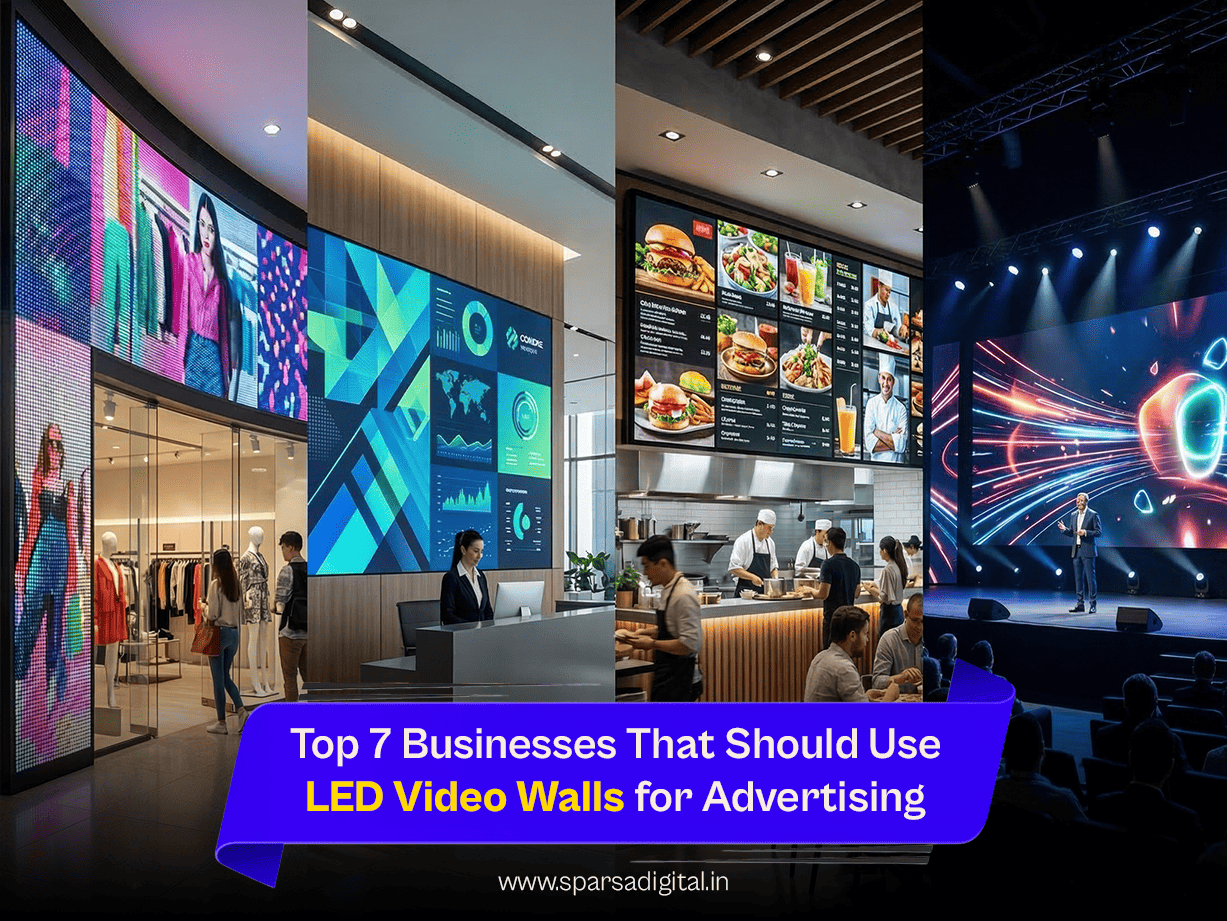
Table of contents
- Why LED Video Walls Are Powerful Advertising Tools
- 1. Retail Stores and Shopping Malls
- How LED Video Walls Help Retail Businesses
- LED Video Wall for Shopping Mall Advertising
- 2. Corporate Offices and Reception Areas
- LED Wall for Corporate Office Reception
- Benefits for Corporate Marketing
- 3. Restaurants and Food Chains
- LED Video Wall for Restaurants Marketing
- Advantages for Restaurants
- 4. Event Venues and Entertainment Industry
- LED Video Walls for Event Advertising
- Why Events Need LED Displays
- 5. Real Estate Developers and Property Showrooms
- LED Display Wall for Business Marketing in Real Estate
- Advantages for Real Estate Marketing
- 6. Airports, Transportation Hubs, and Public Spaces
- LED Video Wall for Digital Signage in Public Areas
- Why Transportation Hubs Are Ideal
- 7. Hotels and Hospitality Industry
- How Hotels Use LED Displays
- Benefits for Hospitality Marketing
- Industries Using LED Video Walls: Summary
- How Much Does LED Display Wall Advertising Cost?
- Key Factors to Consider Before Installing an LED Video Wall
- The Future of LED Video Wall Advertising
- Conclusion
- Frequently Asked Questions (FAQs)
In today’s highly competitive marketplace, businesses need advertising solutions that are dynamic, eye-catching, and capable of delivering real-time content. Traditional banners and printed signage are slowly being replaced by digital technologies that provide greater flexibility and visual impact. One of the most powerful tools in this transformation is the LED video wall.
Across industries, companies are investing in LED displays to enhance brand visibility, improve customer engagement, and modernize their marketing strategies. From retail stores to corporate offices, LED video walls are becoming a key component of modern advertising infrastructure.
If you are wondering which industries can benefit the most from this technology, this guide explores the top 7 businesses that should use LED video wall solutions for advertising and marketing. It also explains how these displays improve customer engagement, brand recall, and overall marketing performance.
Why LED Video Walls Are Powerful Advertising Tools
Before exploring the industries that benefit the most, it is important to understand why businesses are adopting LED displays at such a rapid pace.
1. High Visual Impact
LED video walls offer bright, vibrant visuals that capture attention instantly, even in high-traffic environments.
2. Dynamic Content
Businesses can display videos, animations, promotions, or live updates on the same screen.
3. Long-Term Cost Efficiency
Although the initial investment may be higher than traditional signage, LED displays reduce recurring printing costs.
4. Flexible Advertising
Content can be updated remotely within seconds using digital signage software.
5. Scalability
LED video walls are modular, allowing businesses to expand display size based on space and requirements.
These benefits make LED displays one of the best LED wall for advertising solutions available today.
1. Retail Stores and Shopping Malls
Retail stores are among the biggest adopters of LED display technology because visual merchandising plays a major role in attracting customers.
How LED Video Walls Help Retail Businesses
Retailers use LED displays to:
- Promote new product launches
- Highlight seasonal discounts
- Display brand campaigns
- Showcase product videos
- Improve store ambience
A LED display wall for retail stores can be installed near entrances, inside showrooms, or in window displays to attract customers.
LED Video Wall for Shopping Mall Advertising
Shopping malls benefit significantly from large LED video walls placed in high-traffic zones such as:
- Atriums
- Escalator areas
- Entrance halls
- Food courts
A LED video wall for shopping mall advertising allows mall management to promote multiple brands and events simultaneously. Retailers inside the mall can also run targeted promotions.
Example Use Case
A fashion retailer installs a 3m × 2m LED video wall near the store entrance. The display plays product videos and promotions, drawing customers into the store.
2. Corporate Offices and Reception Areas
Modern corporate offices are increasingly adopting LED displays to enhance communication and branding.
LED Wall for Corporate Office Reception
Reception areas are the first touchpoint for visitors. Installing a LED wall for corporate office reception helps create a professional and innovative brand image.
Common content displayed includes:
- Company introduction videos
- Brand storytelling
- Corporate achievements
- Live data dashboards
- Event announcements
These displays not only enhance aesthetics but also improve internal and external communication.
Benefits for Corporate Marketing
A commercial LED screen for advertising in corporate offices helps:
- Reinforce brand identity
- Communicate company vision
- Impress visitors and clients
- Deliver real-time updates
Large enterprises and tech companies frequently use LED video walls to create modern digital workspaces.
3. Restaurants and Food Chains
Restaurants and quick-service food outlets are increasingly adopting LED displays to modernize their marketing.
LED Video Wall for Restaurants Marketing
A LED video wall for restaurants marketing can be used for:
- Digital menu boards
- Food promotions
- Combo deals
- Brand storytelling
- Entertainment content
Restaurants can showcase high-quality food visuals, which significantly influence customer purchasing decisions.
Advantages for Restaurants
LED displays help restaurants:
- Update menus instantly
- Promote limited-time offers
- Improve order efficiency
- Enhance dining atmosphere
Fast food chains and premium restaurants often install LED video walls near the entrance or behind the counter.
4. Event Venues and Entertainment Industry
Events, concerts, exhibitions, and conferences rely heavily on large displays to deliver immersive experiences.
LED Video Walls for Event Advertising
Event organizers use LED displays for:
- Stage backdrops
- Sponsor promotions
- Live event broadcasting
- Brand advertisements
The LED video wall for digital signage in event venues helps attract sponsors and deliver impactful visual experiences.
Why Events Need LED Displays
Events benefit from LED video walls because they:
- Provide large-scale visibility
- Enhance audience engagement
- Display high-resolution visuals
- Support live video feeds
For large concerts or exhibitions, LED video walls can reach sizes of 10 meters or more.
5. Real Estate Developers and Property Showrooms
Real estate companies rely heavily on visual marketing to showcase projects.
LED Display Wall for Business Marketing in Real Estate
Developers install LED video walls in sales offices and property showrooms to display:
- 3D walkthroughs
- Property highlights
- Location advantages
- Investment benefits
This immersive presentation improves buyer understanding and confidence.
Advantages for Real Estate Marketing
LED video walls help real estate companies:
- Create impactful presentations
- Visualize large-scale projects
- Attract walk-in clients
- Improve sales conversions
Large developers frequently use commercial LED screens for advertising in property exhibitions and sales offices.
6. Airports, Transportation Hubs, and Public Spaces
Airports, metro stations, and railway stations are ideal environments for LED advertising because of high footfall.
LED Video Wall for Digital Signage in Public Areas
LED displays in transportation hubs are used for:
- Passenger information
- Brand advertising
- Event announcements
- Public awareness campaigns
Brands use these spaces for high-impact advertising campaigns.
Why Transportation Hubs Are Ideal
Transportation hubs offer:
- Massive audience reach
- Long viewer dwell time
- High brand visibility
This makes them perfect locations for LED display wall for business marketing.
7. Hotels and Hospitality Industry
Hotels and resorts are also adopting LED video walls to improve guest experiences and marketing.
How Hotels Use LED Displays
Hotels use LED video walls for:
- Lobby displays
- Event promotions
- Conference signage
- Wedding announcements
- Entertainment visuals
A LED video wall for digital signage can enhance the overall luxury experience for guests.
Benefits for Hospitality Marketing
Hotels benefit from LED displays by:
- Promoting hotel amenities
- Advertising events and conferences
- Providing guest information
- Enhancing interior design
Luxury hotels often install LED video walls in lobbies, banquet halls, and conference areas.
Industries Using LED Video Walls: Summary
The adoption of LED video walls continues to grow across industries.
Here are the top industries using LED video walls:
- Retail stores and shopping malls
- Corporate offices
- Restaurants and food chains
- Event venues and entertainment companies
- Real estate developers
- Transportation hubs
- Hotels and hospitality businesses
Each of these industries benefits from the visual impact and flexibility of LED displays.
How Much Does LED Display Wall Advertising Cost?
One of the most common questions businesses ask is about pricing.
The LED display wall price for advertising usually depends on:
- Screen size
- Pixel pitch
- Indoor or outdoor use
- Installation complexity
- Control system and software
Average Price Range in India
Approximate LED wall price per square meter:
| Pixel Pitch | Price Range |
| P2 – P2.5 | ₹4,50,000 – ₹8,00,000 |
| P3 – P4 | ₹2,50,000 – ₹5,00,000 |
| P6 – P10 | ₹1,20,000 – ₹2,50,000 |
Businesses should consider both screen size and resolution when calculating investment.
Key Factors to Consider Before Installing an LED Video Wall
Before installing an LED display wall, businesses should evaluate several factors.
1. Viewing Distance
Pixel pitch should match the distance between viewers and the screen.
2. Screen Size
Larger spaces require bigger displays for maximum impact.
3. Content Strategy
Dynamic content increases advertising effectiveness.
4. Installation Environment
Indoor and outdoor displays have different brightness requirements.
5. Maintenance and Support
Regular maintenance ensures long-term performance.
These considerations help businesses choose the best LED wall for advertising.
The Future of LED Video Wall Advertising
LED display technology is evolving rapidly, bringing new possibilities for businesses.
Emerging trends include:
- Transparent LED displays
- Flexible LED panels
- Interactive LED video walls
- AI-powered content management
- Ultra-fine pixel pitch displays
As digital marketing becomes more visual and immersive, LED displays will continue to play a major role in advertising strategies.
Conclusion
LED video walls have become one of the most powerful advertising tools for modern businesses. Their ability to deliver dynamic content, vibrant visuals, and real-time updates makes them far more effective than traditional signage.
From retail stores and shopping malls to corporate offices, restaurants, events, and hotels, many industries are adopting LED displays to attract customers and strengthen brand communication.
Businesses looking to improve visibility, enhance customer engagement, and modernize their marketing strategies should strongly consider installing LED displays. As technology continues to evolve, LED video walls will remain a key element of digital advertising and smart business marketing.
Frequently Asked Questions (FAQs)
Why do businesses use LED video walls?
Businesses use LED video walls because they offer high brightness, large display sizes, and dynamic content capabilities. These displays attract attention, improve brand visibility, and allow businesses to update marketing messages instantly.
Which industries benefit most from LED displays?
The industries that benefit most include:
- Retail and shopping malls
- Corporate offices
- Restaurants and food chains
- Real estate companies
- Event venues
- Transportation hubs
- Hotels and hospitality businesses
These are some of the most common industries using LED video walls for advertising and communication.
Are LED video walls good for retail marketing?
Yes. A LED display wall for retail stores is highly effective because it attracts customers, promotes offers, and enhances visual merchandising. Retailers often use LED video walls near entrances or inside showrooms.
Is LED display better than traditional signage?
Yes, LED displays offer several advantages over traditional signage:
- Dynamic video content
- Remote content updates
- Higher brightness and visibility
- Long-term cost efficiency
These features make LED displays a powerful commercial advertising solution.
How long do LED video walls last?
High-quality LED video walls typically last 80,000 to 100,000 hours, depending on usage and maintenance.
Can small businesses use LED video walls?
Yes. LED displays are modular, which means businesses can install small LED walls or compact digital signage displays based on available space and budget.
