
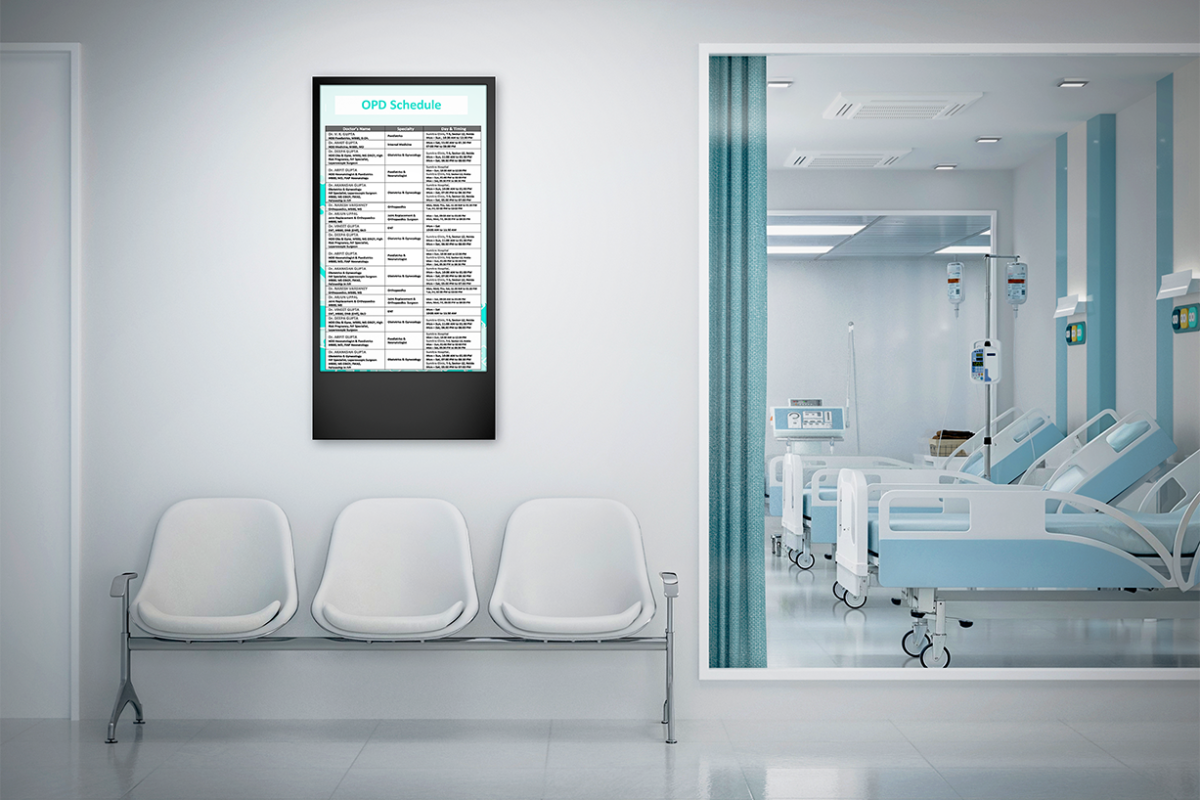
Digital notice board for hospital

Enhancing Healthcare Communication with Patient Display Boards and Digital Notice Boards

In today’s fast-paced healthcare environment, effective communication plays a pivotal role in delivering quality care and improving patient satisfaction. The rise of patient display boards and digital notice boards represents a significant shift toward digitization and real-time communication within medical facilities. These systems are not just tools—they are solutions driving operational efficiency, patient safety, and hospital staff coordination.

The Evolution of Communication in Healthcare Settings

Healthcare facilities have traditionally relied on whiteboards, paper charts, bulletin boards, and verbal updates to convey critical patient or hospital-related information. While functional, these tools are prone to errors, delays, and inconsistencies. Manual updates can quickly become outdated, leading to miscommunication and frustration among staff and patients.

The transition to digital platforms like patient display boards and digital notice boards helps mitigate these issues by offering real-time data, automatic updates, and centralized control. These digital systems offer dynamic communication, visual clarity, and customization, thus enhancing the quality of care delivery and internal coordination.

What Is a Patient Display Board?

A patient display board is a digital interface installed in hospital rooms, nursing stations, or hallways that presents real-time patient-specific or care-related information. Unlike static whiteboards, these digital screens pull data directly from the hospital’s electronic medical records (EMR) and clinical information systems.

Common Features of Patient Display Boards:

  • Patient name, age, room number
  • Assigned care team (doctors, nurses, specialists)
  • Allergies, care precautions
  • Scheduled procedures or tests
  • Pain management details
  • Discharge planning status
  • Language preferences
  • Patient goals and notes from staff

These boards are interactive and can often be tailored based on department (e.g., ICU, ER, Maternity) or user role (nurse, physician, administrator).

Benefits of Using Patient Display Boards

1. Improved Patient Safety

Patient-specific alerts such as fall risk, infection control measures, or medication allergies can be prominently displayed. This ensures that all staff, including float or temporary nurses, have instant access to critical patient data.

2. Enhanced Care Coordination

When patient care information is centralized and visible, handoffs between shifts become smoother. Staff can quickly assess updates, outstanding tasks, and the care plan without digging through paper charts or multiple systems.

3. Increased Patient Engagement

When installed in patient rooms, these boards can help patients and their families understand the care plan, scheduled tests, and who is caring for them. This transparency builds trust and improves patient satisfaction scores.

4. Reduced Documentation Burden

Automation allows the board to reflect live EMR data, minimizing the need for nurses to manually update boards throughout the day. This reduces clerical work and saves time.

Digital Notice Boards in Hospitals

Separate from patient-specific data, digital notice boards serve as centralized displays for non-patient-specific communication. These are typically placed in lobbies, breakrooms, waiting areas, and hospital corridors.

Common Uses of Digital Notice Boards:

  • Announcements (policy changes, event reminders)
  • Shift schedules and departmental updates
  • Emergency codes and protocol reminders
  • Cafeteria menus and service availability
  • Employee recognition or training sessions
  • Real-time news feeds or health education content

Why Hospitals Are Switching to Digital Notice Boards

The healthcare industry has embraced digital transformation, and digital notice boards are a key part of that evolution. These boards improve internal communications and provide timely updates to both staff and visitors.

Advantages Include:

  • Real-time updates: Information can be pushed instantly across multiple displays.
  • Remote control: Centralized software enables updates across multiple facilities.
  • Dynamic content: Multimedia messages, videos, scrolling alerts, and live data improve engagement.
  • Cost-effective: Reduces printing costs and environmental waste.
  • Customizable display zones: Different departments can use different content layouts or language preferences.

Integration Between Systems

Both patient display boards and digital notice boards can be integrated with hospital information systems, staff scheduling platforms, and even IoT-based medical equipment. For instance, a patient board may reflect current vitals from connected monitors or update pain levels based on nurse input in the EMR.

In larger hospital systems, an enterprise digital signage platform can manage both patient-facing and staff-facing screens from a centralized dashboard. This eliminates silos and ensures consistency across communication channels.

Challenges in Implementation

Despite their benefits, these digital systems are not without challenges. Common concerns include:

  • Cost of deployment: Initial setup, hardware, software licenses, and integration fees can be high.
  • Staff training: Effective use requires change management and digital literacy.
  • Privacy and HIPAA compliance: Boards must be designed to protect patient information, especially in shared spaces.
  • Technical reliability: Boards require stable Wi-Fi, system uptime, and IT support to function seamlessly.

Use Cases and Real-World Impact

Hospitals that have implemented these digital tools report noticeable improvements in communication metrics and patient satisfaction. For example:

  • A pediatric hospital in Ohio noted a 22% improvement in family engagement when using in-room patient boards.
  • A regional trauma center reduced patient handoff errors by 35% after switching to digital patient boards.
  • A mid-sized hospital chain cut internal email usage by 40% by using digital notice boards for daily updates.

Frequently Asked Questions (FAQs)

Q1: Are patient display boards customizable per department?

Yes, patient display boards can be configured differently for departments such as ICU, Maternity, or Emergency. Each area can highlight different types of information based on clinical priorities.

Q2: Do digital notice boards support multimedia content?

Absolutely. Digital notice boards can display videos, scrolling tickers, images, and even live data. This improves message retention and engagement.

Q3: Is it safe to show patient information on digital screens?

Yes, provided that proper privacy protocols are followed. Patient display boards must be HIPAA-compliant, using access restrictions, screen dimming, or patient initials only when in public areas.

Q4: How often do these boards update?

Boards connected to hospital systems can update in real time or at set intervals (e.g., every 5 minutes). Emergency notices can override screens immediately across the facility.

Q5: Can patients interact with the display boards?

Some systems offer touchscreen capability or remote control features, allowing patients to request help, view their schedule, or read education materials directly.

Q6: What happens if the system goes down?

Most systems have fail-safe modes that display basic static information if connectivity is lost. IT departments also maintain redundancy plans for critical care areas.

Q7: Are there mobile versions of these boards?

Some vendors offer mobile app integration, allowing nurses or physicians to view or update board content via tablet or smartphone for convenience.

Conclusion

The adoption of patient display boards and digital notice boards is redefining healthcare communication. By replacing static, manual processes with dynamic, data-driven displays, hospitals are not only streamlining operations but also empowering patients and improving care quality.

As technology continues to evolve, these boards will become even more interactive, intelligent, and integrated, it is helping transform the hospital experience from admission to discharge.

If your healthcare facility is considering a digital upgrade, investing in patient and staff display systems is a forward-thinking step toward enhanced communication and operational excellence.

Digital Notice Boards for Schools and Corporate Environments

Digital Notice Boards for Schools and Corporate Environments

  • Introduction
  • What is a Digital Notice Board?
  • Benefits of Digital Notice Boards
  • Real-Time Updates
  • Enhanced Communication
  • Cost and Environmental Efficiency
  • Customization and Interactivity
  • How Digital Notice Boards Work
  • Applications in Schools
  • Applications in Corporate Environments
  • Choosing the Right Digital Notice Board System
  • Future Trends in Digital Notice Board Technology
  • Conclusion
  • FAQs

Introduction

In today’s fast-paced world, traditional bulletin boards are being replaced by digital notice boards to streamline communication and information sharing. Whether in schools or corporate settings, digital notice boards offer a modern, dynamic, and efficient way to display announcements, schedules, and important updates. With real-time updates and engaging multimedia content, these digital solutions are revolutionizing how information is disseminated.

What is a Digital Notice Board?

A digital notice board is an electronic display system used to share announcements, news, and other essential information in an organization. These notice boards leverage LED, LCD, or e-paper technology to present real-time updates in a visually appealing manner. Unlike traditional static boards, digital notice boards can integrate multimedia elements such as images, videos, and animations to enhance engagement.

Benefits of Digital Notice Boards

Real-Time Updates
One of the most significant advantages of digital notice boards is their ability to update content instantly. Whether displaying emergency notifications or routine announcements, administrators can make real-time changes remotely, ensuring everyone stays informed.
Enhanced Communication
In both schools and corporate settings, digital notice boards facilitate clear and effective communication. They eliminate outdated paper notices and reduce confusion by presenting consistent, easily accessible information.
Cost and Environmental Efficiency
By replacing paper-based announcements, digital notice boards contribute to environmental sustainability. Schools and businesses save money on printing costs while reducing paper waste, promoting eco-friendly practices.
Customization and Interactivity
Digital notice boards allow customization to fit specific needs. Users can schedule content, include QR codes for additional resources, and integrate interactive elements to boost engagement. This flexibility enhances the way information is presented and consumed.

How Digital Notice Boards Work

A digital notice board operates using cloud-based or local software that manages content display. The key components include:
Display Screen: LED, LCD, or e-paper screens provide a clear visual presentation.
Content Management System (CMS): A software platform that enables users to create, schedule, and update content remotely.
Internet or Network Connectivity: Allows seamless remote access and integration with databases, calendars, and other systems.

Applications in Schools

Classroom Announcements
Teachers can use digital notice boards to display schedules, assignments, and exam timetables, ensuring students remain well-informed.
Emergency Alerts
Schools can instantly broadcast emergency messages regarding weather conditions, lockdowns, or other safety concerns.
Student Engagement
Interactive digital notice boards encourage student participation by displaying achievements, event details, and motivational messages.

Applications in Corporate Environments

Internal Communication
Corporations use digital notice boards to streamline internal messaging, ensuring employees are updated on company news, HR policies, and performance metrics.
Meeting and Conference Room Schedules
Displaying meeting room bookings and corporate event schedules helps in optimizing workplace organization.
Employee Recognition
Businesses can showcase employee achievements, birthdays, and milestones to foster a positive work environment.

Choosing the Right Digital Notice Board System

When selecting a digital notice board, consider the following factors:
Display Type: Choose between LED, LCD, or e-paper based on readability and energy efficiency.
Software Compatibility: Ensure it integrates with existing communication and scheduling systems.
Remote Access: Look for cloud-based solutions that allow remote updates.
Customization Features: Opt for systems that support multimedia and interactive content.

The future of digital notice boards is promising, with advancements such as:
AI-Powered Content Scheduling: Automated updates based on user engagement and preferences.
Touchscreen and Voice-Activated Displays: Enhancing interactivity for better user experience.
Augmented Reality (AR) Integration: Allowing users to access 3D content and immersive presentations.

Conclusion

The shift to digital notice boards is transforming communication in schools and corporate environments. By offering real-time updates, interactive content, and cost-effective solutions, these digital tools improve efficiency and engagement. Whether for student announcements or corporate briefings, digital notice boards are an essential innovation in modern communication.
With continuous technological advancements, organizations can expect even more sophisticated digital notice board systems, incorporating AI, interactivity, and sustainability. The adoption of these systems not only enhances information sharing but also supports an eco-friendly and digitally driven future.
For educational institutions and businesses seeking a reliable, future-proof communication tool, investing in digital notice boards is a smart decision. As workplaces and schools continue to evolve, digital signage will play a crucial role in streamlining information flow, ensuring accessibility, and fostering an engaged community.

FAQs

1. How do digital notice boards work?
Digital notice boards operate using a centralized content management system that allows real-time updates and remote access.
2. Are digital notice boards expensive to maintain?
While the initial setup may require investment, digital notice boards reduce long-term costs by eliminating paper waste and printing expenses.
3. Can digital notice boards be used for emergency notifications?
Yes, digital notice boards are ideal for emergency alerts, ensuring instant communication during critical situations.
4. Do digital notice boards require internet connectivity?
Some digital notice boards function offline, but internet connectivity enhances remote accessibility and content updates.
5. What industries can benefit from digital notice boards?
Beyond schools and corporates, digital notice boards are used in hospitals, hotels, retail stores, and government offices for effective communication.

Digital Notice Boards and Digital Display Boards

Transforming Communication with Digital Notice Boards and Digital Display Boards

In today’s fast-paced, digitally-driven world, businesses, educational institutions, and public organizations are increasingly adopting digital notice boards and digital display boards to communicate with their audiences more effectively. These digital solutions are revolutionizing the way information is shared, making it more dynamic, interactive, and efficient. Whether for internal communication, announcements, or public displays, these digital tools offer a modern alternative to traditional paper-based methods, creating a more engaging and streamlined experience for everyone involved.

What Are Digital Notice Boards and Digital Display Boards?

Digital notice boards are electronic screens designed to display important information such as announcements, event schedules, news updates, and emergency alerts. These boards replace traditional cork boards, whiteboards, and posters, offering the advantage of real-time updates, multimedia content, and remote management.

Digital display boards serve a similar purpose but are often more expensive, used in settings like public spaces, transportation hubs, and large corporate offices. These boards can display a variety of content including advertisements, news feeds, interactive maps, and much more. Digital display boards are typically larger and more versatile than digital notice boards, providing greater flexibility in terms of the content and format they can present.

Why Digital Notice Boards and Digital Display Boards Are Essential

  1. Real-Time Updates and Flexibility
    One of the major advantages of digital notice boards and digital display boards is the ability to update content instantly. In traditional notice boards, updating content can be time-consuming and requires physical changes. With digital solutions, content can be updated remotely and in real time, allowing organizations to communicate new information, schedule changes, or urgent announcements instantly.
  2. Increased Engagement
    Digital boards are visually appealing and can display dynamic content such as videos, images, and animations. This dynamic aspect makes it more likely that people will engage with the content displayed. For example, a digital display board in a shopping mall could showcase promotional videos, store openings, and seasonal sales in a visually engaging way, drawing in more attention from passersby.
  1. Environmentally Friendly
    By eliminating the need for paper and physical materials, digital notice boards are an environmentally friendly alternative. Businesses and institutions no longer need to print new flyers, posters, or notices, reducing paper waste and helping organizations move toward a more sustainable future.
  2. Improved Communication
    Digital notice boards and display boards help organizations communicate more effectively. Whether it’s displaying emergency alerts, internal communications, event schedules, or customer-facing promotions, these digital solutions ensure that information is delivered clearly, consistently, and in a timely manner. Additionally, digital display boards can display multiple messages at once, ensuring that different groups of people receive the information most relevant to them.
  3. Cost-Effective Over Time
    While the initial investment in digital signage technology might be higher than traditional methods, the long-term cost savings are significant. Businesses save on the costs of printing, shipping, and labor associated with traditional notice boards. With digital boards, content updates can be done quickly and remotely, without needing to print new materials or manually post information.

Case Study: A School’s Use of Digital Notice Boards to Improve Communication

A high school in New York City decided to replace its traditional bulletin boards with digital notice boards in order to enhance communication with students, faculty, and staff. The school wanted to provide real-time updates on events, schedules, and important announcements, as well as reduce the clutter of paper notices that often went unnoticed.

The school installed digital notice boards in key areas: the main hallway, cafeteria, and near classrooms. These boards were connected to a central content management system that allowed administrators to update the boards with announcements, event reminders, and emergency alerts in real-time. The system also allowed for multimedia content such as videos of school events, photos from extracurricular activities, and motivational messages.

The result was a significant improvement in student engagement and information dissemination. Students no longer missed important announcements or deadlines, and faculty and staff could easily share updates with the entire school community. The digital boards also provided a more modern and visually appealing way of communicating, which was well-received by students and staff alike. Additionally, the school saved time and money by eliminating the need to print and distribute paper notices.

FAQs About Digital Notice Boards and Digital Display Boards

Q1: How are digital notice boards different from traditional notice boards?

A1: Traditional notice boards require physical updates, such as pinning papers or flyers to a board. Digital notice boards, on the other hand, use screens to display content that can be updated remotely and instantly. This allows for more dynamic, engaging, and up-to-date information, without the need for paper or physical labor.

Q2: Can digital notice boards and display boards be used outdoors?

A2: Yes, digital notice boards and digital display boards can be used outdoors, but it’s important to choose screens designed for outdoor environments. These screens are built to withstand weather conditions such as rain, heat, and sunlight. They are often enclosed in weather-resistant casings and have high brightness levels to ensure visibility in direct sunlight.

Q3: How do I update the content on digital display boards?

A3: Digital notice boards and digital display boards can be updated via a content management system (CMS). This system allows you to control and schedule content remotely, ensuring that updates are timely and consistent across multiple boards. Many CMS platforms offer user-friendly interfaces that can be accessed from any internet-enabled device.

Q4: Are digital notice boards energy-efficient?

A4: Yes, digital notice boards are generally energy-efficient, especially when using modern LED screens. These displays consume less power compared to traditional lighting-based signage, and their long lifespan means that they require fewer replacements.

Q5: Are digital display boards suitable for all types of businesses?

A5: Yes, digital display boards are versatile and can be used in various industries, including retail, education, healthcare, hospitality, and corporate offices. They are particularly useful in high-traffic areas where clear, up-to-date communication is essential, such as shopping malls, airports, and hospitals.

Conclusion

With benefits like real-time content updates, reduced paper waste, and increased engagement, these digital solutions are quickly becoming an essential tool for organizations of all sizes. Whether you’re a school, business, or public institution, adopting digital notice boards and digital display boards can improve communication, save time, and create a more modern and professional image.

Communication with Digital Notice Boards and Digital Signage Software

Transforming Communication with Digital Notice Boards and Digital Signage Software

In today’s fast-paced and technology-driven world, traditional communication methods are no longer enough to capture attention and convey messages effectively. Whether in schools, workplaces, public spaces, or retail environments, businesses and institutions are increasingly adopting digital solutions to keep their audiences informed, engaged, and connected. Among these innovative solutions, digital notice boards and digital signage software are leading the way, revolutionizing how information is displayed and managed.

In this blog, we’ll explore the benefits and functionalities of digital notice boards and digital signage software, and how they are transforming communication in various industries. We’ll also dive into real-world case studies that illustrate the success of these technologies in different settings.

What Are Digital Notice Boards?

A digital notice board is an electronic display used to convey important messages, announcements, and information in various settings. These digital displays are usually placed in high-traffic areas such as offices, schools, hospitals, airports, and retail stores. Unlike traditional notice boards that require physical updates (e.g., printing and pinning new notices), digital notice boards allow for real-time updates and dynamic content, making them far more efficient and effective in delivering timely information.

Digital notice boards typically feature:

  1. High-Resolution Displays: These screens are equipped with vibrant and high-quality visuals, allowing for clearer communication even in crowded or noisy environments.
  2. Remote Management: Through connected software, users can manage and update content from any location, allowing for quick changes without the need to visit each display physically.
  3. Interactive Capabilities: Some digital notice boards allow for touch interaction, enabling users to navigate through various messages, images, or videos.
  4. Real-Time Information: These boards can be integrated with live data sources to display up-to-the-minute information such as news, weather, stock updates, or event schedules.
  5. Customization: Businesses can tailor the content displayed on digital notice boards based on the target audience, location, or even time of day.

The Role of Digital Signage Software

Digital signage software is the platform that powers digital notice boards. It allows users to create, schedule, and manage content on one or more digital screens from a centralized location. Whether it’s a single display in an office lobby or hundreds of screens across multiple locations, digital signage software provides businesses with an efficient and streamlined way to manage and update content.

Key functionalities of digital signage software include:

  1. Content Creation and Design: Most digital signage software comes with built-in templates and design tools, making it easy for businesses to create visually appealing and engaging content without needing advanced design skills.
  2. Content Scheduling: Users can schedule content to be displayed at specific times, ensuring that relevant information is shown at the right moment. For example, businesses can schedule lunch specials on digital notice boards in restaurants, or update event information on a campus display.
  3. Remote Content Management: Digital signage software enables remote management, meaning content can be updated and modified without needing to physically visit each display. This is especially beneficial for organizations with multiple locations or large facilities.
  4. Multimedia Support: Digital signage software supports various forms of media, including videos, images, social media feeds, live news, and weather updates, providing endless possibilities for content variety.
  5. Analytics and Reporting: Some advanced software platforms offer detailed analytics, allowing businesses to track viewer engagement, content performance, and overall system efficiency.

Benefits of Digital Notice Boards and Digital Signage Software

The combination of digital notice boards and digital signage software offers numerous advantages, making it an attractive solution for businesses and organizations. Here are some of the key benefits:

1. Efficient Communication

One of the most significant advantages of digital notice boards is the ability to communicate efficiently. Whether it’s in a school, office, or public space, businesses can update messages in real-time, ensuring that critical information, such as safety alerts, schedule changes, or announcements, is delivered promptly and accurately. This eliminates the delays associated with manual updates and printed materials.

In environments like offices, digital notice boards can streamline internal communication by displaying important updates, meeting schedules, and employee recognition in a visually appealing way. In schools, digital notice boards can display class schedules, exam dates, or extracurricular activities, ensuring students and staff are always in the loop.

2. Cost-Effectiveness

Traditional notice boards require constant physical updates, such as printing and pinning new posters or flyers, which can be costly over time. With digital signage, the content can be updated instantly and remotely, reducing the need for physical printing and distribution.

Moreover, digital notice boards are durable and designed to last longer, meaning they require less maintenance compared to traditional boards. In the long run, this can lead to significant cost savings for businesses, especially those with multiple locations or large facilities.

3. Engagement and Interaction

Digital notice boards provide businesses with the opportunity to engage customers, employees, or visitors through dynamic content. The visual appeal of moving images, videos, and animations can capture attention far more effectively than static images or printed text. Whether it’s an eye-catching advertisement in a retail store or a visual schedule in an office, digital signage keeps audiences engaged and informed.

Interactive features, such as touchscreens, can also be integrated into digital notice boards, enabling users to interact with the displayed content. For example, in a retail setting, customers can browse through product catalogs, check store promotions, or even check out product reviews.

4. Customization and Targeted Messaging

Digital signage software allows businesses to tailor content for specific audiences. For example, a digital notice board in a waiting room can display relevant information for visitors, such as wait times, services offered, or upcoming events. In contrast, a digital notice board in a corporate office could show internal memos, meeting schedules, and company news for employees.

This customization makes digital signage more relevant and impactful for the audience, ensuring that they receive the information they need when they need it.

5. Improved Brand Visibility

Digital notice boards are visually striking and can enhance brand visibility. Businesses can use them to display their logo, promote products, or showcase brand messaging. For retail environments, digital notice boards can be used for in-store promotions, sales events, or seasonal advertisements, creating a more immersive shopping experience.

Conclusion

Digital notice boards and digital signage software have quickly become indispensable tools for modern communication across various industries. Whether in educational institutions, corporate offices, retail environments, or public spaces, these technologies offer numerous benefits, including real-time content updates, cost savings, improved engagement, and enhanced brand visibility.

By combining the visual appeal of digital notice boards with the flexibility and control offered by digital signage software, businesses can create a more dynamic and effective communication strategy. As these technologies continue to evolve, we can expect even more innovative and creative uses that will redefine the way we share and receive information.

Digital-Notice-Boards-and-Content-Management-Systems

Here’s How You Can Revolutionize Communication with Digital Notice Boards and Content Management Systems

In today’s fast-paced world, where information needs to be communicated efficiently and effectively, traditional methods of displaying notices and announcements are increasingly becoming outdated. Paper-based notice boards, flyers, and printed posters are not only environmentally unsustainable but also prone to becoming outdated quickly and are hard to update. Enter the world of digital notice boards and content management systems (CMS)—innovative technologies that have transformed how organizations communicate with their audiences, both internally and externally.

Whether for schools, offices, hospitals, retail outlets, or public spaces, digital notice boards have become a crucial part of modern communication. Paired with a robust content management system, these tools allow organizations to streamline the display of information, offering flexibility, real-time updates, and a much more engaging way to interact with an audience.

What is a Digital Notice Board?

A digital notice board is an electronic display system that allows organizations to post announcements, important messages, schedules, and other content in a digital format. These boards are typically large LED or LCD screens that display dynamic content such as text, images, videos, and animations, replacing the traditional bulletin boards used for notices in offices, schools, and public areas.

Digital notice boards are designed to capture attention more effectively than static paper-based notices. They can display content in various forms, including real-time news, weather updates, event schedules, emergency alerts, and promotional materials, providing a much more engaging user experience. The key advantage is the ability to update and modify the displayed content remotely, instantly, and as needed, ensuring that the information remains accurate and timely.

Product Banner (1)

The Role of a Content Management System (CMS) in Digital Notice Boards

A content management system (CMS) is a software platform that controls and organises the content displayed on digital notice boards. This system allows users to create, manage, and schedule content across one or more screens from a centralised location. The CMS provides an intuitive interface for users to upload, edit, and organize content, ensuring that the correct information is displayed at the right time and in the right format.

Benefits of Digital Notice Boards and CMS Integration

The combination of digital notice boards and a powerful content management system offers several key advantages for organizations looking to modernize their communication efforts. Here are some of the primary benefits:

1. Improved Communication and Engagement

Digital notice boards are far more engaging than traditional printed boards. With the ability to include rich media content such as images, videos, and animations, digital notice boards can capture attention more effectively and communicate messages in a way that resonates with the audience. Furthermore, with real-time updates, important announcements or emergency alerts can be disseminated instantly, ensuring that no one misses crucial information.

2. Cost and Time Efficiency

Maintaining traditional paper-based notice boards is not only costly but also time-consuming. Printing and distributing paper notices, especially when changes need to be made, can require a lot of effort and resources. In contrast, digital notice boards, powered by CMS platforms, significantly reduce the need for physical materials and the time spent managing them. Content can be updated remotely in just a few clicks, and the need for staff to manually replace or adjust notices is eliminated.

3. Environmental Sustainability

Digital notice boards help reduce paper waste, which is an important step toward creating a more sustainable workplace or community. By moving from paper-based notices to digital screens, organizations contribute to lowering their carbon footprint and promoting environmentally friendly practices.

4. Increased Flexibility and Control

One of the most significant advantages of using a CMS for managing digital notice boards is the increased flexibility it offers. Content can changed on the fly, allowing organizations to react to changing circumstances or urgent announcements with ease. For example, in a school setting, the CMS can used to switch between class schedules, emergency alerts, and event information, depending on the time of day.

5. Improved Brand Image and Aesthetics

With digital notice boards, organizations can present a more modern, polished, and professional image. High-quality displays can customized to reflect the brand’s color scheme and design, and the flexibility of content types ensures that messages are visually engaging. This makes digital notice boards an ideal tool for businesses, educational institutions, and public spaces that want to leave a lasting impression.

6. Enhanced Security and Access Control

The integration of a CMS allows organizations to assign different levels of access to their digital notice boards, ensuring that only authorized personnel can update or modify content. This helps safeguard sensitive information and prevent unauthorized access or tampering.

7. Scalability for Multiple Locations

For businesses or organizations that operate in multiple locations, digital notice boards managed through a CMS provide scalability. A centralized CMS allows administrators to control the content on screens across multiple branches or offices from a single interface, ensuring consistent messaging across all locations.

Use Cases of Digital Notice Boards and CMS

The applications of digital notice boards and content management systems are vast and can adapted to various industries:

  • Educational Institutions: In schools and universities, digital notice boards can used to display class schedules, announcements, event updates, and emergency alerts. The CMS allows for easy scheduling and updating of content across different campus locations.
  • Corporate Offices: Businesses use digital notice boards for internal communications, such as employee announcements, meeting schedules, or company-wide updates. The ability to update content in real-time and the flexibility to display multimedia content enhances employee engagement and communication.
  • Healthcare Facilities: Hospitals and clinics use digital notice boards to share important information with patients, visitors, and staff. These might include wait times, health tips, facility guidelines, and emergency information.
  • Retail Stores: Digital notice boards in retail spaces can used to display promotional offers, store events, product information, or wayfinding directions. The CMS ensures that promotions can quickly updated to match the current marketing campaign.

Conclusion

Digital notice boards, when paired with an efficient content management system, offer a modern solution to communication challenges faced by organizations. Whether for schools, offices, hospitals, or public spaces, digital notice boards bring efficiency, flexibility, and engagement to the forefront of communication strategies.

By replacing traditional paper-based methods with digital signage, organizations not only streamline communication but also contribute to a more sustainable, dynamic, and visually appealing environment. A well-integrated CMS ensures that content is always up-to-date, accurately targeted, and easily accessible, making it an invaluable tool in today’s digital-first world.

As organizations continue to embrace digital transformation, the role of digital notice boards and content management systems will only grow, offering endless possibilities for better engagement, communication, and efficiency.

The Evolution and Impact of Digital Notice Boards and Digital Standees

The Evolution and Impact of Digital Notice Boards and Digital Standees

In today’s rapidly evolving digital landscape, the way information is shared and consumed has undergone a dramatic transformation. Traditional methods of communication, such as paper notice boards and static posters, are being increasingly replaced by more dynamic and engaging digital solutions. Among these, digital notice boards and digital standees have emerged as powerful tools that enhance communication, improve engagement, and offer a multitude of benefits across various sectors. In this blog, we will delve into the world of digital notice boards and digital standees, exploring their significance, applications, advantages, and the future trends shaping their development.

Understanding Digital Notice Boards

What Are Digital Notice Boards?

Digital notice boards are electronic displays that present information, announcements, and messages in a visually appealing and easily updateable format. Unlike traditional notice boards, which require manual posting and removal of paper notices, digital notice boards allow for real-time updates and content management through digital means. These boards can found in various forms, such as LCD screens, LED panels, and interactive touchscreens, and are commonly used in public spaces, educational institutions, corporate environments, healthcare facilities, and more.

Applications of Digital Notice Boards

  1. Educational Institutions: Schools, colleges, and universities use digital notice boards to display class schedules, event announcements, examination results, and important updates. This ensures that students, faculty, and visitors are always informed about the latest happenings on campus.
  2. Corporate Offices: In the corporate world, digital notice boards serve as an effective tool for internal communication. They can display company news, employee achievements, meeting schedules, and corporate policies, fostering a culture of transparency and engagement.
  3. Healthcare Facilities: Hospitals and clinics utilize digital notice boards to provide patients and visitors with information about doctor availability, appointment schedules, health tips, and emergency announcements. This enhances the overall patient experience and ensures smooth operations.
  4. Public Spaces: Airports, train stations, shopping malls, and other public spaces use digital notice boards to convey important information such as flight schedules, train timings, promotional offers, and emergency alerts. These boards help in guiding and informing the public efficiently.
  5. Hospitality Industry: Hotels and resorts employ digital notice boards to provide guests with information about check-in/check-out times, dining options, spa services, and local attractions. This enhances the guest experience and ensures a seamless stay.

Benefits of Digital Notice Boards

  1. Real-Time Updates: One of the most significant advantages of digital notice boards is their ability to provide real-time updates. This ensures that the information displayed is always current and relevant, reducing the risk of outdated or incorrect information.
  2. Engaging Content: Digital notice boards can display multimedia content, including images, videos, and animations. This makes the information more engaging and visually appealing, capturing the attention of viewers effectively.
  3. Remote Management: With digital notice boards, content can managed remotely through a centralized system. This means that updates can made from anywhere, eliminating the need for physical presence and manual labor.
  4. Cost-Effective: While the initial investment in digital notice boards may higher than traditional notice boards, they prove to cost-effective in the long run. They eliminate the need for printing and paper costs, and their durability ensures a longer lifespan.
  5. Eco-Friendly: By reducing the reliance on paper and printing, digital notice boards contribute to environmental sustainability. They help in minimizing waste and conserving resources.

Exploring Digital Standees

What Are Digital Standees?

Digital standees, also known as digital kiosks or digital signboards, are freestanding digital displays that are used to showcase advertisements, information, and interactive content. These standees are equipped with high-definition screens and are often placed in high-traffic areas to maximize visibility and engagement. Digital standees can be interactive or non-interactive, depending on the intended use and audience.

Applications of Digital Standees

  1. Retail and Advertising: In the retail sector, digital standees are used for advertising products, promotions, and sales. They attract customers’ attention and can influence purchasing decisions by providing detailed product information and engaging content.
  2. Event Management: Digital standees are commonly used in conferences, trade shows, and exhibitions to display event schedules, speaker information, and interactive maps. They enhance the attendee experience by providing easy access to important information.
  3. Tourism and Hospitality: Hotels, resorts, and tourist attractions use digital standees to provide guests with information about local attractions, dining options, and entertainment activities. Interactive standees can offer personalized recommendations based on user preferences.
  4. Corporate Communication: In corporate environments, digital standees are used for internal communication, displaying company news, employee achievements, and motivational content. They contribute to a positive workplace culture and improve employee engagement.
  5. Public Services: Government offices, libraries, and public service centers utilize digital standees to provide citizens with information about services, procedures, and announcements. They facilitate easy access to information and improve service delivery.

Benefits of Digital Standees

  1. High Visibility: Placed strategically in high-traffic areas, digital standees attract attention and ensure high visibility for the displayed content. Their bright and dynamic screens stand out, making it hard for passersby to ignore them.
  2. Interactive Capabilities: Interactive digital standees offer a unique user experience by allowing users to interact with the content. Touchscreens enable users to access information, make selections, and even complete transactions, enhancing engagement and satisfaction.
  3. Content Versatility: Digital standees can display a wide range of content, including advertisements, information, videos, and interactive applications. This versatility makes them suitable for various purposes and industries.
  4. Remote Management: Similar to digital notice boards, digital standees can managed remotely through a centralized system. This allows for easy content updates and maintenance, ensuring that the information displayed is always relevant and up-to-date.
  5. Brand Promotion: For businesses, digital standees serve as an effective tool for brand promotion. They can display branded content, promotional offers, and product information, reinforcing brand identity and increasing customer engagement.

Conclusion

Digital notice boards and digital standees have revolutionized the way information is communicated and consumed in various settings. Their ability to provide real-time updates, engage audiences, and offer versatile content makes them invaluable tools in today’s digital age. As technology continues to evolve, these digital communication solutions will become even more sophisticated, providing enhanced user experiences and contributing to sustainable practices. Whether in educational institutions, corporate environments, healthcare facilities, or public spaces, digital notice boards and standees are set to play a pivotal role in shaping the future of communication and engagement.

Embracing these digital solutions not only improves the efficiency of information dissemination but also fosters a culture of innovation and sustainability. As we move forward, the integration of advanced technologies and the focus on user-centric experiences will continue to drive the evolution of digital notice boards and digital standees, making them indispensable assets in our interconnected world.

The Power of Digital Notice Boards and Information Displays in Transforming Communication

The Power of Digital Notice Boards and Information Displays in Transforming Communication

In the fast-paced and information-rich environments of workplaces, educational institutions, and public spaces, effective communication is paramount. Traditional notice boards and static information displays often fall short in delivering timely and engaging messages to their intended audiences. Enter digital notice boards and digital information boards, dynamic platforms that revolutionize communication by offering real-time updates, and interactive features. In this blog, we explore digital notice boards and digital information boards, and the benefits they bring to various environments.

Communication is the lifeblood of any organization or community, facilitating the exchange of information, ideas, and announcements. However, in environments characterized by high traffic, diverse audiences, rapidly changing information; traditional methods of communication struggle to keep pace. Digital notice boards and digital information displays address these challenges by harnessing the power of technology to deliver dynamic content. This in return, captures attention and drives engagement.

The Evolution of Digital Notice Boards

The concept of digital notice boards traces its roots to the early days of digital signage. That is where static displays were replaced by dynamic electronic screens capable of showcasing multimedia content. Initially adopted by businesses for advertising and marketing purposes, digital signage quickly found its way into other settings. This includes educational institutions, healthcare facilities, transportation hubs, and government buildings.

Digital notice boards represent a specialized application of digital signage tailored for delivering announcements, updates, and alerts to specific audiences. Unlike traditional notice boards, which require manual posting and updating of notices. Digital notice boards enable remote management, making them ideal for environments where information needs to be disseminated quickly and efficiently.

Applications of Digital Notice Boards

Digital notice boards find applications across a wide range of industries and settings, including:

  1. Corporate Environments: In corporate settings, digital notice boards serve as a centralized platform for sharing announcements, meeting schedules, HR updates, and reminders. Interactive features such as employee recognition boards or feedback channels foster a sense of community and engagement among staff.
  2. Educational Institutions: Schools and universities leverage digital notice boards to communicate important announcements, event schedules, academic deadlines, and emergency alerts to staff. Interactive displays in common areas can also promote student engagement and showcase academic achievements.
  3. Healthcare Facilities: Hospitals, clinics, and medical offices use digital notice boards to relay critical information to patients, caregivers, and staff. This includes appointment reminders, health tips, waiting room updates, and emergency notifications. Integration with patient management systems enables real-time updates based on patient flow and occupancy levels.
  4. Transportation Hubs: Airports, train stations, and bus terminals utilize digital notice boards to provide travelers. For example- up-to-date information on departure and arrival times, gate assignments, baggage claim locations, and service disruptions. Wayfinding features help passengers navigate complex terminal layouts and find their destinations efficiently.
  5. Retail Environments: Retailers deploy digital notice boards in-store to promote sales and promotions, highlight new product arrivals. It also helps to engage shoppers with interactive content such as product demos or customer testimonials. Integration with inventory management systems ensures accurate and timely updates on product availability.

Implementation Considerations

Successful implementation of digital notice boards and information displays requires careful planning and consideration of various factors:

  1. Content Strategy: Developing a compelling content strategy is essential for maximizing the impact of digital displays. Organizations should create engaging and relevant content tailored to their target audience and communication objectives.
  2. Hardware and Software Selection: Choosing the right hardware components and digital signage software is crucial for achieving optimal performance and reliability. Factors to consider include display quality, connectivity options, content management features, and scalability.
  3. Integration with Existing Systems: Seamless integration with existing IT infrastructure, including network infrastructure, and data sources, is necessary to ensure interoperability and data accuracy.
  4. User Training and Support: Proper training and support are essential to empower users to manage and operate digital displays effectively. Training programs should cover content creation, scheduling, troubleshooting, and best practices for maximizing engagement.
  5. Compliance and Accessibility: Organizations must ensure compliance with relevant regulations and standards governing digital signage, including accessibility requirements for users with disabilities. Content should be designed with accessibility principles in mind, such as color contrast, and alternative text descriptions for multimedia content.

The Future of Digital Notice Boards and Digital Information Boards

As technology continues to evolve, future of digital notice boards and information displays holds tremendous potential for innovation and transformation. Emerging technologies such as artificial intelligence, augmented reality, and IoT (Internet of Things) are poised to further enhance the capabilities and functionality of digital displays.

For example, AI-powered content personalization algorithms can deliver tailored messages and recommendations to individual users based on their preferences, behaviors, and demographic information. Augmented reality overlays can provide interactive experiences that blend digital content with the physical environment, enabling users to access additional information or perform tasks seamlessly.

Furthermore, the integration of IoT sensors and data analytics enables context-aware signage that responds dynamically to environmental factors such as foot traffic, temperature, or weather conditions. For example, digital displays in retail stores can adjust promotional content based on shopper demographics and browsing patterns in real-time.

Conclusion

Digital notice boards represent a paradigm shift in communication, offering organizations and communities a versatile platform for delivering timely, engaging, and relevant content to their audiences. By harnessing the power of technology, organizations can enhance visibility, and streamline information dissemination in a wide range of settings.

While the adoption of digital signage presents challenges, the benefits in terms of flexibility, and cost savings outweigh initial investment. As technology continues to advance, the future of digital notice boards holds exciting possibilities for innovation and transformation in communication. By embracing these technologies, organizations can stay ahead of the curve and create experiences that captivate and inform their audiences.

Still wondering where to start from? Get in touch with our experts at Sparsa Digital today. Make the most out of the latest digital signage solutions for your business.

Enhancing-Communication-with-Digital-Notice-Boards-and-Information-Displays

Enhancing Communication with Digital Notice Boards and Information Displays

In today’s fast-paced world, effective communication is paramount, especially in public spaces like schools, offices, hospitals, and transportation hubs. Traditional notice boards and information displays have long served as means to disseminate information. However, the digital age has brought forth innovative solutions in the form of digital notice boards and digital information displays. These technological advancements offer numerous benefits over their conventional counterparts, including real-time updates, dynamic content, and interactivity.

Understanding Digital Notice Boards

Digital notice boards are electronic displays that showcase information, announcements, advertisements, and other content in digital format. Unlike traditional notice boards, which rely on printed materials and manual updates, digital notice boards leverage technologies such as LCD, LED, or e-paper screens to present dynamic content. These boards are often connected to a central content management system, allowing administrators to update information remotely and in real-time.

Key Features of Digital Notice Boards

  • Real-time Updates: One of the primary advantages of digital notice boards is their ability to display information instantaneously. Whether it’s schedule changes, emergency alerts, or event notifications, administrators can update content remotely and ensure that the latest information is readily available to viewers.
  • Dynamic Content: Unlike static notice boards, digital displays offer the flexibility to showcase dynamic content. This includes multimedia elements such as videos, animations, and slideshows, enhancing engagement and capturing the audience’s attention more effectively.
  • Remote Management: Digital notice boards can be centrally managed through intuitive software interfaces. Administrators can schedule content, organize displays by location or audience, and monitor screen status remotely, streamlining the management process and reducing operational overhead.
  • Interactivity: Some advanced digital notice boards feature interactive capabilities, allowing viewers to engage with the displayed content. Touchscreen interfaces enable users to navigate through information, access additional details, or even submit feedback or inquiries directly through the display.

Applications of Digital Notice Boards

  • Education Sector: Schools, colleges, and universities utilize digital notice boards to communicate announcements, exam schedules, campus events, and important notices to students, faculty, and staff. These displays also serve as interactive learning tools, facilitating student engagement and collaboration.
  • Corporate Environments: In office buildings, digital notice boards are employed to convey internal communications, HR announcements, meeting schedules, and company updates to employees. Additionally, they can be used for wayfinding purposes, guiding visitors through the premises and providing directory information.
  • Healthcare Facilities: Hospitals and clinics leverage digital notice boards to broadcast health advisories, appointment reminders, patient information, and emergency alerts. These displays contribute to efficient patient flow management and enhance the overall healthcare experience.

Understanding Digital Information Boards

Digital information boards, often referred to as digital signage or information displays, serve a broader purpose beyond simple announcements. These displays are designed to deliver targeted messages, advertisements, promotions, and relevant content to specific audiences in various environments. Similar to digital notice boards, they utilize advanced technologies to present content in a visually appealing and engaging manner.

Key Features of Digital Information Boards

  • Content Customization: Digital information boards offer extensive customization options, allowing organizations to tailor content based on audience demographics, location, and time of day. This targeted approach ensures that messages resonate with viewers and drive desired outcomes.
  • Integration with Data Sources: Advanced digital signage solutions can integrate with external data sources such as social media feeds, weather updates, news headlines, and live event schedules. This enables real-time content updates and enhances the relevance and timeliness of displayed information.
  • Analytics and Metrics: Digital information boards often come equipped with analytics tools that track viewer engagement, content effectiveness, and audience demographics. By analyzing these metrics, organizations can refine their messaging strategies and optimize the impact of their digital displays.
  • Multi-screen Capabilities: Digital information boards can be configured as single displays or multi-screen video walls, offering versatile deployment options to suit diverse spatial requirements and visual aesthetics. Multi-screen setups enable immersive brand experiences and high-impact storytelling.

Applications of Digital Information Boards

  • Retail Environments: Retailers use digital information boards to showcase product promotions, advertisements, and branding messages to shoppers. These displays influence purchasing decisions, drive foot traffic, and create memorable in-store experiences.
  • Transportation Hubs: Airports, train stations, and bus terminals deploy digital information boards to provide real-time travel information, departure schedules, wayfinding assistance, and safety instructions to passengers. These displays enhance the overall passenger experience and improve operational efficiency.
  • Hospitality Industry: Hotels, restaurants, and resorts leverage digital information boards to promote amenities, special offers, event listings, and dining options to guests. These displays enhance guest satisfaction, increase revenue opportunities, and streamline communication within the hospitality environment.

Conclusion

Digital notice boards and digital information displays represent powerful tools for communication, engagement, and information dissemination in various settings. Their ability to deliver real-time updates, dynamic content, and targeted messaging enables organizations to enhance communication effectiveness, streamline operations, and create memorable experiences for their audiences. As technology continues to evolve, the potential applications and benefits of digital signage solutions will undoubtedly expand, shaping the future of communication in both public and private sectors.

Digital-Notice-Boards-and-Bulletin-Boards-Transforming-Communication-in-the-Digital-Age

Digital Notice Boards and Bulletin Boards: Transforming Communication in the Digital Age

In an era where information is dynamic and constantly evolving, traditional notice boards and bulletin boards are undergoing a digital revolution. The advent of Digital Notice Boards and Digital Bulletin Boards is reshaping the way organizations, educational institutions, and public spaces communicate with their audiences. This blog post explores the usage, benefits, and potential impact of these digital communication platforms, delving into their applications across diverse sectors and their role in fostering effective and engaging communication.

Evolution from Traditional to Digital Communication Platforms:

The Role of Notice Boards and Bulletin Boards:

Traditional notice boards and bulletin boards have long been essential fixtures in various settings. Whether in schools, offices, community centers, or public spaces, these boards served as static platforms for posting announcements, event details, and important information.

Challenges of Traditional Boards:

While traditional boards served their purpose, they faced limitations in terms of real-time updates, space constraints, and visual appeal. As information became more dynamic and the need for instant communication grew, the transition to digital platforms became inevitable.

Understanding Digital Notice Boards:

Introduction to Digital Notice Boards:

Digital Notice Boards are modern communication platforms that replace traditional boards with electronic displays. These digital displays can showcase a variety of content, including text, images, videos, and real-time updates, providing a more dynamic and engaging means of communication.

Dynamic Content Display:

Unlike static notice boards, Digital Notice Boards can display dynamic content that captures attention and keeps viewers engaged. This dynamic nature allows for the rotation of announcements, event schedules, emergency alerts, and other information without the need for manual intervention.

Real-Time Updates:

Digital Notice Boards enable real-time updates, ensuring that the displayed information is always current. This feature is particularly valuable in fast-paced environments where information changes frequently, such as corporate offices, educational institutions, and healthcare facilities.

Remote Content Management:

One of the key advantages of Digital Notice Boards is the ability to manage content remotely. Administrators can update, schedule, and organize content from a central location, eliminating the need for physical presence at each display location.

Understanding Digital Bulletin Boards:

Introduction to Digital Bulletin Boards:

Digital Bulletin Boards share similarities with Digital Notice Boards but are often broader in scope. While Digital Notice Boards primarily focus on announcements and information updates, Digital Bulletin Boards serve as versatile platforms for displaying various types of content, including news, weather updates, social media feeds, and interactive elements.

Multifunctional Display:

Digital Bulletin Boards offer multifunctional displays that go beyond traditional notice board functionalities. They can showcase a mix of announcements, news headlines, live feeds, and interactive widgets, creating a more immersive and information-rich experience.

Interactive Features:

Many Digital Bulletin Boards incorporate interactive features, allowing users to engage with the displayed content. Interactive elements may include touchscreens, QR code scanning, and real-time data feeds, enhancing user participation and creating a more personalized experience.

Customization and Flexibility:

Digital Bulletin Boards provide a high level of customization and flexibility. Administrators can tailor the content based on the audience, time of day, or specific events. This adaptability makes them suitable for a wide range of applications, from corporate lobbies to public transportation hubs.

Applications and Benefits of Digital Notice Boards and Bulletin Boards:

Corporate Environments:

  • Employee Communications: Digital Notice Boards in corporate settings streamline internal communications by displaying company announcements, policy updates, and employee recognition.
  • Meeting Room Information: In office environments, Digital Bulletin Boards can provide real-time information about meeting room availability, schedules, and upcoming events.
  • Educational Institutions:
    • Announcements and Events: Digital Notice Boards in schools and universities are effective for sharing announcements, event details, and important dates.
    • Interactive Learning: Digital Bulletin Boards can be utilized for interactive learning experiences, displaying educational content, quizzes, and real-time updates.
  • Healthcare Facilities:
    • Patient Information: Digital Notice Boards in hospitals can display essential patient information, appointment schedules, and emergency alerts.
    • Wayfinding and Facility Maps: Digital Bulletin Boards assist visitors in navigating healthcare facilities by providing interactive maps, department locations, and real-time wait times.
  • Retail Spaces:
    • Promotions and Product Information: Digital Notice Boards in retail environments are effective for showcasing promotions, product information, and advertising campaigns.
    • Interactive Product Displays: Digital Bulletin Boards can enhance the shopping experience by providing interactive displays that allow customers to explore product features and details.
  • Transportation Hubs:
    • Real-Time Travel Information: Digital Notice Boards in transportation hubs display real-time information about departures, arrivals, and schedule changes.
    • Interactive Wayfinding: Digital Bulletin Boards assist travelers with interactive wayfinding features, helping them navigate through complex transit spaces.
  • Public Spaces:
    • Community Announcements: Digital Notice Boards in community centers or public spaces can be used for sharing local announcements, events, and public service information.
    • Weather and News Updates: Digital Bulletin Boards provide real-time weather updates, news headlines, and community-related content.

Overcoming Challenges and Considerations:

Cost Considerations:

The initial cost of implementing Digital Notice Boards and Bulletin Boards can be a consideration for some organizations. However, the long-term benefits, including reduced printing costs and increased communication efficiency, often justify the investment.

User Training and Adoption:

Introducing digital communication platforms may require user training to ensure that administrators can effectively manage content. Additionally, users need to become familiar with the interactive features and capabilities of Digital Bulletin Boards.

Cybersecurity Concerns:

As digital communication platforms become more interconnected, ensuring the cybersecurity of these systems becomes crucial. Protecting sensitive information and preventing unauthorized access is paramount in maintaining the integrity of digital displays.

Content Management Strategies:

Organizations need effective content management strategies to maximize the impact of Digital Notice Boards and Bulletin Boards. This includes creating engaging and relevant content, scheduling updates strategically, and ensuring a consistent flow of information.

Conclusion:

Digital Notice Boards and Digital Bulletin Boards are at the forefront of transforming communication strategies in various sectors. These dynamic and interactive platforms offer a myriad of benefits, including real-time updates, enhanced user engagement, and the flexibility to display diverse content. As technology continues to advance, the integration of artificial intelligence, augmented reality, and IoT promises to further elevate the capabilities of these digital communication tools.

The shift from traditional to digital communication platforms represents a paradigm change in how information is disseminated and consumed. Whether in educational institutions, corporate offices, healthcare facilities, or public spaces, Digital Notice Boards and Bulletin Boards are contributing to more efficient, engaging, and responsive communication. Embracing these technologies not only addresses the limitations of traditional boards but also opens new avenues for creativity, customization, and connectivity in the digital age.

Communication With Digital Notice and Bulletin boards

Revolutionizing Communication: The Impact of Digital Notice Boards and Bulletin Boards

In the digital age, communication has undergone a remarkable transformation. Traditional methods of disseminating information and announcements, such as paper notices and physical bulletin boards, are gradually being replaced by their digital counterparts. Digital notice boards and bulletin boards have emerged as powerful tools in various settings, ranging from educational institutions to corporate offices, healthcare facilities, and public spaces. This article explores the use, benefits, and potential challenges of digital notice boards and bulletin boards, shedding light on their growing significance in today’s interconnected world.

The Transition to Digital Notice Boards and Bulletin Boards

The Emergence of Digital Communication

The past few decades have witnessed a seismic shift in the way we communicate. With the advent of the internet and the proliferation of digital devices, information sharing has become more instantaneous, flexible, and dynamic. In response to this digital revolution, the concept of notice boards and bulletin boards has been reimagined and brought into the digital realm.

What are Digital Notice Boards and Bulletin Boards?

Digital notice boards and bulletin boards are electronic displays that serve the same purpose as their traditional counterparts – sharing information with a specific audience. However, they offer a wide range of advantages, including real-time updates, multimedia support, and remote management. These boards typically consist of large screens or panels that can be mounted on walls or placed in strategic locations for maximum visibility.

The Shift from Static to Dynamic

One of the most significant advantages of digital notice boards is their dynamic nature. Unlike traditional bulletin boards where physical notices can quickly become outdated, digital versions allow for real-time updates. This dynamism makes them well-suited for environments where information changes frequently, such as schools, offices, and healthcare facilities.

Benefits of Digital Notice Boards and Bulletin Boards

Real-time Information Updates

Digital notice boards excel in providing real-time information updates. Whether it’s a change in the daily cafeteria menu, an emergency alert, or the latest company news, digital boards can instantly convey this information to the intended audience. This real-time feature is particularly crucial in situations where timely communication is essential, such as in hospitals or educational institutions.

Multimedia Capabilities

Unlike traditional bulletin boards limited to text and static images, digital boards can display multimedia content. Videos, animations, and interactive graphics can be used to engage and inform the audience more effectively. This capability makes digital boards highly versatile for conveying a wide range of information, from training materials to product advertisements.

Remote Management

Digital notice boards and bulletin boards can be managed remotely. This means that administrators can update content, schedule messages, and monitor performance from a central location. For organizations with multiple locations or campuses, this remote management feature greatly simplifies the task of keeping everyone informed and up to date.

Enhanced Interactivity

Digital notice boards often come with interactive features, such as touch screens or QR code scanning. This allows users to engage with the content, access additional information, or even complete tasks like event registrations directly from the board. Interactivity not only enhances user experience but also helps in gathering data and insights on audience engagement.

Environmental Benefits

The move towards digital notice boards is also a step towards sustainability. Reducing the use of paper notices and printed materials not only saves resources but also minimizes waste. Digital boards, being energy-efficient, further contribute to reducing the environmental footprint of communication.

Applications of Digital Notice Boards and Bulletin Boards

Education

Digital notice boards have found extensive use in educational institutions. From elementary schools to universities, these boards are employed to share important announcements, class schedules, events, and emergency notifications. With remote learning becoming more prevalent, digital boards are also used to broadcast lessons and share educational content with students.

Corporate Environments

In the corporate world, digital bulletin boards are a valuable tool for internal communication. They are used to display company news, performance metrics, safety reminders, and HR announcements. These boards can also be strategically placed in common areas to boost employee morale and engagement.

Healthcare

Hospitals and healthcare facilities have adopted digital notice boards to relay critical patient information, appointment schedules, and emergency alerts. The ability to provide real-time updates is particularly crucial in a medical setting, where lives may depend on the rapid dissemination of information.

Public Spaces

Digital bulletin boards are also a common sight in public spaces, like airports, train stations, and shopping malls. These boards inform travelers about departure times, provide directions, and display advertisements. Their dynamic nature ensures that passengers and shoppers stay well-informed.

Retail

Retail businesses utilize digital notice boards for various purposes, including showcasing product promotions, advertising sales, and sharing store hours. These boards create eye-catching displays that capture the attention of shoppers, thereby increasing sales opportunities.

Transportation

Digital notice boards are essential in the transportation sector. They convey real-time information about bus and train schedules, platform changes, and delays. Passengers rely on these boards for accurate and up-to-date information to plan their journeys.

Challenges and Considerations

Implementation Costs

While digital notice boards offer numerous benefits, they come with initial setup costs, including the purchase of hardware, software, and installation. The costs can vary depending on factors like the size and complexity of the display system. However, many organizations find that the long-term benefits outweigh the initial investment.

Content Management

The effectiveness of digital boards depends on the quality and relevance of the content displayed. Administrators need to ensure that the information is up to date and engaging. Additionally, the design and layout of the content should be user-friendly and easily digestible.

Technical Challenges

Digital boards can face technical issues, such as software glitches, connectivity problems, or hardware malfunctions. Organizations must have a plan in place to address and resolve these issues promptly to minimize disruptions in communication.

Accessibility

Digital notice boards should be accessible to all users, including those with disabilities. Ensuring compliance with accessibility standards is essential to reach the widest audience possible.

Security

Protecting the content displayed on digital notice boards from unauthorized access and tampering is crucial. Strong security measures are necessary to prevent potential breaches.

Training and User Adoption

Users need to be trained on how to interact with and understand the digital notice board system. Ensuring user adoption and engagement is a vital component of successful implementation.

Integration with IoT

The integration of digital notice boards with the Internet of Things (IoT) is expected to become more prevalent. This will enable boards to display information that responds to real-world events, such as displaying traffic updates or temperature information based on sensor data.

Artificial Intelligence

Artificial intelligence (AI) is poised to play a more significant role in digital notice boards. AI can help in personalizing content, analyzing user engagement, and even automating content updates based on user preferences and behavior.

Mobile Compatibility

As mobile devices continue to dominate our lives, digital notice boards are likely to become more mobile-compatible. Users may be able to interact with boards through their smartphones, enhancing the accessibility and convenience of the platform.

Augmented Reality

Augmented reality (AR) can be used to enhance the interactivity of digital notice boards. Users may use AR apps to access additional information or immersive experiences related to the content displayed.

Conclusion

Digital notice boards and bulletin boards have revolutionized the way we communicate and disseminate information in various settings. The shift from traditional, static notice boards to dynamic, multimedia-capable digital platforms has brought about numerous advantages, including real-time updates, enhanced interactivity, and the potential for remote management. Despite certain challenges in implementation and maintenance, the benefits of these digital boards far outweigh the initial investments.

As technology continues to advance, the future of digital notice boards holds even more promising developments, including integration with IoT, AI, AR, and improved mobile compatibility. These advancements will further enhance the efficiency, interactivity, and relevance of digital communication tools, solidifying their place as indispensable assets in our interconnected world.